
Humanitarian Situation Report | 31 July 2026
Highlights
- In Gaza, food insecurity has eased, but needs remain high, and declining aid coverage since February 2026 risks reversing gains, according to the latest Integrated Food Security Phase Classification analysis.
- Gender-based violence is on the rise, with a 27 per cent increase in reported cases between January-March to April-June 2026, according to UNFPA.
- Shortages of insulin, cardiac catheterization materials, hemodialysis supplies and critical diagnostic and monitoring equipment hinder the treatment of non-communicable diseases in Gaza.
- In the West Bank, eight Palestinians, including one child, and two members of Israeli forces were killed in Nablus, Jenin and East Jerusalem; July was jointly with March 2026 the deadliest month for Palestinians in incidents involving settlers since October 2023.
- In just one week, Israeli settler attacks displaced at least 20 Palestinian families and caused damage to homes, vehicles and livelihood assets; over 40 settler attacks resulted in casualties or property damage.
- Israeli forces and officials entered the United Nations Kalandia Training Centre in East Jerusalem for the second time in less than a month, disrupting educational activities and breaching the inviolability of UN premises.
Overview
Heightened violence and Israeli military operations continue to drive civilian casualties, destruction of property, and displacement across the Occupied Palestinian Territory (OPT). Coupled with severe and tightening access restrictions, these practices are further hindering people’s ability to safely reach workplaces and essential services, while humanitarian needs remain acute. In the Gaza Strip, airstrikes, shelling and other attacks over the past week have reportedly resulted in civilian casualties, including young children. n the West Bank, a series of deadly incidents and an intensifying pattern of settler violence brought July to match March 2026 as the deadliest month for Palestinians in settler attacks since October 2023. Demolitions, settler violence and related access restrictions have displaced an average of 17 people, including eight children, per day in 2026 – double the daily average recorded over the preceding three years.
Gaza Strip
This section covers 20 to 26 July unless otherwise specified.
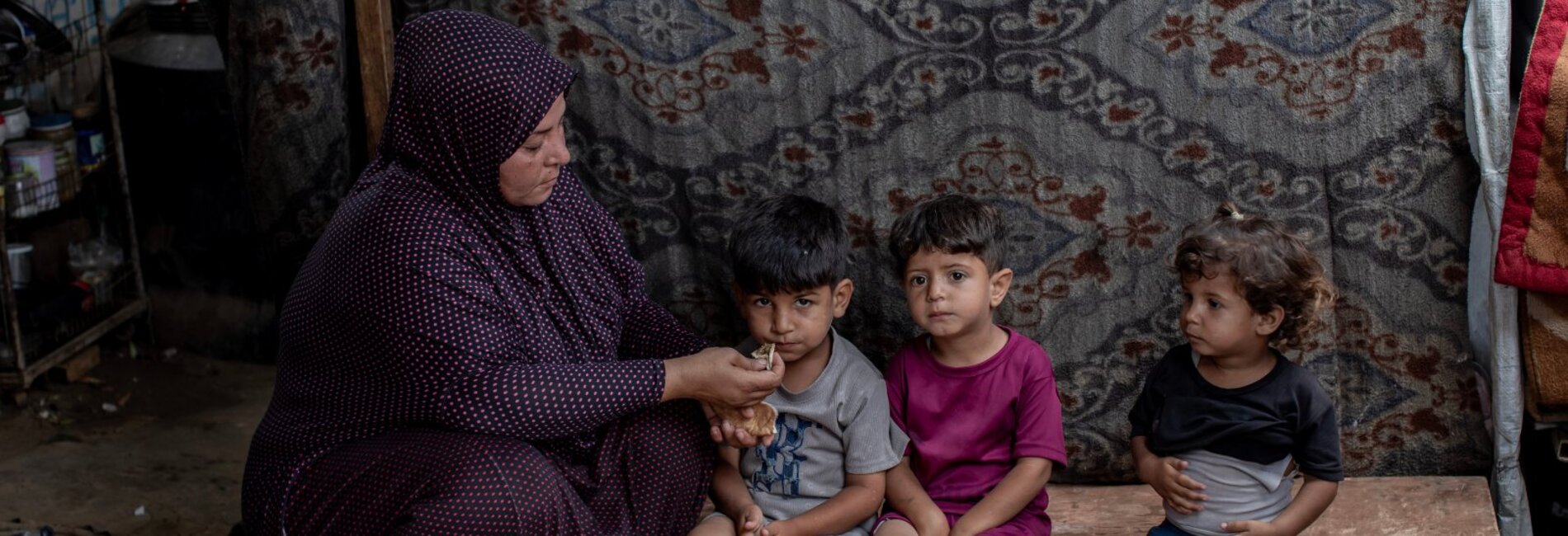
The humanitarian situation in Gaza remains dire. Ongoing military operations near the so-called “Yellow Line,” coupled with strikes reported in other locations of the Strip, are increasingly disrupting civilian life, damaging shelters, driving renewed displacement and restricting access to life-saving services. At the same time, 67 per cent of the population continues to face high levels of acute food insecurity, and the fragile gains made since the October 2025 ceasefire announcement risk being rapidly reversed as aid coverage declines amid growing funding constraints.
Shortages of essential medical supplies continue to hamper non-communicable disease services, while infectious diseases remain widespread due to overcrowding in displacement sites and poor water, hygiene and sanitation conditions. Against this backdrop, protection risks are on the rise, with women, children and other vulnerable groups disproportionately affected; a marked increase has been noticed in reported gender-based violence. All the while, shortages of basic supplies such as cooking gas and solar lanterns further undermine people’s ability to meet even their most basic needs.
According to the Ministry of Health (MoH) in Gaza, which operates under the de facto authorities, 30 Palestinians were reported killed, including those who died of wounds and had their bodies retrieved from under the rubble, and 134 people were injured between 22 and 29 July. This brings the overall casualty toll reported by MoH since the announcement of a ceasefire agreement on 10 October 2025 to 1,209 fatalities and 3,943 injuries.
Civilians continue to face significant security risks across Gaza, with incidents during the reporting period affecting both communities and service delivery points. In areas of North Gaza governorate, including Beit Lahia and Jabalya, ongoing Israeli military operations continued to severely disrupt people’s lives. Military advances and withdrawals occurred on multiple occasions throughout the week, while nearby strikes and shelling damaged shelters and forced affected households to relocate temporarily within and around displacement sites.
On 25 July, 13 families were temporarily displaced from Al Atatra site in Beit Lahia while in Jabalya, 25 families at Misr 16 site relocated internally following damage to their shelters. At Rahmaa Baynahum site in central Jabalya Camp, approximately 137 families temporarily sought refuge with relatives and friends or in open areas. Additional incidents at Zaad Al Khair site and Sumud site in Gaza Port resulted in the temporary displacement of nine families within the sites. Across all locations, affected households generally returned to their displacement sites within two to three days after humanitarian partners provided them with replacement tents and shelter materials.
Throughout the Gaza Strip, children remain exposed to severe and compounding protection risks, including hostilities, stray gunfire, explosive remnants of war, unsafe shelter, water, sanitation and hygiene (WASH) conditions, disease outbreaks, family separation, school dropout, child labour, early marriage, neglect, violence and heightened risks of gender-based violence and sexual exploitation and abuse for adolescent girls. Unsafe site conditions – including damaged shelters, poor lighting, open pits, sewage leakage, overcrowding and water shortages – continue to restrict safe access to services and increase protection risks.
Recent discussions that Site Management partners led with children in 24 displacement sites hosting more than 11,300 families (over 54,600 people) highlighted the impact of poor lighting on children. Participants said it undermines their safety when accessing sanitation facilities at night, limits their ability to study, and contributes to broader protection concerns within crowded displacement environments.
Between 19 and 25 July, according to the Health Cluster, acute respiratory infections remained the leading reported condition, amounting to 43.2 per cent of all communicable diseases, followed by acute watery diarrhea (22 per cent), underscoring persistent risks associated with overcrowding and inadequate WASH conditions. Skin diseases continued to represent a significant burden, with ectoparasitic infestations accounting for 18.9 per cent of cases, impetigo showing an upward trend (10.8 per cent), and chickenpox continuing to decline (4.9 per cent).
Meanwhile the humanitarian community’s ability to respond remains constrained by Israeli access restrictions into and within Gaza as well as funding shortfalls.
Attempts by the de facto authorities to inspect humanitarian warehouses for alleged smuggled items continue but at a slower pace compared with previous periods. Between 6 and 26 July, the UN recorded eight cases where individuals identifying themselves as agents of the de facto authorities searched humanitarian warehouses, causing disruptions to humanitarian operations and breaching the inviolability of United Nations premises. No alleged contraband was found.
Fragile Food Security Gains
On 23 July, the Integrated Food Security Phase Classification (IPC) released the findings of its latest Acute Food Insecurity and Acute Malnutrition Analysis for the Gaza Strip. The analysis indicates that the scale-up of humanitarian assistance, enabled by improved access and reduced conflict intensity following the October 2025 ceasefire announcement, has driven improvements in food security and nutrition conditions across Gaza. However, needs remain high and recent gains are highly fragile.
Between mid-April and 30 June 2026, over 1.2 million people (59 per cent of the population) continued to face Crisis (IPC Phase 3) or worse levels of food insecurity, including 212,000 people in Emergency (IPC Phase 4) and none in Catastrophe (IPC Phase 5).

Looking ahead, the IPC projects a renewed deterioration in food security conditions between July and December 2026, with the number of people facing Crisis or worse expected to rise to 1.4 million (67 per cent of the population). The analysis noted that aid coverage has already declined since February 2026, and further reductions are expected due to funding constraints, and uncertainty regarding the renewal of operational authorizations for 37 international non-governmental organizations. According to IPC, coupled with continuing population displacement in an increasingly confined area of Gaza as militarized zones expand, dire health, water, hygiene and sanitation conditions, and volatile access for both humanitarian and commercial supplies, all these concurrent factors could rapidly trigger a sharp deterioration in food security and nutrition conditions, as livelihoods have collapsed and people have exhausted their coping mechanisms.
On the nutrition front, while acute malnutrition – particularly among children – has declined significantly, driven by a marked scale-up of nutrition programmes, the IPC expects an estimated 74,200 children aged 6-59 months and 24,600 pregnant and breastfeeding women (PBW) to continue requiring treatment through April 2027.
According to the latest World Food Programme Palestine Market Monitor, food prices in Gaza continued to decrease throughout June and the first half of July, particularly for fresh fruits and vegetables, while wheat flour prices remained stable. Food intake continues to be significantly below the levels recorded before October 2023, especially for protein-rich foods as meat and eggs (consumed the equivalent of only once per week, on average), fruits (consumed the equivalent of half a day per week), and vegetables (consumed the equivalent of twice per week), WFP found.
WFP notes that, although the entry of commercial and humanitarian supplies continued to increase in June and July, compared with the low levels observed in March and April, during the regional escalation, market access slightly worsened in July, with 77 per cent of surveyed households reporting difficulties accessing markets mainly to due lack of cash and unaffordability of basic food items, compared to 67 per cent in May. Cooking gas supplies remain extremely limited, with approximately 73 per cent of households surveyed by WFP reporting that they relied on waste burning as an alternative to cooking gas in July.
Rising Gender-Based Violence
Women and girls in Gaza continue to face escalating and life-threatening risks of gender-based violence (GBV), with devastating consequences for their physical safety and mental wellbeing, including Post-Traumatic Stress Disorder, depression and suicide – according to the United Nations Population Fund (UNFPA) that leads the GBV response under the Protection Cluster. In April-June 2026, reported GBV incidents increased by 27 per cent compared with January-March 2026.
According to UNFPA, this reflects both worsening protection risks and expanded reporting, attributed to awareness raising sessions provided by protection partners (see below, in the section on response to GBV). The denial of resources, opportunities and services remains the most prevalent form of GBV, while psychological violence, sexual violence and forced marriage are increasing, particularly among adolescent girls, UNFPA says.
Male survivors of conflict-related sexual violence continue to face significant barriers to accessing confidential, survivor-centred services due both to stigma and to the inadequate resources available to GBV partners, which prevent them from recruiting more frontline service providers able to provide specialized support, UNFPA reports.
At the same time, caseworkers specializing in addressing GBV are managing unsustainable caseloads while many face GBV risks themselves within their homes and communities, further straining an already overstretched response. Despite an increase in GBV service delivery points from 74 to 84 in recent weeks, access to life saving services remains critically inadequate, with 17 Women and Girls’ Safe Spaces (WGSSs) still closed due to lack of funding and two others forced to close following movements of the “Yellow Line”, leaving many survivors without safe, confidential support.
Incoming Supplies
According to data collected by the Logistics Cluster, Ashdod remained the primary route for humanitarian cargo entering Gaza during the reporting period, with 308 UN and humanitarian partner trucks offloaded. Through Egypt, the offloading rate stood at 69 per cent, while the remaining 31 per cent of manifested trucks were either rejected and returned by the Israeli authorities or cancelled due to operational issues. In most return and rejection cases, no reason was provided; where specified, reasons included pallet conditions, cargo type and inconsistencies in information submitted. Via Jordan, aid truck volumes returned to normal levels following the resolution of the scanner malfunction at the Sheikh Hussein Bridge-Jordan River. Presently, the King Hussein Bridge-Allenby Crossing operates twice weekly (Mondays and Wednesdays) with a maximum of 60 trucks per convoy, while the Sheikh Hussein Bridge-Jordan River crossing operates Sunday to Thursday with a capacity of 15 trucks per day. More than two months following the closure of the Zikim Crossing in northern Gaza on 24 May, Kerem Shalom remains the only operational crossing point into Gaza.
Items that the Israeli authorities classify as having “dual use” are more difficult to secure approval for and bring in. Even when cleared, offloading items classified as such at Kerem Shalom remains limited to one day per week, creating significant bottlenecks that delay humanitarian assistance, disrupt supply pipelines, and constrain preparedness for the upcoming winter season. (For examples of such items, see the Shelter section below.)
The UN is only able to confirm the entry of supplies tracked by UN 2720. For breakdowns of those, see the online UN 2720 Mechanism Dashboard.
For a detailed account of the latest humanitarian operations in Gaza, see Annex 1 below.
West Bank
This section covers 21 to 27 July unless otherwise specified.
The reporting period was marked by a series of deadly incidents that resulted in the killing of eight Palestinians and two members of Israeli forces, including a settlement security guard. These developments occurred amid an intensifying pattern of settler violence, with July matching March 2026 as the deadliest month for Palestinians in settler attacks since October 2023. Across the West Bank, lack-of-permit demolitions, settler violence and related access restrictions have displaced an average of 17 people, including eight children, per day in 2026 – double the daily average recorded over the preceding three years.
Concerns over access to education were heightened after Israeli forces and officials forcibly entered the United Nations Kalandia Training Centre (KTC) in East Jerusalem for the second time in less than a month, disrupting educational activities. At the time of the unauthorized entry, more than 100 students and staff were attending classes and sheltered in place while the operation was underway. In a statement issued on 28 July, the Humanitarian Country Team stated that the raid "breached the inviolability of United Nations premises" and "impeded joint efforts by UN agencies and NGOs to provide humanitarian assistance and critical services."
Despite funding and operational constraints, as well as movement restrictions, Education Cluster partners continued to deliver summer learning programmes providing catch-up and remedial classes, recreational activities and psychosocial support to help children prepare for the new school year. Child protection partners also continued to provide critical protection services, reaching 2,320 children with disabilities since the beginning of 2026, as part of a Disability-Inclusion Action Plan focused on advocacy, capacity building, strengthening disability-disaggregated data collection and analysis, and improving the accessibility and inclusiveness of child protection services.
During the fourth week of July, Shelter Cluster partners reached 528 people (119 households) through 23 interventions, primarily minor-to-moderate shelter repairs (73 per cent), alongside the provision of essential non-food items and cash assistance. Assistance focused on communities affected by displacement, demolitions and settler violence in Nablus, Ramallah and Hebron governorates, with these three governorates accounting for about 62 per cent of all people reached. Meanwhile, more than 33,000 Palestine refugees displaced from Jenin, Tulkarm and Nur Shams refugee camps since early 2025 continue to face significant shelter needs.
Casualties and Settler Violence
During the reporting period, four deadly incidents resulted in the killing of eight Palestinians and two members of Israeli forces, including a settlement security guard, in Nablus, Jenin and East Jerusalem. On 23 July, one Israeli settler was stabbed and injured by a Palestinian and two Palestinians were shot and killed by an Israeli settler near Beit Furik following a fire that reportedly triggered confrontations between Palestinians, Israeli settlers and Israeli forces. On 24 July, four Palestinians from the same family and two members of Israeli forces, including a settlement security guard, were killed in Tell village. Palestinian sources reported that Israeli settlers from Havat Gilad settlement entered and attacked the village and Israeli media reported that the group had been hiking in the area and entered Areas A and B without coordination with the Israeli military. During the incident, a Palestinian man seized a rifle from an Israeli settler and reportedly opened fire.
Separately, on 23 July, Israeli forces shot and killed a Palestinian man at Shu'fat Camp checkpoint in East Jerusalem. The Israeli police stated that officers had ordered the man, whom they described as “behaving suspiciously,” to stop, but he did not comply; no Israeli personnel were injured. His body was returned to the family on 25 July. Also on 23 July, Israeli forces shot and killed a Palestinian man after he stabbed and injured an Israeli soldier at a checkpoint east of Jenin city.
On 24 July, a Palestinian man was reportedly attacked, stabbed and injured by Israeli settlers while his vehicle was stranded on Road 449 between Jericho and Ramallah after his vehicle ran out of fuel. According to the affected man, the settlers also seized his vehicle and personal belongings. Due to movement restrictions imposed following the deadly incidents in Nablus governorate, he was initially unable to reach hospital and received first aid in Al 'Auja town before being transferred to Jericho hospital after road access partially reopened.
Since the beginning of 2026, 76 Palestinians have been killed by Israeli forces or settlers or died of wounds sustained earlier, and three Israelis, including the two members of Israeli forces mentioned above, have been killed by Palestinians in the West Bank. More than 1,600 Palestinians have also been injured, including 46 per cent by Israeli settlers and the remainder by Israeli forces, while 24 Israelis, including 20 settlers and two soldiers, have been injured.
These incidents occurred amid an intensifying pattern of settler-related violence affecting Palestinian communities across the West Bank. In Tell village, they followed repeated settler attacks, including an arson attack on 18 July that displaced a Palestinian family.
Following the deadly incident in Tell village, Israeli settlers carried out multiple attacks across Nablus, Qalqiliya, Jenin, Ramallah, Jerusalem, Jericho and Bethlehem governorates. During the reporting period, at least 40 incidents involving Israeli settlers that resulted in Palestinian casualties, property damage or both were documented, about half of which occurred in Ramallah and Nablus governorates. At least 16 Palestinians were injured, including in physical assaults, stabbings, stone-throwing incidents and attacks involving live ammunition. The attacks also resulted in extensive damage to Palestinian property and livelihoods, including the burning or damage of at least 10 homes, more than 20 vehicles, two livelihood caravans, a stone crusher facility, a quarry and associated equipment, guard rooms, offices, agricultural structures and infrastructure. Hundreds of olive trees were bulldozed or otherwise damaged, while Palestinian vehicles travelling between communities were repeatedly attacked, further undermining access to livelihoods and essential services in areas already affected by movement restrictions imposed by Israeli forces.
Since the beginning of 2026, more than 1,380 settler-related incidents have been documented, affecting over 250 Palestinian communities and averaging about 6.6 incidents per day. During the same period, about 900 Palestinians were injured in the context of settler attacks, accounting for more than half of all Palestinian injuries documented across the West Bank, while more than 2,300 Palestinians were displaced due to settler attacks and related access restrictions.
Following the deadly incident in Tell village on 24 July, Israeli forces intensified movement restrictions across Nablus governorate, deploying additional forces, conducting search-and-arrest operations, and carrying out raids in several communities, including Tell village and Nablus city. The main checkpoints surrounding Nablus were closed, multiple road gates were blocked, and additional roadblocks and flying checkpoints were established, severely disrupting access to workplaces, health care, education and other essential services until some restrictions were eased on 26 July.
Attacks on Health Care
Attacks on health care and impediments to medical access continued across the West Bank during the reporting period. While fewer incidents were documented in 2026 than during the same period in 2025, this largely reflects the large-scale operations by Israeli forces launched across the northern West Bank in early 2025, which resulted in a sharp increase in attacks affecting health care. According to the World Health Organization (WHO), 53 attacks on health care were documented between January and June 2026, resulting in one fatality and 23 injuries, and affecting four health facilities and 44 ambulances. Under WHO's Surveillance System for Attacks on Health Care (SSA), these incidents include obstruction of or interference with the delivery of health services. Most incidents involved obstruction of access (50), the use of force (39), detentions (17) and militarized searches (10). Nearly half of all documented incidents occurred in Nablus governorate (26), followed by Ramallah (9), Hebron (5) and Salfit (4), reflecting the concentration of operations by Israeli forces in the northern West Bank over the first half of 2026.

Developments during the reporting period reflected many of these recurring patterns, particularly in Nablus governorate following the deadly incident in Tell village on 24 July. Following the incident, Israeli forces imposed extensive movement restrictions across Nablus governorate, closing checkpoints, road gates and other access points, while deploying additional forces and conducting search-and-arrest operations. The restrictions significantly impeded access to health care and hampered humanitarian operations. Medical teams reported multiple incidents in which ambulances transporting injured patients were delayed while attempting to reach hospitals. According to the Palestinian Ministry of Health, these restrictions also impeded access to emergency obstetric care. Israeli forces raided Nablus Specialized Hospital, where Palestinians injured during the Tell incident were reportedly arrested, disrupting access to care.
Recent developments in Sinjil village further illustrate the humanitarian impact of prolonged movement restrictions on access to emergency health care. Following a two-day search-and-arrest operation by Israeli forces on 15 and 16 July, the village's main northern entrance was closed and the road connecting Sinjil with nearby Jiljilya was blocked with an earth mound. Although residents later partially reopened the latter road, the main entrance remained closed as of the end of the reporting period, forcing residents to rely on lengthy detours or back-to-back ambulance transfers during medical emergencies. On 17 July, a Palestinian woman requiring urgent medical evacuation was delayed at the closed gate despite coordination efforts through the Palestinian District Coordination Office. According to medical sources, she died shortly after arriving at hospital. As of the end of the reporting period, the village's main entrance remained closed, constraining access to emergency health care and other essential services.
Movement restrictions also continued to affect access to specialized health care requiring permits to enter East Jerusalem or Israel. According to WHO, during the first half of 2026, 78 per cent of the 51,444 patient permit applications submitted to Israeli authorities were approved, while more than one fifth were either denied or delayed beyond the scheduled medical appointment. The 2026 approval rate is the highest rate since 2023, when 74 per cent of applications were approved. Adults aged 18 to 60 accounted for 77 per cent of applicants, and Al Makassed Hospital in East Jerusalem received 42 per cent of approved referrals.
Displacement
During the reporting period, Israeli authorities demolished 44 Palestinian-owned structures for lacking Israeli-issued building permits, which are nearly impossible for Palestinians to obtain. The demolished structures included 14 homes, two uninhabited residential structures, 22 WASH and agricultural structures, and six livelihood-related structures. As a result, 16 households comprising 86 people were displaced, including 76 people in Area C and 10 in East Jerusalem.
More than half of those displaced (47 people, including 20 children) occurred on 22 July in Nahhalin (Bethlehem governorate) and on 27 July in the North Beit Hanina Bedouin community (Jerusalem governorate), where the Israeli Civil Administration, accompanied by Israeli forces, demolished seven residential structures and associated livelihood assets. In both incidents, families were unable to remove many of their personal belongings before the demolitions.

Displacement also continued as a result of recurrent settler attacks, intimidation and the expansion of settlement outposts. In Jalud village, south of Nablus governorate, two Palestinian households comprising seven people, including three girls, were displaced after months of escalating settler intimidation, threats and isolation. The displacement followed the establishment of an Israeli settler outpost near their homes in April and the takeover of a nearby Palestinian house by Israeli settlers on 29 June. Since then, the families had faced repeated intimidation, damage to water and electricity infrastructure, and restricted access to the village centre and essential services. On the day of the displacement, settlers reportedly blocked humanitarian attempts to deliver food and medicine to the families, who left behind their homes and most of their household belongings.
Ten Palestinian Bedouin households were displaced on 23 July from Area B of Al Mazra'a ash Sharqiya (Ramallah governorate) for a second time. The families had previously been displaced from the fully depopulated Bedouin communities of Al Mu'arrajat Centre and Ras at Tin due to Israeli settler attacks and related access restrictions. Their latest displacement followed the establishment of a new settler outpost on 22 July, after months of recurrent settler intimidation and threats, including night-time incursions, prompting the families to relocate to other areas in Ramallah and Hebron governorates.
Between 23 and 24 July, at least 10 Palestinian families comprising 49 people were displaced in three settler-related incidents across Nablus governorate. Four families were displaced in Sarra after Israeli settlers set fire to at least six homes, while five additional families in Urif were temporarily displaced after four homes sustained fire damage. A Palestinian family of four was also displaced from the Al Mas'udiya area following years of settler harassment, intimidation, and restrictions on grazing and access to water. Following the violence in Tell village on 24 July, Israeli settlers reportedly established several caravans and began land-levelling works, raising concerns about the establishment of a new settlement outpost and increased pressure on nearby Palestinian communities.
These incidents reflect a broader pattern of recurrent displacement driven by demolitions, settler violence and the expansion of settlement outposts. Since January 2023, more than 6,200 Palestinians, including over 3,000 children, have been displaced, including more than 2,300 people since the beginning of 2026.

For key figures and additional breakdowns of casualties, displacement, and settler violence between January 2005 and June 2026, please refer to the OCHA West Bank June 2026 Snapshot. For key figures on the impact of settler attacks, please refer to the West Bank – The Impact of Settler Attacks, January 2023 – April 2026.
Funding

Sources: Financial Tracking System and oPt HFas of 30 July 2026.
Annexes
Annex 1: Humanitarian Operations in the Gaza Strip by Cluster
Read more
This section covers 20 to 26 July unless otherwise specified.
Intersectoral support
- Through the Rapid Joint Distribution Mechanism, partners from across the humanitarian community responded to 14 requests for assistance following nine shelling incidents, two displacement incidents and one flooding event that affected 180 households across Gaza cumulatively. Assistance was tailored to assessed needs, including emergency shelter materials, bedding, water containers, clothing, hygiene and dignity kits, and food assistance. Households experiencing total losses received more comprehensive response packages.
Food Security
- Between 1 and 26 July, partners provided general food assistance to 136,000 households (533,000 people) through 36 distribution sites as part of the monthly distribution cycle. Each family received two parcels and one 25-kilogram flour bag, covering 75 per cent of the minimum caloric needs.
- As of 23 July, partners continued to prepare 708,000 meals every day through 97 kitchens, delivering them across 1,092 locations. This includes 262,000 meals distributed to 360 locations in northern Gaza, and 446,000 meals to 732 locations in the central and southern governorates of the Strip. Overall, meal production levels have remained largely stable since late May, despite minor week-to-week fluctuations.
- Humanitarian partners currently support the production of approximately 300 metric tonnes (MT) of bread per day, covering about 36 per cent of the estimated bread needs across the Gaza Strip. Of this total, about 110,000 two-kilogram bread bundles are produced daily by 28 subsidized bakeries. About 80 per cent of the bread is sold through more than 150 contracted retailers at a subsidized price of 3 NIS (US$0.93) per bundle, while the remaining 20 per cent is distributed free of charge to more than 300 shelters and community sites. In addition, through the “fuel-only” production model, 10 private bakeries are receiving free fuel from humanitarian partners to produce bread for the community while independently managing their operations, including bread pricing. These bakeries are producing an average of 40 MT of bread per day.
- On 29 July, for the first time after nearly two months, partners were able to bring into Gaza new stocks of animal fodder. Continued entry of animal fodder is critical to sustain the improvements in livestock survival rates and herd recovery observed since the October 2025 ceasefire agreement.
Health
- Between 19 and 25 July, 206 active health facilities reported conducting over 242,000 medical consultations across Gaza, with communicable diseases accounting for 20.5 per cent of all consultations.
- Disease surveillance findings have informed the establishment of a Joint Public Health Committee under the National Infectious Diseases Committee, a MoH-led mechanism in which Health and WASH partners also participate. The new body brings together surveillance and outbreak response teams, WASH and Risk Communication and Community Engagement partners to coordinate multisectoral assessments and integrated disease response activities.
- Between 20 and 26 July, two Health Cluster partners conducted training for medical officers on communicable disease surveillance and the identification and reporting of adverse events following immunization.
- A partner distributed cleaning equipment, personal protective equipment and detergents to health facilities across Gaza as part of wider efforts to prevent and control infections.
- Partners supported the medical evacuation of 81 patients, including 13 children, alongside 136 companions, from Gaza abroad.
A few examples of what is still needed:
- Funding constraints continue to drive shortages of essential medical supplies, including insulin for patients with Type 1 diabetes and medicines for cardiovascular diseases. Stocks of basic critical diagnostic and monitoring equipment, such as glucometers, blood glucose test strips, blood pressure monitors, and monofilaments, are also low, affecting the quality of screening, follow-up, and disease management services. Hemodialysis services are short in key consumables, particularly vascular access supplies, while scarce quantities of cardiac catheterization materials are affecting cardiac services, limiting interventions to a small number of priority cases.
- More supplies required to prevent and control infections are pending Israeli approval to bring into Gaza. Alcohol-based disinfectants, which are essential for hand hygiene and routine infection prevention, is largely unavailable.
Water, Sanitation and Hygiene (WASH)
- Humanitarian partners started distributing nine metric tonnes of rodenticides brought into Gaza by the United Arab Emirates, alongside previously secured stocks. The new stocks have allowed a scale up of these operations.
- Partners distributed 1,434 hygiene kits, 1,002 garbage bins, 1,852 water containers, and eight latrines, benefiting at least 8,500 people.
A few examples of what is still needed: There continue to be severe shortages of spare parts, materials, equipment and consumables.
Shelter
Partners undertook the following actions:
- Provided approximately 5,200 households with emergency shelter materials, including 4,571 mattresses, 2,991 blankets, 2,201 bedding items, 1,850 searchlights, 423 tarpaulins, 255 solar lanterns and 69 emergency tents.
- Provided 255 households with clothing through cash and voucher assistance.
- Provided 18,343 households with kitchen sets.
- Repaired damaged homes.
A few examples of what is still needed: Challenges with the entry of shelter items continue. Most core emergency shelter and household items – including tents, tarpaulins, kitchen sets, solar items, timber, tools, ropes, and tapes – remain classified as “dual-use” by the Israeli authorities, making it more difficult to bring them in. (See above, Incoming Supplies section.)
For more information, see the Shelter Cluster website.
Protection
- Partners reached over 13,830 people with protection services through flexible and community-based approaches. This includes:
- Mental Health and Psychosocial Support (MHPSS) for 9,449 people, including Psychological First Aid (PFA), individual and group counselling, and other structured and community-based MHPSS interventions.
- Case management, follow-up and referral services for 330 people, facilitating individualized protection support and access to specialized services for people facing heightened protection risks.
- Legal counselling, representation, mediation, and legal follow-up for 271 people, and the provision of awareness and community engagement activities aimed at strengthening community resilience, promoting safe coping strategies, and improving awareness of available protection services to 3,781 people.
- To address immediate protection-related needs, partners provided material assistance to at least 2,573 households, including hygiene kits, clothing vouchers, food-storage containers, and emergency tents, while 23 individuals received tailored multi-sectoral assistance based on case-specific protection needs.
- Partners established and equipped 10 additional safe spaces.
- Partners offered support to 192 returnees through psychological first aid, emergency assistance, and referral services. This brings the cumulative number of returnees assisted since the reopening of the Rafah Crossing to 4,578 people, of whom 1,599 are currently receiving ongoing protection support, including specialized psychosocial services.
- Partners conducted nine focus group discussions and 95 key informant interviews with 1,018 community members across 12 accessible neighbourhoods to assess protection risks associated with ongoing military activities, inadequate shelter conditions, unsafe access to water, food insecurity, and limited access to essential services.
For more information, see the online Protection Cluster dashboard.
Child Protection
Partners provided:
- Child protection case management services for 338 newly identified children at risk, referral services for 190 children and case follow-up for another 186 children, including 56 unaccompanied and separated children (UASC).
- MHPSS, including individual counselling, PFA, play therapy, recreational activities and disability-inclusive support for 9,336 children.
- Caregiver-focused MHPSS and related support for 3,304 caregivers and community-members through group sessions, individual and family counselling, caregiver support groups, psychoeducation, positive parenting, stress-management and self-care activities.
- Targeted material and emergency support to reduce immediate protection risks and enable service access; this included distribution of hygiene kits to 566 families and 76 adolescent girls, 10 newborn kits, shopping vouchers for 160 vulnerable children, cash assistance for 215 children and their families, and essential household and hygiene items for 750 displaced families with children. In addition, 34 child-headed households, including an estimated 90 children without parental care, received support. Recreational supplies, child identification materials, safety booklets, notebooks, crayons and toys were also distributed.
- Community-based prevention activities for approximately 3,000 children and 2,500 caregivers and community members through awareness sessions, outreach, child-friendly space activities, positive parenting, UASC messaging, Explosive Ordnance Risk Education, hygiene promotion, safe and unsafe touch sessions, bullying prevention, online safety and information on available referral pathways. A reported example of positive EORE impact was a 13-year-old child identifying and reporting a suspicious explosive device, enabling its safe removal without injury.
- Health-linked protection support included medical screening for 60 children, specialized health referrals for six children, and follow-up with 18 caregivers.
- Child safety mapping and child safety walks for 245 children across nine sites, enabling children to identify safe and unsafe locations, safer routes, emergency exits, support networks and reporting points. Findings highlighted practical risks in displacement sites and service locations, including unsafe shelter structures, poor lighting, open or poorly covered pits, overcrowding, sewage leakage, lack of fencing and unsafe WASH facilities, reinforcing the need for site-level risk mitigation and stronger integration of child protection concerns into broader humanitarian services.
What is still needed:
- Rapid, flexible and sustainable funding to ensure continuity and scale-up of ongoing child protection interventions to meet needs, recruit additional trained caseworkers, psychologists, counsellors, speech therapists, facilitators and volunteers, ensure incentives for Child-Friendly Space facilitators who are at risk of losing their job amid funding shortfalls and cover transportation and fuel costs.
- More safe, accessible and inclusive spaces, confidential spaces for adolescent girls; adapted activities for children with disabilities.
- More recreational, educational and child-friendly supplies, hygiene kits, child identification materials, communication equipment, solar power, and essential material assistance, including cash, food and livelihood support to reduce child labour and other harmful coping mechanisms.
- Rehabilitation of unsafe shelters, lighting, fencing, sanitation facilities and water systems.
Addressing Gender-Based Violence
Partners undertook the following activities:
- Women and Girls’ Safe Spaces (WGSSs): partners operated 84 safe spaces across all governorates (except for Rafah), with attendance ranging from 36 to 1,450 women per location.
- Multisectoral Services: Partners provided individual GBV case management paired with cash-for-protection assistance, and conducted group awareness and MHPSS sessions covering stress management, GBV awareness, available services, the prevention of sexual exploitation and abuse and reporting, reproductive health, and life skills. They distributed 450 dignity kits to vulnerable women and girls.
- Capacity-building: Partners provided trained 51 workers addressing GBV. The sessions focused on the supervision of GBV caseworkers, GBV referrals, and psychosocial support.
- Community Mobilization: Partners raised the awareness of over 450 people, including men and community members, of the dangers of GBV and the services that address it.
A few examples of what is still needed:
- Nineteen WGSSs remain closed due to funding challenges and proximity to the so-called “Yellow Line.” Most of the functional site fall below recommended global standards for WGSSs due to lack of appropriate space, materials and resources.
- There is a severe lack of safe, suitable locations for activities in displacement sites, with debris clearance and large tents urgently needed to establish more WGSSs, particularly in northern Gaza.
- Persistent transportation challenges affect service provides and women and girls seeking support.
Mine Action
- Partners conducted 24 explosive hazard assessments to facilitate rubble removal operations, shelter-related and activities supporting farming and agriculture.
- Partners conducted one emergency response mission and accompanied two inter-agency missions to ensure the safe conduct of humanitarian assessments.
- Partners conducted in-person explosive ordnance risk education sessions, with 55 trainers reaching a total of 5,814 people between 19 and 23 July.
Education
- The Education Cluster is piloting an accelerated learning programme in six schools across the Gaza Strip, which would mark an important step towards addressing severe learning loss and helping children recover essential foundational skills. A three-day training for 20 supervisors was completed, so that they, in turn, can deliver a three-day cascade training to 43 teachers and school principals from the six participating schools. Arabic and Mathematics learning kits for children in Grades 3 and 6 – the two grades selected for the pilot initiative – were also distributed to the schools. Lessons learned will inform the longer-term roll-out of the programme.
- Summer learning activities continued, providing children with essential opportunities to maintain a learning routine, strengthen foundational skills and access recreational and psychosocial support during the school break.
Emergency Telecommunications Cluster (ETC)
- ETC supported a humanitarian partner and the Garmin Response Team in updating emergency communications procedures and contact protocols, strengthening emergency response arrangements and supporting the continuity of security communications for humanitarian operations.
- ETC continued supporting UNDSS in the standardization of United Nations VHF radio communications across Gaza to strengthen communications coordination and interoperability. Approximately 68 per cent of the UN VHF radio fleet has been reconfigured - most of it in July - , with activities underway across nine of 14 UN agencies, supporting a phased transition to improved inter-agency security communications.
- On 26 July, ETC and UNDSS delivered basic security communications system training for 15 personnel from UN agencies and international NGOs, covering radio operations and communication procedures.
** Double asterisks indicate that a figure, sentence, or section has been rectified, added, or retracted after the initial publication of this update.
SUBSCRIBE TO RECEIVE OCHA'S INFORMATION PRODUCTS
 SUBSCRIBE
OCHA Sites










Follow Us
Support
Your donations go to relief organizations delivering quick and effective support to Palestinians in need.