
Humanitarian Situation Report | 23 July 2026
Highlights
- Fatalities linked to settler attacks in 2026 have already surpassed the total recorded during all of 2025, with 18 Palestinians killed as of 20 July compared with 17 throughout 2025.
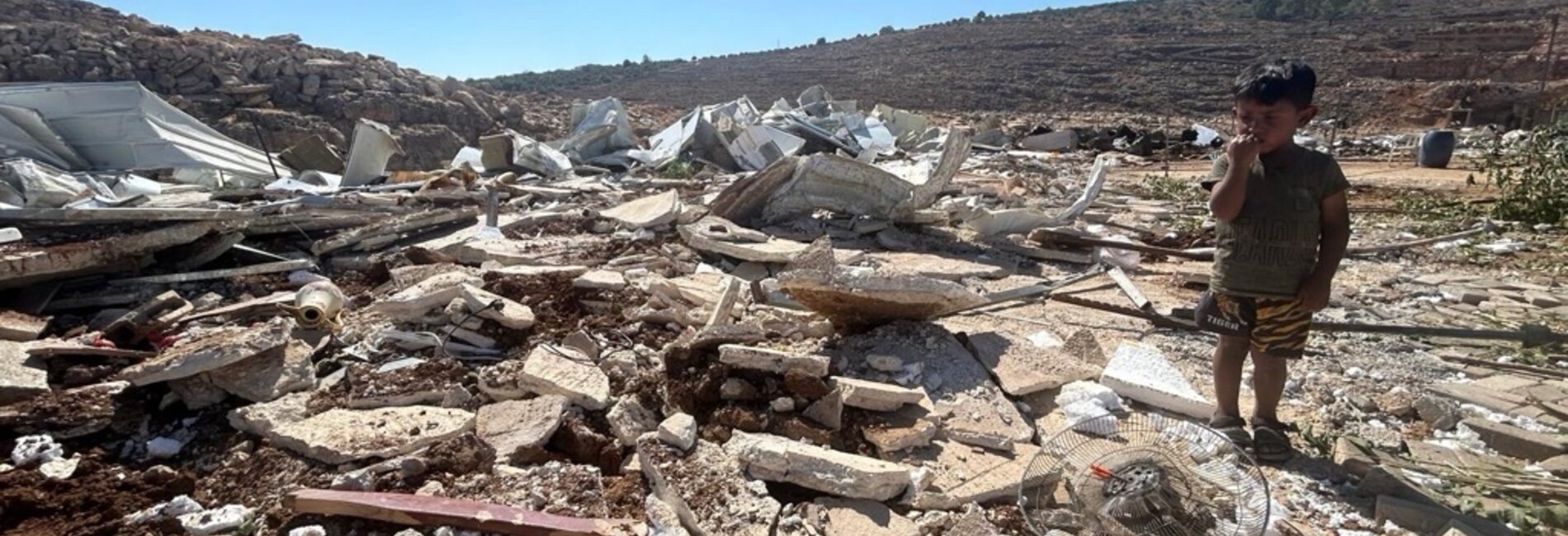
- About 90 Palestinians were displaced by demolitions and settler attacks during the reporting period, most following a large-scale demolition carried out by Israeli authorities in a Bedouin community in Qalqiliya governorate.
- Demolitions and settler attacks continued to affect Palestinian homes, water systems, schools and livelihood assets, further undermining access to essential services and community resilience.
- In Gaza, deteriorating sexual and reproductive health conditions are placing pregnant women at growing risk: in the first half of 2026, nearly 4,000 miscarriage cases were recorded, severe maternal morbidity reached 82 cases per 1,000 deliveries, and more than 57 per cent of pregnant women were anemic.
- Nearly 630,000 tonnes of debris have been cleared from roads and essential service facilities to date across the Gaza Strip, but this remains only a fraction of the more than 60 million tonnes generated since October 2023, much of which remains inaccessible.
Overview
Across the Occupied Palestinian Territory (OPT), humanitarian needs continue to deepen as insecurity, access restrictions, repeated displacement and the erosion of essential services affect Palestinians in both the Gaza Strip and the West Bank. In the West Bank, including East Jerusalem, Israeli forces' operations, demolitions, settler violence and settlement expansion continued to drive displacement, casualties and property damage, with Bedouin and herding communities in Area C among the most affected. During the reporting period, demolitions and settler attacks displaced about 90 Palestinians and damaged homes, water and sanitation infrastructure and livelihood assets. Meanwhile, the number of fatalities linked to settler attacks in 2026 has already surpassed the total recorded during all of 2025.
In the Gaza Strip, civilians continued to face severe protection risks amid ongoing military operations, repeated displacement and widespread insecurity, while access constraints, shortages of essential supplies and funding gaps continued to hamper the humanitarian response. Deteriorating sexual and reproductive health indicators point to growing risks for women and girls, including high levels of pregnancy loss, maternal complications and anaemia. At the same time, overcrowded displacement sites, limited shelter capacity, damaged water and sanitation infrastructure, and the massive accumulation of debris continue to undermine safe living conditions and access to basic services, despite ongoing efforts to clear roads, restore critical infrastructure and facilitate the delivery of humanitarian assistance.
West Bank
The reporting period for this section is 14 to 20 July unless otherwise specified.
Across the West Bank, including East Jerusalem, Israeli forces' operations, demolitions, settlement expansion, settler violence and movement restrictions continued to drive displacement, heighten protection risks, and undermine Palestinians' access to housing, livelihoods and essential services.
During the third week of July, Shelter Cluster partners reached approximately 1,180 people (228 households) through about 224 interventions, primarily minor-to-moderate shelter repairs, alongside essential non-food items, protection kits and, where feasible, cash assistance. Response prioritized communities affected by displacement, demolitions and settler violence, particularly in Nablus, Ramallah and Hebron governorates. Meanwhile, the prolonged displacement of more than 33,000 Palestine refugees from Tulkarm and Nur Shams refugee camps continued to generate significant shelter needs, but funding shortfalls continue to limit partners' capacity to scale up assistance.
Since the beginning of 2026, Child Protection partners have provided case management and referrals to specialized services for 758 children and caregivers affected by settler violence, Israeli forces' operations, movement restrictions, displacement and deteriorating socioeconomic conditions. Partners also provided cash-for-protection, in-kind assistance and clothing kits to 1,331 children and 211 caregivers.
Health Cluster partners continued to deliver life-saving services through a network of 870 health service points, including 230 mobile clinic locations. During the third week of July, mobile teams reached 232 of the 249 communities requiring these services (approximately 205,800 people), while about 10 Barrier-isolated communities in the Seam Zone remained inaccessible. Ongoing military operations, movement restrictions, settler violence, shortages of essential medicines and funding shortfalls continued to constrain humanitarian health operations.
Casualties
Between 14 and 20 July, Israeli forces shot and killed two Palestinian men and injured two others during a settler attack in Deir Jarir village, east of Ramallah, after dozens of settlers, some armed and accompanied by Israeli forces, raided the village while attempting to seize sheep. Separately, on 18 July, a 17-year-old Palestinian boy succumbed to wounds sustained six days earlier after Israeli settlers, accompanied by Israeli forces, attacked a Palestinian home in Al Mughayyir village, also in Ramallah governorate.
These incidents reflect a broader rise in fatalities linked to settler attacks. As of 20 July, 18 Palestinians had been killed in such incidents in 2026, including 12 by Israeli settlers, three by Israeli forces, and three where it remains disputed whether Israeli settlers or Israeli forces were responsible. This already exceeds the 17 fatalities recorded in all of 2025. More than half of those killed in settler attacks this year (10 of 18) were in Ramallah governorate.
Overall, during the reporting period, about 36 Palestinians, including two children and eight women, were injured by Israeli forces or settlers. More than 90 per cent were injured in the context of settler attacks, while the remainder were injured mainly during Israeli forces' raids and other operations. Nearly 30 Palestinians were injured by Israeli settlers, including nine during a single attack targeting Palestinian herders, among them five women, in Isfey al Fauqa community in Firing Zone 918, Masafer Yatta, south of Hebron governorate, where armed settlers assaulted residents while attempting to seize livestock.
Since the beginning of 2026, about 880 Palestinians have been injured in the context of settler attacks, including 720 by Israeli settlers and the remainder by Israeli forces, accounting for 56 per cent of all Palestinian injuries in the West Bank. The number of injuries by Israeli settlers linked to settler attacks has risen sharply, increasing from an average of one injury every three days in 2020 to two injuries per day in 2025 and more than three per day so far in 2026.
Settler Attacks and Property Damage
During the reporting period, at least 50 settler attacks that resulted in casualties, property damage, or both were documented, of which nearly 60 per cent were in Ramallah and Nablus governorates. Since the beginning of 2026, more than 1,330 such incidents have been recorded across 250 Palestinian communities, averaging more than six incidents per day.
During the reporting period, five settler attacks targeting Palestinian homes and community infrastructure were documented in Burqa (Ramallah), Khalet al Luza (Bethlehem) and At Tuwani in Masafer Yatta (Hebron). The predominantly night-time attacks involved arson, vandalism, stone throwing and attempted break-ins, damaging at least five homes, a mosque, a community dairy factory and other civilian property, including water infrastructure, a livelihood vehicle and a residential solar water heating system. At least 570 Palestinians were directly affected, including about 560 residents of At Tuwani, among them 58 farmers who rely on the village dairy factory for their livelihoods. Beyond the physical damage, the attacks disrupted livelihoods and community services and heightened protection concerns, particularly following repeated night-time raids on residential areas.
Similar protection concerns were reported in Jalud village, south of Nablus governorate, where Israeli settlers have continued to occupy an under-construction Palestinian house since 29 June. As of the end of the reporting period, the takeover had effectively isolated three neighbouring households comprising nine people from the village centre and essential services. Since early July, settlers have repeatedly vandalized nearby homes and infrastructure, including water pipelines, water tanks and electricity cables, while preventing residents from carrying out repairs. As of the end of the reporting period, the affected households had been without electricity for more than four days after coordination through the Palestinian District Coordination Liaison (DCL) to facilitate repairs was unsuccessful. The families remain increasingly isolated, with limited access to water, electricity, and essential services.
Access to Water
According to the Water, Sanitation and Hygiene (WASH) Cluster, access to water and sanitation services across the West Bank remains constrained by damage to infrastructure resulting from demolitions and settler attacks. Settler attacks affecting WASH structures have been concentrated in Ramallah and Tubas governorates, while demolitions have primarily affected Jerusalem, Hebron and Bethlehem governorates. Nablus and Jericho governorates have been significantly affected by both types of incidents. The loss of water infrastructure increases reliance on emergency water trucking and undermines access to sufficient water for domestic use and livestock, particularly in Bedouin and herding communities where alternative sources are limited.
The demolition of WASH infrastructure has increased significantly in recent years. In 2025 and during the first seven months of 2026, Israeli authorities demolished an average of about 14 WASH structures per month in Area C – more than three times the monthly average recorded between 2009 and 2024 (see graph).

At the same time, settler attacks continue to affect water infrastructure. Since the beginning of 2026, water tanks have accounted for more than half of the approximately 160 WASH structures damaged, destroyed or seized in settler attacks across the West Bank, followed by water networks, household connections and other water infrastructure. Recent attacks have increasingly targeted shared water infrastructure serving entire communities. In June alone, water networks were vandalized in at least six communities, disrupting water supply to all or large parts of those communities.
This pattern was reflected in several incidents during the reporting period. On 19 July, Israeli settlers from surrounding settlement outposts attacked Nkheila, one of 18 Bedouin communities located within the area designated for the planned expansion of the E1 settlement plan, in Jerusalem governorate. Settlers damaged water pipelines serving approximately 200 residents, restricted access to grazing areas, and took over the nearby Ein Rawabi spring, a key water source for the community's livestock. According to residents, repeated attacks and harassment have prevented repairs to the damaged pipelines, leaving the community dependent on inadequate alternative water sources for domestic and livestock use.
Similarly, on 21 July, Israeli settlers from a newly established settlement outpost took over a Palestinian-owned water cistern in Khallet al Hums, in Masafer Yatta, Hebron governorate, by installing an electric pump. According to local sources, the takeover has prevented at least 90 people from accessing three water cisterns used for domestic purposes and livestock, exacerbating water shortages in the community.
To mitigate these challenges, WASH partners continue to implement emergency and resilience-focused interventions across the West Bank, including water trucking, the distribution of hygiene kits, mobile latrines and water storage solutions. Since the beginning of 2026, partners have provided water trucking support to approximately 60 communities and locations hosting displaced families. Most assistance has focused on Bedouin and herding communities in Masafer Yatta and the northern Jordan Valley, where recurrent settler violence, demolitions and restrictions on access to water sources have heightened humanitarian needs. Partners have also provided support to highly vulnerable communities in Ramallah and Jerusalem governorates affected by demolitions, settler violence and acute water shortages, as well as to locations hosting displaced families in Hebron, Nablus, Salfit, Jericho, Jenin and Tulkarm governorates.
Access to Education
On 21 July, the Khallet al Miyah Municipality, in coordination with a legal aid organization, secured a temporary injunction suspending the execution of a demolition order against Ar Rifa'iyya Mixed Basic School, east of Yatta in Hebron governorate. The school, which serves 175 students from kindergarten to Grade 7 and employs 14 staff, had faced imminent demolition after an Israeli court rejected the community's appeal on 8 July (see previous Sitrep).
While the injunction temporarily delays the demolition, it comes amid growing concerns over the impact of settler violence, displacement and demolition threats on access to education. According to the Education Cluster, 20 of the 84 Palestinian schools currently subject to demolition or related orders are assessed to be at high risk of abandonment due to settler violence, demolitions and related displacement risks, placing about 1,600 students at heightened risk of educational disruption. Since 2023, the displacement of Bedouin and herding communities has led to the abandonment of 10 schools that previously served more than 460 students. Seven of these schools have since been vandalized and three demolished, including two by Israeli settlers. Although Education Cluster partners have facilitated school transfers and temporary learning arrangements, many children continue to face longer journeys to school, overcrowded classrooms, transportation challenges and an increased risk of dropping out.
Throughout 2026, Education Cluster partners reached more than 60,000 students through remedial and catch-up learning programmes, rehabilitated 30 schools, provided transportation assistance and other protective measures to more than 2,600 students and education personnel in high-risk areas, and delivered education-specific cash assistance, psychosocial support and legal aid. However, chronic underfunding continues to constrain the response. As of mid-2026, less than 10 per cent of the Education Cluster's Flash Appeal requirements had been funded, limiting the cluster's capacity to sustain emergency interventions and support longer-term learning recovery and resilience.
Displacement
During the reporting period, Israeli authorities demolished 61 Palestinian-owned structures for lacking Israeli-issued building permits, which are nearly impossible for Palestinians to obtain. These included 56 structures in Area C, displacing 15 households comprising 79 people, three structures in Area B, and two structures, including one home, in East Jerusalem, displacing five people. Overall, the demolished structures comprised 18 homes, four uninhabited residential structures, 32 WASH and agricultural structures, and seven livelihood-related structures.
Most of the displacement in Area C occurred in the Arab al Jahalin/Wadi Mu'nes Bedouin community, near Immatin village in Qalqiliya governorate, where Israeli authorities demolished 37 structures, including 19 donor-funded structures. As a result, 13 Bedouin households comprising 64 people, including 34 children, were displaced. The demolitions included 15 residential shelters, 13 latrines, nine livestock shelters and multiple water tanks, severely affecting shelter conditions, access to WASH services and livestock-based livelihoods. Many of the demolished structures had been provided as humanitarian assistance in 2021 and 2022. Humanitarian partners subsequently delivered emergency assistance, including food parcels, bedding, kitchen and hygiene kits, a one-off multipurpose cash payment, mental health and psycho-social support (MHPSS) services, WASH support, emergency tents and assistance to restore livestock shelters.
Separately, one Palestinian family was displaced after about 40 masked Israeli settlers, believed to be from Gilad settlement, raided the western side of Tell village, south of Nablus governorate, on 18 July and set fire to a Palestinian home. The family fled minutes before the house was completely destroyed, resulting in the displacement of five people. During the same incident, settlers also set fire to nearby Palestinian agricultural land before withdrawing.
The incident in Tell village reflects a broader pattern of recurrent settler attacks and related access restrictions that has intensified across the West Bank since January 2023, particularly in Bedouin and herding communities in Area C. Between January 2023 and 6 July 2026, 123 Palestinian communities experienced full or partial displacement, including 47 that were fully displaced. More than 6,200 Palestinians, including over 3,000 children, were displaced during this period, including more than 2,300 people in 2026 alone. Repeated displacement, attacks on homes and infrastructure, and restrictions on access to land and essential services continue to increase humanitarian needs and undermine community resilience.
For key figures and additional breakdowns of casualties, displacement, and settler violence between January 2005 and May 2026, please refer to the OCHA West Bank May 2026 Snapshot. For key figures on the impact of settler attacks, please refer to the West Bank – The Impact of Settler Attacks, January 2023 – April 2026
Gaza Strip
This section covers 13 to 19 July unless otherwise specified.
The humanitarian situation across the Gaza Strip remains critical, with ongoing military operations, insecurity and repeated displacement continuing to drive humanitarian needs, heighten protection risks and disrupt access to essential services. Civilians, including children and frontline service providers, continue to face serious safety risks, while sexual and reproductive health indicators are deteriorating amid the cumulative effects of displacement, food insecurity, and the degradation of health services.
At the same time, severe funding constraints, access restrictions, shortages of supplies and operational challenges are limiting partners' ability to sustain and expand assistance, including in displacement sites where living conditions remain dire. Although some progress has been made in debris clearance and the entry of supplies, needs continue to outpace available resources, leaving many vulnerable people unable to access the support and services they require.
According to the Ministry of Health (MoH) in Gaza, which operates under the de facto authorities, 59 Palestinians were reported killed, including those who died of wounds and had their bodies retrieved from under the rubble, and over 190 people were injured between 15 and 22 July. This brings the overall reported casualty toll since the announcement of a ceasefire agreement on 10 October 2025 to 1,180 fatalities and 3,810 injuries.
Against this backdrop, civilians, including children, and service providers continued to face significant security risks across Gaza, with incidents affecting both communities and service delivery points. On 14 July, a child was reportedly killed by stray gunfire in Al Mawasi area, in Rafah. The following day, on 15 July, a female teacher was injured after reportedly being shot by a bullet fired by Israeli forces while she was working inside a temporary learning space (TLS) west of Khan Younis, approximately 3.3 kilometres from the “Yellow Line”. Separately, on 13 July, a bullet landed in the yard of another TLS in Rafah, forcing the suspension of all activities and its interim closure. Several additional cases of children being killed or injured were also reported during the reporting period, underscoring the urgent need for enhanced protection measures and safe access to services.
Sexual and Reproductive Health Indicators Continue to Deteriorate Across Gaza
Sexual and reproductive health indicators continued to deteriorate across the Gaza Strip during the first half of 2026, reflecting the cumulative effects of crisis, displacement, food insecurity, and the degradation of essential health services. Between January and June 2026, over 3,950 miscarriage cases were recorded in the Bayan Dashboard, the MoH’s reproductive health information platform, which consolidates data from partners providing reproductive health services across the Strip. The miscarriage rate reached 208.5 per 1,000 live births, a 3.3-fold increase compared with the second half of 2025 and peaked at 377.3 per 1,000 live births in April 2026. Nearly 74 per cent of pregnancy losses occurred during the first trimester, while 57.1 per cent of pregnant women were anaemic, highlighting the worsening health and nutritional status of women across the Gaza Strip.
The number of deliveries declined by 3.2 per cent in the first six months of 2026 compared with the first half of 2025, with sharper monthly decreases observed since April. Alongside the increase in miscarriages, severe maternal morbidity reached 82 cases per 1,000 deliveries, while caesarean sections accounted for 49.2 per cent of all deliveries, largely driven by emergency procedures among women arriving in critical condition. Haemorrhages, hypertension, and infections accounted for 92 per cent of severe maternal complications, underscoring the increasing severity of maternal health risks.
To better understand the drivers of these adverse outcomes, the United Nations Population Fund (UNFPA), in collaboration with humanitarian partners, is commissioning a comprehensive study to identify risk factors, service gaps and barriers to care, and to inform an evidence-based response to strengthen maternal and newborn health services. Meanwhile, UNFPA continues to distribute reproductive health supplies, dispatching medicines, contraceptives, midwifery supplies and equipment sufficient to support approximately 1,950 women and girls between 13 and 19 July. These supplies were provided to the Al Helou, Al Awda and Nasser hospitals, as well as to medical points operated by Médecins Sans Frontières (MSF). Additionally, over 3,700 postpartum kits were distributed to 15 maternity hospitals, based on recent delivery figures from the Bayan Dashboard.
Debris Management Supports Access and Early Recovery Amid Major Constraints.
The United Nations Development Programme (UNDP)’s debris management efforts continue to play a critical role in restoring humanitarian access and improving access to essential services, markets and neighbourhoods across the Gaza Strip. Despite highly constrained operating conditions, significant progress has been achieved in clearing conflict-generated debris and supporting early recovery interventions.
To date, nearly 630,000 tonnes of debris have been cleared in a risk-managed manner from roads and essential service facilities. In parallel, 231,334 tonnes of concrete debris have been crushed across five dedicated debris-crushing sites, generating materials that are being reused to support local recovery efforts. This includes 184,191 tonnes of crushed concrete used to pave 264,873 square metres of roads and provide foundations for shelters and essential service facilities, helping to improve mobility and service delivery in affected areas.
However, debris management operations continue to face substantial challenges. Volatile security conditions, access constraints, restrictions on the entry of critical machinery and spare parts, and severe shortages of fuel and engine oil continue to limit the pace and scale of activities.
The scale of needs also remains overwhelming. The volume of debris cleared to date represents only a small fraction of the more than 60 million tonnes of debris generated, much of which remains inaccessible. This underscores the magnitude of the recovery effort required and the need for sustained access, equipment and resources to expand debris management operations across the Gaza Strip.
Dire Conditions in Displacement Sites Heighten Health and Protection Risks
Living conditions in displacement sites across the Gaza Strip remain extremely concerning, particularly in collective centres where access constraints and limited site management capacity continue to hinder the identification of urgent needs and timely response. During the reporting period, the Site Management Cluster analysed 181 non-UNRWA collective centres hosting approximately 28,000 households (138,258 people). Many of these sites lack active site management support for routine monitoring, community engagement, care and maintenance, and the referral of priority needs. Although 93 per cent of assessed sites reported having site management committees, only 42 per cent of these committees had received training on site management approaches, humanitarian principles, protection principles, and codes of conduct, leaving many sites reliant on overstretched community structures to address daily challenges.
Recent site monitoring findings highlight severe risks to health, safety, and dignity. Sixty-nine per cent of assessed sites reported visible sewage within the compound, largely due to damaged or blocked sewage systems, increasing the risk of contamination and disease transmission. Inadequate sanitation facilities have forced some families to improvise toilets inside their shelters or use buckets and plastic bags, while rodent infestations have been reported in several sites. In addition, 80 per cent of sites lack functional lighting, limiting safe movement at night and heightening protection risks, particularly for women, girls, older people, and people with specific needs. Existing Women and Girls’ Safe Spaces cover less than half of the 537 sites with active Site Management Cluster presence according to the latest joint service mapping by the Site Management and Protection cluster. This is equivalent to roughly 270 sites, or only about 17 per cent of the approximately 1,600 displacement sites mapped across the Gaza Strip, leaving many women and girls without access to essential support services. Some school buildings currently hosting displaced families also show structural damage from previous military operations, raising concerns about potential building collapse.
Site Management Cluster partners continue to support collective centres where possible, including through care and maintenance activities implemented via Cash for Work initiatives, which have reached 42 per cent of the assessed sites. However, needs continue to far exceed available capacity, underscoring the urgent need for additional support to improve living conditions and address critical infrastructure, protection, and public health risks in displacement sites across the Gaza Strip.
Incoming Supplies
Ashdod remained the primary upstream route for humanitarian cargo entering Gaza during the reporting period, with 334 UN and humanitarian partner trucks offloaded, marking a continued improvement following the scanner breakdown between 16 June and 2 July, which had disrupted cargo flow and contributed to a backlog. This represents a 21 per cent increase compared with the previous week, when 276 trucks were offloaded, and an 81 per cent increase compared with two weeks earlier, when 185 trucks were offloaded.
Despite this improvement, access and logistical constraints continued to affect the predictability and volume of incoming supplies. On 19 July, a scanner malfunction at the Sheikh Hussein Bridge-Jordan River Crossing prevented 14 trucks carrying water, sanitation and shelter items for two partners from crossing. Although the scanner was subsequently repaired and operations resumed, the delay meant that no cargo carrying items designated as “dual-use” from Jordan was offloaded during the reporting period. Such items, once cleared by the Israeli authorities, are currently authorized to offload at Kerem Shalom only once per week; as a result, the delayed cargo missed the available offloading window. Humanitarian partners continue to advocate for the authorization to have two weekly offloading days for “dual-use” items, particularly to reduce the backlog from Jordan.
The closure of the Zikim Crossing on 24 May has further reduced aid throughput and removed direct cargo access to northern Gaza, with approved cargo now channelled through the only available crossing, Kerem Shalom, in the south. Following the October 2025 ceasefire announcement, when Zikim and Kerem Shalom were both operational and Kissufim was used intermittently, UN and partners’ aid throughput averaged 749 trucks per week. After Zikim was temporarily closed following the 28 February regional escalation and later reopened for six weeks from 12 April to 22 May, weekly throughput averaged 639 trucks. Since the final closure of Zikim on 24 May, average weekly throughput has fallen to 517 trucks, representing a 31 per cent decrease compared with the period when Zikim and Kerem Shalom were both operational, and a 19 per cent decrease compared with the six-week period when Zikim temporarily reopened.
On the commercial front, data from the Gaza Chamber of Commerce, shared with the Cash Working Group (CWG), indicate that the private sector collected 828 truckloads into Gaza between 13 and 19 July. Of these, 419 truckloads (50 per cent) contained food items, 21 (2.5 per cent) cooking gas, 46 (5.5 per cent) hygiene products, and 88 (11 per cent) shelter materials. Smaller quantities included baby care items, insecticide, stationary supplies and solid fuel. In addition, 238 truckloads (28 per cent) contained non-essential goods, in line with the pattern observed in previous weeks.
According to the Gaza Chamber of Commerce, prices remained relatively stable, with only minor differences (+/- 5 per cent) for fresh products, compared to the preceding week. However, prices of baby diapers and infant formula increased by 12 and 8 per cent, respectively, likely due to reduced supply and continued demand. Overall inflation moderated slightly in July, averaging 187 per cent compared with 194 per cent in June. The combination of inflation and limited income-generating opportunities continue to undermine purchasing power and increase reliance on humanitarian assistance.
The UN is only able to confirm the entry of supplies tracked by UN 2720. For breakdowns of those, see the online UN 2720 Mechanism Dashboard.
For a detailed account of the latest humanitarian operations in Gaza, see Annex 1 below.
Funding

Sources: Financial Tracking System and oPt HFas of 15 July 2026.
Annexes
Annex 1: Humanitarian Operations in the Gaza Strip by Cluster
Read more
This section covers 13 to 19 July unless otherwise specified.
Intersectoral support
- Partners from across the humanitarian community responded to 22 incidents affecting 279 households across Gaza through the Rapid Joint Distribution Mechanism. The reported incidents included 11 shelling incidents, nine domestic fires, and two displacement incidents.
- Assistance was tailored to assessed needs and the severity of impact. Households experiencing total losses received a multi-sectoral response package, including tents, blankets, mattresses, hygiene kits, dignity kits, jerrycans, clothing kits, and tarpaulins, while other affected households received targeted shelter and non-food item (NFI) assistance based on assessment findings and identified needs.
Food Security
- Between 1 and 19 July, partners provided general food assistance to more than 443,000 people via 36 distribution sites as part of the monthly distribution cycle. Each family received two parcels, one 25-kilogram flour bag, covering 75 per cent of the minimum caloric needs.
- As of 16 July, partners were preparing 705,000 meals each day through 100 kitchens and delivering them across almost 1,100 locations. Overall, meal production levels have remained largely stable since late May, despite minor week-to-week fluctuations.
- Humanitarian partners currently support the production of approximately 300 metric tonnes (MT) of bread per day, covering about 36 per cent of the estimated bread needs across the Gaza Strip. Of this total, about 110,000 two-kilogram bread bundles are produced daily by 28 subsidized bakeries. Around 80 per cent of the bread is sold through more than 150 contracted retailers at a subsidized price of 3 NIS (US$0.93) per bundle, while the remaining 20 per cent is distributed free of charge to approximately 320 shelters and community sites.
- Under the “fuel-only” production model, 10 private bakeries—including four that joined the programme on 14 July—receive free fuel from humanitarian partners to produce bread for the community while independently managing their operations, including bread pricing. These bakeries produce an average of 35 MT of bread per day.
- The last shipment of animal fodder entered Gaza on 4 June. Between 13 and 19 July, approximately 447 MT of remaining fodder was distributed to around 2,200 livestock holders, each receiving two 50‑kilogram bags of barley and two 50‑kilogram bags of concentrate feed. Continued delays in fodder entry are likely to constrain distributions in August, risking recent improvements in livestock survival rates and herd recovery.
A few examples of what is still needed: Recent improvements in food security and nutrition remain heavily dependent on sustained humanitarian assistance and could be reversed if funding constraints lead to a significant reduction in support later in 2026. To safeguard progress and enable a gradual recovery of local food production, key priorities include ensuring safe access to agricultural and fishing livelihoods, including through mine action and debris removal; maintaining continuous and predictable flows of multiple agricultural inputs through both humanitarian and commercial channels; and protecting and rehabilitating critical water and energy infrastructure. Strengthened engagement of the private sector, alongside support for farmers and herders with inputs, market access, irrigation, and energy solutions, remain essential to restoring agricultural production at a scale and improving the resilience of local food systems.
Health
- Between 6 and 19 July, the Emergency Medical Team (EMT) Coordination Cell coordinated five humanitarian personnel rotations, facilitating the entry of 28 EMT personnel into Gaza and the departure of 24 personnel. As of 20 July, 16 EMT partner organizations were supporting 31 activities across Gaza, with 73 international personnel deployed. Approximately 70 per cent of EMT activities were delivered through specialized care teams embedded within Ministry of Health facilities. One of the two national EMT deployments remains active, while the other concluded due to insufficient funding. Ebola-related transit restrictions and regional travel disruptions continue to delay some EMT deployments.
- During the reporting period, 108 patients, including 12 children, were medically evacuated from Gaza through the Rafah Crossing, alongside 170 caregivers.
- Health partners continued providing essential services for people living with non-communicable diseases despite persistent shortages of medicines, supplies, and equipment. During the reporting period, the United Arab Emirates (UAE) assisted the MoH through the provision of 60,000 insulin syringes and critically needed hemodialysis supplies, including sodium bicarbonate for Fresenius dialysis machines, fistula needles, and a two-month stock of cyclosporine for transplant patients. WHO also continues to procure and facilitate the delivery of additional hemodialysis commodities and, during the reporting week, facilitated the entry of a second shipment of insulin syringes, baby aspirin and other essential supplies. Nevertheless, critical shortages remain, including insulin analogues for patients with Type 1 diabetes, cardiovascular medicines, glucometers, blood glucose test strips, blood pressure monitors and monofilaments used for diabetic foot screening.
Water, Sanitation and Hygiene (WASH)
- The Sheikh Radwan and Saftawi stormwater lagoons in northern Gaza have progressively resumed operations around the third week of July following the arrival of engine oil and the completion of repair works. Due to damage to the wastewater network, the lagoons continue to receive sewage and, when non-operational, pose a significant flood risk to surrounding neighbourhoods. The resumption of pumping of accumulated water to the sea will enable WASH partners to undertake winter preparedness activities at both sites. In parallel, work is ongoing to repair sewage pumping stations and divert wastewater from the lagoons to Wadi Gaza, with the ultimate goal of ensuring tertiary treatment before discharge into the sea.
- Partners have removed approximately 75 per cent of the waste accumulated at the Firas Market temporary dump site in Gaza city and transferred it to a new emergency site at Abu Jarad in the Netzarim Corridor area. Preparations for Phase 2 of the Abu Jarad site are pending the arrival of geomembrane materials to ensure appropriate environmental protection measures are in place before Phase 1 reaches capacity.
- Partners are also nearing the completion of five secondary domestic water wells in Al Mawasi area, which are expected to serve 17 displacement sites. Once the network rehabilitation works are finalized, the project is expected to reduce reliance on water trucking in the area.
- More than 60 partners are currently delivering drinking water by trucks to 2,707 collection points, delivering a total of 20,368 cubic metres (m³) per day to 1.6 million people providing at least 6 litres per person per day. This represents an increase of approximately 3,000 m³ per day compared with June.
- WASH partners distributed 1,239 hygiene kits, 8,000 lice treatment kits, 19,300 cleaning material kits, 763 household solid waste containers, and 10 latrines, benefiting at least 8,000 people.
Shelter
- Between 11 and 18 July, partners provided approximately 1,380 households with shelter materials and other essential items. Distributed items included 933 bedding items, 384 tents, 32 tarpaulins, 100 kitchen sets, and 150 clothing vouchers. Households reached represented less than 7 per cent of the response capacity that cluster partners could achieve if sufficient shelter materials were available.
- As the number of people requiring shelter assistance continues to rise, shelter partners face significant challenges in meeting growing humanitarian needs. Shelter and non-food item (NFI) stocks have been critically depleted, with fewer than 1,000 tents remaining and other essential household items sufficient to support only 7,000 households.
For more information, see the Shelter Cluster website.
Protection
- Protection partners reached over 17,900 people and 550 families through a combination of direct protection services, protection-sensitive assistance, and intersectoral support across the Gaza Strip. This includes:
- Mental health and psychosocial support (MHPSS), psychological first aid, counselling, and structured psychosocial support services for 11,044 people;
- Protection awareness, risk-reduction, explosive ordnance risk education (EORE), digital safety, and youth engagement activities for 5,170 people;
- Case management, follow-up, and referral services for 652 people;
- Legal counselling, mediation, and social support services for 464 people;
- Integrated psychological, health, and legal consultations for 114 people;
- Rehabilitation, speech, and communication services for 229 people;
- Frontline worker well-being activities, professional supervision, and capacity-building support for 131 personnel;
- Protection-linked economic empowerment initiatives reaching 60 women and Cash for Protection assistance supporting 40 people.
- Protection-sensitive material assistance and intersectoral support reached 17,302 people and 517 families, including the distribution of food and hygiene items, clothing, drinking water, kitchen and water-supply items, tarpaulins, dignity and household items, cleaning materials, tents, and lighting kits. In addition, 25 Psychological First Aid kits were distributed to community committees, and three integrated health and protection clinics were established around displacement camps.
- Partners continued coordinating the Protection Desk, supporting 279 returnees through Psychological First Aid, emergency assistance, and referral services. This brings the cumulative number of returnees assisted since the reopening of the Rafah Crossing to 4,386 people, of whom 1,533 are currently receiving ongoing protection support, including initial needs assessments and specialized psychosocial services.
- Five focus group discussions (FGDs) and 95 key informant interviews (KIIs) were conducted with 798 community members across nine neighbourhoods to assess protection risks associated with ongoing military activities, inadequate shelter conditions, unsafe access to water, food insecurity, and limited access to essential services.
For more information, see the online Protection Cluster dashboard.
Child Protection
- Partners undertook the following activities:
- Child protection case management services for 420 newly identified children at risk, ensuring access to follow-up support, protection interventions, and referrals to specialized services as needed;
- Individual mental health and psychosocial support (MHPSS) counselling for 4,008 children, helping them cope with distress and strengthen their emotional well-being amid ongoing conflict and displacement;
- Unaccompanied and Separated Children (UASC) awareness sessions reaching 936 caregivers, enhancing their knowledge of identification, referral pathways, and available support services for vulnerable children.
- In response to the worsening security environment, some child protection activities in Rafah were suspended following changes to the “Yellow Line” and escalating hostilities, further constraining access to essential protection services for vulnerable children and their families.
Addressing Gender-Based Violence
Partners undertook the following activities:
- Expanded the number of Women and Girls' Safe Spaces (WGSSs) from 79 to 84, while maintaining the operation of two shelters that collectively reached more than 200 women and girls per day with mental health and psychosocial support (MHPSS), skills development activities, GBV case management, cash and voucher assistance, and referral services.
- Completed the WGSS assessment, which confirmed that WGSSs remain highly relevant and irreplaceable platforms for enhancing the safety and well-being of women and girls across the Gaza Strip.
- Developed contextualized operational guidelines for WGSSs, based on GBV survivor-centred principles, to support partners in establishing and managing effective, impactful, and context-specific safe spaces. The guidelines are expected to be published shortly.
- Despite ongoing operational challenges, including fuel shortages, frequent power outages, limited internet connectivity, and increasing demand for services that exceeded partner capacity, GBV partners continued delivering critical support to women and girls across Gaza. Persistent gaps remained in key areas such as safety and privacy standards, disability inclusion, referral pathways, data protection, and accountability mechanisms. Service delivery was further affected by access and funding constraints, with the operation of two WGSSs disrupted due to the expansion of the “Yellow Line” and an additional 17 WGSSs remaining closed, including as a result of funding shortfalls.
Mine Action
- Partners conducted 21 explosive hazard assessments in support of debris removal and other partner activities. Twelve quality management activities, one emergency response team in support of UNDSS, and two interagency missions to accompany humanitarian assessments across the Gaza Strip. Assessments of schools, mosques and other locations also helped to inform damage assessments and reconstruction planning.
- Between 12 and 16 July, partners delivered explosive ordnance risk education sessions to over 3,300 people and conducted other conflict preparedness and protection activities through in-person sessions, training of trainers, mass media campaigns, and emergency awareness initiatives to reduce risks posed by explosive ordnance. Coordination and data collection efforts helped ensure that interventions reached the most vulnerable populations.
- Partners continued to refer victims of explosive ordnance incidents to appropriate health, psychosocial, and rehabilitation services across Gaza.
Education
- Partners distributed essential education materials to 15,069 school-aged children across 13 temporary learning spaces (TLSs) in North Gaza governorate.
- Partners also continued scaling up summer programme activities and engaging children in structured learning, recreational, and psychosocial support activities to help maintain routines and prepare them for the new school year.
Emergency Telecommunications Cluster (ETC)
- On 6 July, ETC and UNDSS delivered Basic Security Communications System (SCS) training at the Khan Younis Training Centre (KYTC) for 13 personnel from UN agencies and international NGOs. The training covered radio operations, communication procedures, and security communications protocols, strengthening participants' proficiency and promoting the effective use of inter-agency security communications systems that support humanitarian operations in Gaza.
- On 8 July, ETC engaged with the Coordination of Government Activities in the Territories (COGAT) headquarters to discuss restrictions affecting the approval, entry, and use of security communications equipment, including radios and satellite phones. The engagement aimed to identify solutions to equipment access constraints and facilitate the timely deployment of critical communications assets required to sustain security communications services and support the safety of humanitarian personnel operating in Gaza.
- Between 4 and 8 July, ETC supported UNDSS in standardizing United Nations Very High Frequency (VHF) radio communications across Gaza through the reconfiguration and channel alignment of security communications equipment. Approximately 65 per cent of the UN VHF radio fleet has now been reconfigured, with activities underway across nine of the 14 UN agencies. During the reporting period, 52 radios were programmed or reprogrammed, enhancing interoperability and strengthening coordinated security-communications across the humanitarian community.
** Double asterisks indicate that a figure, sentence, or section has been rectified, added, or retracted after the initial publication of this update.
SUBSCRIBE TO RECEIVE OCHA'S INFORMATION PRODUCTS
 SUBSCRIBE
OCHA Sites










Follow Us
Support
Your donations go to relief organizations delivering quick and effective support to Palestinians in need.