
Humanitarian Situation Report | 19 June 2026
Highlights
- UN Relief Chief tells Security Council that Gaza civilians cannot wait for diplomacy, while in the West Bank, a decades-long deterioration is accelerating rapidly.
- Further encroachment of the “Yellow Line” triggers new displacement as Israeli troops advance towards populated areas of Gaza city, marking the revised route with cement blocks.
- A reduction in fuel inflows forces humanitarian partners to prioritize the most life-saving services, further limiting overall efforts.
- Over 520 endoscopic and surgical procedures are at risk of being suspended unless new supplies of high-level disinfectant agents urgently enter Gaza.
- In the West Bank, two Palestinian herding families were displaced for a second time since the beginning of 2026 following escalating settler attacks near Birzeit, highlighting a broader trend that has displaced over 2,200 Palestinians, including more than 1,000 children, this year.
- By the end of May, humanitarian partners had reported 230 access incidents across the West Bank, where checkpoints, road closures and other movement restrictions continue to impede aid delivery and humanitarian operations.
- Humanitarian partners continue to report growing protection and psychosocial support needs across the West Bank, while health partners report ongoing access constraints and attacks affecting health-care delivery.
Overview
Across the Occupied Palestinian Territory (OPT), civilians continue to face insecurity, displacement and constrained access to essential services, while humanitarian partners operate under growing access restrictions and operational uncertainty. Essential systems remain under pressure, protection risks are high, and damage to infrastructure as well as poor living conditions are compounding vulnerabilities.
Briefing the Security-Council on 18 June, Under-Secretary-General for Humanitarian Affairs and Emergency Relief Coordinator Tom Fletcher, paid tribute to humanitarian workers who have made progress since the announcement of a ceasefire on 10 October 2025. At the same time, he warned that “Gaza is being held together by humanitarian workarounds and Palestinian perseverance,” which is unsustainable. “Palestinians in Gaza remain deprived of the basics that you would all demand for your own families: safety, shelter, clean water, health care, education,” he said.
UN Relief Chief noted that “Too many Palestinians are being squeezed into an ever-shrinking strip of land. Their lives are shaped by the indignity of constantly shifting ‘yellow’ and ‘orange’ lines that define where they can seek refuge.”
Speaking of the West Bank, including East Jerusalem, Mr Fletcher warned that “a decades-long deterioration is accelerating rapidly, characterized by calls from Israeli officials for Palestinian ‘voluntary migration’ and an intensification of discriminatory policies and practices.” In this context, he mentioned the high level of settler attacks and their impact so far in 2026.
He called for humanitarian “funding that is timely, flexible and commensurate with the scale of this crisis” and for the cessation of measures that "appear aimed at altering the demographic composition of the Occupied Palestinian Territory in violation of international law,” listing forced displacement, destruction of homes and other property, land confiscation, and movement restrictions.
Gaza Strip
Families across all parts of Gaza continue facing insecurity, prolonged and new displacement, and lack of access to essential services or minimum standards of living. Civilians and civilian infrastructure, including aid workers and their premises and assets, are exposed to Israeli airstrikes, shelling and gunfire, resulting in reported casualties and damage.
According to the Ministry of Health (MoH) in Gaza, which operates under the de facto authorities, 18 Palestinians were killed, one body was retrieved, six died of wounds, and 53 people were injured between 10 and 17 June. This brings the overall reported casualty toll since the announcement of a ceasefire agreement on 10 October 2025 to 1,005 fatalities and 3,157 injuries, according to MoH.
On 11 June, a structure in Deir al Balah belonging to a humanitarian organization sustained minor damage from an Israeli strike that hit nearby. The following day, an airstrike struck the yard of a UN school in Jabalia Camp, used to shelter displaced families, causing minor damage.
The same day in eastern Gaza city, dozens of families were displaced after Israeli troops placed yellow cement blocks that signalled further expansion of the so-called “Yellow Line” to the west. Since the line was introduced in October 2025, it has been used to mark the area within the Strip where access is restricted by Israeli forces; and that area has been expanded multiple times through the placement of yellow blocks. The United Nations Human Rights Office (OHCHR) has warned that Israeli forces have killed Palestinians apparently for being too close to that line.
Following the 12 June displacement, people who remained near the area reported that insecurity is increasing the pressure on them to leave. Humanitarian partners report that many of the newly displaced families left without their tents or belongings. Some are now staying with relatives and friends. To help them, humanitarian teams have activated a rapid response that secures quick support for families affected by sudden developments.
OHCHR reports that on 9 June, members of armed elements seemingly backed by Israeli forces detained several Palestinians at a checkpoint near Wadi Gaza on Salah ad Deen Street, including seven Palestine Red Crescent Society (PRCS) ambulance crew members. Five were later released, while two were taken to unknown locations. One of the two was reportedly released the following day, while the other was still unaccounted for as of 11 June.
Meanwhile, addressing pest and rodent infestations remains a top priority across the humanitarian response and in all parts of Gaza. Conditions on the ground are making the problem worse: temperatures are rising, displacement sites are overcrowded, and many people lack adequate sanitation and safe drinking water. Humanitarian partners are using up the pesticides and rodenticides they brought into Gaza in May. Since stocks are insufficient and running low quickly, they are already procuring new ones.
In addition, partners are finalizing an assessment of risks related to the presence of rodents. At the community level, between 8 and 14 June, they trained 95 focal points from displacement sites on how to better detect and report disease. However, in health facilities, better surveillance and reporting – through the World Health Organization’s (WHO) Early Warning, Alert and Response System (EWARS) – requires tablets and phones that the Israeli authorities have not yet allowed into Gaza; requests submitted in 2025 for some items are still reported to be pending approval, the Health Cluster says.
Despite all efforts, diseases related to water, sanitation and hygiene (WASH) caused by ectoparasites and rodents have been on the rise over the past four epidemiological weeks. In displacement sites where Site Management Cluster partners maintain presence, their ongoing fumigation activities have helped reduce risks in outdoor areas. However, partners continue to lack adequate chemicals for indoor residual spraying – that require approval by the Israeli authorities – hampering their ability to address infestation risks within shelters. Two thirds of displacement sites have no Site Management Cluster presence, leaving them even more exposed to pests and insects.
As temperatures soar, domestic fire incidents in displacement sites have also been increasing, with eight related alerts received by humanitarian partners between 8 and 14 June. These incidents are largely driven by families cooking inside tents, many of which are highly flammable and reinforced with old blankets, cardboard, plastic sheeting, old tents and other combustible materials. As a result, fires are extremely difficult to contain once they start.
Humanitarian partners continue using the Rapid Joint Distribution Mechanism to address the immediate life-saving needs of households who lost their shelters or belongings due to fire incidents, building collapse or forced displacement. Between 8 and 14 June, partners supported 428 such households with emergency shelter and essential household items.
Meanwhile, fuel shortages continue to significantly hinder the humanitarian response, affecting all critical activities. Between 9 and 14 June, partners from across the humanitarian community were forced to collectively prioritize fuel allocations to life-saving services and suspend them for non-critical ones. In the WASH realm, this allowed the maintenance of water production and treatment, water trucking and limited secondary waste collection, but operations remained far below required levels. Across all critical services reliant on generators in the absence of electricity, fuel shortages are further compounded by a lack of lubricant oils – for which approval is also difficult to secure from the Israeli authorities – meaning that even if fuel supplies are restored, generators will not be able to operate at previous capacity. For an overview of challenges related to bringing fuel into Gaza, see the Incoming Supplies section below.
Shortages in Health Items
Critical supply gaps are placing additional strain on health services.
Soon, over 520 endoscopic and surgical procedures might have to be suspended unless more high-level disinfection agents are urgently brought into the Strip.
The treatment of non-communicable diseases is undermined by shortages of insulin, insulin syringes, and hemodialysis supplies. Among others, this affects all of Gaza’s approximately 700 patients requiring dialysis three times per week. While dialysis services are currently provided at the Al-Shifa, Al-Aqsa and Nasser hospitals and at the Az Zawaida field unit, due to the absence of therapeutic erythropoietin – critical for red blood cell production in patients whose kidneys no longer produce enough of the hormone -- many dialysis patients now require blood transfusions, placing significant strain on already limited blood supplies and hospital capacity. This medicine has been out of stock since September 2025, the Health Cluster says.
Rehabilitation needs far exceed available capacity: although 56 health facilities are currently providing rehabilitation services across the Strip, supported by 44 community-based teams delivering outreach rehabilitation services, North Gaza is critically underserved, with only two facilities and three mobile teams active in the area, and requests to import rehabilitation equipment and artificial limbs continue being denied. On 6 June, two requests to take into Gaza a total of 160 items for people’s rehabilitation were rejected by the Israeli authorities, who said that “fitness equipment does not comply with the humanitarian policy.” Artificial limbs such as prosthetic hand, knee and ankle joints, prosthetic silicone locking liner and medical shoes, have also been denied by the Israeli authorities, despite recurrent submissions, the Health Cluster notes.
While WHO has recently brought 120 wheelchairs into Gaza, the number of dialysis, cancer and complex trauma cases urgently needing wheelchairs exceeds 3,000, according to MoH. Based on the Health Cluster’s latest estimates, more than 20,000 mobility aid products are still needed to address the massive demand. While partners have already procured these supplies, obtaining approval for their entry by the Israeli authorities has been challenging. Due to the harsh living environment and extensive infrastructural destruction, the average lifespan of a wheelchair for an active user is estimated to be less than three months.
Incoming Supplies
Between 1 and 15 June, according to the UN 2720 mechanism data, UN and partners offloaded approximately 23,760 pallets of aid at the Kerem Shalom Crossing – which remains the only entry point for both humanitarian and commercial cargo following the closure of the Zikim Crossing on 24 May. This is down from 27,500 pallets in the first half of May. During the same period, partners collected into the Strip nearly 19,800 pallets of assistance, a 32 per cent decrease compared with the 29,000 pallets brought in between 1 and 15 May.
Previously reported delays at the checkpoint established on 1 June on the road leading to the Kerem Shalom crossing have largely eased, with most UN and partner movements experiencing no waiting time at the point between 8 and 14 June.
Between 8 and 16 June, UNOPS – which is the main actor bringing fuel into Gaza to support the humanitarian response – took in nearly 900,000 litres of diesel and 38,000 litres of benzine and distributed over one million litres of diesel and 19,000 of benzine to humanitarian partners through a prioritization approach led by the Deputy Humanitarian Coordinator. UNOPS currently relies on a single supplier through the Egypt corridor, which has imposed fuel cost increases and has at times been unable to meet the quantities UNOPS requested. In addition, the absence of a VAT exemption on fuel bought in Israel means this route is not currently a viable option, leaving UNOPS able to buy fuel in Israel only when there are shortages from the Egyptian supplier or when that supplier is unable to provide sufficient volumes.
Israeli authorities allow fuel imports – whether originating in Egypt or in Israel – only through the Kerem Shalom crossing, and only during its limited operating hours, significantly restricting the volume that can be brought in. Even if additional fuel supply were secured, these operational constraints would continue to limit throughput until further opening times or routes are secured.
UNOPS procures, coordinate, and manages fuel supplies on behalf of all humanitarian clusters and partners, distributing it based on the prioritization of critical services and response activities collectively agreed by the humanitarian community.
The UN is only able to confirm the entry of supplies tracked by UN 2720. For breakdowns of those, see the online UN 2720 Mechanism Dashboard.
For a detailed account of the latest humanitarian operations in Gaza, see Annex 1 below.
West Bank
Israeli forces’ operations, movement restrictions, demolitions, and settler violence continue to drive humanitarian needs and displacement, while disrupting access to housing, livelihoods and essential services. Humanitarian partners continue to report growing protection and psychosocial support needs among children, caregivers, women and girls. During the second week of June, Child Protection partners reached more than 2,000 children and 740 caregivers and partners addressing gender-based violence (GBV) reached more than 2,400 women and girls through mental health and psychosocial support, case management and other interventions. A total of 37 Women and Girls Safe Spaces (WGSS) remained operational across the West Bank, with the highest levels of response reported in Jenin, Nablus, Hebron and Tulkarm governorates. Humanitarian partners also continue to report constraints affecting access to assistance and the delivery of essential services across multiple sectors.
Humanitarian Access
Humanitarian access constraints continue to impede aid delivery across the West Bank, including East Jerusalem. As of the end of May 2026, humanitarian partners had reported 230 access incidents through the Access Monitoring and Reporting Framework (AMRF), an average of 46 incidents per month. As in 2025, when there was an average of approximately 57 incidents per month, Israeli movement restrictions – including checkpoints, road closures and other physical and administrative obstacles – remain the most frequently reported access constraint. Partners also continue to report incidents related to unsafe operational environments, mainly involving Israeli forces’ operations or the presence of Israeli settlers that prevented humanitarian actors from safely reaching communities or carrying out planned activities, resulting in delays to humanitarian movements and services, mission cancellations, and the evacuation of teams from the field. Additional incidents involved violence against humanitarian personnel, assets and facilities, including detention, physical and verbal assaults, threats, intimidation, harassment, and damage to humanitarian sites, equipment or supplies. Restrictions on movement into the West Bank further impeded humanitarian operations through delays or denials of entry, prolonged security checks and interrogations affecting humanitarian personnel. Together, these incidents constrained the ability of humanitarian organizations to deliver assistance while increasing operational costs and reducing operational efficiency.
Humanitarian partners also report that insecurity, funding shortfalls (the 2026 OPT Flash Appeal is funded at only 24 per cent, according to data retrieved from the Financial Tracking Service on 18 June) and other operational impediments continue to limit the mobility of outreach teams and hinder aid delivery to vulnerable communities, particularly affecting access to specialized services for women, children and people with disabilities in Bedouin and herding communities and other vulnerable areas. Health partners similarly report delays affecting ambulance access and patient transport, particularly in Nablus, Hebron, Jericho, Qalqilya and Ramallah governorates, with ambulance teams in some cases forced to use alternative routes or transport patients on foot. The fiscal crisis facing the Palestinian Authority and subsequent strike action have further reduced operational capacity across the West Bank (see last week’s Humanitarian Situation Report).
These constraints are compounded by ongoing attacks on health care. Between 7 October 2023 and 31 May 2026, the World Health Organization (WHO) documented 987 attacks on health care in the West Bank, resulting in 39 deaths and 201 injuries and affecting 673 ambulances. Since the beginning of 2026, WHO has recorded 49 such attacks, including three in May, resulting in one death and 23 injuries and affecting 33 ambulances and four health facilities.
Over the past week, one incident involving violence against humanitarian personnel was reported through the AMRF by a local humanitarian organization. The organization reported that, on 9 June, three of its employees were carrying out a field assessment in Wadi ar Rakheem, near Susiya in Hebron governorate, when a group of settlers approached and threw stones at them. One aid worker was injured while the team fled the area, sustaining injuries to his leg and face.
Casualties, Settler Violence and Displacement
Between 9 and 15 June (the reporting period of the West Bank section in this report; hereinafter the reporting period), over 20 Palestinians were injured by Israeli forces or settlers. Half of the injuries occurred during settler attacks, while the other half of injuries were reported during Israeli forces’ search operations and other raids. During the same period, no Israelis were reported injured.
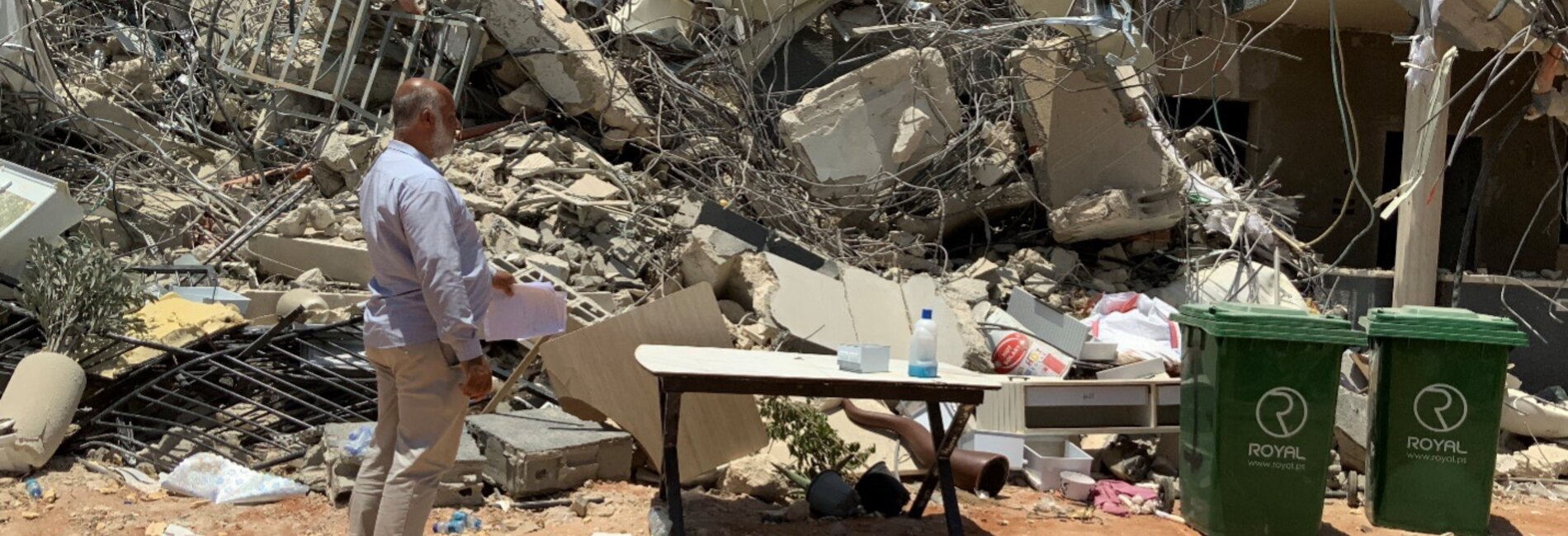
During the reporting period, Israeli authorities demolished 30 Palestinian-owned structures for lacking Israeli-issued building permits, which are nearly impossible for Palestinians to obtain, including 22 in Area C and eight (8) in East Jerusalem. The demolished structures included 11 homes (six inhabited), and 19 livelihood-related, water and sanitation, and other structures. The demolitions displaced 10 households comprising 30 people, including nine children, and otherwise affected 142 people, including 67 children. Of the total, three refugee families comprising 10 people, including three children and one man with a disability, were displaced after Israeli authorities demolished their home in South Bir Nabala Bedouin community, in Jerusalem governorate. One of the displaced households had previously been displaced from Frush Beit Dajan in Nablus governorate following settler attacks in October 2025. According to the family, the demolition was carried out while legal procedures were ongoing and without prior notice.
OCHA documented at least 30 settler attacks during the reporting period that resulted in casualties, property damage, or both. This brings the total number of such incidents since the beginning of 2026 to over 1,020 across over 230 communities, an average of six incidents per day.
In one incident, on 12 June, two Palestinian herding families, comprising 10 people including two women and eight children, were forced, for the second time since the beginning of 2026, to relocate from the eastern outskirts of Birzeit town in Ramallah governorate due to escalating settler attacks and intimidation following the establishment of a settlement outpost in the area between Birzeit and ‘Atara towns. According to the families, after being displaced from Area B on the eastern outskirts of Bir Zeit town in January following the establishment of a nearby settlement outpost, settler harassment and trespassing continued at the new location. The families reported repeated incursions into their residential area, damage to cultivated crops, and incidents in which settlers broke into their homes while only women and children were present, with direct threats and demands that the families leave the area. The families relocated women and children to Bethlehem governorate, while the two male heads of household remained behind to protect their property.
Since the establishment of a new Israeli settlement outpost on the outskirts of ‘Atara town in Ramallah governorate in August 2025, settler attacks have expanded across the surrounding mountainous areas and outskirts of Atara, Birzeit and Ein Siniya in Ramallah governorate, increasingly targeting Palestinian agricultural areas and herding communities. OCHA documented more than 70 settler attacks resulting in casualties or property damage in these areas between August 2025 and mid-June 2026, compared with four such incidents recorded between January 2020 and July 2025. Affected families have reported repeated raids, trespassing, intimidation and direct threats, creating conditions that have contributed to the repeated displacement of 12 herding families comprising 69 people, including 35 children. Many of the affected families have dismantled their residential and herding structures and relocated to more densely populated rural areas, where access to grazing land and traditional livelihoods is severely constrained.
The incidents in Birzeit town and surrounding villages reflect a broader pattern of displacement that has disproportionately affected Bedouin and herding communities across the West Bank. Since January 2023, 6,200 Palestinians, including more than 3,000 children, have been displaced due to settler attacks and related access restrictions across 119 communities. These include more than 3,600 people displaced from 46 communities that have become fully emptied of their residents. Of the total, more than 2,200 people, including more than 1,060 children, have been displaced in 2026 alone.
Protection concerns affecting children remain acute. In a recent statement, OHCHR noted that most Palestinian children killed in the West Bank since October 2023 were teenage boys, accounting for 213 of 241 child fatalities documented during the period. The statement highlighted the cumulative impact of violence, displacement, detention and movement restrictions on children, echoing concerns raised by humanitarian partners regarding increasing psychosocial support and protection needs among children and caregivers.
Humanitarian Impacts of Raids and Other Operations
During the reporting period, OCHA documented at least 38 raids as well as search and other operations by Israeli forces, entailing mass detentions, temporary home evacuations, and movement restrictions, including in Jenin, Tubas and Tulkarm governorates. Prolonged operations and movement restrictions continue to disrupt daily life and undermine access to housing, livelihoods, and essential services.
Evacuations and displacement linked to ongoing militarized operations continued in areas surrounding refugee camps in Jenin and Tulkarm in the northern West Bank. On two occasions, on 10 and 11 June, Israeli forces temporarily evacuated approximately 35 Palestinian households in the Jabal al Salehin neighbourhood near Nur Shams refugee camp in Tulkarm governorate, during an operation that also damaged the main water network serving the area. On 11 June, three Palestinian refugee families comprising 17 people, including six children, were displaced from the Jabriyat neighbourhood near Jenin refugee camp following an evacuation order issued by Israeli forces citing military necessities. The families were instructed to leave their homes until 23 August and are currently staying with relatives in Jenin and Nablus governorates.
Additionally, on 10 June, in the northern West Bank, Israeli forces launched a large-scale operation across villages south of Jenin, including Arraba, Fahma, Mirka and Bir al Basha, as well as areas in Tubas governorate. The operation involved extensive house-to-house searches affecting more than 170 Palestinian homes, prolonged military presence lasting between five and 15 hours, and the conversion of at least three residential and community buildings into military posts. No injuries or arrests were reported. According to local sources, the operation disrupted daily activities and movement in the affected communities.
For key figures and additional breakdowns of casualties, displacement, and settler violence between January 2005 and April 2026, please refer to the OCHA West Bank April 2026 Snapshot.
Funding

Sources: Financial Tracking System and oPt HF
Annexes
Annex 1: Humanitarian Operations in the Gaza Strip by Cluster
Read more
This section covers 8 to 14 June unless otherwise specified.
Food Security
- Between 1 and 13 June, partners provided general food assistance to more than 420,000 people as part of the monthly distribution cycle. Each family received two parcels, one 25-kilogram flour bag and 2.5 kilograms of high energy biscuits, covering 75 per cent of the minimum caloric needs. The sector is working with partners and stakeholders to strengthen communication with the communities on the increased use of different modalities to address food needs such as multi-purpose cash assistance, coordinated by the Cash Working Group.
- As of 3 June, partners were preparing almost 713,000 meals each day through 93 kitchens across more than 1,000 locations. Due to funding constraints, the production of at least 400,000 daily meals has been suspended since May. While these efforts remain critical, partners have been forced to scale down cooked meal production amid underfunding and rising operational costs. Limited funding visibility has further compounded access constraints, restricting partners’ ability to plan, pre-position contingency stocks, and respond to emerging needs. This is undermining preparedness efforts in an increasingly volatile environment. At the same time, responders are seeking to diversify assistance modalities, including expanding cash and livelihood support.
- Partners provided six private bakeries with free fuel to sustain operations. While the bakeries manage their businesses independently - including setting the price of bread packages - this support has enabled a steady increase in output. As of mid-June, production has reached an average of 18 metric tons of bread per day, improving availability for the local community.
Water, Sanitation and Hygiene (WASH)
- On 7 June, the Palestinian Water Authority repaired the Bani Suhaila Mekorot water pipeline from Israel in Khan Younis, replacing 98 metres of damaged pipeline and restoring the water flow. The pipeline had been damaged due to road excavation by the Israeli forces on 2 June, affecting the provision of water for 200,000 people.
- The entry into Gaza of a UNICEF consignment of sodium hypochlorite on 10 June, along with critical electrical spare parts, will further support increased drinking water production from desalination plants.
- Partners distributed more than 122,300 water containers, 16,000 hygiene kits, 5,000 dignity kits and laundry powder to approximately 10,000 people. They also supported with the installations of new latrines for 80 households.
Health
- As of 14 June, 31 emergency medical teams (EMTs), including two national ones, remained deployed across Gaza, with personnel rotations affected by the new Jordanian border restrictions linked to the Ebola outbreak; during the reporting period, two specialists were denied entry due to these restrictions.
- Sexual and Reproductive Health partners sustained services through 17 Comprehensive and Basic Emergency Obstetric and Newborn Care hospitals, 238 primary healthcare centers and medical points, and 10 mobile units. Partners also pre-positioned supplies to support continuity of care for around 5,000 people, primarily women and girls.
- On 10 June, the Health Cluster brought a shipment of 160 air mattresses with pumps into Gaza after 17 months of waiting for approval from the Israel authorities.
- Mental Health and Psychosocial Support (MHPSS) Technical Working Group partners continued coordination, service mapping and capacity-building activities, including on WHO’s Mental Health Gap Action Programme community toolkit to expand psychosocial support for children and adolescents. Partners are reporting high levels of distress among the population, limited specialized care, referral challenges and staff burnout.
For more information, see the online Heath Cluster Dashboard.
Shelter
- Between 7 and 13 June, partners provided nearly 1,370 households with shelter and other essential items through in-kind and cash-based modalities despite severe operational constraints. Distributed items included 180 tents, 65 sealing-off kits, and 14 bedding kits. Partners also reported emergency repairs and upgrades to 850 makeshift shelters and urgent repairs to 258 partially damaged housing units.
- Since January 2026, partners brought into Gaza 3,030 Refugee Housing Units (RHUs), of which 1,850 have been installed across 10 displacement sites. Work is ongoing at an additional four locations.
- Two partners are conducting a detailed damage assessment of residential buildings in different areas across the Gaza Strip. So far, out of an estimated 227,700 buildings requiring assessment, only 28,722 comprising approximately 140,000 housing units have been inspected; of these, 11,452 buildings – or 40 per cent - were destroyed, while the remainder sustained partial damage.
- A few examples of what is still needed: The shelter response is facing severe constraints due to access restrictions, insecurity, supply chain disruptions, shortages of shelter materials and non-food items, and major funding gaps, leading to reduced partner reach in early June despite rising needs. Ongoing challenges with import approvals and clearance procedures continue to delay the delivery of critical items. Additionally, funding for winterization preparedness has dropped by about 90 per cent, significantly limiting partners’ ability to pre-position supplies and prepare for seasonal demands.
For more information, see the Shelter Cluster website.
Site Management
- Site Management Cluster (SMC) partners reported 47 incidents across displacement sites, affecting more than 10,000 families, comprising 50,000 people. The reported incidents were predominantly associated with ectoparasitic and rodent infestations, while fire-related incidents remained a recurrent and serious risk across affected sites. Overall, partners reported 78 shelters destroyed and 3,400 damaged, 100 WASH facilities affected, and the secondary displacement of 49 families due to damage of all kinds.
- The SMC has developed programme guidance on heat-related incidents in sites, including measures to reduce fire and infestation risks. This guidance, addressed to families, has been disseminated to approximately one-third of the 1,600 total sites, reflecting the portion of sites covered by SMC.
Protection
- Protection partners delivered lifesaving and protection-related services to nearly 27,300 people across North Gaza, Gaza city, Deir al Balah and Khan Younis governorates, representing a stead reach week-on-week.
- Mental health and psychosocial support (MHPSS), including psychological first aid (PFA) and individual and group counselling, to 5,234 people;
- Legal aid, civil documentation and housing, land and property rights-related support reached 363 beneficiaries, while awareness sessions on protection issues, including Prevention of Sexual Exploitation and Abuse (PSEA) and safe reporting, nutrition and health-protection related awareness reached 4,190 people.
- Case management, case follow-up and referral services accounted for approximately 650 visits.
- Disability-related services, including rehabilitation, prosthetic and orthotic support, physiotherapy, speech therapy, and provision of assistive devices and services, to 358 people;
- Explosive Ordnance Risk Education sessions to 11,067 people;
- In addition, partners provided cash-for-protection to 292 people, distributed vouchers to 700 marginalized households and provided 3,272 people and 976 vulnerable households with cleaning, hygiene and menstrual health management kits, food parcels, clothing vouchers and tents.
- Livelihoods, skills-building and economic empowerment activities reached 366 people through skills training, social media marketing training, coaching/mentoring and livelihood-related activities.
- Protection monitoring and needs/risk assessment activities covered 120 displaced households.
- The Cluster continued coordinating the Protection Desk at the Nasser Medical Complex in Khan Younis, reaching 238 returnees through psychological first aid, emergency assistance, and referral services. This brings the cumulative number of returnees supported since the reopening of the Rafah Crossing in February 2026 to 3,211, of whom 1,135 continue receiving follow-up protection support.
- Protection monitoring activities continued through 14 focused-group discussions (FGDs) and 257 key informant interviews (KIIs) with community members across 26 accessible neighbourhoods, reaching 2,184 people cumulatively. Overall, food insecurity, shortages of safe drinking water, inadequate shelter conditions, environmental health hazards and the threat posed by explosive ordnance, particularly to children, remain core concerns for households.
For more information, see the online Protection Cluster dashboard.
Child Protection
Child Protection partners undertook the following activities:
- provided almost 11,400 children and caregivers with a wide range of services, including case management, alternative care, family reunification, MHPSS, psychosocial support, counselling, recreational activities, child-friendly space interventions, awareness raising, and emergency assistance. Additionally, 1,149 families received emergency or material support;
- expanded caregiver-focused MHPSS, reaching at least 2,200 caregivers and adults—including women and men caregivers, mothers, and women with disabilities—through positive parenting, stress management, wellbeing, and psychosocial support activities;
- continued support for frontline workers and community responders, with “Helping the Helpers” activities reaching 97 personnel, including medical, mental health and psychosocial support (MHPSS), and child protection staff, through structured wellbeing, stress relief, self-care, and team-building sessions in Gaza city and Deir al Balah; capacity-building efforts also included seven sessions for teachers and educators on puppet shows, arts, and theatre-based approaches, alongside mind-body skills training for 22 trainees from community-based partner organizations;
- strengthened child participation and safety risk identification, reaching at least 200 children through safety walks, action planning, and safety mapping tools across displacement camps and schools, including 180 children in six camps and 20 children through school-based exercises, supporting children to identify risks and inform mitigation measures;
- continued case management and specialized follow-up for children at risk, including injured children, unaccompanied and separated children, and those requiring referral to specialized services; at least 175 children received individualized case management, with 79 referrals made for additional services;
- scaled up child protection awareness and prevention activities, reaching at least 7,900 children and 3,400 caregivers/adults through face-to-face sessions on child protection, prevention of PSEA, child safeguarding, explosive ordnance risk education (EORE), digital safety, positive coping, reporting mechanisms, and safe behaviours, complemented by community-based messaging on violence, neglect, child labour, exploitation, hygiene, personal safety, and help-seeking pathways;
- provided limited emergency assistance alongside protection interventions, including 500 hygiene kits for families with children, 311 cleaning supply bags, 10 hygiene kits for children, 22 newborn kits, 120 cash assistance payments for children without parental care, and child-friendly and awareness materials such as colouring books, crayons, child protection posters, explosive remnants of war and EORE leaflets, and hotline information.
Addressing Gender-Based Violence
Partners undertook the following activities to address GBV:
- reached 32,233 people across the Gaza Strip through a range of multisectoral response activities to address GBV;
- expanded safe space programming for women and girls, with over 28,000 women and girls accessing Women and Girls’ Safe Spaces (WGSSs) to participate in group MHPSS and learning activities, including recreational sessions, family support, parenting skills, nutrition, grief support, and sexual and reproductive health; among them, 2,300 women and girls received individual MHPSS sessions;
- provided specialized GBV case management services to 1,358 women and girls, supporting them in developing and implementing tailored safety and referral plans; in addition, 232 women received cash-for-protection assistance to facilitate access to further care and services;
- scaled up community outreach and awareness-raising activities, reaching 16,908 people - including 11,448 women and 5,560 men – through sessions conducted in safe spaces, communities, and health facilities, covering topics such as prevention, response services, and referral pathways;
- strengthened the capacity of frontline service providers, with 128 personnel trained on GBV-related topics, including GBV and food security linkages, PSEA, and core GBV concepts;
- A few examples of what is still needed: Partners continue to face significant operational constraints, including limited access to services due to insecurity, high transportation costs affecting both beneficiaries and partners, and disruptions linked to shortages of fuel and electricity. These challenges continue to undermine outreach efforts, mobile service delivery, and follow-up activities.
Mine Action
- UNMAS conducted 19 explosive hazard assessments in support of debris removal and other partner activities, and eight inter-agency missions. Seven emergency response teams were also carried out in support of UNDSS.
- Between 6 and 11 June, explosive ordnance risk education and Conflict Preparedness and Protection activities continued, reaching almost 15,000 people.
Education
- Education Cluster partners distributed basic learning materials to 43,215 learners across 31 learning spaces in Deir al Balah, Khan Younis, and in accessible areas of Rafah.
- Preparations for the 2026 Tawjihi examinations (final high-school exams) are ongoing. Due to operational constraints, including logistical challenges and safety concerns associated with large-scale in-person examinations, the Ministry of Education and Higher Education is planning to administer the exams electronically. The examinations are currently scheduled to commence on 20 June 2026. Partners continue to support candidates through revision activities, registration assistance, learning materials, and other preparatory measures.
- Disability screening activities are ongoing in temporary learning spaces to identify children requiring additional support to participate in learning. Through established referral pathways, children identified with specialized needs are being referred to appropriate service providers and partners across relevant sectors for further assessment and assistance. These efforts form part of the Education Cluster’s broader commitment to promoting inclusive access to learning and ensuring that children with disabilities can participate meaningfully in education.
** Double asterisks indicate that a figure, sentence, or section has been rectified, added, or retracted after the initial publication of this update.
SUBSCRIBE TO RECEIVE OCHA'S INFORMATION PRODUCTS
 SUBSCRIBE
OCHA Sites










Follow Us
Support
Your donations go to relief organizations delivering quick and effective support to Palestinians in need.