
Humanitarian Situation Report | 12 June 2026
Highlights
- The situation in the Occupied Palestinian Territory is rapidly deteriorating, the UN Secretary-General warns.
- In the West Bank, more than one third of essential medicines is out of stock and over 11,000 surgeries have been postponed since the beginning of 2026, the Palestinian Ministry of Health warns.
- Since January, more than 1,000 settler attacks caused casualties or property damage across more than 230 communities, with over 2,200 Palestinians displaced in this context.
- Since January, more than 100 incidents of demolition or settler violence have damaged or destroyed over 190 structures related to water and sanitation across the West Bank, increasing reliance on emergency water trucking in vulnerable communities.
- In Gaza, over 70 per cent of people rely on trucked water, but funding gaps are putting this supply at risk.
- Displaced families in overcrowded sites, damaged buildings and makeshift shelters will soon be exposed to extreme summer temperatures, while access restrictions and lengthy clearance procedures continue to affect the timely delivery of critical shelter and non-food items and funding shortfalls threaten procurement and pre-positioning of winter supplies.
- While some 2,000 sites have been treated for pests since mid-May, skin diseases and infections continue to rise owing to limited access to safe water, sanitation and treatment, and access to landfills remaining restricted, causing continuous accumulation of waste in populated areas.
Overview
The situation across the Occupied Palestinian Territory is deteriorating quickly. This was articulated most recently by Secretary-General António Guterres on 10 June in his remarks to the Security Council.
“Despite the ceasefire announced eight months ago,” he said, “Gaza still faces profound uncertainty and immense human suffering. Violence is on the rise, with civilians killed on a daily basis. Humanitarian operations remain heavily constrained. Basic human needs – for clean water, sanitation, food, shelter, health care, and more – are going unmet. And the Israeli Government is declaring its intent to control 70 per cent of the Strip.”
With regards to the West Bank, Mr. Guterres cited “alarming reports ]…[ of settler violence – now averaging six attacks per day. The demolition of homes, destruction of farms, and confiscation of land. The relentless expansion of illegal Israeli settlements. The ongoing displacement of Palestinians at levels not seen since 1967. The threat of an attempted annexation that would – like the decades-long occupation – have no legal validity.”
The Secretary-General warned of a “presumption of impunity” throughout the Occupied Palestinian Territory. “These injustices must stop,” he said. “Member States must comply with all their obligations under international law. No exceptions.”
West Bank
The Palestinian Ministry of Health warned on 4 June of a rapidly worsening shortage of medicines, laboratory supplies and medical consumables, which it attributes to the prolonged withholding of Palestinian clearance revenues. According to the Ministry, more than one-third of essential medicines have reached zero-stock levels, including 180 of 520 medicines on the Essential Medicines List and 50 of 97 cancer treatment drugs. Overall, 726 pharmaceutical items and medical consumables are reportedly out of stock, including 265 specialized medical consumables and 79 laboratory items. The Ministry warned that the lives of more than 4,000 cancer patients and thousands of dialysis patients are at risk due to shortages of cancer medicines, dialysis filters and other critical medical supplies. These shortages and the effects of the broader financial crisis have also affected the provision of health services, with more than 11,000 scheduled surgeries reportedly postponed since the beginning of 2026. The Ministry appealed for urgent international support to sustain essential health services and prevent further deterioration in healthcare provision.
Against this backdrop, Health Cluster partners continue to support the delivery of essential health services through a network of 870 service points across the West Bank, including 59 hospitals, 477 primary health care centres, 230 mobile clinic locations and 16 emergency centres. Despite efforts to maintain service provision in affected areas, response operations continue to face significant constraints, including access restrictions, movement obstacles, shortages of medicines, medical supplies and consumables, and reduced operational capacity. As a result, many health facilities have reduced their operating days and working hours, limiting the availability and accessibility of healthcare services for affected populations.
Beyond public services, humanitarian partners continue to report growing needs linked to the combined effects of displacement, movement restrictions and deteriorating socioeconomic conditions. According to the World Food Programme (WFP), over 300,000 people received food and cash-based assistance in May, including food-insecure households, displaced families and vulnerable herding communities. The continued scale of assistance underscores the sustained impact of access restrictions, loss of livelihoods, and recurrent displacement on household resilience and reliance on humanitarian support across the West Bank.
Casualties and Settler Violence
Between 2 and 8 June (the reporting period of the West Bank updates in this report), Israeli forces killed two Palestinians in the West Bank, bringing the total number of Palestinians killed since the beginning of 2026 to 57, including 13 children and two women. One of the two killed was a seven-month-old baby in Hebron city after Israeli forces opened fire on a vehicle injuring both parents. On the same day, on 5 June, near Beitin village in Ramallah governorate, Israeli forces shot, killed and withheld the body of a Palestinian man who, according to the Israeli military, was among several people who threw Molotov cocktails at vehicles on the main road.
During the same period, over 48 Palestinians, including six children, were injured by Israeli forces or settlers, and one Israeli was injured after he was struck by a car driven by a Palestinian near Efrata Israeli settlement junction south of Bethlehem governorate. More than 60 per cent of Palestinian injuries (31 of 48) occurred during settler attacks, while most of the remaining injuries were reported during Israeli forces’ search operations and other raids.
Settler attacks also caused widespread damage to Palestinian property, livelihoods and essential infrastructure. OCHA documented at least 49 settler attacks that resulted in casualties, property damage, or both, bringing the number of such incidents recorded since the beginning of 2026 to over 1,000 across over 230 communities, an average of six incidents per day.
Many of the attacks affected agricultural livelihoods and productive assets. Across Nablus, Hebron and Bethlehem governorates, settlers vandalized at least 100 olive trees and saplings, set fire to more than 170 dunums (42 acres) of cultivated land planted with wheat and seasonal crops, and damaged agricultural and livestock-related infrastructure. Elsewhere, settlers damaged an electricity pole supplying a Palestinian poultry farm and a fish-farming facility, stole livestock-related assets, and obstructed efforts to restore water and electricity services in affected communities.
Property Damage and Displacement
During the reporting period, Israeli authorities demolished 21 Palestinian-owned structures. These included eight homes and 13 livelihood-related, water and sanitation, and other structures for lacking Israeli-issued building permits, which are nearly impossible for Palestinians to obtain. Overall, 20 structures were demolished in Area C and one in East Jerusalem, resulting in the displacement of six households comprising 29 people, including eight children, of whom 26 people were displaced in Area C and three in East Jerusalem.
Between 20 May and 2 June, 27 Palestinian Bedouin families comprising 125 people, including 71 children, were displaced from Fer'a (also known as ‘Ein Fera’a area) in Hebron governorate following months of reported Israeli settler harassment, intimidation and threats. Since January 2023, more than 6,100 Palestinians have been displaced from Bedouin and herding communities, including about 2,200 people in 2026 alone, while 119 communities have experienced full or partial displacement, including 46 communities that have been fully displaced.
Humanitarian partners continue to respond to growing needs among displaced and at-risk communities. According to the Shelter Cluster, between 1 and 7 June, partners reached approximately 150 households, comprising more than 680 people, including persons with disabilities (approximately 10 per cent), across multiple governorates in the West Bank with emergency and recovery shelter assistance. Tulkarm governorate accounted for nearly two-thirds of the response due to ongoing displacement from Tulkarm and Nur Shams refugee camps. Assistance included repairs to shelters that sustained minor-to-moderate damage, shelter rehabilitation and improvement works, cash rental assistance, shelter protection measures such as doors, fences and windows, and the distribution of emergency shelter and non-food items, including bedding kits, kitchen sets and tents. Cash and cash-based interventions accounted for approximately 46 per cent of assistance provided, followed by in-kind assistance (32 per cent), combined cash and in-kind assistance (15 per cent), and vouchers (7 per cent).

Access to Water
According to the Water, Sanitation and Hygiene (WASH) Cluster, access to water and sanitation services across the West Bank remains constrained as a consequence of settler violence, movement restrictions, demolitions and damage to infrastructure, particularly in the northern West Bank, Masafer Yatta in Hebron governorate, and other herding communities in Area C.
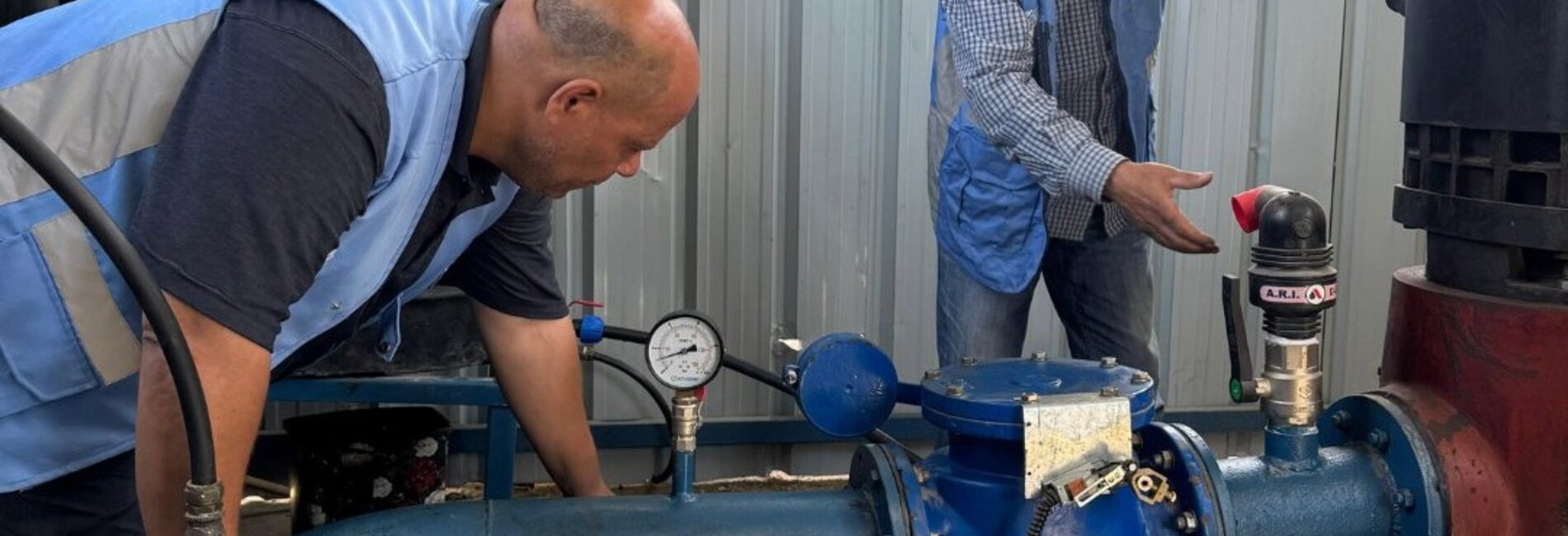
Since the beginning of 2026, more than 100 demolition and settler violence-related incidents have resulted in damage to or the demolition of over 190 WASH structures across the West Bank, including pipelines, irrigation systems, and water tanks. This is broadly consistent with 2025 levels, when an average of 25 such incidents were documented each month. These incidents continue to disrupt and undermine Palestinians’ access to water sources, heightening reliance on emergency interventions, such as water trucking.
The impact on Bedouin and herding communities in Area C is particularly acute. For example, on 4 and 5 June, Israeli settlers from surrounding settlement outposts repeatedly vandalized the main water pipelines serving Khan al Ahmar–Makab as Samen and Khan al Ahmar–Mihtawish Bedouin communities in Jerusalem governorate, disrupting water access for all 57 households in both communities for approximately one day. According to residents, settlers punctured multiple sections of the pipelines and cut parts of them. Residents reported recurrent attacks on the pipelines, including two separate incidents on 4 June after repairs had been completed, alongside repeated damage to water infrastructure, settler trespassing, harassment, and restrictions on access to grazing areas. In Masafer Yatta, at least 10 communities have remained disconnected from the water network since January, following repeated settler damage to, and interference with, the main transmission pipeline, resulting in continued reliance on emergency water trucking.
To mitigate the impact of these challenges, WASH partners continue to implement emergency and resilience-focused interventions across the West Bank, including through water trucking, the distribution of hygiene kits, mobile latrines, and water storage solutions. Moreover, in the northern West Bank, where more than 33,000 Palestinians have been displaced from Jenin, Tulkarm and Nur Shams refugee camps and surrounding areas since early 2025, partners continue to provide water trucking, hygiene kits, and support to local service providers serving displaced populations.
In May, partners provided water trucking support to approximately 30 communities and locations where displaced families have moved, including 10 communities in Masafer Yatta, nine communities in the northern Jordan Valley, and locations hosting displaced families in Hebron, Ramallah, Jericho, Salfit, Jenin, and Tulkarm governorates.
See Annex 1 for selected incidents in the West Bank during the reporting period.
For key figures and additional breakdowns of casualties, displacement, and settler violence between January 2005 and April 2026, please refer to the OCHA West Bank April 2026 Snapshot.
Gaza Strip
Civilians and civilian infrastructure are exposed to Israeli airstrikes, shelling and gunfire, resulting in reported casualties and damage. According to the Ministry of Health (MoH) in Gaza, which operates under the de facto authorities, 39 Palestinians were killed, two bodies were retrieved, four died of wounds, and 199 people were injured between 3 and 10 June. This brings the overall reported casualty toll since the announcement of a ceasefire agreement on 10 October 2025 to 981 fatalities and 3,104 injuries, according to MoH.
On 10 June, OHCHR expressed concern over repeated reports of violent activity by “Palestinian armed elements in Gaza that appear to be backed by Israeli forces.” The day before, according to OHCHR, such elements detained several Palestinians, including seven ambulance crew members from the Palestine Red Crescent Society (PRCS). While five were later released, two were taken to an unknown location, according to OHCHR, who called for their immediate release, stressing Israel’s obligations as the occupying power to ensure public order and safety “and to refrain from, as well as prevent, such violations of international law, including the obstruction of medical services.” On 11 June, PRCS said one of the two has been released.
Meanwhile, humanitarian partners report a deteriorating child protection environment, with poverty, displacement and insecurity heightening risks of neglect, hazardous labour, family separation, and exposure to violence. Children face severe psychological distress and risks from explosive ordnance, while access constraints, resource shortages, and limited supplies continue to hinder the delivery of child protection and mental health and psychosocial support services. More broadly, protection partners report critical shortages of dignity kits and menstrual hygiene management (MHM) items, with stocks nearly depleted despite high demand among women and girls.
The pest-control campaign is ongoing with over 2,000 sites treated since mid-May. Nevertheless, skin diseases and ectoparasitic infections continue to rise, while partners report that pest and rodent infestations are also increasing stress levels and contributing to a rise in domestic violence. This is because people remain displaced in overcrowded settings, with limited access to safe water, hygiene supplies and timely treatment, and because landfills near Gaza’s eastern perimeter remain inaccessible, perpetuating the accumulation of waste within populated areas.
Between 1 and 9 June, just over one million litres of diesel could be taken into Gaza. That amount falls short of the volumes required to keep life-saving operations running. Low volumes of incoming fuel have, in turn, forced humanitarian partners to prioritize the most critical operations identified by clusters, leading to the scaling back of some non-critical activities.
The WASH cluster reports, for instance, that in the north, limited fuel deliveries last week forced disruptions and rotational operation of key services, including relocation of solid waste from Firas Market and the functioning of water and sanitation infrastructure in Gaza city.
For over 70 per cent of the population, the primary source of drinking water is truck deliveries. These are difficult to sustain. While humanitarian partners are mitigating gaps linked to four partners phasing out water trucking since mid-May, funding remains insufficient to keep the current coverage, let alone scale it up during the summer.
Compounding these challenges, access restrictions and lengthy clearance procedures for the entry of aid items continue to affect the timely delivery of critical shelter and non-food items, with needs outpacing available resources, particularly among displaced households living in overcrowded sites, damaged buildings, and makeshift shelters that will be increasingly exposed to extreme summer temperatures, limiting partners’ ability to respond effectively to emerging priorities.
Food Security and Markets
According to the World Food Programme’s (WFP) latest Gaza Market Monitor, during the first half of May 2026, food consumption, availability and prices improved slightly compared with April, attributed to a reported increase in the inflow of commercial and humanitarian supplies. Surveys reported by WFP show a decrease – from 75 per cent in April to 63 per cent – in households reporting difficulties in accessing markets. Among households facing difficulties, 93 per cent cited financial struggles due to lack of cash and 54 per cent indicated they could not afford basic food items due to their high prices. WFP warns that the intake of fruit and protein-rich foods remained limited to once a week or less, perpetuating the risk of malnutrition, particularly among children. WFP say that overall prices remain high compared with late February (the eve of the regional escalation). Fuel and cooking gas are said to have remained scarce and extremely expensive, leading 66 per cent to rely on waste burning to cook, according to WFP.
According to data from the Gaza Chamber of Commerce, between 1 and 7 June the prices of food items, particularly fresh products, declined by 15 or more percent compared with the previous week, but remain significantly higher than pre-October 2023 levels. Non-food prices remained stable compared with the previous week, though still elevated, with the exception of sanitary pads, now cheaper than before October 2023. Overall, according to the Chamber of Commerce, the Gaza Consumer Price Index fell from 235 per cent in May to 199 per cent in early June, indicating some easing of inflation, though it remains unclear if this trend is sustainable given the volatile regional situation.
Meanwhile, the Chamber of Commerce reports that cash-out commission rates further declined to 10 per cent, down from higher levels observed in previous months, and remained largely stable. According to the Cash Working Group (CWG), this gradual reduction marginally improves purchasing power for beneficiaries relying on cash transactions, although persistent liquidity shortages continue to limit the scope for further decreases. Overall, data gathered by the CWG indicates that markets remain under significant strain, with constrained and uneven supply chains, limited diversification of goods, and persistent structural challenges continuing to undermine market recovery and household resilience.
Incoming Supplies
On the evening of 7 June, Israeli authorities temporarily closed Kerem Shalom and the Rafah Crossing, citing security measures linked to missile attacks from Iran. On 8 June, they announced that Kerem Shalom would resume operations the following day, and that Rafah would also reopen. Throughout the temporary closure, UN and partners could still collect cargo from the Palestinians side of Kerem Shalom, but other operations had to be suspended: cargo offloading resumed on 9 June and support to medical evacuations and returnees resumed on 10 June.
As reported previously, Kerem Shalom is the only active entry point for approved cargo. Access to that location from within Gaza is channelled through a new road, with a new military checkpoint, where convoys have been facing delays and congestion.
Between 1 and 7 June, the UN and partners took into Gaza thousands of metric tons of food as well as nutrition items, provisions related to health, water and sanitation, shelter materials, education supplies and other essential goods. During that period, 62 per cent of all aid trucks from Egypt could offload at the Israeli-controlled Kerem Shalom Crossing, based on data tracked by the Logistics Cluster. By contrast, shipments from Ashdod Port in Israel resulted in successful offloading at Kerem Shalom in 94 per cent of cases.
On the commercial front, data from the Gaza Chamber of Commerce, provided to the Cash Working Group suggest that between 1 and 7 June, the private sector collected 817 truckloads of products into Gaza. Of them, 374 carried food items and 23 cooking gas, representing 48 per cent of the total, while another 153 carried essential non-food items – including hygiene, shelter, and small quantities of childcare supplies – with no medicines or agricultural inputs recorded. About one-third of supplies were non-essential goods, according to the dataset.
On 25 May, a new storage facility secured by the Logistics Cluster became operational for both UN and non-UN partners, following approval from the Israeli authorities.
The UN is only able to confirm the entry of supplies tracked by UN 2720. For breakdowns of those, see the online UN 2720 Mechanism Dashboard.
For a detailed account of the latest humanitarian operations in Gaza, see Annex 1 below.
Funding

Sources: Financial Tracking System and oPt HF
Annexes
Annex 1: Selected incidents in the West Bank during reporting period (2-8 June 2026)
Read more
Between 20 May and 2 June, 27 Palestinian Bedouin families comprising 125 people, including 71 children, were displaced from Fer'a in Hebron governorate following months of reported Israeli settler harassment, intimidation and threats. The displaced families are currently dispersed across multiple locations, with most living in tents and facing limited access to basic services, including water, electricity and shelter. This displacement reflects a broader pattern observed across Palestinian Bedouin and herding communities, where recurrent settler violence, alongside restrictions on access and construction, has undermined livelihoods, generated physical and psychological harm, eroded living conditions, and driven the displacement of Palestinian communities.
On 2 June, Israeli settlers, believed to be from Yitzhar settlement and a nearby outpost, carried out multiple attacks in Madama village in Nablus governorate. Settlers set fire to approximately 100 dunums of Palestinian land, attacked four Palestinian homes, vandalized two household water meters, burned a vehicle, and damaged about 14 solar panels and several windows by throwing stones at residential properties. In a separate incident on the same day, settlers damaged an 80-cubic-metre water tank serving the same community.
On 2 and 6 June, Israeli settlers believed to be from a newly established settlement outpost near ‘Atara town attacked and injured two Palestinians in separate incidents in Bir Zeit and ‘Atara towns in Ramallah governorate. In the first incident, settlers physically assaulted a Palestinian while he was working on agricultural land and stole his vehicle along with equipment inside it. In the second incident, settlers assaulted a Palestinian Civil Defense staff member while he was responding to a fire at a dumping site between Bir Zeit and ‘Atara towns, striking him on the head with a stick and attempting to seize equipment from a Civil Defense vehicle. Both injured Palestinians were transported to hospital for medical treatment. On 5 June, Israeli settlers, accompanied by Israeli forces, erected an earthmound blocking an agricultural road leading to Palestinian farmland near Idhna in Hebron governorate. After affected landowners removed the earthmound and attempted to access their land, settlers reportedly assaulted the farmers and prevented them from reaching the area. Israeli forces subsequently fired live ammunition and tear gas canisters at the farmers, injuring two Palestinians with live ammunition and causing several others to suffer from tear gas inhalation, including two who required medical treatment. During the incident, settlers also set fire to approximately 10 dunums of cultivated land. The injured Palestinians were transported to hospital, while Palestinian Civil Defense teams and residents extinguished the fire.
On 3 June, 14 out of the 26 people displaced in Area C during the reporting period were in Jaba’ community in Jerusalem governorate, where Israeli authorities demolished two homes, one livelihood structure and one water cistern. The demolitions also resulted in the loss of household belongings, furniture and work equipment that remained inside the structures at the time of demolition, affecting their main source of income.
On 6 June, Israeli settlers, believed to be from a nearby settlement outpost and accompanied by Israeli forces, attacked areas in Huwwara and Einabus villages in Nablus governorate. Settlers reportedly assaulted Palestinian residents with stones, wooden sticks and live ammunition, injuring eight Palestinians, including five who were physically assaulted and three who were injured by shrapnel. During the attack, settlers reportedly raided and damaged three livestock barracks, seized dozens of heads of livestock, attacked two livelihood structures, assaulted their owners and workers, and stole a Palestinian vehicle and tools from car repair shops. All injured Palestinians were transported to hospital for medical treatment. The attack affected six households, comprising 30 people.
On 6 June, Israeli settlers believed to be from nearby settlement outposts set fire to Palestinian agricultural land in the As Sahel area, east of Al Mughayyer in Ramallah governorate, marking the third such incident reported in the area within ten days. According to local sources and video footage, settlers entered the area and spread flammable materials across land cultivated with wheat, causing a fire that destroyed 15 olive trees, approximately 10 years old. As affected families attempted to extinguish the blaze, Israeli forces reportedly fired tear gas canisters towards them, preventing access to the area and contributing to the spread of the fire. The incident affected the livelihood of at least one Palestinian household.
On 8 June, a Palestinian family comprising three people, including a child and a pregnant woman, was forced to demolish its home in the Bir Ayoub area of Silwan in East Jerusalem following the receipt of demolition orders, in order to avoid additional fines and fees. About half of the structures demolished in East Jerusalem so far in 2026 were demolished by their owners following the issuance of demolition orders by Israeli authorities, approximately one-third of them in the Silwan area.
Annex 2: Humanitarian Operations in the Gaza Strip by Cluster
Read more
This section covers 1 to 7 June unless otherwise specified.
Food Security
- Partners provided general food assistance to 69,000 households (262,000 people) as part of the monthly distribution cycle. Each family received two parcels, one 25-kilogram flour bag and 2.5 kilograms of high energy biscuits, covering 75 per cent of the minimum caloric needs.
- While some families continue to receive assistance through in-kind monthly food distributions, an increasing number of households are now receiving monthly multi-purpose cash assistance, coordinated by the Cash Working Group, which helps meet food needs and supports overall food security.
- As of 3 June, partners were preparing almost 740,000 meals every day through 95 kitchens at more than 1,000 locations. Compared with 1.5 million daily meals in mid-March, production has declined significantly. While these efforts remain critical, partners have scaled down cooked meal production due to funding constraints and rising operational costs. At the same time, responders are seeking to diversify assistance modalities, to include more cash and livelihood support.
- Twenty-eight UN-supported bakeries produce some 120,000 two-kilogram bread bundles daily. One fifth of the bread is distributed free of charge to more than 300 shelters and community sites, while the remainder is sold at a subsidized price of NIS 3 (US$0.95) per bundle through 160 retailers.
- During the first ten days of June, partners supported over 2,200 herders, giving each of them one 50-kilogram bag of concentrated fodder and one bag of barley.
- Since late March, partners have been providing conditional cash assistance to more than 1,000 farmers to support the reactivation of local crop production. Following the release of the first instalment in previous months, the second disbursement began in June, with about 500 targeted farmers having received it to date.
- On 3 June, the private sector imported a limited quantity of engine oil for a small number of bakeries. Advocacy remains critical to facilitate the entry of engine oil and spare parts through commercial channels, in addition to humanitarian pathways.
Water, Health and Sanitation (WASH)
- Partners trained professionals on the use of chlorine to improve water quality and distributed more than 11,500 hygiene kits, 273,000 bars of soap, 1,500 jerrycans, 500 adult diapers, 100 dignity kits, and 12 rat traps, reaching more than 69,000 people cumulatively.
- On 2 June, the Mekorot water pipeline from Israel in Bani Suhaila was damaged due to road excavation by the Israeli military, lowering pumping capacity and affecting water provision to about 200,000 people in Khan Younis. The pipeline was initially out of service and subsequently operated at reduced capacity before the Palestinian Water Authority completed repair works on 8 June.
Health
- As of 7 June, 31 emergency medical teams (EMTs) were deployed across Gaza, comprising 312 national and 74 international health personnel. The cluster has introduced a new tool that allows EMT partners to schedule rotations into Gaza at least two months in advance.
- Between 30 May and 6 June, communicable diseases accounted for nearly 28 per cent of all consultations reported through the World Health Organization’s (WHO) Early Warning, Alert and Response System (EWARS). Acute respiratory infections and acute watery diarrhea remained the most frequently reported conditions, although both showed a decreasing trend. By contrast, skin diseases and ectoparasitic infections continued to increase, likely driven by overcrowded living conditions, limited access to safe water and hygiene supplies, and delays in accessing appropriate treatment.
- In coordination with the Site Management Cluster, partners trained and deployed 129 new focal points in shelters and other high-risk settings, enhancing the early detection and reporting of public health risks.
- The Mental Health and Psychosocial Support (MHPSS) Technical Working Group continues to support the expansion of MHPSS services across partners, with training of trainers underway on WHO’s Mental Health Gap Action Programme community toolkit and coordination of an MHPSS modality known as “Teaching Recovery Techniques (TRT)” to expand psychosocial support for children and adolescents. The Inter-Agency Standing Committee (IASC) guidelines relating to the MHPSS Minimum Service Package have been adapted to the Gaza context and will be disseminated across partners to support standardized service delivery.
For more information, see the online Heath Cluster Dashboard.
Shelter
- Between 31 May and 6 June, partners provided more than 4,000 households with shelter and other essential items through in-kind and cash-based modalities. Assistance included 955 tents, 1,168 tarpaulins, 475 bedding items, 150 bedding kits, 150 kitchen sets, and 1,544 clothing kits provided through cash and voucher assistance.
- Partners conducted emergency repairs and upgrades to 749 makeshift shelters, alongside urgent repairs to 40 damaged housing units.
- On 8 June, the Shelter Cluster published its Summer Preparedness Priorities, outlining priority interventions, operational recommendations, community coping mechanisms, and advocacy priorities to improve shelter conditions during the summer months.
A few examples of what is still needed: There is an urgent need to initiate procurement and pre-positioning of winterization materials to ensure readiness ahead of the upcoming winter season. However, significant funding shortfalls threaten preparedness efforts and risk to undermine the humanitarian community's capacity to meet anticipated seasonal shelter needs.
For more information, see the Shelter Cluster website.
Protection
- Protection partners delivered lifesaving and protection-related services to at least 27,700 people, in addition to 260 vulnerable households, across North Gaza, Gaza city, Deir al Balah and Khan Younis governorates:
- Mental health and psychosocial support (MHPSS), including psychological first aid (PFA) and individual and group counselling, to 10,365 people;
- “Helping the Helpers” support to 573 humanitarian and protection workers;
- Legal counselling, legal awareness, support with Housing, Land and Property Rights-related dispute resolution, and alternative dispute resolution training for lawyers to reached 1,384 individuals, while protection awareness sessions on rights, complaints and feedback mechanisms, safe reporting channels, PSEA, and referral pathways reached 2,646 individuals.
- Case management, case follow-up and referral services to 600 individuals;
- Disability-related services, including rehabilitation, prosthetic and orthotic support, physiotherapy, speech therapy, and provision of assistive devices and services, to 696 people;
- Explosive Ordnance Risk Education sessions to 6,705 individuals;
- In addition, partners reached 4,732 people and 260 vulnerable households through the provision of shelter items, tents, food parcels, dignity kits, cash for protection, livelihood support, and latrines.
- The Protection Cluster also offered services to 311 returnees through psychological first aid, emergency assistance, and referral services. This brings the cumulative number of returnees supported since the reopening of the Rafah Crossing in February 2026 to 2,973, of whom 981 continue receiving follow-up protection support.
- Protection monitoring activities continued through 13 focus group discussions (FGDs) and 130 key informant interviews (KIIs) with community members across 12 accessible neighbourhoods, reaching 1,430 people cumulatively.
- Findings from the most recent Protection Monitoring Snapshot highlight persisting concerns regarding food insecurity, shortages of safe drinking water, inadequate shelter conditions, and environmental health hazards, including rodent and insect infestations linked to poor waste management. Communities also reported challenges in obtaining civil documentation, while the presence of unexploded ordnance (UXO) continued to raise significant safety concerns, particularly for children. Communities living near high-risk areas faced heightened protection risks, while insecurity and movement restrictions further hindered access to humanitarian assistance and essential services.
For more information, see the online Protection Cluster dashboard.
Child Protection
Child Protection partners undertook the following activities:
- provided at least 17,800 children and caregivers with a wide range of services, including case management, alternative care, family reunification, MHPSS, psychosocial support, counselling, recreational activities, child-friendly space interventions, awareness raising, and emergency assistance. Additionally, 1,149 families received emergency or material support;
- provided individualized case management to 200 at-risk children, including 31 children with disabilities, supported 44 unaccompanied and separated children with alternative care, and reunified six children with their families;
- continued to scale up MHPSS services, with over 5,000 children participating in psychosocial and mental health activities, including 500 receiving specialized interventions. At least 2,000 caregivers were also reached through parenting and psychosocial support activities;
- strengthened prevention and awareness efforts, reaching 3,432 children and caregivers through face-to-face child protection sessions, 211 through explosive ordnance risk education, and around 5,000 through mass awareness messaging on key protection risks and prevention measures;
- expanded adolescent programming, reaching at least 250 adolescents through life skills, empowerment, vocational training, and psychosocial support, with targeted activities addressing risks such as school dropout, child labour, early marriage, and psychological distress;
- delivered rehabilitation and assistive devices to 680 children with disabilities, while 69 families received counselling. However, significant gaps remain in specialized services, assistive devices, and access to advanced care;
- implemented child safety mapping and participatory activities in four camps, engaging 182 children to identify risks and inform mitigation measures in displacement settings;
- provided emergency assistance to mitigate protection risks, including hygiene kits, dignity kits, vouchers and cash assistance for 539 families hosting children without parental care, and in-kind support for highly vulnerable children.
Addressing Gender-Based Violence
Partners undertook the following activities to address gender-based violence (GBV):
- continued delivering services primarily through safe spaces for women and girls, opened eight new such spaces, bringing the total number of functional spaces to 73, while 19 remain closed due to funding constraints. Two safe shelters also continue operating and provide protection services to vulnerable women and girls;
- provided multisectoral support to more than 24,000 people, including 15,700 women and girls who participated in group MHPSS activities, and 2,095 people who received specialized MHPSS care;
- delivered specialized GBV case management services to 1,565 women and girls, including cash-for-protection assistance and referrals for 262 cases;
- conducted community awareness and outreach activities, reaching 12,183 females and 5,190 males on topics including domestic violence, sexual and reproductive health, prevention of sexual exploitation and abuse (PSEA), and referral pathways;
- strengthened the capacity of frontline providers, with 550 personnel trained on addressing GBV and on PSEA;
- distributed 3,741 dignity kits to women and girls, though needs continue to exceed available resources.
Mine Action
- Between 1 and 7 June, UNMAS conducted 50 explosive hazard assessments in support of debris removal and other partner activities, and two inter-agency missions. Seven emergency response teams were also carried out in support of UNDSS.
- Between 23 May and 4 June, explosive ordnance risk education and Conflict Preparedness and Protection activities continued, reaching almost 14,000 people.
Nutrition
- On 2 June, the Nutrition Cluster launched a Standardized Monitoring and Assessment of Relief and Transitions (SMART) survey to better assess the prevalence of acute and other forms of malnutrition, along with the contributing factors. The survey is expected to be completed next week.
- In May, partners screened 77,197 children between the ages of 6 and 59 months, out of whom 3,180 (4.1 per cent) were identified with acute malnutrition and admitted for treatment, including 478 (0.6 per cent) with the most severe acute malnutrition (SAM) form. The latest admissions bring the total number of children who received ready-to-use therapeutic food for treatment in the last five months to 17,392.
- In May, partners also screened 53,593 pregnant and breastfeeding women (PBW) for acute malnutrition, of whom 1,683 (3.14 per cent) were admitted for treatment and reached over 55,900 PBW and other caregivers with a combination of group and one-on-one counselling on Infant and Young Child Feeding in Emergencies (IYCF-E).
Education
- Education Cluster partners continued efforts to enhance the inclusivity of the response by scaling up the screening of children with disabilities to better identify and address barriers to learning. To date, approximately 22,000 children enrolled in learning spaces have been screened, with 27 per cent identified as requiring more in-depth assessment. Through established referral pathways, these children are being referred to specialised service providers for further evaluation and support. The most commonly identified needs relate to speech and visual impairments. While some interventions, including speech therapy, are being provided, the limited availability and entry of assistive devices remain a major challenge. Increased access to assistive devices is critical to enable children with disabilities to participate independently and meaningfully in learning activities.
- The entry of education supplies remains severely constrained. Although 865 School-in-a-Carton kits, sufficient for 46,000 students, entered Gaza on 1 June, this followed a prolonged period with no education supplies entering since 19 May. With the academic year scheduled to conclude on 17 June, many children will complete it without receiving essential learning materials, undermining both the quality of learning and their ability to fully participate in educational activities.
- Preparations for the 2026 Tawjihi examinations (high-school final exams) continue; however, significant operational challenges remain. Many planned examination centres, including temporary learning spaces, lack adequate furniture, safety measures, and essential logistical support. Limited printing capacity is also constraining efforts to produce and distribute examination papers in time for the scheduled start date of 20 June. While partners are working to address these gaps, there is growing concern that examinations may need to be administered electronically, as in the previous academic year. Such a scenario risks excluding students who lack access to appropriate devices, reliable internet connectivity, or electricity. In addition, students have had limited opportunities to familiarise themselves with or test the examination platform, which may negatively affect their performance.
** Double asterisks indicate that a figure, sentence, or section has been rectified, added, or retracted after the initial publication of this update.
SUBSCRIBE TO RECEIVE OCHA'S INFORMATION PRODUCTS
 SUBSCRIBE
OCHA Sites










Follow Us
Support
Your donations go to relief organizations delivering quick and effective support to Palestinians in need.