
Humanitarian Situation Update #358 | West Bank
Key Highlights
- Between 3 and 16 February, Israeli forces killed three Palestinians in Qalqiliya and Jericho and Palestinian forces killed one Palestinian child in Tubas.
- Over 90 per cent of Palestinians displaced due to settler attacks and access restrictions in 2026 to date have been in the Jordan Valley area, which also accounts for more than one third of such displacement since January 2023.
- The UN Secretary-General warned that recent Israeli land-related measures in the West Bank erode prospects for a two-State solution and risk the dispossession and displacement of Palestinians, following Israeli cabinet decisions to expand administrative control and resume land registration in Area C.
- Boys and men face severe protection risks in the West Bank, including East Jerusalem, experiencing disproportionate levels of killing and injury, detention, and exposure to exploitation and harmful coping mechanisms such as child labour, a Protection Cluster analysis finds.
Humanitarian Developments
- Between 3 and 16 February 2026, Israeli forces killed three Palestinians in the West Bank, including East Jerusalem. This brings the total number of Palestinians killed by Israeli forces between 1 January and 16 February 2026 to nine (all male), including two children. Palestinian forces killed one Palestinian child and injured his sister while attempting to arrest their father, who was shot and injured.* Another 137 Palestinians, including 11 children, were injured, of whom 78 were injured by Israeli forces and 59 by Israeli settlers. Casualties included one person killed and eight injured by Israeli forces while attempting to cross the Barrier to reach East Jerusalem and Israel. During the same period, no Israelis were reported injured. The following are details of the incidents that resulted in fatalities during the reporting period:
- On 3 February, Israeli forces shot and killed a Palestinian man near Ras at Tira village, in Qalqiliya governorate, while he was attempting to cross the Barrier into Israel. Since 7 October 2023, OCHA has documented the killing of 17 Palestinians and the injury of 262 others while attempting to cross the Barrier, after Israeli authorities revoked or suspended most permits to access East Jerusalem and Israel. Many of those attempting to cross reportedly did so in search of employment opportunities amid a severe economic downturn in the West Bank.
- On 3 February, Israeli forces shot and killed a Palestinian man during a raid in Jericho city. According to the Israeli military, Israeli forces opened gunfire at Palestinians who threw stones at the forces.
- On 15 February 2026, Palestinian forces shot and killed a 15-year-old Palestinian boy and injured his sister and father after opening fire at a vehicle in Tammun town, Tubas governorate. The five-year-old girl was later declared clinically dead. According to Palestinian forces, the operation aimed at arresting the father pursuant to a judicial warrant; the circumstances of the incident remain under review and an investigation was immediately launched. In a statement, the UN Human Rights Office (OHCHR) in the Occupied Palestinian Territory (OPT) called on the Palestinian authorities to conduct a prompt, thorough and transparent investigation, noting that the incident raises concerns about the unnecessary use of lethal force and may amount to an unlawful killing.
- On 16 February, Israeli forces shot and killed a Palestinian man in Qalqiliya city, reportedly while he was on his way to his family’s farm near the Barrier. According to two human rights organizations, there were no reports of stone-throwing or attempts to cross the Barrier at the time of the incident.
- An analysis issued by the Protection Cluster in January 2026 highlights the disproportionate exposure of boys and men to various protection risks in the West Bank, including arbitrary arrest and detention, excessive and sometimes lethal use of force, and ill-treatment, including torture and sexual violence. Since October 2023, 97 per cent of Palestinians injured or killed in incidents involving excessive use of force by Israeli forces were men or boys, and 99 per cent of detainees were also men or boys.
- The analysis notes that adolescent boys and young men are particularly vulnerable during raids, at checkpoints, and in confrontations, where they are often treated as adults and profiled as security threats based on gender. Widespread movement restrictions, home incursions, and repeated exposure to violence contribute to psychological distress, while livelihood losses, permit revocations, and displacement undermine traditional provider roles and increase exposure to exploitation, recruitment into armed roles, and harmful coping mechanisms, including child labour. Risks are compounded for boys and men with disabilities and those in rural, Bedouin, and refugee communities, who face greater isolation, service barriers, and exposure to violence and neglect. Overall, the cumulative impact points to a coercive protection environment characterized by pervasive insecurity, dignity-related harm, and long-term psychosocial consequences for boys, men, and their families. The report offers inclusive analysis, while also highlighting that women and girls continue to face severe protection risks.
- On 8 February 2026, the Israeli Security Cabinet approved a series of measures altering administrative and legal arrangements in the West Bank that further deepen Israeli control over land, including in areas administered by the Palestinian Authority (Areas A and B). According to official summaries, these include de-classifying West Bank land registries, removing certain restrictions on land transactions, and renewing a land acquisition committee to enable state purchases. They also entail expanding Israeli supervisory and law-enforcement authorities in Areas A and B, transferring selected planning and building-permit powers from Palestinian municipal bodies to the Israeli Civil Administration (ICA), and establishing municipal frameworks linked to specific religious sites, such as Al Ibrahim Mosque/Cave of the Patriarchs in Hebron and Rachel’s Tomb in Bethlehem. On 15 February, the Government of Israel approved the allocation of about NIS 244 million (approximately US$79 million) to resume land registration and settlement procedures in Area C, following a May 2025 decision to initiate these processes.
- On 9 February 2026, the UN Secretary-General warned that recent measures authorized by the Israeli security cabinet in the West Bank further erode prospects for a two-State solution, reiterating that Israeli settlements have no legal validity under international law, and calling for the measures to be reversed. On 16 February, the Secretary-General also condemned the Israeli decision to resume land registration in Area C, warning that it “could lead to the dispossession of Palestinians of their property and risks expanding Israeli control over land in the area.” The resumption of land registration is expected to accelerate the formalization of state land claims, increase the risk of dispossession of Palestinian landowners, and heighten the risk of evictions and displacement, while further constraining Palestinian development in Area C.
Israeli Settler Attacks
- Between 3 and 16 February, OCHA documented at least 86 Israeli settler attacks against Palestinians across 60 communities that resulted in casualties, property damage, or both. These incidents led to the displacement of 146 people (see section below for details) and the injury of 64 Palestinians, including one child. Of those wounded, 59 were injured by settlers and five by Israeli forces. Most incidents were recorded in Nablus governorate (23), particularly in Qusra and Talfit villages, followed by Ramallah governorate (19), mainly in Al Mughayyir and Birzeit, and Hebron governorate (19), mainly in Halhul and Susiya. Overall, more than 800 olive trees and saplings and 39 vehicles were vandalized, water pipes and networks were damaged, and dozens of Palestinian-owned livestock were reportedly stolen. Settler attacks, threats and harassment predominantly affected communities near settlement outposts, involving repeated raids, assaults, damage to homes and denial of access to agricultural land.
- In Ibziq, in Tubas governorate in the northern Jordan Valley, Israeli settlers carried out three attacks, including against the village’s school. On 4 February, Israeli settlers from a newly established settlement outpost near Ibziq broke into the village’s school, smashed doors, windows and classroom contents, damaged solar panels and water tanks, confiscated solar batteries and water tanks, as well as dug a trench and placed an earth mound on the road leading to the school, which serves approximately 30 students. On 5 February, settlers dressed in what appeared to be military uniforms physically assaulted and injured seven Palestinian men, when a delegation from the Ministry of Education and the Tubas Governor’s Office visited the school to assess the damage caused the previous day. According to the village council, the settlers handcuffed the men, confiscated their phones and identification documents, and detained them for approximately three hours before Israeli forces arrived, released them, and returned their belongings. On 7 February, settlers believed to be from the same settlement outpost assaulted three Palestinian herders near Ibziq, beat them with stones, injured them, and temporarily seized their sheep.
- Incidents included attacks that targeted critical water, sanitation and hygiene (WASH) facilities and infrastructure, causing damage and undermining access to water for Palestinian communities across three governorates.
- In Ramallah governorate, Israeli settlers carried out repeated attacks on water infrastructure in the Ein Samiya area, the main water source for about 20 villages and additional communities in eastern Ramallah, serving an estimated 100,000 Palestinians. On 7 February, dozens of settlers raided a water well site managed by the Jerusalem Water Undertaking (JWU), cutting fences, vandalizing key equipment, and assaulting a worker. On 15 February, masked and armed settlers again raided the site, pepper-sprayed and injured five JWU workers, and forced the suspension of maintenance works. According to JWU, these attacks resulted in intermittent water cuts and the partial suspension of pumping from the Ein Samiya wells, with three wells reportedly ceasing operation. JWU reported that repair crews are working to restore pumping capacity and called for water conservation in the most affected towns pending full restoration. OCHA documented 10 settler attacks in the Ein Samiya spring area in 2025 and six such incidents so far in 2026.
- In Hebron governorate, in Masafer Yatta area, on 11 February, Israeli settlers cut the water network supplying the Palestinian community of Jinba, after previously severing the main water connection serving 10 communities located within Firing Zone 918. As a result, approximately 300 residents are currently relying solely on stored water in household cisterns. This incident follows a similar attack on 28 January 2026, when settlers from a newly established outpost cut the main pipeline supplying water from the village of At Tuwani to about 10 Palestinian communities in this firing zone, leading to the complete disruption of water supply to approximately 190 households. At that time, affected residents were forced to depend on limited winter-stored water, raising urgent humanitarian concerns as supplies diminished.
- In Nablus governorate, on 8 February, Israeli forces, accompanied by settlers, bulldozed an agricultural road west of Sabastiya village, damaging sections of the water network and temporarily disconnecting water supply to about four Palestinian households; works, reportedly linked to a road connecting nearby settlements to Road 60, were ongoing at the time of reporting. On the same day, settlers and Israeli forces prevented Palestinian local council and Ministry of Agriculture staff from installing a water tank between the villages of Beit Dajan and Beit Furik, detained six staff members for about five hours, and obstructed a project intended to supply about 400 agricultural greenhouses and nearby households, undermining agricultural livelihoods.
- For key figures and additional breakdowns of casualties, displacement and settler violence between January 2005 and December 2025, please refer to the OCHA West Bank December 2025 Snapshot.
Displacement due to Demolitions and Settler Attacks
- Between 3 and 16 February, OCHA documented the demolition of 108 Palestinian-owned structures for lacking Israeli-issued building permits, which are almost impossible for Palestinians to obtain, including 89 in Area C of the West Bank, 17 in East Jerusalem and two in Area B. Demolished structures included 29 residences (of which 25 were inhabited), 55 agricultural and livelihood structures, and 24 water and sanitation and other structures. Six of the demolished structures had been provided as humanitarian assistance. In total, 114 Palestinians, including 59 children, were displaced, of whom 48 were in East Jerusalem and 66 in Area C. The highest levels of displacement were recorded in Jayyus town in Qalqiliya governorate (five households, comprising 22 people), followed by Beit Hanina in East Jerusalem (three households, comprising 18 people), and Hammamat al Malih – Al Meiteh community in the northern Jordan Valley in Tubas governorate (four households, comprising 16 people).
- In Al Bustan area of Silwan, in East Jerusalem, Israeli authorities carried out a large-scale demolition operation on 10 February, during which they demolished six structures, forced a family to demolish a house extension, and restricted the movement of residents after sealing the area’s main entrances. Among the demolished structures was a 700-square-metre construction materials facility, with losses estimated at over NIS 150,000 ($48,440). In total, seven households comprising 37 people, including 15 children, were affected. During the demolition, four men were physically assaulted and injured with bruises as confrontations between the residents and Israeli forces broke out. Since the beginning of 2026, at least 14 households in Al Bustan have received demolition notices, placing over 80 residents at imminent risk of displacement. According to the Norwegian Refugee Council (NRC), who is representing 85 demolition cases in the community, all structures in Al Bustan, home to about 1,550 Palestinians and 150 housing units, are at risk of demolition.
- Between 3 and 16 February, 29 Palestinian herding households comprising 146 people, including 77 children, were displaced due to settler attacks and access restrictions, over 90 per cent of whom were in the Jordan Valley area, as follows:
- In the Northern Jordan Valley in Tubas governorate, at least 11 households were displaced or began relocating during the reporting period. This includes four households (20 people) from Hammamat al Maleh – Al Meiteh following a settler arson attack on 13 February, and seven households (34 people) from Humsa al Bqaia on 8 February amid repeated settler harassment, threats and restrictions on access to grazing land and water. Displaced families cited recurrent settler attacks, including arson, intimidation and denial of access to livelihoods, alongside demolitions and detentions, as key drivers of displacement.
- In Jericho governorate, on 5 February, seven refugee households (26 people) were displaced from Al ‘Auja, and 10 Bedouin households (57 people) began relocating from Al Jiftlik–Abu al ‘Ajaj due to escalating settler violence, including night-time incursions, stone-throwing, arson, livestock theft and direct threats, leaving many families without adequate shelter and access to basic services.
- In Masafer Yatta in southern Hebron governorate, on 11 February, one household of nine people, including six children, was displaced from Mirkez community located in Firing Zone 918 following repeated settler harassment and threats, including attempts to damage approximately 120 beehives that constituted the family’s primary source of income.
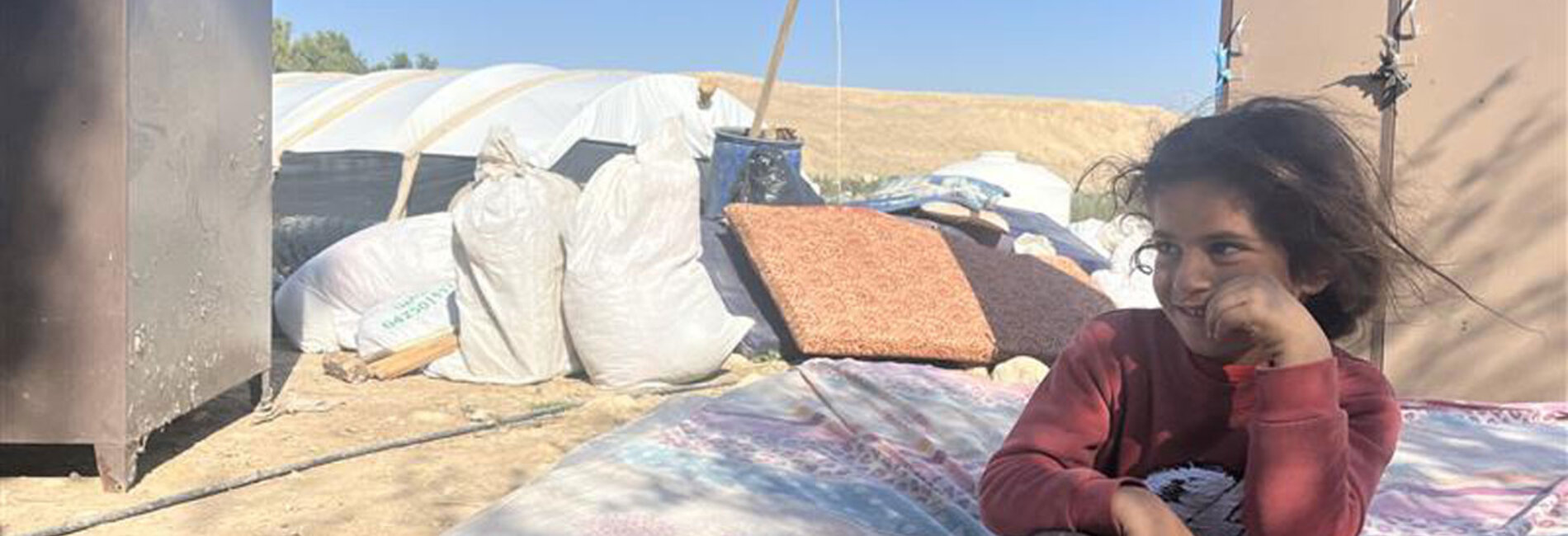
- Palestinian Bedouin and herding communities in Area C continue to face a heightened risk of forced displacement driven by recurrent settler attacks and access restrictions, particularly in the Jordan Valley area. Between January 2023, when OCHA began systematically documenting displacement linked to specific incidents of settler violence, and 16 February 2026, 883 Palestinian households – comprising 4,765 people – have been displaced across 97 communities and areas, the majority of them Bedouin and herding communities. In the Jordan Valley area, which extends across parts of Tubas, Nablus, Jericho and Ramallah governorates, displacement has steadily increased over the past three years in connection with settler attacks on families, livestock and property, as well as restrictions on access to grazing land, with 1,656 people displaced, accounting for 35 per cent of people displaced within this context (see graph below). In January 2026, 600 Palestinians were displaced from Ras Ein al ‘Auja Bedouin community in the central Jordan Valley, marking the highest single-community displacement due to settler attacks and access restrictions over the past three years.

Operations by Israeli Forces in the Northern West Bank
- Between 3 and 16 February, OCHA documented at least 48 raids and search-and-arrest operations by Israeli forces across Nablus, Jenin, Qalqilya, Tulkarm and Salfit governorates. These entailed mass detentions, temporary home evacuations and movement restrictions. In total, Israeli forces took over at least five Palestinian homes for military use, temporarily evacuated eight families, and detained at least 84 Palestinians, alongside extensive house searches, property damage and widespread disruption to access to basic services. Among the incidents were four large-scale operations, as detailed below by governorate:
- In Qalqiliya governorate, Israeli forces raided Azzun town on 6 and 7 February, searched approximately 14 houses, detained about 17 men for around 20 hours before releasing them, ordered dozens of shops to close, and converted a residential rooftop into a temporary military post for several hours, disrupting commercial activity and restricting residents’ movement.
- In Nablus governorate, Israeli forces raided Nablus city on 8 February and Balata refugee camp on 14 February; operations included the firing of tear gas cannisters, physical assault and arrest of residents, the detonation of an explosive device inside a previously damaged structure, and the temporary evacuation of at least four homes in the camp.
- In Salfit governorate, on 16 February, Israeli forces closed four entrances to Salfit city with earth mounds while keeping the main gate open, searched houses, detained and interrogated residents, and took over four houses as military observation points. Two Palestinian men were physically assaulted and transferred to hospital, while government offices, private shops and schools were closed, significantly disrupting education, livelihoods and access to services.
- On 9 February, Israeli forces re-established a previously evacuated military post in Arraba town, in Jenin governorate, resulting in the forcible displacement of five Palestinian herding families. After issuing prior verbal orders and subsequent warnings to evacuate, Israeli forces compelled the families to dismantle their residential and livestock structures and relocate to a nearby area to avoid forcible removal. The displaced families, who had lived in the area since 2013 and rely primarily on livestock herding as their main source of livelihood, have lost their habitual place of residence and now face heightened protection risks and increased vulnerability.
Funding

|

|
| Source: Financial Tracking Service webpage. | Source: OCHA oPt HF webpage. |
SUBSCRIBE TO RECEIVE OCHA'S INFORMATION PRODUCTS
 SUBSCRIBE
OCHA Sites










Follow Us
Support
Your donations go to relief organizations delivering quick and effective support to Palestinians in need.