
Humanitarian Situation Update #355 | Gaza Strip
One Humanitarian Situation Update is issued every week. The next Humanitarian Situation Update on the West Bank will be issued on 4 February and the next Humanitarian Situation Update on the Gaza Strip will be issued on 11 February. We invite you to take a moment to provide feedback on OCHA's regular publications covering the humanitarian situation in Gaza and the West Bank. You can access the survey at https://surveys-kobo.unocha.org/single/fdgdeISC. The survey is anonymous.
Key Highlights
- Attacks, shelling, and shooting continue across Gaza, raising serious concerns over the continued killing of civilians, according to the UN Human Rights Office.
- Over 100,000 tents have entered Gaza through UN coordination and bilateral donations since October, but tents are not a durable solution: winter storms and material restrictions have left hundreds of thousands exposed to winter-related risks. Eleven children have reportedly died from hypothermia.
- Food and cash assistance reached hundreds of thousands of households in January, while fragile markets, low purchasing power, and prevalent malnutrition continue to drive extreme risks for children.
- Health services have expanded with more functional health points and the first open-heart surgeries since 2023, yet a surge in communicable diseases driven by winter, poor shelter, and unsafe water continues to strain Gaza’s fragile health system.
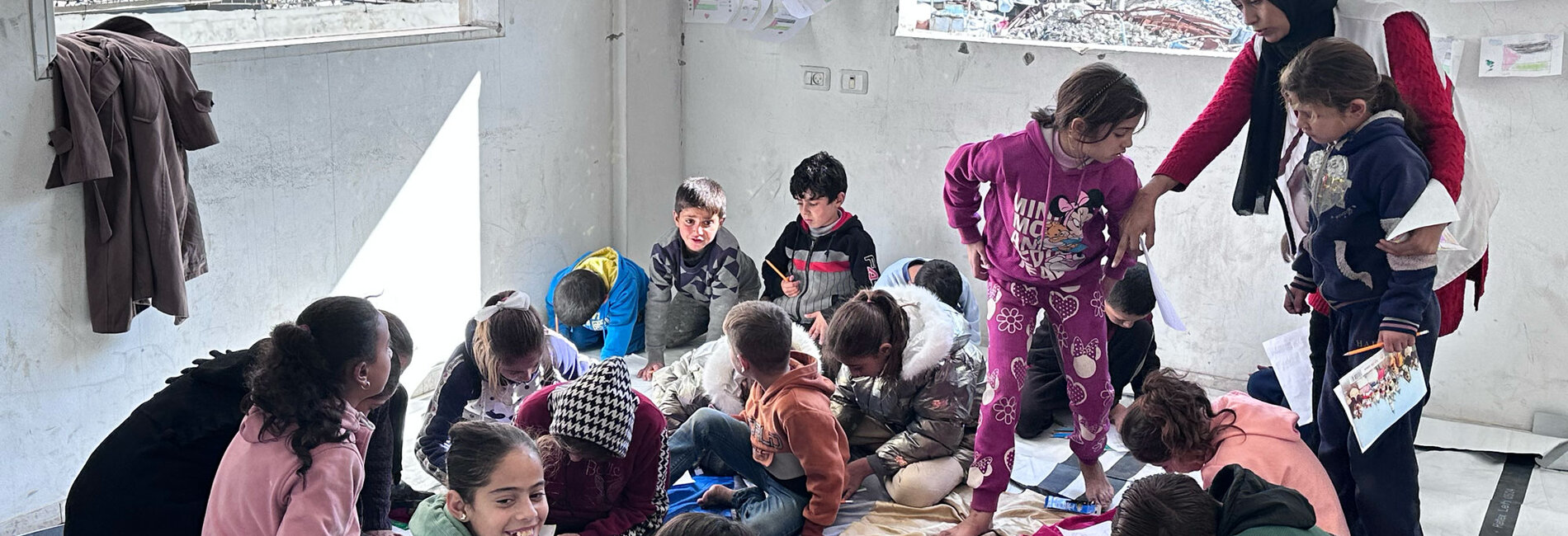
- As 60 per cent of school-aged children in Gaza remain without access to in-person learning, UNICEF and education partners are scaling up temporary learning spaces and delivering the first recreational and school kits allowed into Gaza in over two years to support children’s learning and wellbeing.
Context Overview
- Airstrikes, shelling and gunfire continue to be reported across the Gaza Strip, resulting in casualties. The Israeli military remains deployed in over 50 per cent of the Gaza Strip beyond the “Yellow Line” where access to humanitarian facilities and assets, public infrastructure, and agricultural land is either restricted or prohibited. Access for Palestinians to the sea remains prohibited. Detonations of residential buildings and bulldozing activities continue to be reported, including near or east of the “Yellow Line.” According to the latest Protection monitoring report, people described recurrent incidents, including movement restrictions and displacement pressures, linked to the unclear and unstable demarcation of the “Yellow Line.” According to the UN Human Rights Office (OHCHR), repeated Israeli military operations into areas west of the redeployment (Yellow) line have also led to the displacement of civilians and the demolition of residential buildings.
- According to the Ministry of Health (MoH) in Gaza, between 14 and 28 January 2026, 43 Palestinians were killed, 110 were injured and five bodies were recovered from under the rubble. This brings the casualty toll among Palestinians since 7 October 2023, as reported by the MoH, to 71,667 fatalities and 171,343 injuries. According to the MoH, the total number includes 180 fatalities who were retroactively added between 2 and 23 January after their identification details were approved by a ministerial committee. The MoH reported that since the ceasefire, 492 Palestinians have been killed, 1,356 injured, and 715 bodies retrieved from under the rubble.
- On 23 January, OHCHR in the Occupied Palestinian Territory (OPT) stated that it documented trends since the ceasefire came into effect on 11 October 2025 that “include the continued killing of civilians in Israeli aerial attacks, shelling, and gunfire across all five governorates of Gaza, including incidents both far from and in the vicinity of the ‘Yellow Line’.” Between 11 October 2025 and 21 January 2026, OHCHR recorded at least 216 Palestinians killed, including 46 children and 28 women, in Israeli attacks far from the "Yellow Line," primarily affecting shelters for internally displaced persons (IDPs) and residential buildings, and at least 167 Palestinians reportedly killed in the vicinity of the “Yellow Line,” including 26 children and 17 women. During the same period, OHCHR recorded at least 80 reported killings of Palestinians by Hamas since the ceasefire, mostly in clashes with rival families and in summary executions. On 21 January, according to OHCHR, at least 11 Palestinians were killed in a series of attacks, including an Israeli strike on a car near Netzarim area that reportedly killed three journalists. According to the Palestinian Journalists Syndicate (PJS), this brings the total number of journalists killed in Gaza to 258.
- According to the Israeli military, between 14 and 28 January 2026, as of noon, one Israeli soldier died of wounds sustained on 19 October 2025 in the Gaza Strip. The casualty toll among Israeli soldiers since the beginning of the Israeli ground operation in October 2023 stands at 471 fatalities and 2,995 injuries. According to Israeli forces and official Israeli sources cited in the media, more than 1,671 Israelis and foreign nationals have been killed, the majority on 7 October 2023 and its immediate aftermath. On 26 January, official Israeli sources reported that the body of the last Israeli hostage in Gaza was recovered and returned to Israel.
- With 81 per cent of structures in Gaza damaged as of 11 October, hundreds of thousands of Palestinians remain displaced while housing, land and property rights remain severely compromised by widespread documentation loss and legal barriers. According to the Palestinian Housing Council’s assessment conducted between May and July 2025, up to 83 per cent of women and 72 per cent of men in Khan Younis and Rafah reported losing ownership documents, with around 70 per cent affected in Gaza city. Between 48 and 80 per cent of women across governorates face discrimination in claiming or retaining property due to inheritance laws and social norms, while 57 to 87 per cent reported unresolved inheritance disputes. To address tenure insecurity, prevent evictions and enable equitable recovery, particularly for female-headed and displaced households, the Housing, Land and Property Technical Working Group (HLP TWG) continues to support documentation retrieval, legal aid, and gender-responsive interventions.
- According to the UN 2720 Mechanism, between 1 and 26 January, about 37,000 metric tons (MT) of humanitarian aid were collected by the UN and its partners from Gaza’s crossings, compared with more than 62,300 MT of aid collected in December. Most of the aid (75 per cent) continued to be collected from the Kerem Shalom Crossing. Humanitarian movements inside Gaza continue to require coordination with Israeli authorities to and from crossings and in or near other areas where Israeli forces remain deployed. Between 13 and 26 January, 95 humanitarian missions were coordinated with the Israeli authorities, of which 60 were successfully facilitated, 10 were impeded, 13 were denied and 12 were cancelled by the requesting organizations due to operational, logistical or security reasons.
- According to the Education Cluster, as of 28 January, 4,400 recreational kits and 240 school-in-a-carton kits have entered Gaza for use by both Education and Child Protection partners, marking a significant step in supporting children after more than two years of restrictions on the entry of educational materials. These kits, containing learning and play materials such as pencils, exercise books, slates and teaching aids, are intended to support children’s learning and wellbeing amid widespread destruction of school infrastructure and limited access to formal education. Sixty per cent of school-aged children currently lack access to some form of in-person learning, and over 335,000 children under five face severe developmental delays as early childhood services have collapsed. Education partners continue to expand the number of temporary learning spaces to reach more children, though demand is overwhelming and waiting lists are long.
Winter and Displacement
- For the third consecutive year, Gaza’s population is facing winter amid widespread displacement, substandard shelter conditions, and overcrowded displacement sites. According to the MoH in Gaza, as of 27 January, 11 children (seven boys and four girls) have died due to hypothermia. On 22 January, the Palestinian Civil Defence (PCD) warned that harsh weather conditions could lead to a further collapse of damaged buildings.
- According to the Site Management Cluster (SMC), more than 100 displacement sites have been established since the ceasefire, including 55 sites in North Gaza to accommodate people who have returned to the area. As of 26 January, some 1.3 million people are estimated to be living at 970 displacement sites across Gaza, including 598 makeshift sites and 76 collective centres, compared with 862 sites prior to the October ceasefire. Seventy-two per cent (674 sites) are in Deir al Balah and Khan Younis and the rest in northern Gaza. Since the first winter storm in November, harsh weather conditions have damaged several displacement sites, some of which have been destroyed and subsequently reconstructed, while additional sites have emerged in response to winter-related population movements and increased movements to northern Gaza.
- Due to increasing needs and limited capacity, 381 of 970 displacement sites in Gaza (40 per cent) receive site management support. Site management ensures that sites are safe, meet minimum standards, and that people have access to assistance. Displacement sites with active site management enable coordinated service delivery, clear communication with IDPs, and systematic identification of protection, health, and water, sanitation and hygiene (WASH) risks. Most sites with active site management are at full capacity and cannot accommodate newly displaced families. Of the total, the United Nations Relief and Works Agency for Palestine Refugees in the Near East (UNRWA) manages 85 displacement sites, including UNRWA schools and installations converted into emergency shelters, that are hosting more than 75,000 people and serving over one million people in the surrounding areas.
- According to the Shelter Cluster, more than 100,000 tents have entered Gaza since October, through bilateral donations and UN coordination, benefiting over 560,000 people. However, winter conditions are accelerating the deterioration of tents, increasing replacement needs and reinforcing reliance on repeated tent distributions. Since the beginning of 2026, due to limited stocks of tents and tarpaulins, Shelter partners are reaching about 20,000 households per week, primarily with non-food items, including clothing, kitchen kits and mattresses. The Shelter Cluster reiterates the urgent need to accelerate durable transitional shelter solutions that limit dependency on tents and help address the enormous needs in Gaza.
Market Access, Cash Assistance, and Child Nutrition
- Since the ceasefire of 10 October 2025, market conditions across the Gaza Strip have continued to improve gradually, supported by increased entry of goods and the resumption of commercial activity. By December, open markets were functioning in most governorates, with improved availability of fresh produce, dry food items and basic hygiene supplies, although access remained uneven, particularly in North Gaza and the thinly populated Rafah governorate. Prices continued to decline for a fifth consecutive month, with many essential food and non-food items falling below levels observed during the January-February 2025 ceasefire (including most vegetables, hygiene items and clothing), and for some commodities, such as vegetable oil and flour, below pre-October 2023 escalation levels.
- Between 1 and 25 January, Food Security Sector (FSS) partners reached about 1.2 million people through household-level general food assistance delivered via 52 distribution points across the Strip, with each family receiving a full ration consisting of wheat flour and food boxes. According to UNICEF, limited access to markets has led some households to maintain small-scale home gardens near shelters as a coping mechanism to supplement food consumption, including growing vegetables such as eggplant, potatoes and herbs. UNICEF underscores the importance of diversified food sources alongside sustained food and nutrition assistance. As market activity gradually resumes, FSS partners plan to further expand cash and voucher assistance to support local food systems and contribute to economic recovery.
- Despite gains, market structures and household purchasing power remain fragile. According to UNICEF’s Gaza humanitarian cash transfer monthly bulletin covering December 2025, more than half of vendors continue to operate from informal or temporary stalls, and supply gaps persist for animal products, fuel, basic medicines and chronic disease treatments. Marked geographic disparities are evident: Deir al Balah has seen a significant shift towards more stable retail infrastructure, with 70 per cent of vendors operating from permanent shops (up from 54 per cent in November), followed by Gaza city at 55 per cent (up from 44 per cent in November). Khan Younis remains dominated by informal, tent-based vending (82 per cent), and North Gaza continues to rely heavily on temporary market arrangements, with moving street vendors accounting for 40 per cent of vendor activity. At the household level, financial access remains a key constraint; according to the World Food Programme (WFP), after peaking at an unprecedented NIS 11,984 (US$3,594) in July, the Minimum Expenditure Basket (MEB) cost stabilized at NIS 1,989 ($623) in November, but was still 16 per cent above the pre-October 2023 baseline of NIS 1,717 ($431), reflecting ongoing affordability challenges in meeting basic needs.
- According to the Cash Working Group, humanitarian partners significantly scaled up multi-purpose cash assistance (MPCA) following the October 2025 ceasefire, delivering 330,000 MPCA payments between 10 October 2025 and 25 January 2026, an average of 85,000 payments per month, compared with 41,900 per month during the first nine months of 2025. MPCA was delivered primarily through digital modalities, with a transfer value of NIS 1,250 NIS ($391) per payment, supporting market-based responses as digital transfers became the predominant delivery mechanism. However, UNICEF reports that only 27 per cent of families receiving cash assistance list work-related income as a main source of support, underscoring continued reliance on humanitarian assistance and the need for predictable, sustained cash support alongside measures to support livelihood recovery.
- Cash assistance has contributed to improved food consumption and modest gains in dietary diversity. While children’s diets remain dominated by staple foods such as bread, rice and potatoes, with minimal consumption of fruits, vegetables, vitamin A–rich foods and animal-source proteins, UNICEF reports that, in December 2025, households receiving multiple cash transfers were able to diversify children’s diets more than those receiving a single transfer. Still, based on post-distribution monitoring, they found that nearly 97 per cent of children between 6 and 23 months remain below the Minimum Dietary Diversity (MDD) threshold, indicating continued vulnerability to micronutrient deficiencies. According to WHO and UNICEF, MDD entails the consumption of at least five out of eight defined food groups for children aged 6-23 months.
- Nutrition Cluster screening data from the first three months of the ceasefire (October-December 2025) indicate that approximately 317,000 children were screened for acute malnutrition, with nearly 22,400 enrolled in treatment, including 4,515 cases of severe acute malnutrition. Admissions show a decline, with almost 50 per cent fewer cases in December compared with September just before the ceasefire. No child deaths from acute malnutrition have been reported since early October 2025. Overall, in 2025, 94,000 children aged 6-59 months were admitted for the treatment of acute malnutrition, compared with fewer than 40,000 admissions in 2024.
- With more than 100,000 children under five in Gaza projected to face acute malnutrition and require long-term care in 2026, since the ceasefire, UNICEF has supported the establishment of 72 new nutrition facilities, bringing the total to 196 across the Strip. Yet, the nutrition response faces significant operational risks: 11 Nutrition Cluster partners at risk of deregistration conducted approximately 25 per cent of malnutrition screenings in 2025 and provided a large share of treatment for severe malnutrition, as well as support for stabilization centres, blanket feeding, and infant formula. According to the Nutrition Cluster, any suspension of their operations could affect children relying on these services, while poor living conditions and winter-related illnesses further heighten malnutrition risks and threaten recent improvements.
Access to Health Care
- The second round of a routine immunization catch-up campaign in Gaza, led by UNICEF, UNRWA, WHO and the Palestine Red Crescent Society (PRCS) and partners in collaboration with the MoH, was launched on 18 January. Running until 29 January, the campaign targets children under three to strengthen protection against vaccine-preventable diseases following two years of hostilities and disrupted health services. According to WHO and UNICEF, vaccinations are being delivered by 170 teams at 129 health facilities, with seven mobile teams reaching hard-to-reach areas. As of 27 January, based on preliminary results, about 13,000 children had been vaccinated out of around 18,000 targeted. The first round in November 2025 reached over 14,000 children, and a third round is planned for April 2026 to complete the full schedule and reach a total of 44,000 children.
- Since early December,* Health Cluster partners have supported the establishment or restoration of services at 16 health service points, of which 13 are in Gaza city, including Al Rantisi Hospital that had been out of service since September 2025. Médecins Sans Frontières (MSF) reported that, following debris clearance and rehabilitation of the emergency department at Al Rantisi, in coordination with the MoH, the facility is now treating more than 300 children daily, while another new MSF-supported clinic in Az Zaytoun receives nearly 300 patients per day, many requiring wound care and follow-up amid inadequate shelter conditions that increase the risk of infection. Notwithstanding these efforts, the health system remains severely constrained, with 60 per cent of health service points still non-functional, compared with 65 per cent prior to the October 2025 ceasefire.
- Humanitarian partners have also enhanced bed and service capacity at functional health facilities. PRCS, with support from the International Committee of the Red Cross (ICRC), upgraded the Emergency Department at Al Amal Hospital in Khan Younis, adding beds, expanding capacity, and establishing a new triage area. At PRCS-operated Al Quds Hospital, pacemaker implantation resumed, alongside cardiac and peripheral catheterization services that restarted in late August 2025. On 23 January, the MoH announced three successful open-heart surgeries at Al Quds Hospital – the first since late 2023, following their suspension across Gaza due to the destruction of cardiac surgery facilities at Al Shifa and European Gaza hospitals, damage to critical equipment at Al Quds, and prolonged shortages of essential medications. With about 45,000 patients in Gaza previously estimated to suffer from cardiovascular diseases, surgeries are now performed daily. However, only one cardiac surgery room is operational and equipment shortages continue to limit advanced procedures, leaving hundreds of patients still in need of cardiac operations, with cases prioritized based on urgency. In parallel, specialized medical imaging services have been partially restored with the reactivation of colour imaging at Ad Daraj Health Center in Gaza city, supporting diagnosis and treatment follow-up, though major gaps persist with no functional MRI machines and only six CT scanners available across the Strip.
- As of 28 January, approximately 31 emergency medical teams (EMTs) are deployed in Gaza, including 98 international and 270 national staff, delivering medical consultations and emergency surgeries, alongside trauma and non-communicable disease care. WHO has coordinated EMTs since December 2023 to provide surge capacity amid hostilities, staff shortages and severe supply constraints, including by supporting internal patient transfers, response to mass casualty incidents and medical evacuations outside Gaza.
- Notwithstanding ongoing efforts to revitalize Gaza’s health system, communicable disease burdens continue to strain the system. Between 4 and 17 January, health partners carried out nearly 497,000 consultations, with over 25 per cent related to communicable diseases, including more than 88,600 acute respiratory infection (ARI) cases (or over 70 per cent of all communicable disease consultations) and about 11,000 acute watery diarrhoea (AWD) cases, of which 80 per cent were children. This represents a sharp increase from 44,000 ARI cases and 9,500 AWD cases in the preceding two weeks. According to the International Rescue Committee (IRC), recurrent “exposure to cold, damp environments sharply increases the risk of respiratory infections and water-borne diseases, while the lack of adequate shelter leaves families with no protection from further storms.”
- On 26 January, WHO facilitated the medical evacuation of 24 children from Gaza to Jordan along with 36 companions. In another recent medical evacuation on 19 January, WHO facilitated the transfer of 21 patients and 36 companions from Gaza to Jordan. WHO also welcomed the recent approval for one patient to travel from Gaza to the West Bank for treatment – the first since October 2023, underscoring the need to re-open this route, including East Jerusalem, as the most time- and cost-effective way to access specialized care. Since the October 2025 ceasefire, and as of 26 January, WHO facilitated the medical evacuation of 377 patients (including 310 children) and 1,032 companions. These are among more than 10,700 patients evacuated for specialized treatment since October 2023, yet over 18,500 people, including 4,000 children, still urgently require medical evacuation for care not available in Gaza. On 27 January, the MoH in Gaza said that 1,268 patients had reportedly died while waiting to leave Gaza for urgent medical care, and approximately 4,000 cancer patients are registered on critical waiting lists for evacuation.
Funding
- As of 26 January, Member States disbursed approximately $211 million out of the $4 billion (5 per cent) requested to meet the most critical humanitarian needs of nearly 3 million out of 3.6 million people identified as requiring assistance in Gaza and the West Bank, including East Jerusalem, under the 2026 Flash Appeal for the OPT. Nearly 92 per cent of those required funds are for the humanitarian response in Gaza, with just over eight per cent for the West Bank. In December, the oPt Humanitarian Fund managed 111 ongoing projects, totalling $61.1 million, to address urgent needs in the Gaza Strip (89 per cent) and the West Bank (11 per cent). Of these projects, 54 are being implemented by international non-governmental organizations (NGO), 44 by national NGOs and 13 by UN agencies. Notably, 48 out of the 67 projects implemented by international NGOs or the UN are being implemented in collaboration with national NGOs. For more information, please see OCHA’s Financial Tracking Service webpage and the oPt HF webpage.
SUBSCRIBE TO RECEIVE OCHA'S INFORMATION PRODUCTS
 SUBSCRIBE
OCHA Sites










Follow Us
Support
Your donations go to relief organizations delivering quick and effective support to Palestinians in need.