
Humanitarian Situation Update #350 | West Bank
Between 17 December 2025 and 20 January 2026, there will be one Humanitarian Situation Update issued every week. The next Humanitarian Situation Update on the Gaza Strip will be issued on 30 December and the next Humanitarian Situation Update on the West Bank will be issued on 6 January.
Key Highlights
- Three Palestinian children were killed by Israeli forces in the West Bank over the past two weeks.* In total, a quarter of Palestinians killed by Israeli forces or settlers in 2025 were children.*
- Over 100 Palestinians were displaced by demolitions and evictions over the past two weeks,* including 63 in East Jerusalem. These include 50 people displaced in the Silwan area of East Jerusalem when Israeli authorities demolished a four-storey building for lacking Israeli-issued building permits, which are near impossible for Palestinians to obtain.
- Israeli authorities issued demolition orders for 25 buildings in Nur Shams refugee camp in Tulkarm governorate, affecting about 70 households; while the orders were frozen following legal action, residents faced access restrictions and limited time to retrieve belongings by Israeli forces.
- Settler violence and access restrictions have driven displacement across 85 Palestinian communities and areas in the West Bank, with 33 fully emptied of their residents, in the past three years.
Humanitarian Developments
- Between 9 and 22 December, six Palestinians, including three children*, were killed by Israeli forces or settlers in the West Bank, including East Jerusalem. Israeli forces killed five Palestinians, including three children, and injured 34 others, including eight children. During the same period, Israeli settlers killed a Palestinian child and injured 23 others, including five children, and Palestinians injured three Israeli settlers (see section on settler attacks below). Since the beginning of the year, a total of 238 Palestinians, including 55 children (23 per cent)*, were killed by Israeli forces or settlers, including 223 by Israeli forces, nine by Israeli settlers, and six where it remains unknown if they were killed by Israeli forces or settlers. The following are details of the incidents that resulted in fatalities during the reporting period:
- On 13 December, Israeli forces killed and withheld the body a Palestinian child during an Israeli military raid in Silat al Harithiya village, northwest of Jenin. Israeli forces stated that they killed the boy after he threw an improvised explosive device (IED) at them during the raid.
- On 14 December, Israeli forces killed and withheld the body of a Palestinian man on Road 35, at a checkpoint at the northern entrance to Hebron city. Israeli forces stated that the man attempted to stab soldiers.
- On 15 December, Israeli forces shot and killed a Palestinian child during an Israeli raid in Tuqu’ town, in Bethlehem governorate. During the raid, Israeli forces fired live ammunition and threw stun grenades and tear gas canisters and Palestinians threw stones.
- On 16 December, an Israeli settler shot and killed a Palestinian youth* near the northern entrance to Tuqu’ town, following the funeral of a boy who was killed by Israeli forces on 15 December.
- On 20 December, Israeli forces killed and withheld the body of a Palestinian child during an Israeli forces’ raid in Qabatiya town, south of Jenin city. Israeli forces stated that the boy hurled a brick toward the soldiers, who responded with fire and killed him. After video footage showed the boy walking when he was shot by the soldiers at close range, the Israeli military said the incident is under review.
- On 20 December, Israeli forces shot and killed a Palestinian man and injured a child during an Israeli forces’ raid in Silat al Harithiya village, in Jenin governorate. Israeli forces stated that the man had thrown an IED at their forces who responded with live fire. Both the injured child and the killed man were transported to a hospital.
- On 10 and 14 December, according to the Palestinian Commission of Detainees’ Affairs, two Palestinian prisoners died in Israeli custody, both were from Husan village, in Bethlehem governorate, and had been detained since June 2025. According to the UN Human Rights Office (OHCHR), between 7 October 2023 and 19 December 2025, at least 85 Palestinians, including a 17-year-old child, died in Israeli detention, including 54 from the Gaza Strip, 29 from the West Bank and two Palestinian citizens of Israel. In addition, OHCHR has documented that at least five Palestinians from the West Bank have died while in Israeli custody shortly after being shot, injured and arrested by Israeli forces; four in 2024 and one in 2025. As of 2 December 2025, according to data provided by the Israel Prison Service (IPS) to Hamoked, an Israeli human rights NGO, there are 9,183 Palestinians in Israeli custody, including 1,254 sentenced prisoners, 3,359 remand detainees, 3,350 administrative detainees held without charge or trial, and 1,220 people held as “unlawful combatants.”
- Between 9 and 22 December, Israeli forces shot and injured five Palestinian men with live ammunition while they attempted to cross the Barrier to reach East Jerusalem and Israel. Three of the injuries were sustained near Ar Ram and Dahiyat al Bareed, one in the vicinity of Qalandiya checkpoint (all in Jerusalem governorate), and one in Qalqilya city. The monthly average of Palestinians injured while attempting to cross the Barrier has more than doubled in the past three months, increasing from an average of nine injuries per month in the first eight months of 2025 to 19 injuries per month since 1 September. Since 7 October 2023, when Israeli authorities revoked or suspended most permits that had allowed Palestinian workers and others to access East Jerusalem and Israel, OCHA has documented the killing of 14 Palestinians and the injury of 224 others while attempting to cross the Barrier, reportedly in search of employment opportunities amid a severe economic downturn in the West Bank. These include one killed and four injured in the last three months of 2023, eight killed and 76 injured in 2024, and five killed and 144 injured so far in 2025.
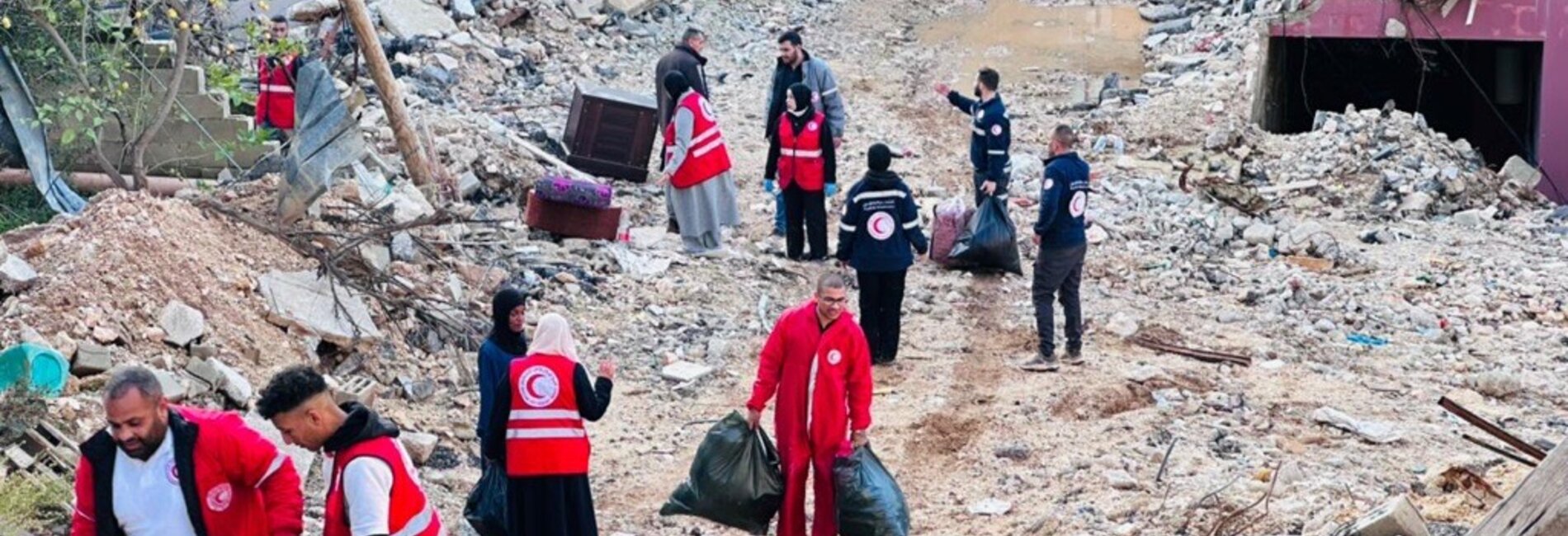
- On 14 December, Israeli authorities issued demolition orders for 25 buildings in and around Nur Shams refugee camp, in Tulkarm governorate. According to the Palestinian District Coordination Office (DCO), the orders target both single-family houses and multi-unit residential buildings, affecting approximately 70 households, and are concentrated in three neighbourhoods of the refugee camp. Although the demolitions were scheduled to begin on 18 December, Israeli authorities froze the orders on that day until further notice, following legal action. On 17 December, Israeli forces restricted the movement and access of Palestinian residents as they attempted to retrieve belongings from homes targeted by the demolition orders. According to local community sources, despite coordination arrangements, residents faced severe checks at checkpoints installed by Israeli forces at the camp’s entrance and were given insufficient time to remove their belongings. On the same day, the Palestine Red Crescent Society (PRCS) reported that Israeli forces forced its teams and volunteers to undergo search before entering Nur Shams Camp to evacuate civilians who had entered the camp to retrieve their belongings.
- Between 9 and 22 December, OCHA documented 46 Israeli settler attacks against Palestinians that resulted in casualties, property damage or both. The attacks led to the killing of a Palestinian child (see above) and the injury of 24 Palestinians (of whom five were children), including 23 by Israeli settlers and one by Israeli forces. During the same period, three Israeli settlers were injured by Palestinians. So far in 2025, OCHA has documented over 1,770 settler attacks that resulted in casualties or property damage in more than 270 communities across the West Bank, of which 65 per cent took place in Ramallah, Nablus and Hebron governorates. This is an average of five incidents per day. Among the key incidents during the reported period, three incidents took place against two Palestinian communities in the Jordan Valley and one Palestinian Bedouin community in Jerusalem governorate, as illustrated below:
- On 14 December, Israeli settlers attacked Ein ad Duyuk al Fauqa community (about 900 residents) in Jericho governorate, physically assaulting and injuring seven Palestinians, including women, children, and a man with a disability, and causing damage to residential properties. The attack occurred in the early morning hours, when settlers raided the community and broke into several residential structures while families were present. During the incident, Israeli settlers damaged windows and belongings in at least three houses and reportedly stole equipment and personal belongings. Settler attacks have intensified over the past two months in Ein ad Duyuk al Fauqa, reportedly by settlers believed to be from a settlement outpost established in August 2024 near three outposts established in the area since 2012. Residents report near-daily raids and harassment by settlers from this outpost, who are believed to have perpetrated attacks against the nearby Bedouin community of Al Mu’arrajat East that resulted in its depopulation in July 2025.
- In two separate attacks on 16 and 22 December, Israeli settlers from a newly established outpost raided the Palestinian herding community of Al Hadidiya (~ 70 residents) in Tubas governorate. On 16 December, settlers damaged and cut electrical cables connected to a donor-funded solar panel system supplying electricity to two out of about nine households in the western section of the community. On 22 December, settlers broke into animal shelters, harassing residents and forcing families to remove livestock feed and water troughs, claiming they were too close to fencing erected around the settlement outpost. According to local sources, settlers chased livestock herds and drove quad bikes through grazing areas, causing the animals to scatter and putting them at risk. During the same incident, settlers attacked another animal shelter and stole at least seven water troughs used for animal drinking. Settler attacks have intensified in Al Hadidiya following the establishment of a settlement outpost within the community boundaries on 24 November 2025. Since then, residents have reported almost daily settler incursions into residential and grazing areas, harassment, and threats.
- On 22 December, Israeli settlers shot and injured with live ammunition three Palestinians (a 60-year-old man and his two adult sons) and Palestinians threw stones and injured three settlers during the same incident in the Abu George Road Nkheila Bedouin community in Jerusalem governorate. According to local community sources, this followed a raid into the community by Israeli settlers from a newly established settlement outpost near the community, which culminated in mutual stone throwing by the settlers and Palestinians, noting that they have faced recurrent settler attacks, raids and intimidation since the establishment of the outpost in July 2025.
- For key figures and additional breakdowns of casualties, displacement and settler violence between January 2005 and November 2025, please refer to the OCHA West Bank November 2025 Snapshot.
Demolitions and Evictions
- Between 9 and 22 December, OCHA documented the demolition of 50 Palestinian-owned structures for lacking Israeli-issued building permits, which are almost impossible for Palestinians to obtain. Forty-two (42) of the structures were in 14 villages and towns in Area C of the West Bank, while the remaining eight structures were in four areas in East Jerusalem. In total, 94 Palestinians, including 43 children, were displaced and more than 2,200 people were otherwise affected. The demolished structures included 10 residences (of which eight were inhabited), 26 agricultural and livelihood structures, eight water and sanitation structures, and six other structures. Among the demolished structures were three demolished in a public park in Mikhmas village, in Jerusalem governorate, affecting more than 2,000 people.
- Out of 19 displaced families during the reporting period, 10 households comprising 50 people, including 21 children, were displaced on 22 December in a single demolition of a four-storey residential building in the Wadi Qaddum area in Silwan in East Jerusalem. In addition, six households comprising 31 people were affected, including some who had leased their apartments and relied on the rent as a primary income source. The demolition incident, which was reportedly carried out without prior notice despite ongoing legal proceedings, lasted for over 12 hours, during which Jerusalem Municipality staff and Israeli forces closed all entrances to the Wadi Qadoum area and forcibly entered apartments, physically assaulting residents and expelling them from their homes. According to two Israeli NGOs, Ir Amim and Bimkom, the plot of land on which the residential building was constructed in 2014 had been designated by Israeli authorities as a green area, and residents have repeatedly attempted to advance a new zoning plan and engage with the authorities, but these efforts have faced obstacles, contributing to the renewed threat of demolition.
- The remaining 44 people displaced were recorded in four villages of Area C. In As Samu’ (Hebron) and Husan (Bethlehem), on 9 December, 24 people, including 16 children, were displaced following the demolition of four inhabited houses. On 16 December, 15 people, included three children, were displaced in Deir Qaddis village in Ramallah governorate, and five people, including three children, were displaced in Qalandiya village, in Jerusalem governorate, due to the demolition of two, two-storey residential buildings in both locations.
- On 14 December, the Israeli police forcibly evicted three Palestinian families from their three-storey residential building in the Batn Al Hawa area of Silwan, in East Jerusalem. As a result, 13 people, including four children, one elderly woman, and two persons with disabilities were displaced. The families owned, built and resided in these homes for over 50 years, but a lawsuit by the Israeli settler organization Ateret Cohanim claiming that the land had been Jewish owned more than a hundred years ago was accepted by the court. This is the fifth eviction incident in Batn al Hawa since February 2024, which in total resulted in the displacement of 11 Palestinian families comprising 49 people. These families are among more than 90 families in Batn al Hawa, comprising over 450 people including about 200 children, who remain at risk of forced displacement due to eviction cases filed against them by Ateret Cohanim settler organization. Following earlier endorsements by the Israeli Supreme Court of the eviction of five Palestinian families in Batn al Hawa, the UN Human Rights Office (OHCHR) said in June 2025 that the “rulings were based on discriminatory laws that permit Jewish individuals to reclaim property lost in the 1948 war, while denying Palestinians the same rights.”
- Overall, at least 243 Palestinian households in East Jerusalem have eviction cases filed against them in Israeli courts, the majority by settler organizations, placing more than 1,000 people, including over 460 children, at risk of forced displacement. Evictions have grave physical, social, economic and emotional impact on Palestinian families concerned. In addition to depriving the family of a home – its main asset and source of physical and economic security – evictions frequently result in disruption in livelihoods, increased poverty and a reduced standard of living. The high legal fees families incur when defending a case in court further strain already meagre financial resources. The impact on children can be particularly devastating, including post-traumatic stress disorder, depression, anxiety and diminished academic achievement. Moreover, the establishment and continued presence of settlement compounds within Palestinian areas have significantly affected the daily lives of Palestinian residents, contributing to an increasingly coercive environment that may place additional pressure on them to leave. The main elements of this environment include increased friction; restrictions on movement and access; and a reduction on privacy due to the presence of private security guards and accompanying surveillance cameras.
Worsening Displacement Trends in the West Bank
- Demolitions linked to the Israeli authorities’ discriminatory planning regimes in Area C and East Jerusalem were historically a main driver of displacement in the West Bank. Between 2009 and 2022, OCHA documented the displacement of over 13,000 Palestinians in the West Bank by demolitions, mainly due to the lack of building permits, which are almost impossible for Palestinians to obtain. In the last three years, settler violence and access restrictions emerged as an equally major trigger of displacement throughout the West Bank, especially in Palestinian Bedouin and herding communities in Area C, while operations by Israeli forces have become a chief cause of mass displacement from refugee camps. During this period, more than 12,000 Palestinians have been displaced due to demolitions (all types) and Israeli settler violence and access restrictions. In addition, in 2025, nearly 32,000 Palestinians have been displaced by Palestinian and Israeli forces operations in Jenin refugee camp as well as by Israeli forces operations in Tulkarm and Nur Shams refugee camps, some of whom had been previously displaced due to operations in the camps (see OCHA West Bank November Snapshot).
- Palestinian Bedouin and herding communities have been especially vulnerable to forced displacement, primarily in Area C. Demolition threats coupled with restrictions on access to land to graze livestock, their primary source of income, and growing attacks by Israeli settlers, have constrained the ability of these communities to develop sustainable livelihoods, limited their development potential, and are increasingly subjecting them to the risk of permanent displacement from their communities. Overall, in the last three years, OCHA has documented the displacement of over 6,400 Palestinians in Area C across the West Bank.
- Escalating Israeli settler violence, with the acquiescence, support, and in some cases participation of Israeli forces, has worsened the coercive environment in the occupied West Bank and heightened the risk of forcible transfer facing Palestinians. Since January 2023, when OCHA began to systematically document displacement linked to specific attacks of settler violence, over 700 Palestinian families comprising roughly 3,900 people have been displaced due to settler attacks and access restrictions. The displacement incidents were recorded in 85 communities and areas on the outskirts of towns and villages across the West Bank, predominantly Bedouin and herding communities in Area C. These encompass 29 communities that experienced such displacement in 2023, 30 communities in 2024, and 42 communities in 2025 – including 16 communities that experienced displacement across years (see Figure 1). Of the total, over 2,200 Palestinians were displaced from 33 communities and habitual areas of residence, which have become emptied of their Palestinian residents, including 12 communities in 2023 (of which eight were in the aftermath of 7 October), 11 in 2024 and 10 so far in 2025.

- The single most affected governorate by displacement due to settler attacks and access restrictions has been the Ramallah governorate, which accounted for 41 per cent of displacement within this context over the past three years (about 1,600 out of 3,900), followed by the Hebron governorate, which had about 720 people displaced, mainly in 2023. Of note, communities in the Jordan Valley area that spans four governorates experienced growing displacement in the past three years in connection to settler attacks on Palestinian families and their property and accounted for a third of such displacement across the West Bank in 2025 (see Figure 2).

- Forced displacement and recurrent settler attacks have profound impacts on Palestinian communities. According to the health and protection clusters, settler and military violence create a pervasive climate of fear and chronic stress, with recurrent exposure to violence severely impacting the mental well-being of families, especially children, and causing trauma-related symptoms such as nightmares, panic attacks, and severe anxiety. In the 2026 Flash Appeal for the Occupied Palestinian Territory, humanitarian partners have prioritized the provision of immediate, coordinated assistance for families displaced by demolitions, forced evictions, operations by Israeli forces and settler violence across the West Bank. Planned response activities comprise rapid provision of temporary shelter solutions, emergency repairs, rental support, and essential non-food items to meet urgent needs and reduce protection risks. Through close coordination among shelter, protection, water and sanitation and other cluster partners, humanitarian actors are working to ensure that they deliver support to displaced families in a timely, dignified, and accountable manner while strengthening community resilience and mitigating the risk of further forcible displacement.
Funding
- As of 23 December, Member States disbursed approximately US$1.6 billion out of the $4 billion (40 per cent) requested to meet the most critical humanitarian needs of 3 million out of 3.3 million people identified as requiring assistance in Gaza and the West Bank, including East Jerusalem, under the 2025 Flash Appeal for the Occupied Palestinian Territory. Nearly 88 per cent of the requested funds is for the humanitarian response in Gaza, with just over 12 per cent for the West Bank. In November, the oPt Humanitarian Fund managed 128 ongoing projects, totalling $73.5 million, to address urgent needs in the Gaza Strip (89 per cent) and the West Bank (11 per cent). Of these projects, 61 are being implemented by international NGOs, 51 by national NGOs and 16 by UN agencies. Notably, 58 out of the 77 projects implemented by international NGOs or the UN are being implemented in collaboration with national NGOs. For more information, please see OCHA’s Financial Tracking Service webpage and the oPt HF webpage. On 8 December 2025, the UN and its humanitarian partners launched a Flash Appeal for $4.06 billion to address the humanitarian needs of 2.97 million out of 3.62 million people identified as requiring assistance in Gaza and the West Bank, including East Jerusalem, in 2026. Nearly 92 per cent of those required funds are for the humanitarian response in Gaza, with just over eight per cent for the West Bank.
* An earlier version of this report incorrectly stated that the Palestinian male killed by Israeli settlers in Tuqu' town on 16 December was a child. He was later confirmed to have been 18 years old. All figures and related references have been rectified accordingly, with asterisks indicating where changes have been implemented.
SUBSCRIBE TO RECEIVE OCHA'S INFORMATION PRODUCTS
 SUBSCRIBE
OCHA Sites










Follow Us
Support
Your donations go to relief organizations delivering quick and effective support to Palestinians in need.