
Humanitarian Situation Report | 27 March 2026
Highlights
- Millions of people throughout the Occupied Palestinian Territory remain reliant on relief aid provided to them amid tight restrictions; many lack protection from Israeli policies and acts of violence that cause casualties, property destruction and displacement.
- In the first three months of 2026, the number of Palestinians displaced in the context of settler violence and access restrictions has reached 1,697, surpassing the whole of 2025; 38 communities have been emptied in this context since 2023.
- Since the onset of the regional escalation, over 150 settler attacks resulted in casualties or property damage in about 90 communities – more than six attacks per day.
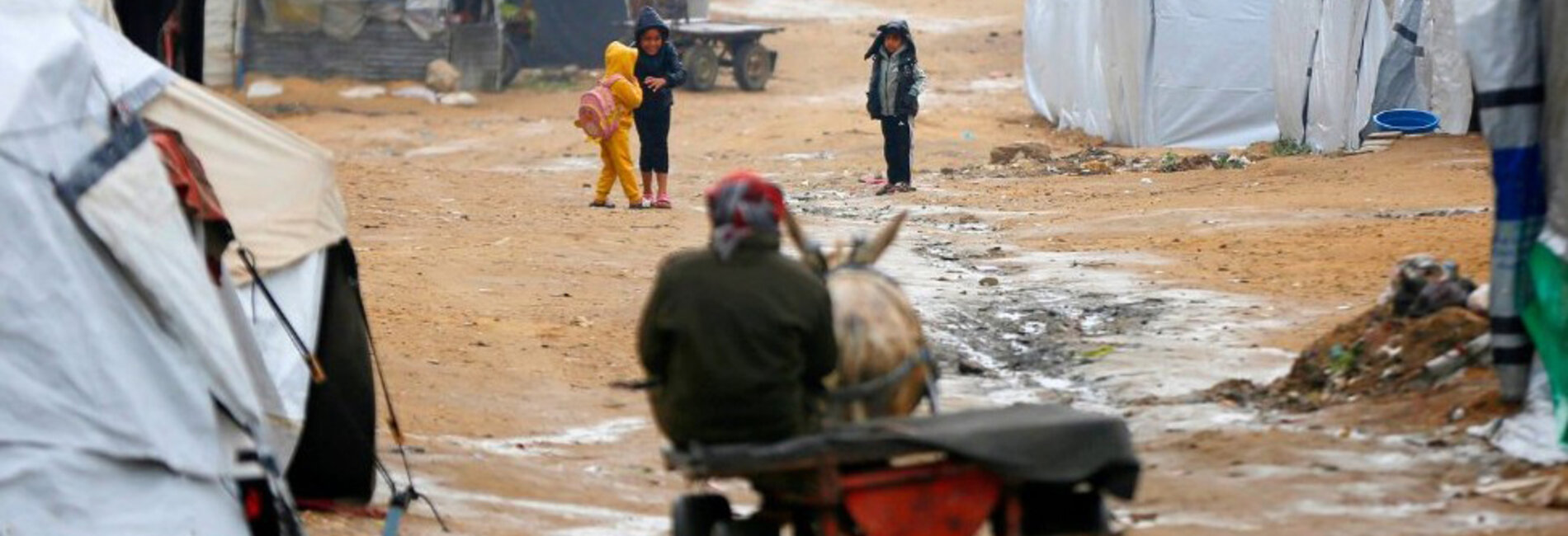
- In Gaza, repeated rainstorms and a recent airstrike have destroyed and damaged shelters, as most people remain in displacement sites where living conditions are dire due to overcrowding, water and sewage accumulation, and inadequate access to basic necessities like drinking water, soap, lighting, safe cooking fuel and shelter materials.
- Following a spike in skin infections, humanitarians are scaling up the distribution of hygiene kits, but there is an urgent need for pest control materials and chemicals.
Overview
Eid al Fitr was marked by many Palestinian families amid continued tightened restrictions and heightened risks to their safety. These included risks and restrictions that intensified in the context of the ongoing regional escalation – such as the ongoing closure of Zikim Crossing on Gaza Strip’s perimeter and the risk of debris falling over residential areas of the West Bank. They also included longstanding policies and practices, such as evictions in East Jerusalem, settler violence across the West Bank, and restrictions on the import of items that are critically needed in war-torn in Gaza.
West Bank
Violence and coercive policies and practices in the West Bank, including East Jerusalem, remain high, causing casualties, damage, and further displacement. Since the onset of the regional escalation, OCHA has documented more than 150 settler attacks resulting in casualties or property damage in about 90 communities across the West Bank, with an average of more than six attacks and roughly four communities affected per day.
Displacement linked to settler violence and access restrictions continues to sharply increase, surpassing 2025 levels within the first three months of 2026. Since 1 January, 1,697 Palestinians have been displaced, over two-thirds in the Jordan Valley, while more than 5,600 people have been displaced since 2023, including from 38 communities that have been completely depopulated.
In East Jerusalem, on 20, 22 and 25 March, Israeli forces forcibly evicted 15 Palestinian households comprising 70 people including 29 children in the Batn al Hawa area of Silwan, to enable the takeover of the properties by Ateret Cohanim, a settler organization whose ownership claims have been upheld by Israeli courts. Out of dozens of families in Batn al Hawa who have eviction cases filed against them by Ateret Cohanim settler organization, more than 30 have been displaced, the majority (24) since February 2024 and more than half (17) since the beginning of 2026. In a statement issued on 26 March, the Humanitarian Country Team described the latest developments as a dangerous escalation in unlawful forced evictions and called upon the Israeli authorities to cease and reverse evictions and settlement expansion.
In the West Bank, since the onset of the regional escalation, OCHA has documented more than 150 settler attacks resulting in casualties or property damage in about 90 communities, with an average of more than six attacks and roughly four communities affected per day. These included 46 attacks documented between 17 and 23 March, which resulted in the injury of 32 Palestinians, damage to homes, livelihood structures, electricity infrastructure and other property, and the displacement of 45 people from four communities.
Since the regional escalation on 28 February, and as of 23 March, the Palestinian Civil Defense documented at least 227 incidents of falling missile fragments across the West Bank, distributed across multiple governorates. The highest number of incidents was recorded in Ramallah governorate (78), followed by Tubas (35), Jerusalem (28), Tulkarm (27), Jenin (16), Hebron (13), Nablus (9), Jericho (8), Bethlehem (7), Salfit (4) and Qalqiliya (2). While many incidents occurred in open areas without reported consequences, a significant number resulted in damage to residential structures, agricultural assets and infrastructure, as well as casualties. On 17 March, in Beit Awwa town in Hebron governorate, missile fragments struck a residential area, killing three Palestinian women and injuring at least seven others. On 18 March, a Palestinian woman succumbed to injuries sustained in the same incident, bringing the total toll to four fatalities, all women.
According to the World Health Organization (WHO), between 28 February and 25 March 2026, there were 15 attacks on health care in the West Bank. Of these, 10 incidents reported between 28 February and 3 March affected ambulances, with health partners indicating that ambulance crews were denied access at checkpoints and subjected to searches. Under WHO’s Surveillance of Attacks on Health Care (SSA) system, these incidents are classified as attacks as they involve obstruction and interference with the delivery of health services. In Atara and Khirbet Abu Farah, where two Palestinians were killed and nine injured during settler attacks so far in 2026, WHO is preparing the delivery of medical supplies to Trauma Stabilization Points to strengthen the villages' capacity to provide lifesaving interventions.
Casualties and Settler Attacks
Between 17 and 23 March, 47 Palestinians, including seven children and two women, as well as one Israeli settler were injured in the West Bank, including East Jerusalem. Among the injured Palestinians, 21 were injured by Israeli forces (including four children and two women) during 14 raids and other operations across the West Bank, six during settler attacks, three while attempting to cross the Barrier in Jerusalem and Tulkarm governorates to reach East Jerusalem and Israel, and one during an eviction in East Jerusalem.
During raids and other Israeli forces’ operations, which involved arrests, house searches and incidents of physical assault, at least 34 Palestinians, including 16 women, were arrested, about 20 houses were searched, and at least 11 Palestinians were injured, including three children and one woman. Of the total, nine were shot with live ammunition, four by rubber bullets and the rest were injured due to physical assault and or tear gas inhalation.
On 21 March, an Israeli settler died and another one, along with a Palestinian, were injured in a collision between an off-road motorized vehicle and a Palestinian vehicle near Beit Imrin village, in Nablus governorate. According to an Israeli statement, the authorities are investigating whether this was an attack. All of those injured received first aid from the Palestine Red Crescent Society (PRCS). The Palestinian driver handed himself over to Israeli authorities and his vehicle was confiscated.
Following this incident, Israeli forces imposed widespread movement restrictions across the northern West Bank, closing road gates and checkpoints from Sinjil village in Ramallah governorate northward to Silat ad Daher/Homesh checkpoint in Jenin governorate for over 12 hours, severely restricting Palestinian movement.
In parallel, between 21 and 23 March, Israeli settlers carried out a series of 32 seemingly coordinated attacks across 30 Palestinian villages and communities, about one-third of them in Nablus governorate. On 22 March alone, the number of settler attacks (16 attacks) and affected communities (15 communities) reached the highest levels recorded in a single day since the beginning of the year (see chart). In one of these attacks, in Jalud village, in Nablus governorate, settlers damaged community and livelihood structures and partially burnt the building housing the village council and a medical clinic, serving about 1,000 people.

Overall, between 17 and 23 March, OCHA documented at least 46 Israeli settler attacks against Palestinians across 41 communities in the West Bank, resulting in casualties, property damage, or both. Most incidents were recorded in Nablus governorate (13), followed by Ramallah (10) and Tubas (seven). These attacks involved arson, stone-throwing, physical assaults, vandalism and road blockages, resulting in at least 32 Palestinian injuries (26 by settlers and six by forces), vandalism of 30 vehicles, and damage to at least 20 homes. Three of the homes were fully burnt, resulting in the displacement of three households comprising 14 people, including two children, in Al Fandaqumiya village in Jenin governorate and Deir al Hatab village in Nablus governorate.
Attacks also affected infrastructure and livelihoods. On 22 March in Turmus’ayya village, Ramallah governorate, settlers cut the main water pipeline supplying seven households (31 people, including children) and damaged parts of the electricity network. On the same day, in Beita town, Nablus governorate, settlers destroyed an electricity generator supplying several homes and livestock barracks.
Displacement due to Demolitions and Settler Attacks
Between 17 and 23 March, OCHA documented the demolition of 10 Palestinian-owned structures – all in Area C and all for lacking Israeli-issued building permits, which are almost impossible for Palestinians to obtain. The structures included four homes, four animal shelters, and two latrines. As a result, 24 Palestinians, including 13 children, were displaced, and the livelihood and access to services of others was undermined. One of the demolished homes was in Khirbet al Marajim, in Nablus governorate, where 11 people were displaced, and the other three houses, alongside two latrines and an animal shelter, were in Umm Qussa herding community, in Hebron governorate, where 13 people were displaced.
In East Jerusalem, on 20, 22 and 25 March, Israeli forces forcibly evicted 15 Palestinian households comprising 70 people including 21 children in the Batn al Hawa area of Silwan, to enable the takeover of the properties by Ateret Cohanim, a settler organization whose ownership claims have been upheld by Israeli courts. Out of dozens of families in Batn al Hawa who have eviction cases filed against them by Ateret Cohanim settler organization, more than 30 have been displaced, the majority (24 households) since February 2024 and more than half since the beginning of 2026 (17).
Protection Cluster partners have reported a rapidly deteriorating protection environment in Silwan, where available legal remedies have been largely exhausted, and many other families face imminent risks of eviction and demolition. OCHA visited the families and carried out an assessment of their needs. Displaced families require emergency shelter and cash assistance as well as continued protection services, including mental health and psychosocial support. According to the Protection Cluster, families are concerned about limited housing options within East Jerusalem, high rental costs, and risks linked to relocation outside the city, which may affect residency rights and expose them to additional protection risks.
On 17 March, two Palestinian families comprising 11 people, including five children and four women, were forcibly displaced from Area B of Rammun town, in Ramallah governorate. According to the families, they relocated to safer areas closer to the built‑up part of the town due to ongoing intimidation and attacks by Israeli settlers from a nearby settlement outpost established in early January. Since the settlement outpost establishment, settlers have repeatedly grazed their livestock between the families’ shelters, emptied water tanks, harassed residents, and restricted their access to surrounding grazing areas.
On 21 March, an extended Palestinian family comprising four households – or 20 people, including nine children – was forcibly displaced from the Ath Thu‘la area in Khirbet ‘Atuf, Tubas governorate. Their displacement followed repeated intimidation, threats of physical harm, and livestock theft by settlers and water disconnections, including an 11‑day disconnection reportedly carried out by Israeli forces and settlers while digging a new trench. In some incidents, settlers, reportedly from an outpost near Tammun mountain, close to Taysir checkpoint, threatened to kill family members, stole livestock, and blocked most roads and access points to service centres in Tubas and Nablus. The families left behind three residential tents and one livestock shelter, and when they attempted to return to retrieve their structures, Israeli forces declared the area a “closed military zone.” Since the beginning of the year, eight families comprising 37 people, including 15 children, have been displaced from Ath Thu‘la. The remaining three to four families continue to face heightened vulnerability to displacement under similar circumstances.
Since 1 January 2026, 1,697 Palestinians from 33 communities have been displaced in the context of settler violence and access restrictions, with more than 68 per cent of the displacement recorded in Jordan Valley communities, primarily among Bedouin and herding groups. This figure already exceeds the total displacement recorded for the whole of 2025 (1,658).
Since January 2023, when OCHA began systematically documenting displacement linked to specific incidents of settler violence, 1,037 Palestinian households – comprising more than 5,600 people, including over 2,600 children – have been displaced across 107 communities and residential areas. Of these, over 3,200 Palestinians were displaced from 38 communities that have since been completely emptied of their Palestinian residents.
Gaza Strip
In the Gaza Strip, airstrikes, shelling, and gunfire continued across multiple areas, reportedly resulting in casualties. Overall, according to the Ministry of Health (MoH) in Gaza, between 17 and 25 March, 13 Palestinians were killed, two died of wounds, and 59 people were injured, bringing to overall reported casualty toll since the announcement of the ceasefire in October 2025 to 689 fatalities and 1,860 injuries. On 25 March, an airstrike hit a displacement site in Deir al Balah, damaging 45 shelters, of which 15 were destroyed. Following an assessment of the affected households, efforts by humanitarian partners are ongoing to respond to their needs.
The recent sandstorm that swept across Gaza on 14 March has further exacerbated the shelter emergency, as most people remain displaced throughout the Strip. At least an estimated 1.7 million people are sheltering in approximately 1,600 displacement sites recently verified by the Site Management Cluster, where living conditions are characterized by vermin and parasite infestations. Skin rashes transmitted by fleas, ticks, and other pests are now common among displaced communities.
Between 16 and 22 March, 104 households were affected by rainstorms and fire incidents; humanitarian partners have begun distributing multisectoral assistance packages, comprising mostly shelter and hygiene items, to 51 households and tarpaulins to 16 households.
In addition, during the same period, more than 150 other scattered alerts were received for households in Khan Younis and Gaza city living in damaged houses and needing tarpaulins. Efforts continue to assess and attend to those needs. On 25 and 26 March, rainfalls flooded or otherwise damaged more tents across Gaza.
Market conditions remain volatile. According to WFP’s Palestine Food Security Market Monitor, in early March, Gaza saw sharp spikes in food and cooking gas prices after the Israeli authorities temporarily closed all crossings citing security concerns linked to the regional escalation. Although the Kerem Shalom crossing later reopened and markets partially stabilized, prices for key food items, especially vegetables, remained higher than in late February, with tomatoes reaching record levels. Limited commercial truck entry deepened market instability in a context already characterized by severe damage to local agriculture, ongoing liquidity challenges and limited employment. A 10-day halt in cooking gas deliveries between 26 February and 8 March drove black market prices sharply upward and caused its disappearance from official distribution channels during that period, with nearly half of the population continuing to rely on unsafe waste-burning methods to cook in March. Retailers also struggled, with low stock levels and extreme price fluctuations, underscoring the urgent need to increase supply flows and support local production.
Gaza Humanitarian Operations
The humanitarian community in Gaza continues to provide critical supplies and services amid severe constraints spanning access restrictions, fuel scarcity, and disruptions to the supply chain. Such impediments prevent people from accessing vital resources that they need.
For the fourth consecutive week, aid workers have been relying solely on the Kerem Shalom Crossing for stock replenishment, as Zikim Crossing in the north remains closed. The Israeli authorities cited security concerns linked to the regional escalation as the reason for the closure. Restrictions also remain on the types of items that may be brought into Gaza.
Read more
While operational continuity is being preserved across most sectors, this is often achieved through costly workarounds that strain systems and reduce efficiency.
Between 17 and 24 March, the United Nations coordinated 32 humanitarian movements with the Israeli authorities inside Gaza. Of the total, 12 missions were facilitated. Seven were initially approved but then faced impediments, being eventually either partially or fully accomplished. One mission was denied outright, while 12 others were cancelled by the organizers.
Through some of these missions, the UN and its partners supported medical evacuations and offered services to Palestinians returning from abroad – as these movements resumed following a 20-day suspension. The scale of these operations remains limited and discussions are ongoing with the authorities to ensure voluntary movements across the border can proceed safely, with dignity and in line with international humanitarian law.
Incoming supplies
Between 16 and 24 March, based on data retrieved from the UN 2720 Mechanism dashboard at 12:00 on 25 March, 7,765 pallets of aid administered by the UN and its partners were offloaded at the Israeli side of Kerem Shalom crossing. About 38 per cent of these pallets contained shelter items, another 38 per cent carried food assistance, followed by operations, logistics and telecommunication materials (4 per cent), water, sanitation and hygiene (WASH) items (3 per cent) and education supplies (less than 1 per cent). The remaining 16 per cent comprised a combination of other shelter, health and operational commodities.
During the same period, 10,398 pallets of aid were collected from the Palestinian side of Kerem Shalom. About 74 per cent of these pallets contained food, followed by nutrition (8 per cent), operations, logistics and telecommunications items (8 per cent), shelter items (7 per cent), WASH (just above 1 per cent) and education supplies (less than 1 per cent).
Overall, between the announcement of the ceasefire on 10 October 2025 and 24 March 2026, approximately 361,000 pallets of humanitarian cargo were offloaded, and over 366,000 pallets were collected from the operating crossings. Some 1,542 pallets, less than 1 per cent of all collected aid, were looted during transit within Gaza.
Offloading rates from the Egypt corridor remain stable. Between 16 and 22 March, 78 per cent of all truckloads manifested by the UN and its partners for this corridor were successfully offloaded at Kerem Shalom – the same rate as between 1 and 15 March.
Ongoing technical issues with the Ashdod scanner are severely hampering the clearance and dispatch of aid, with approximately 30 containers per day currently being cleared through individual physical inspection.
Between 15 and 25 March, UNOPS brought into Gaza over 1.4 million litres of diesel and almost 46,000 litres of benzine to support humanitarian aid operations.
All data in this section, on incoming supplies, refers to humanitarian cargo tracked by the UN 2720 mechanism; as such, it does not include bilateral donations and the commercial sector.
-
For more information, see the online UN 2720 Mechanism Dashboard.
Food Security
- As of 22 March, Food Security Sector (FSS) partners had provided more than 180,000 families (900,000 people) with household-level general food assistance as part of the monthly distribution cycle. Due to disruptions in the flow of supplies and available stocks, partners could only provide half rations, covering 50 per cent of caloric needs. The limited flow of humanitarian and commercial goods, including cooking gas, in the context of the regional escalation has further strained market availability across Gaza, driving up the cost of vegetables and firewood during Ramadan. As a result, some partners have had to adjust cooked‑meal menus or suspend fresh‑produce distributions due to shortages and high prices.
- As of 17 March, partners continued to prepare and deliver some 1.5 million meals through 165 kitchens across Gaza. This included 512,000 daily meals produced in the north and 978,000 meals in southern Gaza.
- Bread production continued, with approximately 130,000 two-kilogram bread bundles prepared daily through 30 UN-supported bakeries as of 22 March. One-third of this bread is distributed for free, along with cooked meals, while the rest is sold through 139 retailers at a subsidized price of NIS 3 ($0.95) per bundle.
- Food Security Sector partners continue to use the Building Blocks platform to reduce overlap in food assistance. Since March 2025, 14 organizations have adopted the use of the platform. As of 1 March 2026, an overlap of approximately 46.4 metric tonnes of in-kind food assistance has been prevented thanks to these joint efforts.
- The recovery of agricultural production in the Strip requires the full and unrestricted entry of agricultural inputs through both commercial and humanitarian channels. To resume food production at scale, multiple complementary inputs must be available together and in a consistent manner.
Health
- As of 24 March, 32 emergency medical teams (EMTs), consisting of 310 national and 77 international staff, remained deployed to deliver essential health services. The teams provided over 11,000 consultations between 18 and 24 March. Restricted and unpredictable international staff rotations in and out of Gaza, currently limited to only one day per week, however, are causing delays, cancellations and reduced operational capacity.
- Efforts are ongoing to expand emergency department capacity at the Al-Shifa Hospital in Gaza city. Thirty-five additional beds are planned to improve patient flow and reduce overcrowding. Improvements to triage systems and mass casualty management protocols are also ongoing.
- Limb reconstruction support activities are progressing, with patients’ screening ongoing and more than 3,000 cases registered at Al-Shifa Hospital clinics since 16 March. Over the past week, WHO received 20 orthopedic drills, 10 neurosurgery drills and limited orthopedic consumables, which are planned for dispatch to the Nasser Medical Complex in Khan Younis. Disease surveillance coverage has expanded through the onboarding of additional health facilities. While overall communicable disease trends have declined over the past four weeks, skin infections are rising, especially in Khan Younis. Preparations for scaling up community-based surveillance are underway, including identification of shelters and partner coordination.
- Across the Strip, 17 hospitals and 12 field hospitals are providing obstetric and newborn care, though most are only partially functional. During the last week, UNFPA and partners have supported around 4,000 women with clean delivery kits, contraceptives, sexually transmitted infection treatment kits and essential medicines. The Health Cluster has also provided delivery equipment, including a cardiotocograph, to the Al Ahli Arab Hospital in Gaza city, enabling partial reactivation of maternity services at the facility.
- Medical evacuation of patients via the Rafah Crossing took place on 22 and 26 March. The UN continues engaging with relevant authorities to ensure safe, dignified voluntary movement of people in and out of Gaza.
- Delays in shipment of acute flaccid paralysis and environmental surveillance samples via the Kerem Shalom Crossing are affecting diagnostic turnaround times. Continued restrictions on the entry of critical medical supplies, particularly for specialized surgeries like ortho-plastic ones, are limiting service delivery. High patient caseloads, especially trauma and limb reconstruction cases, are overwhelming hospital capacity. Severe equipment and infrastructure shortages continue, including of incubators and diagnostic tools.
- Maternal and newborn health risks are substantial, with approximately 15 births per week occurring outside health facilities without skilled attendance. One in three pregnancies is high-risk, and 70 per cent of newborns are premature or underweight. In some facilities, multiple newborns share a single incubator, significantly increasing mortality risks. Access to family planning and breast and cervical cancer services remains extremely limited or non-functional.
For more information, see the online Heath Cluster Dashboard.
Nutrition
- Over the past two weeks, 35,110 children aged 6-59 months were screened for acute malnutrition across Gaza. Of these, 1,377 children (4 per cent) were admitted for acute malnutrition treatment, including 175 children (0.5 per cent) diagnosed with severe acute malnutrition (SAM). This brings the total number of malnourished children who received ready‑to‑use therapeutic food in the last two weeks to 4,779. Of the 175 SAM cases, 14, with or without nutritional oedema, were admitted for inpatient care in stabilization centres, while the remaining 161 were admitted for outpatient treatment. Additionally, 26,251 pregnant and breastfeeding women were screened for acute malnutrition, with 835 (3 per cent) admitted for treatment. Overall, 8,066 malnourished pregnant and breastfeeding women benefited from targeted supplementary feeding.
- During the same period, six infants younger than six months who were at risk of poor growth were referred and admitted for inpatient care at stabilization centres for acute malnutrition. Five other infants were newly enrolled to receive ready‑to‑use infant formula to ensure appropriate feeding. Four children above the age of five diagnosed with severe wasting and/or nutritional oedema were also admitted for inpatient care for acute malnutrition.
- A total of 26,055 caregivers, including pregnant and breastfeeding women/girls, received counselling on optimal infant and young child feeding and caring practices.
- In addition, 111,975 children aged 6-59 months and 37,791 pregnant and breastfeeding women received medium‑quantity lipid‑based nutrient supplements as part of the blanket supplementary feeding programme to prevent acute malnutrition.
- A total of 255 nutrition sites are currently active in Gaza, including 9 in North Gaza Governorate, 87 in Gaza city, 75 in Deir al Balah, 81 in Khan Younis and 3 in Rafah governorates.
For more information, see the online Nutrition Cluster Dashboard.
Water, Sanitation and Hygiene
- The repairs to the Bani Suhaila Mekorot water supply line from Israel to Khan Younis have been completed and the pipeline has resumed operations on 22 March. The Bani Saeed Mekorot line in Deir al Balah was also repaired and is in a testing phase, operating at 50 per cent capacity. In Gaza city, the Al Muntar Mekorot line from Israel remains functional since partners repaired it on 15 March. The per-capita drinking water available in the Strip is now between 4.5 and 6 litres per person per day. However, significant access to water challenges remain for families living far from these services.
- Additional WASH infrastructure repairs include the completion of two groundwater wells in the Az Zaitoun area of Gaza city and repairs to the sewage overflow at Al Bassa to divert open sewage to the sewage network.
- Since 11 March, partners distributed 7,979 hygiene kits, 17,315 dignity kits and 5,600 jerry cans, benefiting 47,800 people across the Strip. Thirty-seven WASH partners continue to distribute more than 18,600 cubic metres of drinking water daily through trucking to 1,926 collection points across the Strip.
- Skin infections, primarily via ectoparasites, have drastically increased. WASH partners are scaling up the distribution of hygiene kits in hotspot locations, however, there is an urgent need for pest control materials and chemicals.
Shelter
- Between 16 and 24 March**, Shelter Cluster partners reached 12,170 households with shelter assistance through in-kind and voucher-based modalities. In-kind distributions included 9,328 bedding items, 1,650 bedding kits, 1,800 sealing off-kits, 524 tents, 3,800 clothing kits and 1,557 kitchen sets.
- Several partners are scaling up emergency shelter kit (ESK) programming across Gaza through both external and local procurement modalities, adapting to ongoing access and approval constraints. An ESK comprises timber, tarpaulins, toolkits and other materials necessary to install improved emergency shelter solutions for households.
- Between 16 and 22 March, one partner brought into Gaza 500 framing kits (timber), marking the first entry of such items through humanitarian aid since March 2025.
For more information, see the online Shelter Cluster page.
Site Management
- Site Management Cluster (SMC) partners have continued to monitor the impact of adverse weather conditions across displacement sites. Persistent rainfall and strong winds further exacerbated the already dire living conditions in overcrowded sites.
- Between 16 and 24 March, the Cluster received 19 alerts from displacement sites across the Strip through the system activated in coordination with site focal points. These incidents affected approximately 2,012 people across some 400 households. Damage to temporary shelters remains the most severe impact, increasing exposure to harsh weather and exacerbating protection risks among displaced populations.
- The cluster completed a rapid site verification exercise covering approximately 1,600 active displacement sites hosting an estimated 1.7 million people across Gaza. The findings highlight persistent and widespread vulnerabilities:
- A significant proportion of sites (1,000) continue to face challenges related to water accumulation and inadequate drainage, contributing to heightened flood risks during rains.
- Fire hazards also remain a major concern in many sites, reflecting unsafe cooking options and overcrowded conditions for 46 per cent of the population living in displacement sites.
- Shelter conditions are also dire, with an estimated 5,000 households sleeping outdoors, and over 130,000 households (40 per cent of the assessed households) requiring additional shelter assistance.
- Access to basic services remains severely constrained: in around 45 per cent of sites, less than half of residents had sufficient drinking water in the past 30 days, while in approximately 42 per cent of sites, less than half of households had adequate access to soap.
- Access to safe and appropriate cooking fuel also remains limited, with only 64 sites relying on gas or diesel, while others resort to burning garbage or plastic. In 76 per cent of sites, people rely on their mobile phones for lighting at night, given only 10 per cent of sites have communal lighting, and less than one per cent of sites are linked to an electric grid.
- Although approximately 59 per cent of sites reported receiving food assistance in the past 30 days; with over 41 per cent of sites not receiving any support.
- Immediate priorities include shelter repairs, provision of reinforcement materials, site improvement works to mitigate weather-related risks, and addressing critical service gaps identified through the site assessment. Site management teams are currently working to install communal lighting, improve stormwater drainage, and mobilize site-level fire response groups to address critical risks in select sites.
Protection
- Between 16 and 24 March, partners provided protection services to approximately 10,000 people, including children, caregivers, women, persons injured and with disabilities, frontline workers across the Strip.
- Services focused primarily on psychological first aid, psychosocial support sessions and specialized mental health services on top of case management, legal assistance, disability-inclusive and rehabilitation services, and in-kind assistance.
- Important gaps remain in accessing essential specialized items and enabling materials needed to close cases or maintain service quality such as assistive devices, recreational and educational materials, psychosocial supplies, stationery, presentation tools, hygiene items and alternative energy sources.
For more information, see the online Protection Cluster dashboard.
Child Protection
- Between 16 and 22 March, Child Protection partners reached more than 4,000 children and caregivers through structured group mental health and psychosocial support sessions, individual counselling, mind-body therapy, recreational and resilience‑building activities, speech therapy and family‑based psychosocial support. These services were delivered across the Strip, aiming to strengthen coping capacities, support emotional wellbeing, and reinforce protective family and community environments.
- To further support children’s wellbeing during Ramadan, as well as through ongoing winterization and emergency response efforts, Child Protection partners distributed essential items to vulnerable families across Gaza. This included 8,000 pairs of children’s shoes, 14,000 hygiene kits (including 4,000 child‑specific kits), 9,000 dignity kits, 5,143 clothing vouchers for children, 1,944 sets of children’s clothing, and 96 family tents to improve living conditions in displacement settings. These distributions aimed to address urgent protection needs, strengthen children’s dignity, and support families facing worsening humanitarian conditions.
- In addition, 76 children at risk received case management and specialized protection services. Support included one‑on‑one counselling for high‑risk children, speech therapy for children with specific developmental needs, and the establishment of safe spaces to maintain service continuity within displacement sites.
Addressing Gender-Based Violence
- Ten partners addressing gender-based violence (GBV) reported conducting activities between 16 and 22 March. All 68 safe spaces for women and girls remained open throughout the Eid holidays. During this period 1,849 people received multi‑sectoral services addressing GBV, including psychosocial support and GBV case management.
- To expand access to confidential services addressing GBV, hotline numbers were widely shared within communities. As a result, 68 people received assistance through the hotlines during the reporting period.
- Additionally, 159 women received cash-for-protection assistance to help them take immediate safety measures and meet their independent needs. A total of 2,610 women received dignity kits and winterization items.
- To strengthen women’s empowerment and safety, one partner trained 32 people in computer skills, and 70 frontline workers received capacity‑building sessions on various topics.
- Furthermore, 752 people were reached through community mobilization and awareness‑raising activities focused on GBV risks, including the prevention of sexual exploitation and abuse and available referral pathways.
Mine Action
- Between 16 and 22 March, partners conducted 80 explosive hazard assessments in support of debris removal activities.
- During the same period, five emergency response missions were conducted in support of UNDSS.
- Between 12 and 18 March, explosive ordnance risk education activities reached over 9,220 people in Gaza city, Deir al Balah and Khan Younis.
- Since 12 March, one incident was recorded where explosive ordnance detonated, injuring four Palestinians. This brought the total number of such incidents since the ceasefire declaration in October 2025 to 42, leading to 25 people killed and 118 injured. Most of these incidents took place in Gaza city.
Education
- A total of 494 temporary learning spaces (TLSs) are currently operational across the Strip, providing an enrollment capacity of 300,243 learners, including 12,743 kindergarten-aged children and 287,500 school‑aged children. This represents approximately 43 per cent of the entire school‑aged population in Gaza, meaning that more than half of pre‑school and school‑aged children still have no access to partner‑operated learning facilities. Across these 494 TLSs, 7,854 teachers are deployed. While some receive incentives, many continue to volunteer, and ensuring consistent and predictable teacher incentives remains a significant and growing challenge for Education Cluster partners.
- According to reported data, less than one per cent of learners accessing TLSs are children with disabilities. Despite ongoing efforts to expand inclusive education, a substantial number of children with disabilities still lack access to learning opportunities. The Cluster continues to advocate for inclusive programming and supports initiatives aimed at improving access, participation, and educational continuity for children with disabilities.
- Access to learning materials remains limited. Between 7 and 24 March, only 428 learning kits entered Gaza, sufficient for approximately 17,000 learners, with no new entries since 17 March.
- Following heavy sandstorms on 14 March, at least one TLS, serving about 850 learners, was reported damaged.
For more information, see the online Education Cluster page.
Funding

Sources: Financial Tracking System and oPt HF
** Double asterisks indicate that a figure, sentence, or section has been rectified, added, or retracted after the initial publication of this update.
SUBSCRIBE TO RECEIVE OCHA'S INFORMATION PRODUCTS
 SUBSCRIBE
OCHA Sites










Follow Us
Support
Your donations go to relief organizations delivering quick and effective support to Palestinians in need.