
Humanitarian Situation Report | 26 November 2026
Key Highlights
- At least 600 aid workers have been killed in Gaza since October 2023, including 13 since the ceasefire was announced, following the killing of an UNRWA staff member in an Israeli strike on 23 November.
- The World Health Organization reports 692 suspected meningitis cases between 1 October and 23 November, following a sharp increase in cases in mid- and late October, with infants under one year of age accounting for most cases.
- Essential winter supplies in Gaza cost over eight times as much when procured locally as when procured internationally, while only 35 per cent of minimum winter shelter response requirements are funded, according to the Norwegian Refugee Council.
- Child protection partners in Gaza report increasing child labour and hazardous responsibilities, exposing children to exploitation, explosive remnants of war and further disruptions to education.
- According to the Logistics Cluster, 405 trucks carrying humanitarian supplies were offloaded on the Israeli side of Kerem Shalom Crossing between 16 and 23 November, a six per cent decrease compared with the preceding week.
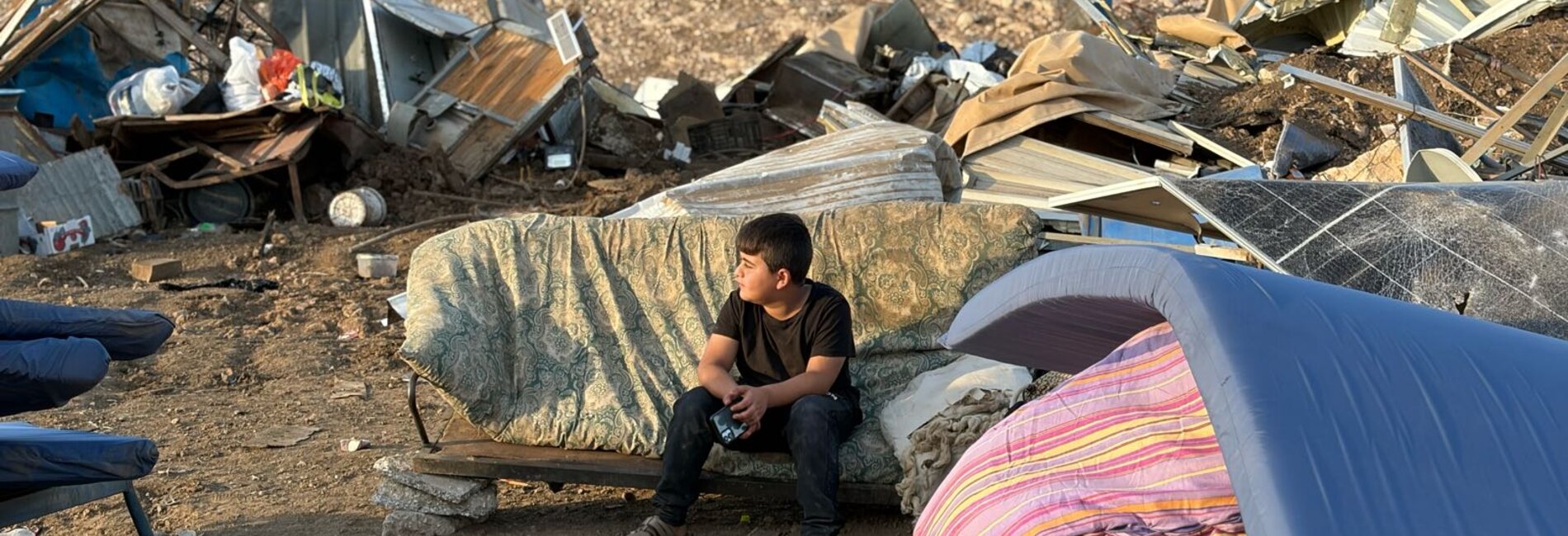
- Intensified movement restrictions, settler violence and demolitions in Masafer Yatta, in southern Hebron governorate, are severely disrupting access to essential services and livelihoods, heightening the risk of further displacement.
- Israeli authorities demolish 79 Palestinian-owned structures across the West Bank in one week, including all remaining structures in Khirbet Samra in the northern Jordan Valley.
- The Humanitarian Country Team calls for urgent protection of Palestinian olive harvesters amid unprecedented levels of harvest-related settler violence.
- A US$40 million allocation from the occupied Palestinian territory Humanitarian Fund was launched. The 2026 Flash Appeal remains only 35.5 per cent funded.
West Bank
The reporting period is 17 to 23 November 2026 unless otherwise specified.
Israeli forces' operations, settler violence, demolitions and movement restrictions continued to drive displacement and undermine Palestinian livelihoods and access to essential services across the West Bank, including East Jerusalem. In herding and farming communities, particularly in Masafer Yatta and the Jordan Valley, the combined impact of violence, access restrictions and the destruction of essential infrastructure is increasingly undermining communities' ability to remain on their land.
During the reporting period, an Israeli settlement guard shot and killed a Palestinian man near Dura al Qar' (Ramallah). According to the Israeli military, a settlement security coordinator opened fire when two Palestinian men approached Beit El settlement, killing one, while the other was arrested. The Israeli military stated that the incident was under investigation.
Overall, 47 Palestinians, including six children, were injured during the reporting period, of whom eight were injured by Israeli settlers and 39 by Israeli forces. Twelve Palestinians (26 per cent) were injured in the context of settler attacks, including three in incidents related to the olive harvest. Operations by Israeli forces displaced 11 Palestinians, while demolitions displaced another 67.
The cumulative impact of violence, demolitions, displacement and movement restrictions is also taking a toll on Palestinians' mental health and psychosocial well-being. According to a report published by Médecins Sans Frontières (MSF) on 19 November, exposure to violence accounted for approximately 70 per cent of recorded reasons for seeking mental health care from MSF teams in the West Bank between October 2022 and April 2026. The report also found that anxiety and depression-related symptoms accounted for about two thirds of reported mental health conditions. These needs are compounded by restrictions on access to health services and humanitarian assistance.
Masafer Yatta: Intensifying access restrictions and protection risks
| KEY FIGURES | |
|---|---|
| 97 | 160+ |
|
structures demolished within the Israeli-designated firing zone in Masafer Yatta in 2026, accounting for nearly a quarter of all structures demolished there since 2009. |
settler attacks resulting in casualties or property damage documented in these communities since January 2023. |
Since the beginning of October, intensified movement restrictions imposed by the Israeli authorities, alongside recurrent settler attacks, have increasingly undermined access to essential services, livelihoods and humanitarian assistance in Masafer Yatta, in southern Hebron governorate. Restrictions on vehicle access to the area designated by the Israeli authorities as “Firing Zone 918” have severely disrupted deliveries of food, water and animal fodder, as well as access to health and education services. These arrangements are insufficient to accommodate daily schooling, emergency medical needs and regular deliveries of essential supplies, including water.
According to the Water, Sanitation and Hygiene (WASH) Cluster, water trucking operations serving more than 1,500 Palestinians across 10 of the 12 remaining communities within the Israeli-designated firing zone in Masafer Yatta remain severely constrained. The programme was initiated in late April following settler attacks in January and February 2026 that severed the communities’ water supply network, which partners remain unable to restore. The programme was recently expanded to cover three additional communities outside the firing zone. Following limited deliveries in November, Israeli settlers reportedly seized a water truck and physically assaulted its driver on 14 November near Isfai al Fouqa. Although residents and the village council subsequently retrieved the truck, deliveries were further disrupted. So far in November, limited quantities of water have reached only three communities inside the firing zone and two outside it.
Between 1 October and 23 November, Israeli forces confiscated at least 18 Palestinian-owned vehicles, including agricultural tractors, private vehicles and a vehicle belonging to a local organization. According to the village council, Israeli authorities had verbally communicated through the Palestinian District Coordination and Liaison Office that vehicles operating within the designated area, except those belonging to the Palestinian Ministry of Education, would be subject to confiscation. The closure of a road gate near Carmel settlement on 23 October has further restricted movement along key routes serving at least 5,800 Palestinians south of Yatta. The restrictions also coincide with the lambing season, a critical period for herding communities, with disruptions to fodder supplies threatening livestock health and productivity and the sustainability of household livelihoods.
The area was designated by the Israeli authorities as a firing zone in the 1980s. On 17 June 2025, the Israeli military issued a notice that the area would be used for military training. In conjunction with this announcement, the Israeli Civil Administration issued a planning directive allowing the retroactive dismissal of Palestinian planning applications, further heightening the risk of mass demolitions and displacement. Since 2009, Israeli authorities have demolished 422 Palestinian-owned structures in the firing zone area of Masafer Yatta, including 240 (57 per cent) that had been provided as humanitarian assistance. Nearly a quarter of these structures (97) were demolished in 2026 alone, displacing 118 Palestinians, including 58 children, and otherwise affecting 136 people. Agricultural, livelihood and water and sanitation structures accounted for approximately 60 per cent of all structures demolished this year. Schools, health clinics and other essential civilian infrastructure remain at risk of demolition.
Since January 2023, more than 160 settler attacks resulting in casualties or property damage have been documented in communities in Masafer Yatta located within the Israeli-designated firing zone, including 41 so far in 2026. Attacks have repeatedly targeted homes, water and electricity infrastructure, livestock, agricultural assets and vehicles used to transport essential supplies and students. In some cases, settlers have subsequently attacked homes belonging to families already displaced, further undermining prospects for return. Since the beginning of 2026, 50 Palestinians, including 29 children, have been displaced due to settler violence and related access restrictions. The combined impact of recurrent demolitions, sustained settler violence, intensified movement restrictions and the erosion of livelihoods is heightening the risk of further displacement.
Protection partners continue to provide legal assistance, including follow-up on vehicle confiscations and access restrictions, alongside psychosocial support, specialized child protection services, gender-based violence prevention and mitigation interventions, cash for protection and protective presence where access allows. Given restrictions on vehicle access, partners are also supporting community-based protection initiatives to identify urgent needs and facilitate referrals, documenting incidents and their humanitarian impact, and raising urgent protection concerns through existing coordination mechanisms.
Demolitions and displacement
| KEY FIGURES | |
|---|---|
| 79 | 31% |
| Palestinian-owned structures demolished for lacking Israeli-issued building permits in one week (17–23 November). | of displacement due to settler violence, related access restrictions and demolitions for lacking building permits in 2026 occurred in the Jordan Valley. |
During the reporting period, Israeli authorities demolished or forced Palestinians to demolish 79 Palestinian-owned structures across the West Bank, including East Jerusalem, for lacking Israeli-issued building permits, displacing 67 Palestinians, including 29 children, and otherwise affecting more than 3,000 people. Of the demolished structures: 69 were in Area C, nine in East Jerusalem and one in Area B, while 13 structures had been provided as humanitarian assistance. Agricultural, water and sanitation structures accounted for more than half of all structures demolished, illustrating the wider impact of demolitions on livelihoods and access to essential services.
In the northern Jordan Valley, on 22 November, Israeli authorities demolished all 44 remaining structures in Khirbet Samra (Tubas), leaving the community's last two resident households, comprising 19 people, including seven children, without shelter. The demolitions also affected essential infrastructure and livelihood assets, including animal shelters, fodder storage facilities, water tanks, latrines provided as humanitarian assistance and solar power systems. At least 15 of the structures belonged to two households comprising eight people who had been displaced to Tubas city in March 2026 following recurrent settler attacks and harassment. According to affected families, they received no recent demolition orders or advance warning, preventing them from salvaging their properties and essential assets. The destruction of all remaining structures further undermines prospects for previously displaced families to return.
The Jordan Valley accounts for nearly one third of all displacement due to settler violence, related access restrictions and demolitions for lacking Israeli-issued building permits across the West Bank so far in 2026 (1,567 out of 4,992). Within the Jordan Valley, settler violence and related access restrictions accounted for 87 per cent of such displacement.
Elsewhere in the northern Jordan Valley, demolitions in Ein al Beida and Bardala (Tubas) displaced three Palestinians and otherwise affected 37 people, including 18 children. The destruction of greenhouses, crops, irrigation infrastructure, agricultural storage facilities and roadside shops further undermined affected families' livelihoods.
In Area B, on 18 November, Israeli authorities damaged and confiscated pumping equipment and associated infrastructure at a groundwater well in Bidya (Salfit), citing the lack of Israeli-issued permits and rendering the well inoperable. The well served at least 3,000 Palestinians and supplied a significant proportion of the municipality's water for domestic and agricultural purposes. According to the WASH Cluster, the loss of this water source has exacerbated water shortages and increased reliance on costly water trucking, with estimated losses exceeding NIS 600,000 (US$177,537).
In East Jerusalem, demolitions in Jabal al Mukabbir, Al Bustan in Silwan and the Ein Jweizeh area of Al Walaja displaced four households comprising 16 people, including six children. Three quarters of those displaced were forced to demolish their own homes to avoid additional fines and demolition costs.
Displacement in the context of Israeli forces' operations also continued. On 23 November, Israeli forces forcibly displaced three Palestinian households comprising 11 people from a residential building in Al Hadaf neighbourhood of Jenin city, citing its location within the area of the ongoing Israeli forces’ operation in Jenin refugee camp. According to an affected resident, the families were given approximately only 10 minutes to vacate their homes. They are temporarily staying with relatives.
Settler violence and the olive harvest
| KEY FIGURES | |
|---|---|
| 55 | 435 |
| settler attacks resulting in casualties or property damage between 17 and 23 November. | harvest-related settler attacks resulting in casualties or property damage between 1 September and 15 November 2026. |
During the reporting period, 55 settler attacks resulting in casualties or property damage were documented across 46 Palestinian communities, compared with a weekly average of 53 such attacks so far in 2026. Attacks continued to target residential property, livelihood assets and essential infrastructure, further undermining living conditions in affected communities.
On 17 and 19 November, Israeli settlers reportedly seized a water tank in Khirbet al Marajem, near Duma (Nablus), and vandalized a main water pipeline in Al Mas'udiya (Nablus), disrupting water supply to approximately 80 people in the latter community. Residents there have also reportedly been without electricity for more than two months after settlers damaged electricity infrastructure and prevented repairs. Other incidents involved the burning of Palestinian-owned vehicles in Hebron governorate and the theft of an electricity generator and destruction of an agricultural structure in Deir Ballut (Salfit).
Settler violence and access restrictions continued to disrupt the olive harvest, including in areas where access requires prior coordination with the Israeli authorities. During the reporting period, 11 harvest-related settler attacks resulting in casualties or property damage were documented. Between 1 September and 15 November, 435 such attacks were documented, the highest recorded in any olive harvest season since the UN began documenting such incidents (see graph).
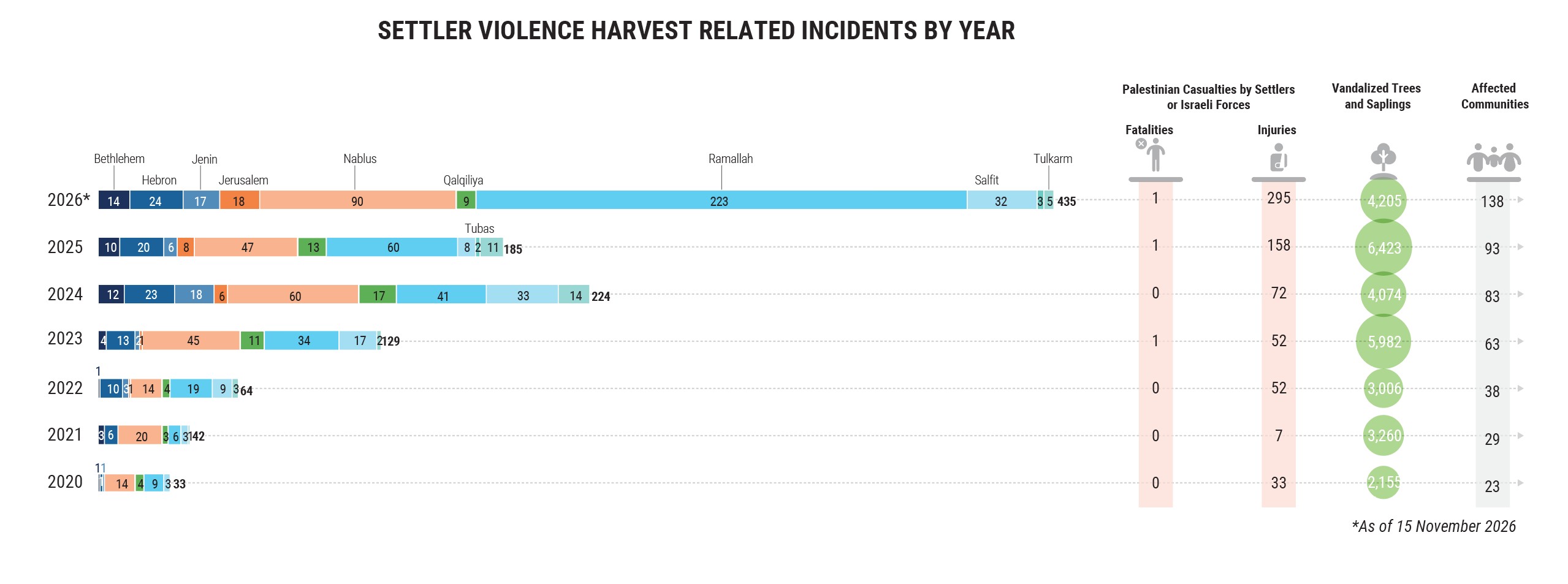
On 20 November, the Humanitarian Country Team (HCT) called on the Israeli authorities to urgently protect Palestinian olive harvesters, ensure safe and reliable access to agricultural land and hold perpetrators of settler attacks accountable, highlighting the implications of continued violence and access restrictions for livelihoods, food security and future harvests.
Humanitarian response activities at a glance – West Bank
17-23 November 2026 (unless otherwise specified)
Shelter: Partners reached 340 people (67 households) through shelter repairs, the provision of non-food items (NFIs) and cash assistance, primarily in Hebron, Nablus and Tubas governorates.
Child Protection: Between 15 and 22 November, partners provided psychological first aid to approximately 5,000 students in communities affected by displacement in Hebron city. Theatre-based awareness activities on risk mitigation and child rights reached more than 1,750 children, while 900 children participated in psychosocial debriefing and storytelling sessions. Structured and unstructured psychosocial support reached at least 161 children and adolescents across Hebron, Tulkarm, Jenin and Nablus governorates. Positive parenting sessions reached at least 39 women, including in Masafer Yatta and Jenin, while nine children at risk were identified and assessed for case management support.
Water, Sanitation and Hygiene: Earlier in November, partners delivered a total of 280 cubic metres of water to only three out of 10 communities in need of water assistance within the Israeli-designated firing zone in Masafer Yatta.
Gaza Strip
The reporting period is 17 to 23 November 2026 unless otherwise specified.
Israeli airstrikes, shooting and shelling continued to cause casualties across the Gaza Strip. Humanitarian operations remain constrained by insecurity, access restrictions, shortages of essential supplies and funding shortfalls. Damage to infrastructure, compounded by shortages of maintenance supplies, is undermining the continuity of essential services, while a sharp increase in reported meningitis cases has heightened public health concerns amid deteriorating living and sanitation conditions.
According to the Ministry of Health (MoH) in Gaza, which operates under the de facto authorities, 29 fatalities were reported between 17 and 23 November, including people newly killed and those who died of wounds sustained earlier. Another 129 injuries were reported during the same period. On 21 November, MoH retroactively added 12 fatalities to the cumulative total after approving their identification details. This brought the total number of reported casualties since the October 2025 ceasefire agreement to 1,679 fatalities and 6,100 injuries.
An Israeli military operation in Deir al Balah between 18 and 19 November temporarily displaced hundreds of Palestinians, who started returning on 19 November following the end of the operation. Initial estimates indicated that more than 18,000 people, including approximately 4,000 people living in displacement sites, were staying in the affected area. Several humanitarian service points were also located in the area, while partners warned of potential sewage and stormwater overflows should critical infrastructure be damaged.
On 23 November, an UNRWA staff member was killed and three others were injured in an Israeli strike near a water well in Jabalya, while carrying out their regular duties to provide water services to the community. As of 23 November, at least 600 aid workers had been killed in Gaza since October 2023, including 13 since the ceasefire agreement was announced on 10 October 2025. These include 403 UN personnel and personnel supporting UN activities, three other UN-contracted personnel, 86 national non-governmental organization (NGO) staff, 55 Palestine Red Crescent Society (PRCS) personnel, 49 international NGO staff and four International Committee of the Red Cross (ICRC) personnel.
According to the Logistics Cluster, 527 UN and partner trucks carrying humanitarian supplies were manifested for entry into Gaza between 16 and 23 November. Of these, 405 were offloaded on the Israeli side of Kerem Shalom, including 152 from Jordan, 111 from Egypt, 51 from the West Bank, 46 from Israel and 45 from Ashdod. The number of trucks offloaded decreased by six per cent compared with the preceding week (433 trucks). Through Cluster-managed common transport services, three rotations collected 1,869 pallets from Kerem Shalom for delivery to Cluster-managed temporary storage facilities, while 1,333 pallets were dispatched from these facilities to partner locations across Gaza.
According to the Cash Working Group (CWG), citing the Gaza Chamber of Commerce, 902 trucks entered Gaza between 16 and 22 November, of which 799 (89 per cent) carried commercial supplies, including 499 trucks carrying food, 135 shelter materials, 83 hygiene items, 22 cooking gas and six medicines and medical supplies. Non-essential commodities accounted for approximately six per cent of commercial trucks, compared with an average of around one third between October 2025 and October 2026. Nevertheless, consumer prices remained broadly unchanged compared with the preceding week and more than three times their pre-October 2023 levels, continuing to constrain households' purchasing power.
Essential services and operational constraints
| KEY FIGURES | |
|---|---|
| 70% | 43% |
| reduction in the water trucking fleet of private desalination operators Source: WASH Cluster |
of generators serving MoH hospitals and clinics have exceeded their maintenance intervals Source: Health Cluster, citing MoH data |
Shortages of engine oil, lubricants, spare parts and maintenance equipment are undermining humanitarian logistics and the continuity of essential services across Gaza. According to the WASH Cluster, less than half of the solid waste collection machinery operated by service providers is operational. The water trucking fleet of private desalination operators has declined from 500 to 150 trucks, while desalination plants are operating below capacity due to shortages of water treatment chemicals and generator shutdowns. Similarly, the Health Cluster reported that 20 of 47 generators serving MoH hospitals and clinics have exceeded their maintenance intervals, threatening the continuity of life-saving health services.
Daily cooking gas requirements across Gaza are estimated at a minimum of 130 metric tons. According to the Food Security Sector, limited supplies continue to undermine households’ and community kitchens’ ability to prepare meals safely. The proportion of the population reportedly relying on unsafe waste-burning methods as an alternative to cooking gas increased from 72 per cent in August to 77 per cent in September and 80 per cent in October.
Damage to drainage and sewage infrastructure, compounded by shortages of maintenance supplies, is limiting preparedness for further rainfall. In Gaza city, the pumping station at Sheikh Radwan Lagoon is operating at less than 40 per cent of its design capacity, while sewage inflows and the accumulation of rubble and waste are reducing the basin's functionality. Across Gaza's stormwater network, an estimated 4,000 manholes lack covers, increasing the risk of blockages and sewage overflows during heavy rainfall. At Moumania School in Gaza city, where flooding affected 150 tents, WASH partners repaired damaged large-diameter stormwater channels and urban drains to manage surface and subsurface water flows ahead of the next rains.
MoH reported the depletion of medical textiles and clothing supplies across its facilities, warning of potential disruptions to surgical, inpatient and emergency services. It also reported the loss of approximately 76 per cent of medical imaging equipment during the war, further limiting diagnostic capacity. According to the Health Cluster, critical shortages of chemotherapy medicines, intravenous fluids, haemodialysis supplies, laboratory reagents and surgical consumables persist.
Opportunities to relocate people from unsafe displacement sites and damaged buildings remain severely limited due to overcrowding, the scarcity of safe land and the need for displaced families to remain within reach of essential services. On 22 November, humanitarian partners visited a displacement site in Deir al Balah following the collapse of a sand dune. Following a visit by representatives of the affected displaced families to an existing site managed by the Egyptian Committee where additional shelters are available, efforts are underway to facilitate the voluntary relocation of families at high risk. Meanwhile, on 23 November, the International Organization for Migration (IOM) reported that Israeli authorities had approved the entry of approximately 70,000 pieces of timber and more than 1,200 toolkits to construct more durable emergency shelters for some 1,200 families.
On 25 November, the Norwegian Refugee Council (NRC), citing Shelter Cluster data, reported that the cost of essential winter shelter and household items for a family of six exceeds $6,000 when procured locally in Gaza, compared with approximately $700 when procured internationally and transported into Gaza by humanitarian organizations. Restrictions on the entry of humanitarian supplies and funding shortfalls continue to hamper efforts to meet winter-related needs. Only 35 per cent of the $283 million required for the Shelter Cluster’s minimum winter response has been funded. Available stocks and incoming supplies cover less than 20 per cent of requirements for blankets, mattresses and solar lights, and less than one per cent of winter clothing needs. An estimated 1.36 million people, representing 65 per cent of Gaza's population, continue to live in tents and makeshift shelters.
Health and disease surveillance
| KEY FIGURES | |
|---|---|
| 692 | 5-fold+ |
| suspected meningitis cases reported between 1 October and 23 November, predominantly among infants under one year of age Source: WHO, 23 November | increase in suspected viral meningitis cases in October compared with the monthly average in February and March Source: WHO, 23 November |
According to the Health Cluster, between 15 and 22 November, reportable communicable diseases accounted for nearly 18 per cent of approximately 259,000 consultations reported through 222 health reporting locations. While reported cases of acute respiratory infections, skin diseases and acute watery diarrhoea declined slightly compared with the preceding week, Khan Younis governorate accounted for half of all reported acute watery diarrhoea cases across Gaza, with Al Mawasi alone accounting for 22 per cent.
Between 1 October and 23 November, the World Health Organization (WHO) recorded 692 suspected meningitis cases through the Early Warning, Alert and Response System (EWARS), including 476 suspected viral and 216 suspected bacterial cases. In October alone, 272 suspected viral meningitis cases were reported, more than five times the monthly average of 45–50 cases recorded in February and March, alongside 108 suspected bacterial cases, compared with an average of about 17 cases per month earlier in the year. Cases remained high in November, with 204 suspected viral and 108 suspected bacterial cases reported between 1 and 23 November. Four associated deaths have been recorded since late August.
MoH linked the increase in cases to deteriorating living and environmental conditions, including overcrowding, damaged water and sewage networks, potential contamination of drinking water and inadequate hygiene conditions. Only about four per cent of cases have been laboratory-confirmed, and limited laboratory capacity continues to hamper differentiation between viral and bacterial meningitis, delaying targeted response efforts. WHO, together with MoH and WASH partners, is expanding disease surveillance, strengthening laboratory capacity and implementing clinical case management protocols, while calling for the unimpeded entry of medical supplies needed to respond to disease outbreaks.
Children: mounting risks to safety, well-being and development
| KEY FIGURES | |
|---|---|
| 210,000 | 1 million |
| learners reached through the Accelerated Learning Programme to date Source: Education Cluster |
children targeted through the Back to Play initiative between January and July 2027 Source: UNICEF / Child Protection Area of Responsibility |
As World Children's Day was marked on 20 November, child protection partners highlighted increasing child labour and hazardous responsibilities amid prolonged displacement, food insecurity and disrupted education. Children are collecting scrap metal in rubble-dumping areas, selling food and travelling long distances to obtain food and bread, particularly in northern Gaza and Al Mawasi area of Rafah, exposing them to explosive remnants of war, exploitation and further interruptions to their education. Unsafe cooking arrangements in overcrowded tents are also contributing to burns and fires.
Children with disabilities face compounded vulnerabilities, including heightened exposure to winter-related risks and persistent barriers to rehabilitation, assistive devices, medical care and nutritional support. In An Nuseirat, protection partners reported malnutrition among children with disabilities alongside shortages of specialized food and nutritional supplements. More broadly, partners report persistent fear and psychosocial distress among children and caregivers, alongside growing demand for structured psychosocial support and recreational activities.
Efforts to address learning loss continue through the Accelerated Learning Programme, which has reached approximately 210,000 learners to date with mathematics and Arabic learning materials for grades 2-9. Some 2,500 teachers have completed preparatory sessions, but additional funding is urgently needed to expand coverage and sustain implementation, including for the printing of learning materials. Child protection partners distributed more than 45,000 winter clothing kits between 1 and 14 November, although gaps remain among children attending temporary learning spaces.
On 20 November, the UN Children’s Fund (UNICEF) launched the Back to Play initiative, bringing together approximately 1,000 children to mark World Children's Day. The initiative aims to reach one million children across Gaza between January and July 2027 through safe and inclusive play spaces, recreational activities and structured psychosocial support, with particular attention to children with disabilities and injured children.
Humanitarian response activities at a glance – Gaza Strip
17–23 November 2026 (unless otherwise specified)
Shelter and Site Management: Partners reached 10,780 households across Gaza through the distribution of shelter and household items, including 251 tents, 132 toolkits, 3,821 transparent plastic sheets, 15,284 mats, 564 mattresses, 127 blankets, 417 kitchen sets, 206 bedding sets and 174 winter clothing kits. Site management partners continued implementing winterization and flood mitigation activities, including the installation of sandbags and flood barriers, drainage clearance and shelter reinforcement.
Water, Sanitation and Hygiene: Partners completed the rehabilitation of two domestic water wells in Gaza city, serving approximately 50,000 people and reducing reliance on water trucking. Partners also continued clearing and repairing drainage infrastructure at flood-affected locations and distributed 77,000 reusable sanitation bags, 100 waste bins and 40 Safe Toilet latrines to displaced children and their families.
Health: Integrated teams comprising WHO surveillance, infection prevention and control, WASH and laboratory officers, together with MoH and UNRWA rapid response teams, conducted intensive field investigations at the main hospitals across the five governorates. Capacity-building training on communicable disease surveillance and laboratory sampling was delivered to 111 medical doctors at the three main MoH hospitals: Al Shifa, Al Aqsa and Nasser Medical Complex. In collaboration with the National Infectious Disease Committee, a unified protocol was developed on the case management and classification of meningitis cases and on laboratory sampling.
Food Security: As of 22 November, humanitarian partners supported the daily production of approximately 295 metric tons of bread, covering 35 per cent of estimated daily needs. The bread reached people through sales at retail outlets and bakeries, free bread distributions and communal ovens. In addition, 24 partners prepared approximately 605,000 cooked meals daily through 91 community kitchens, serving 1,360 locations on a daily or rotational basis. Between 1 and 22 November, partners had reached approximately 384,200 people (112,800 households) through in-kind food assistance, providing food parcels and wheat flour covering approximately 50 per cent of minimum caloric needs. Assistance continues to be provided on a rotational rather than monthly basis.
Nutrition: During the first half of November, partners screened approximately 25,660 children aged 6–59 months for acute malnutrition, of whom 613 were admitted for treatment, including 67 for severe acute malnutrition. During the same period, 1,775 children received ready-to-use therapeutic food, while preventive nutritional supplementation reached approximately 158,400 children and 83,800 pregnant and breastfeeding women. Some 18,250 caregivers received counselling on infant and young child feeding in emergencies. Currently, 286 nutrition sites are operational across the Gaza Strip and some 6,660 pregnant and breastfeeding women are receiving targeted supplementary feeding.
Education: Partners provided learning materials to some 31,700 school-aged children and are working to rehabilitate and upgrade temporary learning spaces, most of which were affected by heavy rainfall in early November, with the provision of 72 high-performance tents to support these efforts.
Protection: Partners reached at least 7,550 people through direct protection services, including mental health and psychosocial support (MHPSS), case management, legal assistance and explosive ordnance risk education. Separately, at least 7,580 people received protection-sensitive and intersectoral assistance, including cash, dignity kits, winter-related assistance and livelihood support. Protection partners also provided 124 returnees with psychological first aid, emergency assistance and referrals. Between 15 and 22 November, child protection partners recorded approximately 4,750 instances of children participating in MHPSS activities, provided case management to 255 children at risk and referred 163 children to specialized services. Partners also conducted 159 follow-up contacts and visits for unaccompanied and separated children, supported 30 children with disabilities through inclusive activities and referrals, and reached some 3,685 caregivers through parenting and psychosocial support. Child protection awareness and risk mitigation activities reached approximately 16,700 children and 5,470 adults, while 340 adolescents and youth participated in structured activities promoting life skills and resilience, including job-readiness training.
Joint Distribution Mechanism: The Joint Distribution Consortium responded to 20 incident appeals affecting 430 households across Gaza, predominantly in Deir al Balah (394 households). These included incidents of displacement, shelling and airstrikes, accidental fires, shelter collapses and strong winds. Based on rapid assessments, 219 households were classified as high-need, 205 as medium-need and six as low-need. Assistance was provided according to the type of incident, extent of damage and assessed household needs.
Humanitarian funding
On 16 November, the Humanitarian Coordinator launched a US$40 million allocation from the occupied Palestinian territory (oPt) Humanitarian Fund (HF), comprising $36 million for the Gaza Strip and $4 million for the West Bank. This complements an $18 million allocation from the Central Emergency Response Fund (CERF) in October, including $16.2 million for Gaza and $1.8 million for the West Bank. Together, the two pooled funds are providing $58 million in coordinated financing to address critical humanitarian needs across the oPt.
The HF allocation will support life-saving and protection-focused interventions across emergency shelter and winterization, WASH, multi-purpose cash assistance, health, education, food security, protection and support to displacement sites. In Gaza, the allocation combines immediate winter and displacement-related assistance with integrated support to underserved neighbourhoods, while in the West Bank it prioritizes communities affected by displacement, demolitions, settler violence and access restrictions. Projects will generally be implemented over six to 12 months, with shorter implementation periods for some time-critical interventions.
Despite these allocations, significant funding gaps persist. As of 20 November, only 35.5 per cent of the $4.06 billion requested under the 2026 oPt Flash Appeal had been funded, leaving $2.62 billion in unmet requirements.
** Double asterisks indicate that a figure, sentence, or section has been rectified, added, or retracted after the initial publication of this update.
SUBSCRIBE TO RECEIVE OCHA'S INFORMATION PRODUCTS
 SUBSCRIBE
OCHA Sites










Follow Us
Support
Your donations go to relief organizations delivering quick and effective support to Palestinians in need.