
Humanitarian Situation Report | 25 September 2026
Highlights
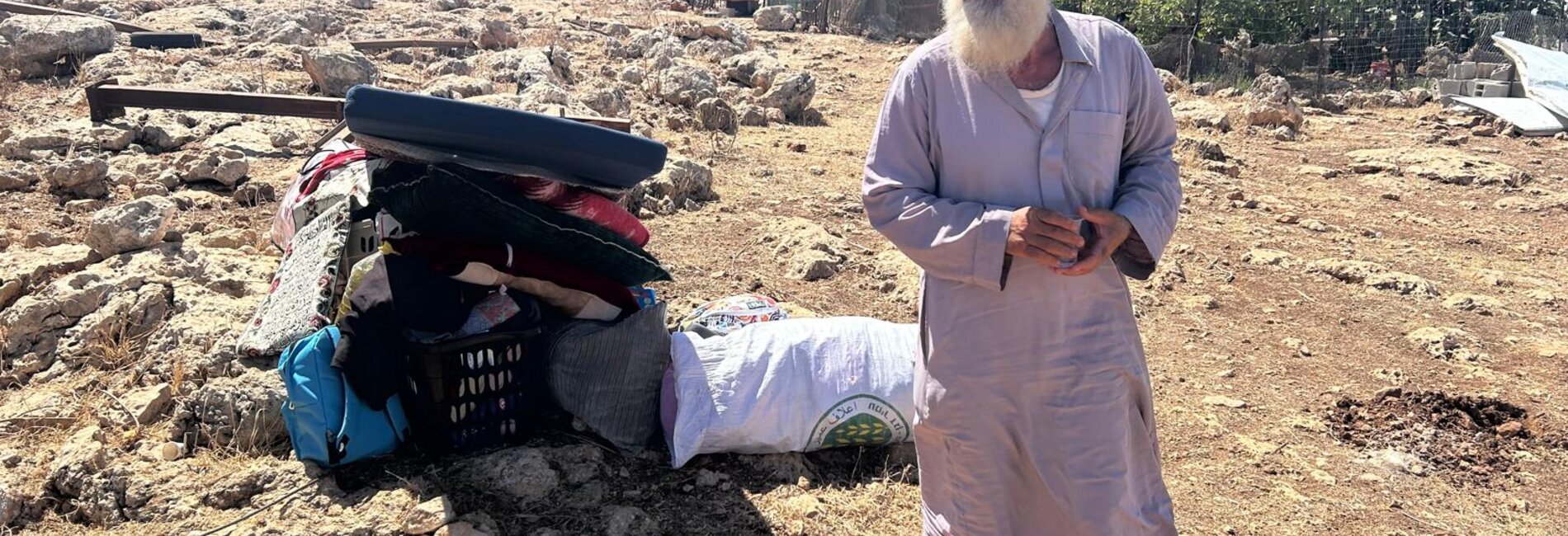
- Demolitions displaced 147 Palestinians across the West Bank in one week, more than three times the 2026 weekly average, including 58 people in South ‘Anata Bedouins, near the area designated for the E1 settlement expansion plan.
- Israeli forces’ operations and movement restrictions disrupted access to essential services for thousands of Palestinians in Ramallah governorate, while operations by Israeli forces in Nablus temporarily displaced families and closed schools and a health clinic.
- Funding shortfalls threaten mobile health services in Area C: 20 locations are at risk of losing mobile-clinic coverage without continued funding, while 17 locations are already without services.
- In Gaza, shortages of cancer medications, chemotherapy and radiotherapy supplies, dialysis materials, insulin and engine oil – caused by underfunding and lack of clearance for limited available medicines to enter Gaza – are disrupting life-saving services.
- The new academic year in Gaza began on 19 September with an estimated 200,000 children remaining out of school, amid funding shortfalls. Partners had prepared by removing rubble, cleaning some classrooms and providing bags and stationery. In the Strip, approximately 495,000 preschool and school-aged children are enrolled in learning spaces supported through the UN and partners’ humanitarian response.
- Funding shortfalls and restrictions are severely constraining preparations for the rainy season, with very limited available stocks covering only a fraction of the needs; hundreds of child-friendly spaces and protection services face disruptions.
- Across the Gaza Strip, 451 displacement sites identified as being at high risk of flooding are hosting an estimated 464,402 people.
Overview
Violence and restrictions continue to drive humanitarian needs in the Gaza Strip and the West Bank, while shortfalls in humanitarian funding are further holding back relief efforts. Addressing Member States as part of the General Assembly High-level Week, the United Nations Secretary-General António Guterres said that "we must not lose sight of the devastating situation in the Occupied Palestinian Territory."
Regarding Gaza, he said that “the resumption of assistance since the ceasefire was announced last October has brough some relief – but conditions remain intolerable... International law, including international humanitarian law, is brazenly violated. Humanitarian access remains severely restricted, and the level of human suffering is still off the charts.” He reiterated the need to allow the UN to perform its mandates in Gaza and for UN and humanitarian personnel to be protected, stressing that all parties must comply with international law and the orders of the International Court of Justice.
Regarding the West Bank, he said that "record levels of settler attacks and relentless efforts to expand settlements are pushing Palestinian communities to the breaking point. Such actions are unlawful and unjust." The Secretary-General further said that violence, displacement and settlement expansion by Israel "are bulldozing the path to peace and raising the spectre of ethnic cleansing."
West Bank
The reporting period for this section is 15 to 21 September unless otherwise specified.
Humanitarian needs across the West Bank continued to be driven by operations by Israeli forces, settler violence, demolitions and movement restrictions. During the reporting period, Israeli authorities demolished 86 Palestinian-owned structures, while one Palestinian family was forced to demolish its own home, resulting in displacement, loss of livelihoods and disrupted access to water. Operations and movement restrictions by Israeli forces resulted in injuries, arrests and temporary displacement, disrupted access to education and health services, and affected the movement of thousands of Palestinians. At the same time, funding shortfalls continued to constrain humanitarian partners’ capacity to respond to growing needs. Without continued funding, an estimated 20 locations in Area C could soon lose mobile clinic services.
Humanitarian partners continued to provide emergency shelter, water, sanitation and hygiene (WASH), health and child protection assistance in response to these and other needs. Shelter Cluster partners reached 798 people in 186 households across the West Bank, primarily through shelter repairs and rental support, alongside non-food items and cash assistance. About 64 per cent of those reached were in Hebron, Nablus and Jenin governorates. Health partners continued to deliver mobile-clinic services to communities facing difficulties accessing fixed health facilities, with 11 partners currently covering 227 locations in Area C.
WASH partners continued to respond to disruptions in water access. According to the Palestinian Water Authority, the Beit Iba well resumed operations on 16 September following a 54-day breakdown that had disrupted water supply to 11 communities. During the disruption, WASH partners provided emergency water trucking in three communities and supported contingency and preparedness measures for local service providers. In Khirbet ar Ras al Ahmar and Khirbet Atuf, 58 households have faced disrupted water access for over a month following reported settler damage to their water network. Israeli authorities’ closure of vehicular routes since 15 September has further restricted access, at times preventing water deliveries for several consecutive days. Affected households have been relying on mobile water tanks donated by WASH partners, with the village council coordinating water deliveries by tractor. Overall, WASH Cluster partners are implementing at least 100 emergency WASH interventions across 66 West Bank communities.
Child Protection partners continued to provide case management and other protection assistance amid financial and psychosocial pressures on vulnerable families. They registered 27 child protection case management cases in the northern West Bank and provided three assistive devices through case management services. Since the beginning of 2026, partners have provided cash-for-protection and in-kind assistance to 802 children and caregivers and clothing kits to 872 children. Access restrictions and limited availability of specialized mental health and psychosocial support services remain among the main challenges affecting the provision of child protection services.
Casualties and Operations by Israeli Forces
During the reporting period, Israeli forces shot and killed two Palestinian men in Ramallah and Jenin governorates, while a Palestinian shot and killed an Israeli settler in Ramallah governorate. At least 49 Palestinians were injured by Israeli forces or settlers, including about 30 in settler attacks. At least 16 Palestinians, including four children, were injured by Israeli forces during operations in Nablus, Jerusalem, Qalqiliya and Ramallah governorates.
On 15 September, Israeli forces shot and killed a Palestinian man inside his home during a search-and-arrest operation in Al Bireh city in Ramallah governorate; the Israeli military, as cited by the media, stated that he tried to grab a soldier’s weapon. On 20 September, Israeli forces shot and killed another Palestinian near Ganim settlement in Jenin governorate, stating that he had attempted a ramming attack. Ambulance crews reported being prevented from reaching the scene.
Also on 20 September, a Palestinian shot and killed an Israeli settler near Deir Nidham village and Halamish settlement. Israeli forces subsequently raided a hospital in Ramallah city and detained an injured Palestinian identified by the Israeli military as the suspected shooter. Israeli forces then imposed extensive movement restrictions across Ramallah governorate, disrupting access to homes, workplaces and essential services for thousands of Palestinians. The Palestinian Ministry of Education suspended school classes in the Ramallah and Jerusalem Suburbs education directorates on 21 September. During a subsequent operation in Biddu village, Jerusalem governorate, Israeli forces detained at least 67 Palestinian men, most of whom were later released, and physically assaulted three others. They also took over several homes and took measurements of the suspect’s family home in preparation for its punitive demolition.
Other operations disrupted services and displaced families. In Balata Camp and Camp No. 1 in Nablus, several Palestinians were injured, at least four families were temporarily displaced, and two UNRWA schools serving more than 450 students, a health clinic and nearby private schools were temporarily closed. Operations in Qalqiliya city and Al Mughayyir village (Ramallah) resulted in seven additional injuries and 45 detentions.
Separately, Israeli forces injured a Palestinian reportedly attempting to cross the Barrier near Ar Ram to reach East Jerusalem for work. Since 7 October 2023, 21 Palestinians have been killed and more than 300 injured while reportedly attempting to cross the Barrier.
Demolitions and Displacement
During the reporting period, Israeli authorities demolished 86 Palestinian-owned structures across the West Bank, including East Jerusalem, for lacking Israeli-issued building permits, and one Palestinian family of six was displaced after being forced to demolish its home in Silwan. Overall, the 87 structures included 30 homes, 49 agricultural and WASH structures, and eight other structures. The demolitions displaced 147 Palestinians, including 73 children, of whom 134 were in Area C and 13 in East Jerusalem, more than three times the 2026 weekly average of 43 people displaced on these grounds.

The largest incident occurred on 17 September in South ‘Anata Bedouins (Wa’ar al Beik), in Jerusalem governorate, where 13 structures were demolished, displacing 58 people, including 31 children. Together with two other demolition incidents in South ‘Anata and nearby Tublas between 8 and 17 September, Israeli authorities demolished 32 structures, displacing 66 Palestinians. Both communities are near the area designated for the E1 settlement expansion plan, where about 4,000 Palestinians living in 18 Bedouin and herding communities are at risk of forced displacement (see previous Humanitarian Situation Report).
Elsewhere in Area C, demolitions displaced 36 people in Um Al Hammam, Salfit governorate, and 23 in Al Jiftlik–Abu al ‘Ajaj, Jericho governorate. In Um Al Hammam, damage to approximately 400 metres of a municipal water pipeline disrupted water supply to the community and nearby farmers. WASH partners are mobilizing assistance, including repairing the pipeline and providing water storage, replacement latrines and hygiene items.
In East Jerusalem, three households comprising 13 people, including eight children, were displaced in demolitions in Beit Hanina and Silwan, including two previously demolished and reconstructed homes.
Settler Violence
During the reporting period, 51 settler attacks resulted in Palestinian casualties, property damage or both, including damage to agricultural land, crops, trees and irrigation infrastructure. At least 800 olive, fruit and palm trees were damaged, uprooted or burned across five governorates. In Khirbet Yarza, Tubas governorate, repeated attacks damaged crops, trees and irrigation infrastructure, while settlers set fire to an agricultural structure in Deir Ballut, Salfit governorate.
Settler attacks also disrupted access to basic services. In Al Mas’uddiya, Nablus governorate, approximately 65 Palestinians remained without electricity for more than 24 hours after settlers reportedly vandalized the community’s main electricity cable. Electricity infrastructure was also damaged in Susiya and Umm ad Daraj in Hebron governorate, affecting households and water-pumping infrastructure. In Tubas governorate, settlers damaged about 200 metres of irrigation pipelines in Khirbet Yarza, following similar damage the previous week, and punctured four water tanks used by herding families in Humsa–Al Bqai’a. In the Al Awsaj area of Jericho, settlers damaged agricultural water infrastructure serving Palestinian farms.
Other settler attacks damaged Palestinian homes and other civilian property. In At Tuwani, Hebron governorate, one agricultural structure was destroyed and a residential structure damaged by fire, affecting two families. In Silwad, Ramallah governorate, settlers damaged at least three homes and five vehicles.
Access to Health Care Constrained
Movement restrictions, insecurity and reduced health-system capacity continue to constrain access to health care across the West Bank, particularly for communities dependent on referral services in major urban centres. The World Health Organization (WHO) identifies movement obstacles, obstruction and detention at checkpoints, closures during Israeli forces’ operations, “prior coordination” requirements for ambulance movement, damage to roads and infrastructure, and declining patient permit approval rates among the factors impeding access to health care. On 19 September, Israeli settlers reportedly broke a window of an ambulance transporting a child to hospital in Al Mughayyir village, Ramallah governorate. Between January and August 2026, WHO documented 124 attacks on health care across the West Bank, affecting 100 health transports and 20 health facilities and resulting in four fatalities and 40 injuries. Of these attacks, 112 involved obstruction to health-care delivery.
Mobile clinics and other outreach services play an important role in bringing primary health care closer to communities where access to fixed health facilities is limited or unreliable. According to the Health Cluster’s latest mapping, 244 locations in Area C, with an estimated population of 204,400 people, require mobile-clinic services. Of these, 227 locations are currently covered by 11 national and international NGO partners, while 17 locations are not receiving services: seven where services are non-functional and ten that are inaccessible, primarily due to access constraints. Mobile clinics generally cover targeted locations once a week, providing primary health care, including integrated sexual and reproductive health services, identification of gender-based violence concerns and referrals, as appropriate.

According to the Health Cluster, movement restrictions since October 2023 have increased demand for mobile health services, particularly for essential medicines and primary health care. Checkpoints, road closures and restrictions affecting access to fixed health facilities have made mobile clinics increasingly important for communities facing difficulties reaching routine services. However, mobile clinics cannot replace access to specialized diagnostics, specialist consultations, hospital-based treatment or surgery.
Funding constraints threaten the continuity of mobile health services. According to the Health Cluster, three Palestinian Medical Relief Society (PMRS) mobile clinics are at risk of ceasing operations unless additional funding is secured. Without continued funding, an estimated 20 locations, including those served by the three PMRS clinics, could lose mobile-clinic coverage, potentially increasing the number of underserved communities. In addition, six Ministry of Health mobile clinics remain non-operational due to the financial crisis. Although no major service gaps are currently reported among operational mobile clinics, the broader fiscal crisis continues to affect the provision of primary, secondary and tertiary health care. Sustaining existing mobile services and restoring coverage in underserved locations requires additional resources, alongside support for the wider health system.
Al ‘Arrub Camp: Prolonged Closures Delay Access to Hospital Care

Al ‘Arrub refugee camp in Hebron governorate, home to an estimated 16,800 UNRWA-registered Palestine refugees, depends largely on Hebron city, and to a lesser extent Bethlehem, for livelihoods, higher education and specialized health care. UNRWA runs four schools serving 1,900 children and one health centre in the camp, as well as environmental sanitation services such as waste collection. Historically, the camp connected directly to Road 60, the West Bank’s principal north–south transportation corridor, through a main entrance with a gate that can be closed by Israeli forces.
Since 7 October 2023, Israeli forces have intensified movement restrictions across Hebron governorate, including checkpoints and road gates controlling access to Hebron city and surrounding communities, including Al ‘Arrub Camp. For two to three months after October 2023, the camp’s direct access to Road 60 was almost completely cut off, severely restricting access towards Hebron and Bethlehem and affecting services, including UNRWA’s waste collection. A partial daytime gate-opening regime was subsequently introduced, but access remained unpredictable and subject to sudden closure. In July 2025, following a Palestinian attack near Gush Etzion junction, the camp’s main gate was again fully closed. Sporadic openings have been reported since, forcing residents and emergency services to rely primarily on longer, indirect routes.
The camp relies on a single volunteer-operated ambulance, which makes an average of two to three emergency referrals per week, mainly to hospitals in Hebron. Due to the closures, ambulances can use only two indirect routes, while other available roads are unpaved or unsuitable for emergency transport. Travel times to hospitals using these alternative routes have increased from 10–20 minutes to over an hour, with reported delays affecting access to emergency care.

Efforts to secure faster emergency access have provided limited relief. According to community representatives, medical coordination with the Israeli authorities to access Road 60 can take more than two hours and rarely succeeds, while requests to open the gate for medical emergencies succeed only in a small minority of cases. Back-to-back ambulance transfers are limited, while access constraints affecting neighbouring communities reduce alternative referral options. Israeli forces’ operations can further disrupt movement and access beyond the restrictions already imposed by gate closures.
For key figures and additional breakdowns of casualties, displacement, and settler violence between January 2005 and August 2026, please refer to the OCHA West Bank August 2026 Snapshot. For key figures on the impact of settler attacks, please refer to the West Bank – The Impact of Settler Attacks, January 2023 – August 2026.
Gaza Strip
The reporting period for this section is 14 to 20 September unless otherwise specified.
Humanitarian needs in Gaza remain overwhelming, amid ongoing strikes and other military activities, continued challenges in accessing water and basic sanitation services, critical shortages of life-saving medical supplies and restrictions on the entry of essential shelter materials, tools, machinery and equipment, including generators, spare parts and engine oil. Coupled with acute funding shortfalls, these are crippling humanitarian partners’ ability to help people prepare for the rainy season while, according to the latest assessment by the Shelter Cluster, 94 per cent of the population remains in urgent need of shelter and basic household assistance and 65 per cent of households continue to survive in tents and makeshift shelters offering almost no protection from the elements.
According to the Ministry of Health in Gaza, which operates under the de facto authorities, 24 Palestinians were reported killed, including those who died of wounds and had their bodies retrieved from under the rubble, and 126 people were injured between 16 and 23 September. These figures bring the overall reported casualty toll since the announcement of a ceasefire agreement on 10 October 2025 to 1,402 fatalities and 4,881 injuries, according to MoH. Another 85 fatalities were retroactively added to the total number after their identification details were approved by MoH.
On 14 September, OCHA and humanitarian partners visited three makeshift displacement sites in Khan Younis and one in Rafah hosting approximately 1,200 households cumulatively. Across all sites, families reported significant gaps in shelter and NFI assistance, with a critical need to replace or reinforce worn-out tents ahead of the winter, domestic water access, sanitation - including lack of accessible latrines for people with amputations and other vulnerabilities - food and nutrition assistance for children, solid-waste collection exacerbating rodent infestations, site lighting and education services. At the Dahab site in Rafah, families highlighted safety as a major concern due to exposure to shooting incidents and insecurity in the area, alongside dire health gaps, including limited first-aid and wound care supplies at the nearby medical point, recurrent skin infections and challenges in obtaining insulin for a diabetic child. During the visit, partners also identified two additional sites as requiring particular attention ahead of the winter due to high risk of flooding and possible ground collapse at times of heavy rainfall; they will conduct more in-depth assessments to better understand needs.
The following day, OCHA visited three makeshift sites in Jabalya, North Gaza, in which 293 households are sheltering. Also in this case, the assessment identified severe unmet needs, with the lack of a regular presence of humanitarian partners and challenges faced by families in reaching service points outside the sites limiting access to aid. The proximity of some locations to the “Yellow Line” further compounds protection concerns and restricts movement. The main priorities identified across the three sites include: access to safe drinking and domestic water, improved sanitation and hygiene services, replacement or reinforcement of deteriorated shelters ahead of winter, access to primary, emergency, maternal and reproductive health care, food and nutrition assistance, the establishment of temporary learning spaces, support for persons with disabilities including the distribution of assistive devices, and explosive ordnance risk mitigation activities.
OCHA has informed all clusters of key needs and gaps assessed with a view to scale up targeted support to these sites based on access and availability of supplies.
New Academic Year Begins
In Gaza, the new school year began on 19 September amid severe operational constraints. According to the latest Education Cluster mapping, approximately 495,000 preschool and school-aged children are enrolled in learning spaces supported through the UN and partners’ humanitarian response. Of these, nearly 67 per cent are attending 200 UNICEF-operated learning centres. Another 70,000 children are reportedly attending community-led and private learning spaces, while approximately 200,000 children are estimated to remain without access to any form of structured learning.
At the start of the school year, education partners scaled up the distribution of learning supplies, providing backpacks and basic stationery to 293,625 and 71,146 children respectively. Significant needs remain unaddressed, with further funding required to procure more items.
To-date, the Education Cluster has received only 13 per cent of the US$170.8 million required as part of the 2026 OPT Flash Appeal, placing continued support for 687 operational temporary learning spaces at risk. Sustained, multiyear funding is critical to keep these spaces open and extend learning opportunities to children currently excluded.
Ahead of the new school year, the UN Development Programme (UNDP) reported removing rubble from 20 schools, four universities and 19 educational points, supporting efforts to make educational facilities accessible for children and students. At the same time, the Education Cluster reported the rehabilitation/cleaning of 165 classrooms in 14 schools across the Strip, further expanding access to education and enhancing the readiness of educational facilities for the start of the academic year.
Water Access Constraints
Access to water, hygiene and sanitation services remains dire across the Gaza Strip, with ongoing operational and funding challenges affecting the continuity of essential services. Throughout the reporting period, the three Mekorot water lines from Israel supplied about 40 per cent below contracted quantities due to the presence of marine algae affecting desalination plants in Israel. In Deir al Balah, the Al Basa Desalination Plant also operated at reduced capacity because of a brine-pumping failure and overuse of the generators. Partners are working to increase water production by groundwater wells to partially mitigate the gaps.
Meanwhile, continued restrictions on the entry of equipment, generators, spare parts and essential consumables, coupled with a critical funding gap for fuel, threatens the continuity of essential WASH operations, putting vital water and sanitation services at risk. With winter approaching, the inability to operate and maintain sewage and stormwater drainage systems poses severe flooding and public health risks, particularly for hundreds of thousands of displaced people living in temporary shelters. Securing prospective funding is therefore urgent to prevent disruptions and sustain these life-saving services, as the situation regarding fuel and water access could worsen.
On 16 September, the United Arab Emirates brought into Gaza nine water trucks aimed at strengthening water trucking services for displacement sites and communities. The same day, a WASH partner brought into Gaza 882 litres of engine oil; distribution to public WASH facilities is ongoing but it remains a fraction of the needs.
In August, health partners collected 938 water samples across Gaza, testing them at the seven water-quality monitoring laboratories that remain functional in the Strip despite significant operational constraints. Over 73 per cent of samples did not comply with WHO-recommended free residual chlorine levels, while 18 per cent showed microbiological contamination. In response to the findings, partners have implemented corrective measures at 36 locations, including health facilities, desalination plants, municipal networks and other high-risk sites.
Safe water within health facilities remains a critical concern. Several facilities lack on-site chlorination systems or have non-functional ones requiring rehabilitation. Yet, persistent restrictions on the entry of chlorine, essential WASH supplies and spare parts continue to delay repairs and undermine reliable water treatment and disinfection.
Gaps in Preparing for the Rainy Season
Ahead of the rainy season, the Site Management Cluster (SMC) is physically examining 451 displacement sites identified as being at high risk of flooding to assess their conditions and the feasibility of implementing flood-prevention measures in them; these sites are hosting an estimated 464,402 people. Should localized mitigation measures be unviable or insufficient, partners will endeavour to support the voluntary relocation of affected households, making it critical to identify adequate space and available land for relocation well ahead of the start of the heavy rains. The exercise will capture community intentions, preferred relocation options, and willingness to move to safer locations during the season, while identifying the operational requirements needed to facilitate any relocation in a safe, coordinated and voluntary manner.
Since the start of September, to mitigate people’s exposure to extreme cold in tents during the winter, partners installed 169 high-performance tents purposed as community heating points across 88 displacement sites hosting approximately 220,000 people. Thousands of additional community heating points are urgently needed, but this hinges on the entry of more high-performance tents, emergency shelter kits and sufficient heaters, alongside reliable fuel supplies to keep them operational throughout the season.
These gaps are compounded by a critical shortfall in funding. As of 18 September, the Site Management and Shelter clusters had received just 2 and 26 per cent of the $70.5 million and $193.7 million requested respectively under the 2026 OPT Flash Appeal. These shortfalls have already affected partners’ ability to procure materials in time and, as existing stocks are depleted, will further limit the scale and continuity of winter assistance. Current stocks, completed procurement and ongoing procurement by cluster members include about 17,000 tents, tarpaulins and sealing-off kits to support approximately 50,000 households, winter clothing kits for 9,000 households, and bedding items and kits for around 50,000 households. While additional assistance may be provided through bilateral and private-sector channels, these quantities remain insufficient relative to the estimated scale of needs across Gaza.
Worn-out tents, inadequate drainage, flooding risks, lack of bedding and warm clothing, insufficient lighting, unsafe heating and cooking arrangements, and worsening sanitation conditions are increasing risks for the population, especially for children. An estimated 650,000 children across Gaza may require child protection winterization support. More than 450 child-friendly and safe spaces are currently operating across Gaza, over 90 per cent of them in tents or temporary structures, serving an estimated 10,000-15,000 children each week, but these spaces remain highly vulnerable to rain, flooding, wind damage, cold, and access constraints. Partner survey findings show that funding gaps are already affecting service continuity, with 12 of 15 partners reporting closures, reductions or limited functioning of child protection service points, safe spaces, mobile teams or outreach. Transport, item availability, storage and fuel remain key barriers to delivery, while access to protective services remains limited. Partners consistently report that child-focused winter items entry remain a major bottleneck. UNICEF is currently the only actor positioned to bring child-focused winter materials into Gaza at scale through its supply pipeline, while partners can support targeting, registration, community engagement, distribution, referrals, monitoring and follow-up. In-kind supplies must be matched by adequate operational funding to ensure that winter items reach children and that child-friendly and safe spaces, mental health and psycho-social support (MHPSS), case management, outreach and referrals can continue throughout the winter.
Medical Supplies for Non-communicable Diseases
The Health Cluster reports that life-threatening gaps persist in specialized cancer treatment, including the lack of essential chemotherapy and radiotherapy supplies, while diagnostic services are being severely affected by shortages of generator engine oil, spare parts and other consumables. At the Al-Ahli Hospital, mammography and CT services have been suspended, leaving Gaza city without extremely limited diagnostic services for breast cancer. While Al Quds Palestinian Red Crescent continues to provide mammography services, its capacity remains limited.
Meanwhile, scarcity of medical-grade sodium bicarbonate and dialysis cartridges continue to threaten the continuity of life-saving hemodialysis services, while patients with Type 1 diabetes are facing severe deficiencies of insulin analogues, increasing the risk of poor glycaemic control and acute complications, highlighting the urgent need for sustained provision of essential renal and diabetes commodities.
During the reporting period, WHO supported the distribution of key non-communicable disease (NCD) recording and reporting tools, including NCD logbooks, cardiovascular risk assessment charts, and hypertension management protocols to strengthen standardized care and patient follow-up. Capacity-building activities are also being scaled up to strengthen NCD service delivery among MoH, UNRWA and other health partners’ staff. Shortages of critical medications and supplies, however, continue to severely curtail the early detection and treatment of NCD.
Incoming Supplies
Based on data collected through the Logistics Cluster, the UN and partners’ aid offloading rate, representing the proportion of truckloads successfully offloaded at Kerem Shalom Crossing against those authorized for manifesting each day, decreased to 52 per cent, from 70 per cent during the previous reporting period. This marks a steep decrease from the end of August, when the offloading rate stood at 86 per cent, and has progressively declined since then. The Egyptian corridor continued to face the highest levels of truck returns and rejections, with offloading rates dropping significantly to 21 per cent, from 35 per cent during the previous week. Of the trucks returned, 72 per cent were reportedly returned with no reason being provided. The Jordan corridor was the most utilized entry route for UN and partners’ humanitarian cargo, accounting for just under 40 per cent of all truckloads offloaded at the Kerem Shalom crossing. The Ashdod route accounted for only 17 per cent of truckloads reaching Kerem Shalom due to a scanner issue.
Low offloading rates through the Egyptian corridor reduced the supplies available for meal production. On 16 September, Food Security Sector partners were forced to halt the production of approximately 50,000 meals because of shortages, followed by a further reduction of 25,000 meals on 17 September. While the reduction was temporary, with the sector working to resume normal meal production levels the week of 21 September after some partner trucks were able to offload on 17 September, the risk of new reductions remains if the flow of supplies entering Gaza continues to be inconsistent.
On the commercial front, data from the Gaza Chamber of Commerce, shared with the Cash Working Group, indicate that the private sector collected 853 commercial truckloads into the Gaza Strip between 14 and 20 September. Of the total, 52 per cent carried food items, including proteins, fruits and vegetables, 12 per cent carried shelter materials, five per cent hygiene items, 2 per cent cooking gas, 1 per cent animal feed and the reminder stationary, medicines and medical supplies. Concerningly, another 26 per cent continued to carry non-essential items, further limiting the entry of critical sectoral commodities needed to address humanitarian needs, according to that data.
According to Cash Working Group market monitoring data, inflation remains high at approximately 207 per cent above pre-October 2023 levels. While the prices of most basic commodities remained relatively stable compared with the previous week, the price of tomatoes increased by 31 per cent, while the average price of a 25-kilogram sack of flour declined by 18 per cent compared to the spike recorded last week, to approximately ILS 52. The decline in flour prices was attributed to increased commercial inflows alongside humanitarian flour distributions and support to bakeries.
Since the closure of the Zikim Crossing in northern Gaza on 24 May, Kerem Shalom has remained the only operational crossing point for cargo. This continues to expose market functionality to heightened vulnerability, as any disruption to cargo flows would likely have cascading effects on the availability of essential commodities across the Gaza Strip.
The UN is only able to confirm the entry of supplies tracked by UN 2720. For breakdowns of those, see the online UN 2720 Mechanism Dashboard.
For a detailed account of the latest humanitarian operations in Gaza, see Annex 1 below.
Funding

Sources: Financial Tracking System and oPt HFas of 22 September 2026.
Annexes
Annex 1: Humanitarian Operations in the Gaza Strip by Cluster
Read more
The reporting period for this section is 14 to 20 September unless otherwise specified.
Intersectoral support
- Partners provided emergency assistance through the Rapid Joint Distribution Mechanism to 56 households comprising 268 people affected by 16 incidents reported by communities and site representatives across the Gaza Strip. The incidents comprised six airstrikes, six accidental fires, the collapse of three buildings and shelters and one wind/storm-related incident. Assistance was prioritized according to the assessed level of need, type of incident, and severity of damage.
Food Security
- As of 20 September, partners had provided in-kind food assistance to 191,000 households (more than 730,000 people) as part of the monthly distribution cycle. Due to stock availability, each family received only one parcel and one 25-kilogram flour bag, covering about 50 per cent of minimum caloric needs. Partners also organized a mobile distribution for about 570 households at the remote displacement sites in the Netzarim area on 20 September.
- As of 17 September, 25 partners continued to prepare 650,000 meals every day through 92 kitchens, delivering them across 967 locations. This includes 263,000 meals distributed to 351 locations in northern Gaza and 378,000 meals to 616 locations in the central and southern governorates. Overall, between late May and mid-September 2026, meal production levels remained largely stable at around 700,000 meals per day despite small week-to-week adjustments and the reduction observed on 16 and 17 September due to high rates of truck returns from Egypt (see above).
- As of 20 September, around 90,000 two-kilogram bread bundles continued to be baked daily by 22 subsidized bakeries across Gaza. About 70 per cent of this bread is sold through 158 contracted retailers at a subsidized price of 3 NIS (US$0.93) per bundle, while the remaining 30 per cent is distributed free of charge to more than 300 shelters and community sites. In addition, through the “fuel-only” production model, 18 private bakeries are receiving free fuel from humanitarian partners to produce and sell bread for the community. While managing their operations independently, these bakeries have been steadily scaling up their production, baking more than 68 metric tonnes of bread per day between 14 and 20 September, which represents a 10 per cent increase compared to the previous week, and a 42 per cent increase from August.
- Between 13 and 20 September, partners completed the distribution of another round of animal fodder to approximately 2,200 livestock holders. Each herder has received two 50 KG bags of concentrate feed and one 50 KG bag of barley. The continued entry of animal fodder remains critical to sustaining the improvements in livestock survival rates and herd recovery observed since the ceasefire agreement in October 2025.
A few examples of what is needed: There is an urgent need to increase the commercial entry of wheat flour to meet growing demand, including by expanding access for traders and bakeries to source flour directly. Ahead of the winter season, additional covered cargo space at Kerem Shalom Crossing is critical to protect supplies from rain-related damage and prevent a repeat of the stock losses experienced last winter. At the same time, severe shortages of engine oil, lubricants, and spare parts risk reducing transport capacity across both humanitarian and private sectors, potentially disrupting the movement and distribution of food supplies to populations across the Strip.
Health
- Disease surveillance: Health Cluster partners continue to monitor communicable disease transmission to assess trends and mitigate risks with the limited supplies available. Between 14 and 20 September, communicable diseases accounted for 18 per cent of all 279,419 health consultations conducted across 215 active reporting locations in Gaza. Acute respiratory infections remain the leading reported condition (52 per cent of all reportable disease cases), followed by skin infections (28 per cent) and acute watery diarrhoea (20 per cent). One new acute flaccid paralysis (AFP) case was also reported, bringing the cumulative total to 22 cases since the beginning of 2026. Partners have finalized a disease surveillance winterization plan to mitigate the expected spike in communicable disease transmission in the coming months and submitted it to the National Infectious Disease Committee for review.
- On 14 September, WHO also concluded a four-day training on Polio surveillance and outbreak response for governorate-level rapid response teams, Ministry of Health and UNRWA surveillance focal points, and WHO surveillance and laboratory staff. The training focused on detection, investigation, analysis and response to AFP and other vaccine-preventable disease events, addressing operational gaps identified through the 2026 Outbreak Response Assessment.
- Neonatal and maternal health: To strengthen care for newborns, UNICEF, WHO and UNFPA have jointly launched Intermittent Kangaroo Mother Care as a pilot at the Nasser Medical Complex in Khan Younis. During the reporting week, UNFPA also distributed essential maternal and sexual and reproductive health equipment and supplies to 18 health facilities, including portable ultrasound machines, pocket dopplers, infusion pumps, pulse oximeters, ECG machines, bedside lamps and oxytocin.
Water, Sanitation and Hygiene (WASH)
- Partners distributed 68,050 soap bars, 12,300 water containers, 4,638 adult diapers, 280 latrine slabs of which 20 amended for people with special needs, 280 handwashing devices, 200 hygiene kits and 40 dignity kits supporting at least 2,000 people cumulatively.
Shelter
- Partners supported 4,863 households with emergency shelter materials and other essential items. This included 426 tents, 4,464 mattresses, 4,464 blankets, 3,025 clothing kits and 237 solar lights.
For more information, see the Shelter Cluster website.
Protection
- Protection partners reached at least 12,936 people with direct protection services across Gaza, including:
- 3,958 people through Mental Health and Psychosocial Support (MHPSS), Psychological First Aid (PFA), individual and group counselling, case management and referrals:
- 3,540 people through explosive ordnance risk education and unexploded ordnance awareness activities;
- 1,890 people through legal, mediation and housing, land and property-related assistance;
- 1,679 people through sexual and reproductive health and other specialized health assistance services;
- 1,512 people through protection awareness, safe spaces, life-skills, economic empowerment and other capacity-building activities; and
- 357 people through cash for protection, specialized support for victims of explosive remnants of war, disability inclusion and referral support.
- Protection partners also distributed hygiene kits to at least 223 displaced families and 741 food parcels, provided approximately 2,000 assistive devices, including mobility aids, wheelchairs and commode chairs. In addition, approximately 6,000 adult diapers were distributed to persons with disabilities and other people with specific needs.
- The Protection Cluster continued coordinating the Protection Desk, supporting 172 returnees with PFA, emergency assistance and referral services. Since the reopening of the Rafah Crossing, 6,208 returnees have received assistance, of whom more than 2,000 continue to receive follow-up support, including needs assessments and specialized psychosocial services.
- Protection monitoring continued through 14 focus group discussions and 60 key informant interviews, reaching 1,100 people cumulatively to identify protection concerns, access constraints and priority needs. Monitoring findings continued to highlight deteriorating conditions in displacement sites, water shortages, barriers to essential services, economic pressures and protection concerns affecting children, women and girls, older persons and persons with disabilities.
For more information, see the online Protection Cluster dashboard.
Child Protection
- Child Protection partners reached more than 8,600 children with structured MHPSS and psychosocial activities, including individual counselling, group MHPSS, PFA, storytelling, recreational activities, life-skills sessions, adolescent engagement and safe-space activities. More than 2,100 caregivers also participated in caregiver support and psychosocial activities.
- At least 324 children at risk received child protection case management services, while 271 children were identified and referred to specialized services. In addition, 29 unaccompanied and separated children (UASC) and other children at risk were identified, registered and enrolled in alternative care and protection services, and one child was reunified with a parent or family member. Case management continued to address concerns linked to disability, family separation, violence, exploitation and child labour through care planning, safe referrals and follow-up support.
- At least 27 children received assistive devices or specialized rehabilitation support, while more than 300 children with disabilities benefited from case management, psychosocial support, outreach, referrals, rehabilitation services and other assistance.
- Partners provided integrated cash assistance to at least 183 households caring for children at heightened protection risk, helping to reduce protection concerns, prevent family separation and mitigate harmful coping mechanisms. Additional support included school bags, stationery, clothing, hygiene items, child identification materials, colouring and recreational supplies, eyeglasses, assistive devices and referrals for health, psychosocial, rehabilitation, NFI and other specialized services.
- Community-based child protection activities reached at least 9,748 children and caregivers through awareness-raising and risk-mitigation sessions on child protection concerns, violence, family separation, abuse, neglect, exploitation, safe and unsafe touch, fire safety, online safety, electronic blackmail, hygiene-related risks, reporting pathways, complaints mechanisms and available referral services. Community focal points, caregivers, volunteers and committees also supported the identification of children at risk, safe referrals, feedback mechanisms and help-seeking pathways.
A few examples of what is needed: Predictable, flexible and multi-month funding to sustain case management, MHPSS, community-based child protection and disability-inclusive services; sufficient frontline staffing, fuel and transport; adequately equipped and accessible child-friendly spaces; child-friendly and MHPSS materials; stronger referral pathways and increased availability of assistive devices and specialized rehabilitation services.
Addressing Gender-Based Violence
- Between 14 and 20 September, partners addressing gender-based violence (GBV) reached at least 1,382 people across 23 service delivery points. Services included GBV case management (71 people), specialized individual MHPSS (355 people), and group MHPSS (191 people).
- A total of 86 Women and Girls Safe Spaces (WGSSs) and two safe shelters remained operational, while another 19 WGSSs are still closed due to security concerns and funding shortages. In Rafah, only one WGSS is functional.
- Through community mobilization, awareness-raising, prevention of harmful social norms and GBV risk-mitigation activities, partners reached 917 people, including 886 females and 31 males.
- The GBV Area of Responsibility under the Protection Cluster and a local partner jointly conducting a three-day training on the Interagency GBV Minimum Standards for Prevention and Response in Emergencies to 23 GBV prevention and response organizations operating in Deir al Balah and Rafah.
A few examples of what is needed: Urgent funding to scale up the distribution of dignity kits to women and girls in displacement sites, expand WGSSs and resume GBV risk mitigation through Multi-purpose Cash Assistance.
Multi-Purpose Cash Assistance (MPCA)
- Between 10 and 23 September, Cash Working Group partners provided MPCA to 4,209 households, bringing the total number of payments reported since 1 January 2026 to 977,634. The cumulative figure reflects assistance delivered across successive reporting periods and does not represent unique households, as some households may have received multiple payments.
Logistics and Telecommunications Cluster (LTC)
- LTC continued supporting UNDSS in strengthening security communications readiness in Gaza through the refinement of the Gaza Communications Plan and the resolution of communication issues affecting humanitarian partners, supporting emergency preparedness and the continuity of security communications services.
- LTC continued developing and testing the Palestinian NGO Network Humanitarian Hub management platform, including validating system recovery arrangements, to strengthen business continuity and the management of shared telecommunications services supporting humanitarian operations. LTC also continued coordinating with humanitarian partners to support telecommunications planning, infrastructure mapping and security communications maintenance.
- LTC Telecoms and UNDSS delivered Basic Security Communications Systems (SCS) training for 16 personnel from UN agencies and international NGOs, covering radio operations, communications procedures, and security communications protocols to strengthen user proficiency and support the effective use of inter-agency security communications.
** Double asterisks indicate that a figure, sentence, or section has been rectified, added, or retracted after the initial publication of this update.
SUBSCRIBE TO RECEIVE OCHA'S INFORMATION PRODUCTS
 SUBSCRIBE
OCHA Sites










Follow Us
Support
Your donations go to relief organizations delivering quick and effective support to Palestinians in need.