
Humanitarian Situation Report | 18 September 2026
Highlights
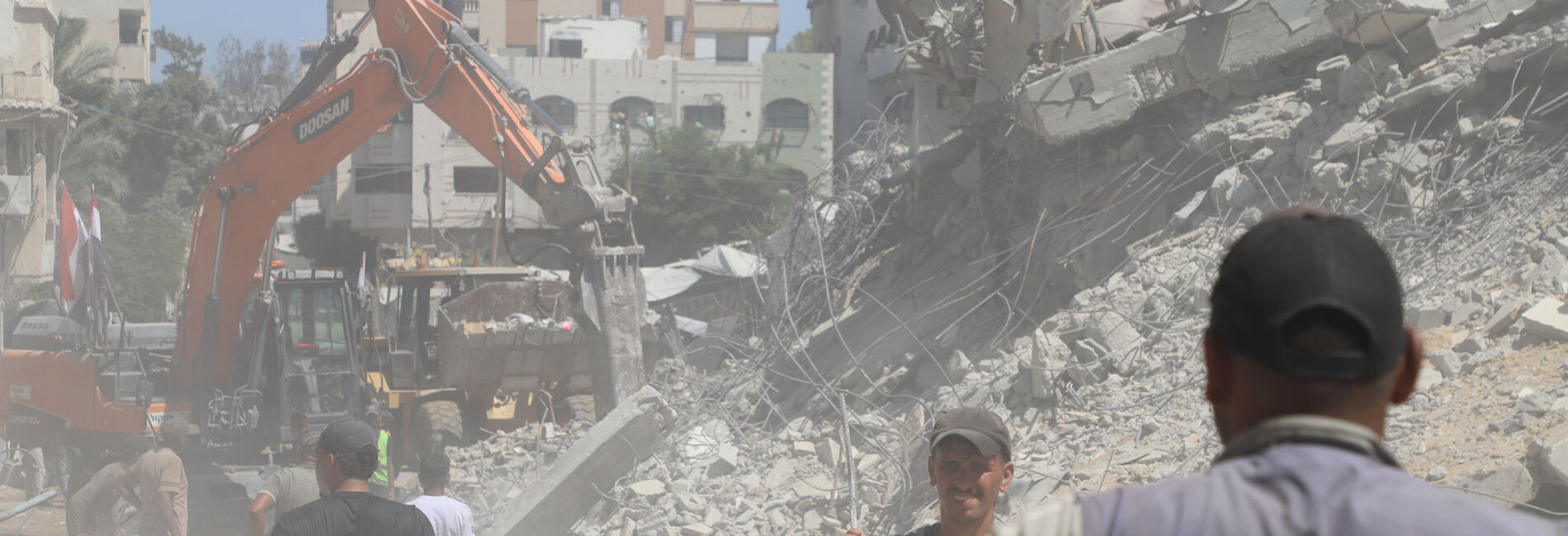
- In Gaza city, 21 people, including 12 children, were reportedly killed, and dozens more injured, when a war-damaged residential building collapsed on 16 September; many remain in unsafe buildings for lack of better housing arrangements.
- Search and rescue operations as well as the ability to repair damaged buildings and help those choosing to relocate from flood-prone areas ahead of the rains are limited by shortages of machinery, fuel, engine oil, spare parts and other supplies.
- Cases of impetigo, a highly contagious bacterial skin infection primarily affecting young children, continued to increase, with a total of 45,190 reported between 2 August and 12 September. One new case of acute flaccid paralysis was reported, bringing the cumulative total to 21 in 2026.
- Two temporary dumping sites have exceeded capacity and closed, raising concerns that Israeli restrictions on access to Gaza’s landfills near the Green Line result in increased public health risks.
- While a US$2 million Humanitarian Fund allocation and a 1.5 million-litre fuel grant will help sustain health services and other critical services amid Gaza’s prolonged power crisis, more humanitarian funding is urgently needed alongside approvals for sustainable solutions.
- In the West Bank, more than 1,100 structures have been demolished for lacking building permits in 2026, displacing over 1,500 people – over a third of the more than 4,300 Palestinians displaced so far this year.
- Settler attacks are affecting an expanding geographic area: 275 Palestinian communities have been affected so far in 2026, nearly as many as the 279 affected during all of 2025, the highest annual figure recorded since 2006.
- In Qusra, three Palestinian families have remained largely isolated for more than five weeks following the establishment of a nearby settlement outpost, with restrictions limiting their movement and access to education and humanitarian assistance.
- In Umm Safa, settlement outpost expansion and a newly installed settler road gate have further isolated a Palestinian family from the rest of the village, amid recurrent settler attacks and intimidation.
Overview
Palestinians across the Occupied Palestinian Territory continue to be exposed to systemic violence and restrictions that cause casualties, property damage, displacement and loss of livelihoods. Humanitarian operations are limited by persistent restrictions and underfunding.
Speaking to journalists in New York on 16 September 2026, Secretary-General of the United Nations António Guterres said that in the Middle East, “de-escalation must be priority one, priority two and priority three.” He called upon all parties to cease any actions that harm civilians and ensure that humanitarian operations can proceed safely and without obstruction.
The Secretary-General said that “we must never forget the dramatic suffering of the Palestinian people – both in Gaza and the West Bank,” noting that the peace plan for Gaza must be fully implemented with unrestricted humanitarian aid. He further said that the creeping annexation of the West Bank must stop, concluding that there will be no peace in the Middle East without realizing the Two-State solution.
That same day, Under-Secretary-General for Humanitarian Affairs and Emergency Relief Coordinator Tom Fletcher had a call with the Prime Minister of the State of Palestine, Mohammad Mustafa. Mr. Fletcher said that through the 81st session of the United Nations General Assembly, he will be pushing a global access initiative to reach 11 million people with live-saving aid – adding that as part of this, it is urgent that we are able to bring in supplies to support some two million people in Gaza through the winter.
Gaza Strip
The reporting period for this section is 7 to 13 September unless otherwise specified.
Nearly a year after the announcement of a ceasefire agreement in October 2025, civilians in Gaza continue to face life-threatening risks amid widespread destruction, immense humanitarian needs, ongoing strikes and restrictions on the entry of essential supplies and equipment, and critical funding shortfalls. These risks are becoming increasingly acute as winter approaches.
On 16 September, before dawn, a war-damaged six-storey residential building collapsed in the Tal al Hawa area of Gaza city, killing 21 people, according to the Civil Defence, and injuring dozens. Many more had been helped out of the area shortly before the collapse, when the building started cracking. Local health authorities say that among those killed are 12 children.
Talal Al Harazin, one of the survivors who lived with his family in a tent next to the building, shared with the UN what he had gone through: “In less than ten seconds, [the building] had completely come down. The dust was so thick that we could not even see our fingers.” He added that “displaced families from the Zeitoun and Ash Shuja’iyyeh neighbourhoods had been sheltering in the building, most of them children, women and older people.”
The incident provides a stark illustration of the wider dangers facing civilians across the Gaza Strip. For lack of better options, thousands of people are sheltering in hundreds of damaged structures assessed as unsafe.
Following the collapse, search and rescue efforts were led by the Civil Defence and supported by Egypt and teams from the United Nations Development Programme (UNDP), which quickly mobilized excavators, wheel loaders and dump trucks to the site. However, teams have indicated that search and rescue operations are severely constrained by critical shortages of heavy machinery and specialized equipment.
Humanitarian partners visited the site to assess the situation and mobilized a rapid response to support survivors, including by providing shelter, health care, and other critical items and services, through the limited stocks available inside Gaza. The United Arab Emirates and Qatar mobilized the delivery of relief supplies. UNICEF and its partners provided psychological first aid to children and their families, and ensured that local health-care providers had the medicines and medical supplies they needed to better support those injured.
Across Gaza, the Palestinian Civil Defence reports that more than 630 bodies and other human remains were recovered from beneath destroyed buildings across Gaza between November 2025 and September 2026, as indicated in a recent statement by UN Human Rights Chief Volker Türk. The Civil Defence estimates the total number of missing under the rubble at over 8,000, the statement said.
Following the collapse of the building, the United Nations has reiterated the urgent need for Israeli approvals to bring in more heavy machinery, specialized equipment, engine oil, spare parts, fuel, construction materials and transitional shelters required for rescue and other critical operations, including road clearing, addressing unsafe buildings, managing debris and reconstruction. The collapse, and the continuing risk of similar incidents, reflects the cumulative effects of ongoing Israeli attacks, widespread destruction, severe restrictions on the entry of essential humanitarian supplies and equipment, and the confinement of civilians within an increasingly limited area of the Gaza Strip. Together, these conditions are deepening humanitarian needs and exposing civilians to mounting life-threatening risks.
With the rainy season approaching, humanitarian partners are supporting voluntary relocation from damaged buildings and flood-prone areas to safer sites. However, restrictions on the entry of humanitarian supplies, including tents, tarpaulins and other critical items, continue to hamper response efforts. Last winter, at least 11 children in the Gaza Strip, including infants, were reported to have died from hypothermia, according to UNICEF.
According to the Ministry of Health in Gaza, which operates under the de facto authorities, 22 Palestinians were reported killed, including those who died of wounds and had their bodies retrieved from under the rubble, and 209 people were injured between 9 and 16 September. These figures, which do not include those killed by the collapse of a building, bring the overall reported casualty toll since the announcement of the ceasefire agreement on 10 October 2025 to 1,381 fatalities and 4,757 injuries, according to MoH.
On 13 September, UNICEF said that nine children had reportedly been killed or died from their injuries over the previous weeks – including two sisters aged 6 and 12, and four other children between the ages of three and 14. UNICEF added that a pregnant mother and her unborn baby had also reportedly been killed by gunfire. At least 13 children had reportedly been injured.
The wider constraints outline above, including restrictions on the entry of essential supplies and equipment and critical funding shortfalls, are also placing Gaza’s already fragile health response at growing risk of disruption, with operational constrains compounding these pressures. Shortages of engine oil, tyres and spare parts for vehicles used by the UN and NGO partners, including ambulances, have led to the suspension of staff transportation services, prompting the MoH and partners to announce that they would shift to emergency operating modalities from 16 September, prioritizing lifesaving and emergency services while reducing routine health-care activities.
On 17 September, outside the reporting period, the Humanitarian Coordinator, Dr. Ramiz Alakbarov, allocated US$2 million from the OCHA-managed occupied Palestinian territory Humanitarian Fund for health partners to sustain fuel support for dozens of critical health services. Through this allocation, humanitarian partners will provide $500,000 worth of fuel every month – for four months – to sustain dozens of critical health services with back-up generators while the electricity grid is down. On 18 September, Qatar announced a grant worth 1.5 million litres of fuel for health and other vital civilian infrastructure in Gaza. The latest funding for fuel is a stop-gap measure that will keep life-saving services from being further interrupted. But fuel-consuming back-up generators are not a sustainable solution to power critical services. Israeli approvals to import solar energy equipment and restart operations at the Gaza Power Plant are urgently needed.
Water and Sanitation Operations at Risk
Health-system pressures are compounded by threats to water, sanitation and hygiene (WASH) operations, which are essential to mitigate the spread of disease and other public-health risks. On 12 September, shots were fired near a portable generator used to power water wells serving shelters in northern Gaza while it was being moved between sites. Although no casualties or damage were reported, the incident illustrates the persistent security risks facing water, wastewater and solid-waste management personnel, as well as humanitarian workers more broadly, whose safety is essential to maintaining critical services. Deteriorating solid waste management and continued insecurity are heightening public health and sanitation risks across the Gaza Strip. During the reporting period, the Al Berka 2 temporary dumping site in Deir al Balah reached approximately 170 per cent of its capacity, while the Al Shallal temporary dumping site in Nuseirat has ceased operations after reaching full capacity. Partners are trying to urgently identify and establish alternative disposal sites to prevent the rapid accumulation of solid waste across central Gaza, which could exacerbate environmental contamination, increase vectors of disease, and further threaten already fragile public health conditions.
Between 7 and 13 September, over 304,000 health consultations were reported across 217 active reporting sites in Gaza, with communicable diseases accounting for 13 per cent of all consultations. Acute respiratory infections remained the most frequently reported condition, followed by acute watery diarrhoea and skin diseases. Cases of impetigo, a highly contagious bacterial skin infection primarily impacting infants and young children, continued to increase. During the five epidemiological weeks between 2 August and 12 September, a total of 45,190 cases were reported, accounting for 2.5 per cent of all consultations. One new case of acute flaccid paralysis was also reported, bringing the cumulative total to 21 cases in 2026. To strengthen polio surveillance and outbreak preparedness, a four-day training-of-trainers programme was launched for 45 Ministry of Health, World Health Organization and UNRWA staff. Shortages of essential medicines continue to constrain the health response.
Incoming Supplies
Based on data collected through the Logistics Cluster, the UN and partners’ aid offloading rate, representing the proportion of truckloads successfully offloaded at Kerem Shalom Crossing against those authorized for manifesting each day, decreased to 70 per cent, from 77 per cent during the previous reporting period. The Egyptian corridor continued to face the highest levels of truck returns and rejections, with offloading rates dropping significantly to 35 per cent from 43 per cent during the previous week. The Ashdod route remained the most utilized entry route for UN and partners’ humanitarian cargo, accounting for just over 46 per cent of all truckloads entering Gaza.
On the commercial front, data from the Gaza Chamber of Commerce, shared with the Cash Working Group, indicate that the private sector collected 884 commercial truckloads into the Gaza Strip between 7 and 13 September. The composition of incoming cargo remains a concern: according to the same data, 290 of the 884 commercial truckloads (33 per cent) carried non-essential items, further limiting the entry of critical sectoral commodities needed to address humanitarian needs.
According to Cash Working Group market monitoring data, inflation remains high at approximately 200 per cent above pre-October 2023 levels. While the prices of most basic commodities remained relatively stable compared with the previous week, the price of a 25 kg flour sack increased by 35 per cent, reaching an average of ILS 63 ($21) and a maximum recorded price of ILS 75 ($25). The increase may be linked to reduced humanitarian distributions, disruptions in private-sector supply chains or both – with further analysis underway.
The Chamber of Commerce also reports that cash-out fees have fallen to zero per cent. The chamber suggests that this reflects a severe shortage of liquidity and a sharp decline in attempts to obtain cash.
Since the closure of the Zikim Crossing in northern Gaza on 24 May, Kerem Shalom has remained the only operational crossing point for cargo. This continues to expose market functionality to heightened vulnerability, as any disruption to cargo flows would likely have cascading effects on the availability of essential commodities across the Gaza Strip.
The UN is only able to confirm the entry of supplies tracked by UN 2720. For breakdowns of those, see the online UN 2720 Mechanism Dashboard.
For a detailed account of the latest humanitarian operations in Gaza, see Annex 1 below.
West Bank
The reporting period for this section is 8 to 14 September unless otherwise specified.
Humanitarian needs across the West Bank continued to be driven by operations by Israeli forces, settler violence, demolitions and movement restrictions, resulting in displacement and property damage, disrupting livelihoods and access to essential services, and constraining humanitarian operations. Funding shortfalls are meanwhile increasingly limiting partners’ capacity to respond to extensive needs.
Since the beginning of 2026, more than 1,500 Palestinians have been displaced due to lack-of-permit demolitions and more than 2,600 in the context of settler violence and related access restrictions. During the same period, more than 1,600 settler attacks resulting in casualties, property damage or both have been recorded across 275 Palestinian communities. In response to these and other humanitarian needs, partners continue to implement a range of emergency interventions. Over the past week, between 7 and 13 September, Shelter Cluster partners carried out shelter repairs and delivered non-food items, cash and other assistance to 138 households comprising about 690 people. During the first eight months of 2026, WASH partners delivered nearly 44,000 cubic metres of emergency, life-saving water by truck to approximately 17,000 people across 51 communities affected by settler violence, demolitions and Israeli forces’ operations.
Food insecurity has worsened. Analysis by the World Food Programme found that 12 per cent of households had poor food consumption in the first quarter of 2026, more than double the five per cent recorded in June 2022. It also found that 76 per cent of households had experienced a decline in income, while nearly two-thirds were resorting to crisis or emergency coping strategies, further undermining their resilience to future shocks. The estimated number of people in need of food assistance has more than doubled over the past three years, from about 353,000 to approximately 900,000. At the same time, response capacity is contracting, with WFP reducing the number of people receiving food assistance from 400,000 to 200,000 from September due to funding constraints.
Protection concerns are heightened ahead of the 2026 olive harvest amid high levels of settler violence and continued damage to agricultural assets. During the 2025 olive harvest, 185 settler attacks were recorded across 70 communities between 1 October and 30 November 2025, compared with 40-99 attacks during the equivalent period in each year between 2021 and 2023. During the same period, more than 6,000 trees and saplings were vandalized in settler attacks. Humanitarian partners are preparing to support harvesters, taking into account potential protection and access risks, including through strengthened coordination, protective presence and accompaniment, and monitoring of evolving risks.
Casualties and Operations by Israeli Forces
During the reporting period, no Palestinian fatalities were documented in the West Bank. At least 27 Palestinians were injured by Israeli forces or settlers, the majority in the context of settler attacks. Four Palestinians were injured by Israeli forces during separate raids in Nablus, Jenin and Tubas governorates. Another four Palestinian men were injured by Israeli forces in two incidents while reportedly attempting to cross the Barrier for work purposes. One was shot and injured near Tulkarm city after reportedly crossing the Barrier into Israel without a valid permit, and three others were physically assaulted near Bir Nabala while reportedly attempting to cross the Barrier to reach East Jerusalem.
Since 7 October 2023, when Israeli authorities revoked or suspended most permits issued to Palestinians to access East Jerusalem and Israel for work and other purposes, 21 Palestinians have been killed and more than 300 others injured while reportedly attempting to cross the Barrier, as of 14 September 2026.
On 16 September, outside the reporting period, according to the Palestinian Commission of Detainees’ Affairs, a Palestinian man from Hebron who had been held in administrative detention for over a year died in Israeli custody. According to the UN Human Rights Office (OHCHR), between 7 October 2023 and 16 September 2026, at least 92 Palestinians (91 men and one boy) died in Israeli detention, including 56 from the Gaza Strip, 32 from the West Bank and four Palestinian citizens of Israel. Separately, OHCHR has documented at least five Palestinians from the West Bank who died in Israeli custody shortly after being shot by Israeli forces.
Operations by Israeli forces during the reporting period resulted in temporary displacement and disruption to education. In Tulkarm governorate, at least 14 Palestinian families were temporarily displaced between seven and 24 hours in three separate locations after Israeli forces took over their homes for temporary military use. All affected families subsequently returned to their homes.
In Deir Abu Da’if village, Jenin governorate, a 14-hour search-and-arrest operation by Israeli forces on 12-13 September and associated access restrictions disrupted the school day for about 2,500 students attending five schools in the village, as well as access to municipal facilities. Israeli forces arrested three Palestinians during the operation.
Demolitions and Displacement
During the reporting period, Israeli authorities demolished or forced Palestinians to demolish 46 Palestinian-owned structures across the West Bank, including East Jerusalem, for lacking Israeli-issued building permits, which are nearly impossible for Palestinians to obtain. As a result, 57 Palestinians were displaced, including 42 in Area C and 15 in East Jerusalem. Two additional Palestinians were displaced after their home was rendered uninhabitable during an operation by Israeli forces in Area B of Tubas governorate. Demolitions also affected Palestinians through the loss of livelihood, agricultural and WASH structures. Notably, on 9 September, Israeli forces demolished 19 agricultural, commercial and other livelihood structures in and around Arrana village in Jenin governorate, affecting 19 families comprising 81 people and resulting in the loss of livelihood assets and facilities.
The largest demolition incident during the reporting period took place on 8 September in Khirbet Al Fakheit in Masafer Yatta, within an area designated by the Israeli authorities as “Firing Zone 918” for military training. Israeli authorities demolished 17 structures for lacking Israeli-issued building permits, including four inhabited residential shelters, eight animal shelters, four latrines and a communal solar panel system that provided residents with electricity. Ten water tanks were also destroyed. Three families comprising 23 people, including 11 children, were displaced, and all structures in the northern part of the community were demolished except for one storage structure. On the same day, additional residential, livelihood and WASH structures were demolished in another community in Masafer Yatta, displacing an additional family of 11 people, including three children. These incidents followed the demolition of 27 structures in nearby Khirbet at Tabban on 2 September, which displaced 23 people (see previous Humanitarian Situation Report). In total, demolitions across the three communities within one week displaced 57 Palestinians.
Humanitarian partners continued to respond to the needs of affected families. Since the initial assessments, humanitarian partners have delivered emergency tents, non-food items, food parcels, hygiene, dignity and baby kits to affected families, alongside psychosocial support. Mobile health teams have also provided primary health care, essential medicines and maternal health consultations. Follow-up is ongoing to address remaining shelter and WASH needs and identify more sustainable options amid recurrent protection risks in the area.
Between 8 and 15 September, including one incident occurring after the reporting period, Israeli authorities demolished 19 Palestinian-owned structures in two Bedouin communities in Area C of Jerusalem governorate, citing the lack of Israeli-issued building permits. On 8 September, nine structures were demolished in South ‘Anata Bedouins (Wa’ar al Beik), displacing a household of nine people, including five children, and affecting 15 others, including nine children. On 15 September, 10 agricultural and livelihood structures were demolished in Tublas, affecting three households comprising 28 people, including 16 children. Overall, the demolitions included residential and agricultural structures, animal shelters, water and solar energy infrastructure, including two donor-funded structures.
The two communities are near the area designated for the E1 settlement expansion plan in eastern Jerusalem governorate. In August 2025, the Israeli government approved the construction of more than 3,400 settlement housing units under the plan, which is intended to create a continuous built-up area between Ma’ale Adumim settlement and East Jerusalem. Humanitarian partners have long raised concerns that implementation of the E1 plan would deepen the fragmentation of the West Bank, further undermine territorial continuity between East Jerusalem and the rest of the West Bank, heighten the risk of forced displacement of about 4,000 Palestinians in 18 Palestinian Bedouin and herding communities in the area, and have severe humanitarian consequences for Palestinians across the West Bank.
In East Jerusalem, three households comprising 15 people, including three children, were displaced. In Jabal al Mukabbir, a family of five was forced to demolish part of its home, while in the Al Bustan area of Silwan, the Jerusalem municipality, accompanied by Israeli forces, demolished a residential building, displacing two households comprising 10 people. Al Bustan, home to about 1,500 Palestinians, is affected by an Israeli settlement-related plan to build a park, entailing the demolition of dozens of Palestinian housing units. In Wadi al Joz, an extended family was forced to demolish two structures comprising about 300 square metres that housed five businesses operated by family members since 2010, including a bakery and several shops and services. The demolition affected five households comprising 22 people, including 11 children. The family reported carrying out the demolition to avoid additional financial penalties and costs.
So far in 2026, more than 1,600 Palestinians have been displaced by demolitions across the West Bank, including East Jerusalem. This includes over 1,500 people displaced following the demolition of 1,164 structures for lacking Israeli-issued building permits. Overall, more than 4,300 Palestinians have been displaced across the West Bank this year due to demolitions, evictions, settler attacks and related access restrictions. Settler attacks and related access restrictions accounted for about 60 per cent of this displacement, making them the leading driver of displacement in the West Bank in 2026.
Settler Violence
During the reporting period, more than 30 attacks by Israeli settlers resulted in Palestinian casualties, property damage or both, including damage to agricultural land, crops, trees, irrigation networks and other farming assets across several communities, affecting Palestinian livelihoods and agricultural production. About 100 trees were damaged in Sinjil (Ramallah), while in Khirbet Yarza (Tubas), damage to crops, trees, irrigation networks and beehives affected three Palestinian farms. In Deir Ballut (Salfit), settlers set fire to an agricultural structure used to support farming activities.
Settler attacks also damaged water and electricity infrastructure, disrupting access to basic services in some communities. Water infrastructure was damaged in Khirbet Yarza (Tubas), Ras Karkar and Deir Dibwan (both in Ramallah), affecting water supply to agricultural and residential properties. In Burin and Madama (Nablus), settlers damaged electricity infrastructure, causing temporary power outages; in Burin, three inhabited homes were without electricity for about 24 hours until repairs were completed. Settlers also caused damage to residential structures in Al Mughayyir, Burqa and Ras Karkar (all in Ramallah).
Settler attacks across the West Bank are increasing in frequency and geographic spread. As of 14 September 2026, more than 1,600 settler attacks resulting in Palestinian casualties, property damage or both had been recorded since the beginning of the year, averaging 6.7 attacks per day compared with five per day in 2025. A total of 275 Palestinian communities have been affected so far in 2026, nearly as many as the 279 affected during all of 2025, which was the highest annual figure since documentation began in 2006.
Beyond immediate casualties and property damage, recurrent settler attacks and related access restrictions continue to have cumulative humanitarian consequences for affected communities, including prolonged isolation and reduced access to homes, agricultural land and essential services. The update on Qusra below illustrates these impacts on three families who have faced severe access restrictions for more than five weeks, while the Umm Safa case study highlights the combined effects of recurrent settler violence and access restrictions on health care, education, livelihoods, agricultural land and water.
Qusra: Prolonged Isolation and Access Restrictions

In Qusra, Nablus governorate, three Palestinian families in the Ras Al Ein (Ein Einia) area have faced severe access restrictions since around 9 August, following the establishment of a nearby settlement outpost in Area B. As of 15 September, more than five weeks later, the families remained largely isolated from the rest of Qusra amid a continued presence of Israeli settlers and Israeli forces and severe restrictions on access to and from the area. The three families cannot routinely cross the Israeli military checkpoint, while humanitarian access remains restricted. Since the school semester began on 6 September, these movement restrictions and related protection concerns have prevented a teacher and a five-year-old child living in the area from reaching their workplace and kindergarten, respectively. On 1 September, settlers from the nearby outpost also reportedly vandalized a Palestinian house under construction in the Ras Al Ein area, damaging three walls and removing two doors.
Some food, water, hygiene items, medicines and basic medical equipment have reached the families on an ad hoc basis through municipal deliveries following access approval by Israeli authorities. On 4 September, Israeli forces reportedly prevented about 40 Israeli activists carrying food and water from reaching the families; the supplies were subsequently delivered by the municipality following coordination. On 6 September, additional supplies could only be transported to the families in a municipal waste collection vehicle following coordinated access. Humanitarian partners have continued their efforts to secure in-person access to provide additional assistance, including mental health and psychosocial support, but access has so far not been secured.
Since 10 September, a protection partner has been working with the affected families to facilitate their movement through the Israeli military checkpoint. According to the municipality, the issue extends beyond the three families, with concerns that other Palestinians seeking to reach agricultural land or houses under construction in the area may face restrictions on accessing their properties.
Umm Safa – Access Restrictions and Settler Violence Deepen Isolation

Umm Safa, a village of about 800 residents north of Ramallah, has two main entrances connecting it to Road 465. While the village has long faced intermittent access restrictions, Israeli forces have kept both entrances closed since 7 October 2023, one with a road gate and the other with an earthmound, forcing residents to rely on longer secondary routes. When residents have attempted to remove the earthmound, Israeli forces have reinstated it. In 2025, Israeli forces briefly opened the entrances on only two occasions, for about three hours each, following coordination to allow funeral processions to reach the village cemetery. Before the closures, Umm Safa also served as a transit point for six surrounding villages, providing some 15,000 people with direct access to Road 465.
The prolonged closures have affected access to health care, education, livelihoods and basic municipal services. Umm Safa has one clinic operating once every two weeks and a pharmacy that often lacks essential medicines, while emergency care is mainly available in Ramallah. Since the closure of the village entrances, ambulance response times have reportedly increased from about 10 to 25 minutes, while pregnant women increasingly travel to Ramallah several days before delivery and emergency cases have at times required back-to-back ambulance transfers. Roundtrip transport costs to Ramallah have also increased from NIS 16 (about US$5) to about NIS 40 (about US$12), particularly affecting residents without private vehicles, including university students. According to the village council, the prolonged detours have also disrupted waste collection.

The access restrictions have coincided with a sharp increase in settler violence and the establishment and expansion of settlement outposts around Umm Safa. Between 2023 and 2026, 42 settler attacks resulting in casualties, property damage or both were recorded in Umm Safa, compared with seven such attacks during the preceding six years. Since October 2023, physical obstacles and fear of attacks have significantly constrained regular access to agricultural land supporting around 80 households. Settler activity has also expanded around Jabal Al Ras, north of the village, where land bulldozing, damage to trees and water infrastructure, and blocked agricultural roads have further restricted access. On 15 June 2026, settlers damaged portions of the main water supply pipe on the western side of the village, cutting water supply for four days and affecting all village residents.
The incident occurred amid a broader pattern of settler attacks affecting community water infrastructure across the central West Bank, including damage to water infrastructure and constraints on access for water service providers in several communities. Amid these constraints, between March and mid-September 2026, WASH Cluster partners provided household-level assistance to vulnerable non-displaced residents in Umm Safa, including five emergency household latrines and six water storage tanks to address sanitation and water-storage needs.
One household on the eastern outskirts of Umm Safa illustrates the increasing isolation faced by some residents. Throughout 2026, the family has reported recurrent settler harassment and intimidation, including settlers grazing livestock around their home, approaching or entering their property and threatening them to leave. In April, a family member was assaulted while herding livestock and four sheep were stolen, and in June settlers erected a tent about 100 metres from the house. On 26 August, settlers installed an additional road gate on the household’s only access road, leaving the family between this gate and the existing closed gate separating it from the village. On 4 and 6 September, settlers closed the newly installed gate for about two hours while gathering outside the house and intimidating family members. The combination of recurrent settler attacks, intimidation and increasingly severe access restrictions has further isolated the family, constrained its access to livelihoods and essential services, and heightened concerns over possible displacement.
For key figures and additional breakdowns of casualties, displacement, and settler violence between January 2005 and August 2026, please refer to the OCHA West Bank August 2026 Snapshot. For key figures on the impact of settler attacks, please refer to the West Bank – The Impact of Settler Attacks, January 2023 – April 2026.
Funding

Sources: Financial Tracking System and oPt HFas of 28 August 2026.
Annexes
Annex 1: Humanitarian Operations in the Gaza Strip by Cluster
Read more
The reporting period for this section is 7 to 13 September unless otherwise specified.
Intersectoral support
- Partners provided emergency assistance through the Rapid Joint Distribution Mechanism to 211 households affected by 14 incidents reported by communities and site representatives across the Gaza Strip. The incidents comprised inter alia seven airstrikes affecting 198 households and five accidental fires affecting seven households. Most affected people were in Khan Younis, where three incidents cumulatively impacted 51 households, followed by Gaza city and Deir al Balah. All reported incidents received a response, with assistance prioritized according to the assessed level of need, type of incident, and severity of damage.
Food Security
- Between 1 and 15 September, partners provided in-kind food assistance to 121,000 households (more than 460,000 people) as part of the monthly distribution cycle. Due to stock availability, each family received only one parcel and one 25-kilogram flour bag, covering about 50 per cent of minimum caloric needs.
- As of 10 September, 25 partners continued to prepare 732,000 meals every day through 102 kitchens, delivering them across 1,104 locations. This includes 276,000 meals distributed to 372 locations in northern Gaza and 456,000 meals to 732 locations in the central and southern governorates. Overall, meal production levels have remained largely stable since late May.
- As of 14 September, around 90,000 two-kilogram bread bundles continued to be baked daily by 22 subsidized bakeries across Gaza. About 72 per cent of this bread is sold through 160 contracted retailers at a subsidized price of 3 NIS (US$0.93) per bundle, while the remaining 28 per cent is distributed free of charge to more than 300 shelters and community sites. In addition, through the “fuel-only” production model, a total of 18 private bakeries are receiving free fuel from humanitarian partners to produce and sell bread for the community. While managing their operations independently, these bakeries have been steadily increasing their production, baking more than 62 metric tonnes of bread per day.
- Since 13 September, another round of animal fodder has been distributed to approximately 2,200 livestock holders. Each herder has received two 50 kg bags of concentrate feed and one 50 kg bag of barley. The continued entry of animal fodder remains critical to sustaining the improvements in livestock survival rates and herd recovery observed since the ceasefire agreement was signed in October 2025.
A few examples of what is needed: There is an urgent need to increase the commercial entry of wheat flour to meet growing demand, including by expanding access for traders and bakeries to source flour directly. Ahead of the winter season, additional covered cargo space at Kerem Shalom crossing is critical to protect supplies from rain-related damage and prevent a repeat of the stock losses experienced last winter. At the same time, severe shortages of engine oil, lubricants, and spare parts risk reducing transport capacity across both humanitarian and private sectors, potentially disrupting the movement and distribution of food supplies to populations across the Strip.
Health
- Between 1 and 15 September, 270 patients were evacuated via Rafah and Kerem Shalom crossings alongside 299 caregivers. Overall, since the ceasefire agreement announced on 10 October 2025, WHO has evacuated 3,172 patients alongside their 5,398 caregivers via the Rafah and Kerem Shalom crossings. Of these, 2,452 patients and 3,696 companions were evacuated via Rafah since it reopened on 2 February 2026.
Water, Sanitation and Hygiene (WASH)
- On 10 September, Oxfam repaired the damaged Serdah sewage pumping station in Jabalya, North Gaza, and procured a generator locally to restore its operations. Between June and August, WASH partners repaired 19 water and sewage facilities, which are technically operational but continue to function at limited capacity due to electricity shortages.
- Partners distributed 7,800 adult diapers, 504 litres of chlorine liquid, 313 hygiene kits, 101 squatting pates and 30 large 100-litre garbage buckets, supporting at least 300 families across Gaza.
Shelter
- Partners supported 6,570 households with emergency shelter materials and other essential items. This included 441 tents, 250 tarpaulins, 466 kitchen sets, 7,999 solar lights, 1,544 sleeping mats, 6,176 mattresses and 9,259 summer blankets.
- Shelter Cluster partners have developed information, education and communication materials to help households strengthen and improve tents and makeshift shelters. The guidance promotes simple measures to improve roofing, structural stability, weather resistance, and thermal comfort, helping communities prepare for the upcoming winter season.
For more information, see the Shelter Cluster website.
Protection
- Protection partners reached at least 8,747 people with direct protection services across Gaza, including:
- 6,193 people who received Mental Health and Psychosocial Support (MHPSS), Psychological First Aid (PFA), individual and group counselling, mind-body interventions and related psychosocial support activities.
- 2,348 people who participated in explosive ordnance risk education, conflict preparedness and protection awareness activities.
- 115 people who received case management, individual support and referral services.
- 54 people who accessed disability inclusion services, including capacity-building and specialized support.
- The Protection Cluster continued coordinating the Protection Desk, supporting 208 returnees with PFA, emergency assistance and referral services. Since the reopening of the Rafah crossing, 6,035 returnees have received assistance, with 1,959 people currently receiving ongoing protection support, including needs assessments and specialized psychosocial services.
- Protection monitoring continued through seven focus group discussions and 125 key informant interviews, reaching 1,073 people across 19 neighbourhoods to identify protection concerns, access constraints and priority needs.
For more information, see the online Protection Cluster dashboard.
Child Protection
- Child Protection partners reached at least 10,000 children and adolescents across Gaza with MHPSS and child protection services, including structured MHPSS, PFA, individual and group counselling, life-skills activities, adolescent engagement, play therapy, sports, storytelling, theatre, drama and other recreational activities. More than 3,500 caregivers and adults also received psychosocial support, positive parenting sessions, counselling and family-based support.
- At least 376 children at risk received child protection case management services, while more than 3,540 existing cases received follow-up support. In addition, 28 unaccompanied and separated children (UASC) were identified and enrolled in alternative care and protection services, 176 UASC received follow-up visits, and three children were reunified with their families.
- Partners provided integrated cash assistance to 419 households caring for children at heightened protection risk, helping to reduce protection concerns, prevent family separation and mitigate harmful coping mechanisms. Additional support included hygiene items, school bags, child identification materials and recreational supplies.
- Specialized and disability-inclusive services continued, with 38 children with conflict-related disabilities or injuries receiving assistive devices and rehabilitation support, and 99 children receiving eyeglass fitting. Referrals were also provided for health care, physiotherapy, speech and language services, medical examinations and other specialized support.
- Community-based child protection activities reached at least 10,108 children and caregivers through awareness-raising and risk-mitigation sessions on child protection, violence prevention, family separation, safe and unsafe touch, positive parenting, fire safety, and help-seeking and reporting mechanisms. Child Safety Walks and safety-mapping exercises also enabled children to identify protection risks and environmental hazards in displacement sites.
A few examples of what is needed: Predictable, flexible and multi-month funding to sustain case management, MHPSS, community-based child protection and disability-inclusive services; sufficient frontline staffing, fuel and transport; adequately equipped and accessible child-friendly spaces; child-friendly and MHPSS materials; stronger referral pathways and increased availability of assistive devices and specialized rehabilitation services.
Addressing Gender-Based Violence
- Between 7 and 13 September, partners addressing gender-based violence (GBV) reached 10,893 people with response services across 98 service delivery points, including 86 Women and Girls Safe Spaces and safe shelters. Services included GBV case management (807 people), specialized individual MHPSS (1,749 people), and group MHPSS (3,860 people).
- Through community outreach and awareness-raising activities, partners engaged 6,847 people (4,662 females and 2,185 males) on GBV prevention, risk mitigation, and positive social norms. Sessions covered topics including PFA, stress management, women's rights, domestic violence, GBV in emergencies, personal empowerment, and digital safety.
- Partners provided targeted assistance to women and girls, including the distribution of 1,275 dignity kits and cash assistance to 12 women to facilitate access to GBV services.
- To strengthen service quality, 208 GBV responders received specialized training on protection principles, safe referrals, Protection against Sexual Exploitation and Abuse (PSEA), case management, PFA, MHPSS, child protection, inclusion of persons with disabilities, GBV protocols for health workers, and caring for child survivors of sexual assault.
Mine Action
- Partners conducted 150 explosive hazard assessments in support to different UN agencies, to facilitate rubble removal operations.
- Partners conducted seven emergency response team missions in support of the United Nations Department of Safety and Security.
- Partners delivered in-person education sessions on explosive ordnance risks to almost 16,000 people between 3 and 9 September.
Education
- During the reporting period, the dispatch of school backpacks to partners continued, with staggered distributions underway ahead of the new school year, scheduled to begin on 19 September.
- Partners rehabilitated 22 classrooms in two schools following the continued voluntary relocation of displaced families who had been using the classrooms as shelters. The two schools, one in Khan Younis and the other in Deir al Balah, had previously benefited from similar support. Efforts to expand access to education continue, including through the expansion of existing learning spaces where feasible.
Logistics and Telecommunications Cluster (LTC)
- On 7 September, LTC engaged with the Palestinian NGO Network to review connectivity requirements for its humanitarian hub and provide technical recommendations for secure internet services, supporting reliable communications for humanitarian operations in Gaza.
- Between 8 and 9 September, LTC coordinated with telecommunications security standards and UNDSS on the expansion of security communications system services to additional humanitarian partners, strengthening inter-agency security communications, coordination and emergency preparedness.
- During the reporting period, LTC continued supporting UNDSS in strengthening security communications across Gaza through communications planning, radio standardization and infrastructure enhancements, improving the reliability and interoperability of inter-agency communications.
** Double asterisks indicate that a figure, sentence, or section has been rectified, added, or retracted after the initial publication of this update.
SUBSCRIBE TO RECEIVE OCHA'S INFORMATION PRODUCTS
 SUBSCRIBE
OCHA Sites










Follow Us
Support
Your donations go to relief organizations delivering quick and effective support to Palestinians in need.