
Humanitarian Situation Report | 16 July 2026
Highlights
- Continued military operations, new displacement and deteriorating access further limited humanitarian assistance and heightened protection concerns across Gaza.
- Agricultural recovery is at risk as animal feed shortages and soaring prices threaten livestock survival across the Gaza Strip.
- Engine oil shortages continue to disrupt essential water and sanitation services, increasing the risk of sewage overflows and public health hazards.
- Settler attacks have become a leading cause of Palestinian injuries in the West Bank, accounting for 55 per cent of all Palestinian injuries in 2026.
- Israeli settlers demolished the abandoned Al Yanoun School, while Ar Rifa'iyya School became at imminent risk of demolition following an Israeli court ruling. Overall, 84 schools in Area C and East Jerusalem remain under pending demolition or stop-work orders.
- Jabal al Aqra'a became the 47th Palestinian community to be fully displaced following recurrent settler attacks and related access restrictions since January 2023.
Overview
Across the OPT, insecurity, access restrictions, repeated displacement and funding gaps continue to deepen humanitarian needs while constraining response efforts. In the Gaza Strip, ongoing military operations, movement restrictions and insecurity are driving new displacement, disrupting humanitarian operations and limiting access to food, water, shelter, health care and other essential services. Shortages of critical supplies, including engine oil and animal feed, are further undermining water, sanitation and hygiene (WASH) services, food security and agricultural recovery.
In the West Bank, including East Jerusalem, Israeli forces’ operations, demolitions, settlement expansion, settler violence and movement restrictions continue to drive displacement, heighten protection risks and undermine access to housing, livelihoods, education and other essential services. Settler attacks have emerged as a leading driver of Palestinian injuries and displacement in 2026, with Bedouin and herding communities in Area C particularly affected.
Gaza Strip
This section covers 6 to 12 July unless otherwise specified.
The humanitarian situation across Gaza remains dire amid ongoing military activity, recurring security incidents, and increasing movement restrictions. These conditions continue to fuel new displacement, disrupt humanitarian operations, limit access to essential services, and heighten protection risks for affected populations. Critical funding gaps are further compounding these challenges, constraining the ability of humanitarian partners to sustain and scale up responses despite growing needs across the Strip.
According to the Ministry of Health (MoH) in Gaza, which operates under the de facto authorities, 40 Palestinians were reported killed, including those who died of wounds and had their bodies retrieved from under the rubble, and 127 people were injured between 8 and 15 July. This brings the overall reported casualty toll since the announcement of a ceasefire agreement on 10 October 2025 to 1,123 fatalities and 3,616 injuries. Another 96 fatalities were retroactively added to the total number after their identification details were approved by MoH.
On 13 and 14 July, reported Israeli military strikes on police positions in North Gaza resulted in 12 fatalities, reflecting the volatile security environment and the continued impact of military operations on civilian infrastructure and public-service capacity. Further south, an airstrike on 10 July reportedly destroyed shelters in displacement sites in Al Mawasi area in Khan Younis. As a result, 78 families were displaced and another 130 families had their shelters damaged, significantly increasing emergency shelter needs and heightening protection concerns, particularly for women, children, older persons, and persons with disabilities.
Humanitarian operations were also affected by interference and insecurity. On 12 July, humanitarian workers were forced to halt food distributions after armed personnel affiliated with the de facto authorities forcibly entered the Abu Rashid food distribution point in Jabalya, North Gaza. The forces also entered a warehouse belonging to the World Food Programme (WFP) and reportedly assaulted two truck drivers who were delivering humanitarian supplies. In a statement issued on 13 July, the Humanitarian Coordinator, who also serves as the Deputy Special Coordinator and Resident Coordinator, condemned these incidents, stressing that they are not isolated and reflect an increasingly dangerous pattern of intimidation, violence and obstruction, including smuggling attempts, targeting and abusing humanitarian operations. He added that this is happening as the expansion of areas under Israeli control is further reducing the space available to civilians, making it imperative that humanitarian assistance is able to move safely and reach people in need without interference.
In southern Gaza, access constraints are particularly acute for communities located near the “Yellow Line” in northern Rafah. Between 6 and 13 July, 11 displacement sites in the Al Mawasi Fish Fresh area became inaccessible due to continued daily movement of Israeli military tanks in the vicinity, placing approximately 1,600 displaced people at heightened risk of secondary displacement. Humanitarian services in the affected displacement sites were suspended due to insecurity and access constraints, significantly reducing partners’ ability to monitor conditions and deliver assistance. The situation was further aggravated by the loss of access to the primary water source serving these sites, raising serious concerns over access to safe drinking water, hygiene conditions, and public health risks.
Following reports of movements of Israeli forces and disruptions to humanitarian services in the area, the UN and its humanitarian partners began conducting joint missions to affected communities. On 13 July, OCHA and its humanitarian partners consulted representatives from 17 displacement sites hosting approximately 3,000 families near the “Yellow Line” in northern Rafah. Community representatives reported that the yellow blocks marking the line had moved northward. They also described daily movements of Israeli tanks, the construction of sand embankments and recurrent gunfire. Families reported remaining inside their tents for much of the day due to fear of injury from gunfire or stray bullets.
Insecurity has significantly disrupted humanitarian access, particularly water trucking, food assistance, hygiene activities, and routine site-management support. Many communities reported severe water shortages and limited access to emergency medical transportation. Some families expressed concerns that they had few viable relocation options due to overcrowding elsewhere, shortages of tents and non-food items, and inadequate access to services.
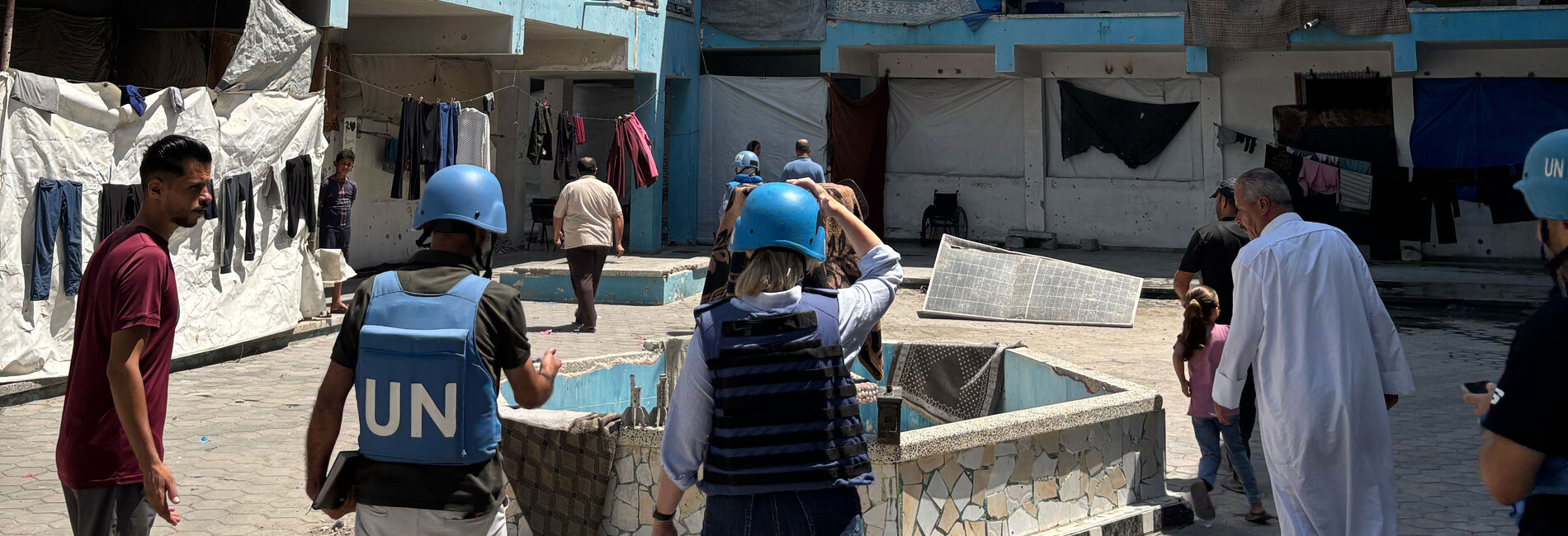
Similar concerns were observed in Deir al Balah. On 15 July, the Deputy Humanitarian Coordinator led a joint humanitarian mission to a school-turned-shelter in Bureij to assess emerging needs and gaps in humanitarian services. The shelter hosts 18 displaced families and is located about 50 yards from the “Yellow Line.” Families reported living there for more than a year and a half, with access constraints hampering the delivery of humanitarian assistance. Their living conditions are severely undermined by insecurity, the absence of alternatives, and severe gaps in access to drinking water, food, healthcare, sanitation and education.
Humanitarian partners have started mobilizing responses to address the most pressing needs and gaps identified in these visited areas. In parallel, they continue to respond to the needs of newly displaced families in various areas across the Strip (See the Intersectoral Support section in Annex 1 below) and maintain support for those in protracted displacement.
WASH, Education and Shelter Response Sustained as Needs Remain High
The fourth round of the Gaza Joint WASH Assessment, conducted between 29 March and 9 April 2026, highlights a net decline in household-level access to basic water, sanitation and hygiene services between August 2025 and March 2026. The assessment found that 63 per cent of assessed households access less than six litres of drinking water per person per day, while 34 per cent access less than nine litres of domestic water per day. Seventy-four per cent of assessed households collect water directly from trucks, often through irregular services and in unsafe and overcrowded conditions. Limited access to adequate water collection and storage containers remains one of the principal barriers to safe household water management. The assessment also highlights dire sanitation conditions: only 52 per cent of assessed households have access to basic sanitation, defined as private, improved facilities that safely separate human waste from contact, while the remainder rely on shared, inadequate, or unsafe options.
The consequences are severe. Overall, 60 per cent of the population is still exposed to sewage or human waste within 10 metres of their shelters, while over 900,000 people are exposed to accumulated garbage in residential areas. These conditions pose serious health and environmental risks and contribute to rodent and pest infestations that humanitarian partners are working to mitigate. The most notable improvement since the announcement of the October 2025 ceasefire agreement is a marked increase in access to soap, with 88 per cent of assessed households reporting soap availability at shelter level, compared with only 37 per cent in the previous assessment round conduct between August and September 2025, though disparities remain among the most vulnerable households.
At the same time, shortages of engine oil continue to severely affect WASH infrastructure, forcing several municipalities to reduce water-pumping hours or suspend services entirely. In North Gaza, the Sheikh Radwan pumping station could operate only five hours per day last week, resulting in a rapid increase in sewage levels in the stormwater lagoon. As of 13 July, after receiving a limited quantity of engine oil, the pumping station resumed operating 12 to 16 hours per day, the level required to at least maintain or lower sewage levels and avert further environmental risks. Humanitarian partners are exploring short-term mitigation measures, such as facility prioritization, while a longer-term plan for the sustainable, at-scale entry of engine oil is urgently needed to sustain all essential water and sanitation services.
Alongside the WASH response, humanitarian partners continue to restore and expand access to basic education through all possible means after more than two years of prolonged disruption to learning. In July, UNMAS has so far conducted five explosive hazard assessments of damaged sites identified for debris clearance and conversion into educational facilities. Several of these sites are also hosting displaced families, meaning with debris clearance has an immediate positive impact on community safety. The five assessments are estimated to directly benefit approximately 2,000 people, including more than 1,000 children.
Shelter needs also remain extensive. Two Shelter Cluster partners continue conducting a Detailed Damage Assessment to gauge the status of residential buildings across the Strip. To date, 33,469 of the estimated 227,703 buildings requiring assessment have been inspected (15 per cent), amounting to approximately 159,000 housing units. Among these assessed housing units, 95,290 (60 per cent) were either destroyed or sustained severe structural damage, while 63,711 (40 per cent) sustained minor to moderate damage. These findings highlight the vast scale of shelter needs across the assessed areas and show that many families returning to damaged homes require emergency shelter repairs, underscoring the urgent need for thousands of framing kits, emergency shelter kits, and other essential shelter NFIs.
Animal Feed Shortages Threaten Livestock Survival
Although FAO has been distributing nearly 600 tonnes of animal feed per month – five times the pre-ceasefire average – to livestock-keeping households, the agency has been unable to bring new barley and feed concentrate stocks into the Gaza Strip for more than one month. The remaining fodder available inside Gaza is only sufficient for one round of distribution to around 2,200 livestock holders, which started on 13 July. If delays in the entry of fodder continue, partners will have no animal feed to distribute in August, risking reversing the gains in livestock survival observed since October 2025 ceasefire agreement, when the number of sheep increased by 33 per cent and goats by eight per cent. These gains were largely achieved through the sustained distribution of animal feed, veterinary kits, alongside cash grants and technical support to herders.
Since February, the local price of barley has tripled to ILS 9 (US$3) per kilogram, while the price of feed concentrate has nearly doubled to ILS 5 ($1.67)/kilogram. Price increases have accelerated over the past 40 days as feed imports have remained blocked.
Humanitarian partners call for the immediate restoration of access for animal feed imports to prevent further livestock mortality. More broadly, to enable farmers and herders to sustain and reactivate agricultural production, both the private sector and the humanitarian community need to be allowed to bring agricultural inputs into Gaza without restrictions, including items not classified by the Israeli authorities as “dual-use”.
Incoming Supplies
Following the resolution of the scanner issues at Ashdod Port on 2 July, cargo flow through the Ashdod route increased significantly. Between 6 and 12 July, 276 trucks were manifested via Ashdod, compared with 185 during the previous week, representing a 49 per cent increase. Offloading rates remained broadly stable, ranging between 87 and 90 per cent across both weeks. Although a replacement scanner has been installed at Kerem Shalom Crossing to improve cargo-handling capacity, 25 per cent of UN and INGO partner trucks from Egypt were returned or rejected during the reporting period.
On the commercial front, data from the Gaza Chamber of Commerce, shared with the Cash Working Group (CWG), indicate that between 6 and 12 July, the private sector collected 836 truckloads into Gaza. Of these, 459 truckloads (55 per cent) contained food items, 22 (3 per cent) cooking gas, 33 (4 per cent) hygiene products, and 93 (11 per cent) shelter materials. Smaller quantities included medicines, baby care items, and motor oil. In addition, 216 truckloads (26 per cent) contained non-essential goods. This high share of non-essential items remains a concern, as market incentives continue to favour higher-profit, lower-fee commodities, reducing available space for critical supplies. Imports also remain almost exclusively consumption-oriented, with limited support for recovery and productive capacity, such as machinery, agricultural inputs, and livelihoods-related goods.
According to the Gaza Chamber of Commerce, prices are gradually stabilizing, with food prices declining by 5 to 10 per cent and most non-food item prices remaining relatively stable. However, despite this recent improvement, overall prices remain approximately 190 per cent of their pre-October 2023 levels.
The UN is only able to confirm the entry of supplies tracked by UN 2720. For breakdowns of those, see the online UN 2720 Mechanism Dashboard.
For a detailed account of the latest humanitarian operations in Gaza, see Annex 1 below.
West Bank
The reporting period for this section is 7 to 13 July unless otherwise specified
Across the West Bank, including East Jerusalem, Israeli forces' operations, demolitions, settlement expansion, settler violence and movement restrictions continue to drive displacement, heighten protection risks and undermine Palestinians' access to housing, livelihoods and essential services.
The Barrier and its permit and gate regime remain the largest obstacle to Palestinian movement, with ongoing humanitarian consequences. In its Advisory Opinion on 9 July 2004, the International Court of Justice (ICJ) found that the sections of the Barrier built inside the West Bank, including East Jerusalem, violate international law and called on Israel to cease construction, dismantle the sections already built within the OPT and repeal the associated legislative and regulatory measures. These pressures are compounded by worsening economic conditions, the Palestinian Authority’s fiscal crisis and persistent shortfalls in humanitarian funding. According to the World Bank, although unemployment in the West Bank declined from a peak of 35 per cent in early 2024 to about 28 per cent by the end of 2025, it remains more than double the pre-October 2023 level of 13.4 per cent. In addition, only about 50,000 Palestinian workers from the West Bank had regained access to jobs in Israel by late 2025, compared with more than 177,000 before October 2023. Child Protection partners also report growing concerns over child labour, with cases typically increasing during the summer holiday period.
To respond to the immediate needs of displaced and affected households, during the second week of July, Shelter Cluster partners reached about 195 households in Bethlehem, Hebron, Jenin and other governorates. Support included shelter repairs, essential non-food items, protection kits, and cash assistance, helping affected families remain in, or safely return to, their homes where possible. Child Protection partners provided mental health and psychosocial support (MHPSS), parenting support, case management, referrals and specialized protection services, reaching over 49,000 children and 22,000 caregivers during the first six months of 2026. In preparation for the school summer break, the Child Protection Area of Responsibility, in collaboration with the Education Cluster, finalized guidance for partners on the safe implementation of summer activities, including safeguarding requirements, and is supporting partners in rolling out these initiatives.
Casualties
Between 7 and 13 July (hereinafter the reporting period), Israeli forces shot and killed a Palestinian man while he was attempting to cross the Barrier in Bir Nabala town to reach East Jerusalem or Israel. In a separate incident at the same location, another Palestinian was injured under similar circumstances.
Since 7 October 2023, when Israeli authorities revoked or suspended most permits for Palestinian workers and others to access East Jerusalem and Israel, OCHA has documented the killing of 21 Palestinians and the injury of more than 290 others while attempting to cross the Barrier, reportedly to reach workplaces in East Jerusalem and Israel, against the backdrop of a severe economic downturn in the West Bank. As of 13 July 2026, Israeli forces had injured an average of eight Palestinians per month while attempting to cross the Barrier, compared with 14 per month in 2025, six per month in 2024 and about one per month during the last three months of 2023.
Overall, during the reporting period, about 65 Palestinians, including 18 children and 10 women, were injured by Israeli forces or settlers. Forty-five Palestinians were injured by Israeli settlers, including 37 in five separate attacks targeting Palestinian farmers in Hiwara community, south of Yatta in Hebron governorate (see section below). During these attacks, settlers physically assaulted farmers or sprayed them with pepper spray while they were working on their agricultural land. Among those injured were 12 children, 10 women and one elderly man.
Since the beginning of 2026, about 850 Palestinians have been injured in the context of settler attacks, including nearly 690 by Israeli settlers and the remainder by Israeli forces, accounting for 55 per cent of all Palestinian injuries in the West Bank. Injuries linked to settler attacks have risen sharply, increasing from one injury every three days in 2020 to an average of two per day in 2025 and more than three per day so far in 2026 (see graph).

Settler Attacks and Property Damage
During the reporting period, OCHA documented at least 69 incidents involving Israeli settlers that resulted in casualties, property damage or both. This brings the total number of such incidents documented since the beginning of 2026 to more than 1,260 across 250 Palestinian communities, averaging about six incidents per day.
In Hebron governorate, Israeli settlers carried out five consecutive attacks against Palestinian farmers working their land near Hiwara community, south of Yatta. In addition to injuring 37 Palestinians (see section above), the attacks damaged an agricultural structure, a water pump and about 450 olive trees. Following four of the attacks, Israeli forces declared the area a closed military zone, requiring Palestinian farmers to leave while settlers were, in some cases, allowed to remain or later returned to graze their sheep. Humanitarian partners report that attacks in this community have intensified since the establishment of a nearby settlement outpost in 2024, resulting in repeated disruptions to agricultural activities, damage to livelihood assets, and increasing protection concerns.
In Ramallah governorate, Israeli settlers targeted Palestinian homes, essential infrastructure and livelihood assets. In Deir Jarir village, settlers damaged four residential houses, burned three Palestinian-owned vehicles and vandalized three others during a large-scale attack. Ambulance access was disrupted after Israeli forces and settlers closed the village's main entrance for several hours. In East Tayba Bedouin community, settlers cut the electricity cable supplying Palestinian households. Residents reported that repeated damage to electricity infrastructure and ongoing harassment have increasingly disrupted daily life and restricted access to nearby grazing areas. Elsewhere in Ramallah governorate, settlers damaged a humanitarian-funded protective fence in Al Mughayyir village, vandalized a protective presence tent and herders' structures, and continued to intimidate residents and restrict access to grazing areas.
In Nablus governorate, settlers repeatedly targeted electricity and water infrastructure. In Qusra village, two attacks on 8 and 13 July damaged electricity cables supplying several households and a main water pipeline serving about eight households, leaving residents without electricity and water for about 15 hours after the first incident and disrupting electricity to three additional households for about eight hours after the second. In nearby Qabalan, settlers accompanied by Israeli forces prevented municipal crews from installing electricity infrastructure and uprooted three newly installed electricity poles.
Access to Education
During the reporting period, three developments heightened concerns over access to education in Area C of the West Bank. On 8 July, an Israeli court rejected an appeal by the community seeking to halt the demolition of Ar Rifa'iyya Mixed Basic School, east of Yatta in Hebron governorate. The school serves 175 students from kindergarten to Grade 7 and employs 14 staff. Under the ruling, the Israeli Civil Administration may proceed with the demolition after the expiry of the 14-day period. During this period, the community may petition the court for an interim injunction to suspend the demolition. Pending the outcome of these proceedings, the school remains at imminent risk of demolition.
Since the beginning of 2026, more than 30 stop-work and demolition orders have been issued in the neighboring communities of Ad Deirat and Ar Rifa'iyya in Hebron governorate. Local authorities indicate that these measures are linked to plans for a new Israeli settlement road running parallel to Road 356 through the two communities. According to the Education Cluster, along Road 356, three of the five government schools, including Ar Rifa'iyya, are subject to demolition orders, while the remaining two may be affected by the planned road construction. Together, the five schools serve about 700 students, placing their infrastructure, accessibility and continued operation at risk.
Also on 8 July, the Education Cluster reported that the Israeli Civil Administration had issued a notice granting the right to submit objections as part of an enforcement process against an UNRWA school in Al Walaja community, in Bethlehem governorate. The school, which serves 237 students and employs 12 teachers, has been subject to a demolition order since 2006 over allegations that it was built without an Israeli-issued building permit in Area C. The notice provides an opportunity for objections to be submitted before the Planning and Licensing Subcommittee. Pending the outcome of this process, the school remains at risk of demolition.
Separately, on 9 July, Israeli settlers reportedly demolished the abandoned Yanoun Co-educational School in Al Yanun Foqa community in Nablus governorate, together with two residential structures. The school had served 16 students before six families, comprising 22 people, were displaced from the community in December 2025 following recurrent settler violence and intimidation. Although students were transferred to a government school in Aqraba village, the demolition eliminated the community's only educational facility and further reduced prospects for displaced families to return.
According to the Education Cluster's July 2026 report, 84 schools across the West Bank, including East Jerusalem, remained under pending demolition or stop-work orders, including 54 facing full demolition and 30 partial demolition affecting specific buildings or school structures. Of the 84 schools, 74 are located in Area C and 10 within the Israeli-defined municipal boundaries of East Jerusalem. These schools serve nearly 13,000 students and employ more than 1,000 teachers. The cumulative impact of demolitions, attacks on schools, movement restrictions and community displacement continues to disrupt learning, reduce instructional time and increase protection risks, absenteeism and school dropout. Humanitarian partners continue to provide psychosocial support, transportation assistance, rehabilitation of damaged facilities where feasible, legal aid, remedial education and catch-up classes to help sustain children's access to education.
Settler attacks continue to undermine access to education, particularly in Bedouin and herding communities in Area C, where they have disrupted classes, forced temporary school closures, damaged educational facilities and, in some cases, contributed to the displacement of entire communities. In Al Maleh, in the northern Jordan Valley, the demolition of the community's school in April 2026 followed months of repeated vandalism and attacks, effectively ending access to education within the community. Overall, 10 schools serving more than 360 students have been abandoned following the full displacement of the communities they served. Seven have subsequently been vandalized and three demolished, including two by Israeli settlers.
Displacement
During the reporting period, Israeli authorities demolished 16 Palestinian-owned structures for lacking Israeli-issued building permits, which are nearly impossible for Palestinians to obtain. These included 11 structures in Area C, displacing seven households comprising 38 people, and five structures in East Jerusalem, displacing nine households comprising 40 people. Overall, the demolished structures included nine homes, three uninhabited residential structures, and four livelihood-related and WASH structures.
Most of the displacement in Area C occurred in Ar Rifa'iyya community, east of Yatta in Hebron governorate, where three households comprising 13 people, including seven children, were displaced following the demolition of a two-storey residential building, a water cistern and an animal shelter near Road 356. One of the affected households had previously been displaced following the demolition of its home in May 2025.
Separately, on 9 July, five Palestinian households comprising 12 people, including four children, were displaced from Jabal al Aqra'a Bedouin community, west of Jenin, following threats and intimidation by Israeli settlers believed to be from a nearby settlement. According to local sources, settlers had raided the community about one week earlier and warned residents to leave within one month, claiming ownership of the land. The displaced households belonged to a longstanding Bedouin community that had been present in the area for more than 70 years. Jabal al Aqra'a became the 47th Palestinian community to be fully displaced following recurrent settler attacks and related access restrictions since January 2023.
Between January 2023 and 13 July 2026, 122 Palestinian communities experienced full or partial displacement, including 47 that were fully displaced, predominantly Bedouin and herding communities in Area C. More than 6,200 Palestinians, including over 3,000 children, were displaced during this period, more than 2,300 of them in 2026 alone. Repeated displacement, attacks on homes and infrastructure, and restrictions on access to land and essential services continue to deepen humanitarian needs while eroding community resilience.
The Jordan Valley remains among the areas most affected by this trend, particularly in 2026. Displacement linked to settler attacks and related access restrictions in the Jordan Valley has accounted for more than half of all displacement recorded in this context across the West Bank this year. Since January 2023, settler attacks and related access restrictions have displaced more than 2,000 Palestinians there, compared with 645 displaced due to permit-related demolitions. During the same period, 11 communities in the Jordan Valley became fully displaced, including five in 2026. As of 13 July 2026, settler attacks in the Jordan Valley resulting in casualties, property damage or both had averaged 23 incidents per month, compared with two per month in 2020 (see graphs below).


For key figures and additional breakdowns of casualties, displacement, and settler violence between January 2005 and May 2026, please refer to the OCHA West Bank May 2026 Snapshot. For key figures on the impact of settler attacks, please refer to the West Bank – The Impact of Settler Attacks, January 2023 – April 2026
Funding

Sources: Financial Tracking System and oPt HF as of 15 July 2026.
Annexes
Annex 1: Humanitarian Operations in the Gaza Strip by Cluster
Read more
This section covers 6 to 12 July unless otherwise specified.
Intersectoral support
- Partners from across the humanitarian community responded to 14 incidents affecting more than 73 households across Gaza through the Rapid Joint Distribution Mechanism. Following rapid assessments, partners provided assistance to all affected households, reaching 334 people. The reported incidents included four airstrike incidents in Gaza, Deir al Balah, and Khan Younis affecting 41 households; seven domestic fires in Deir al Balah and Khan Younis affecting 15 households; two displacement incidents linked to military activities and movements of the “Yellow Line” in eastern Gaza city and Rafah affecting 10 households; and one shelter collapse incident in Gaza city affecting seven households.
- Assistance was tailored to assessed needs and the level of damage sustained. Households experiencing total losses received a multi-sectoral response package, including tents, blankets, mattresses, hygiene kits, dignity kits, jerrycans, clothing kits, and tarpaulins, while other affected households received targeted shelter and non-food item (NFI) assistance based on assessment findings and identified needs.
Food Security
- Between 1 and 12 July, partners provided general food assistance to more than 260,500 people via 36 distribution sites as part of the monthly distribution cycle. Each family received two parcels, one 25-kilogram flour bag, covering 75 per cent of the minimum caloric needs. To preserve emergency stocks, the distribution of 2.5-kilogram high-energy biscuit top-ups provided in previous months was suspended in July. However, severe shortages of engine oil needed to operate vehicles and generators are creating operational challenges, particularly for partners serving hard-to-reach areas, where kitchens are located in western Gaza while distribution takes place in eastern parts of the Strip. To conserve engine oil and sustain deliveries, partners are limiting movements to essential trips only, while some have switched from generators to costly electricity subscriptions where available.
- As of 8 July, partners were preparing just over 700,000 meals each day through 103 kitchens and delivering them across almost 1,100 locations. Overall, meal production levels have remained largely stable since late May, despite minor week-to-week fluctuations.
- About 110,000 two-kilogram bread bundles are being produced daily by 28 subsidized bakeries. Around 80 per cent of the bread is sold via more than 150 contracted retailers at a subsidized price of 3 NIS (US$0.93) per bundle, and 20 per cent is distributed free of charge to approximately 320 shelters and community sites.
- Through the “diesel-only” production model that started on 25 April, six private bakeries continue to receive free fuel from humanitarian partners to produce bread for their communities while managing their operations independently, including setting bread prices. On average, a total of 33 metric tons (MT) of bread is produced daily by these six bakeries. An additional four bakeries started operating under the same model on 14 July. Overall, across these activities, more than 300 MT of bread is produced daily, meeting approximately 36 per cent of daily bread needs in Gaza.
A few examples of what is still needed: scaling up interventions that enable farmers and herders to sustain and reactivate agricultural production, including support for the direct purchase of produce from farmers at fair prices, the rehabilitation of damaged wells, subsidized fuel for irrigation wells, mobile power generators, cash assistance and agricultural inputs; alongside strengthened Mine Action support to enable safe access to agricultural land, including expanded capacity through additional trained personnel, equipment and funding, and closer collaboration between Food Security Sector and Mine Action partners to prioritize time-sensitive agricultural areas requiring assessment.
Health
- International Medical Corps (IMC) opened a fourth field hospital in North Gaza. The emergency department is already treating patients, while full operations are expected by the end of July with a capacity of 120 to 150 beds. Despite this progress, health service availability remains critically limited across the Gaza Strip, with only 44 per cent of health service points mapped before October 2023 currently functioning. The Health Cluster continues to advocate for the protection of health facilities, patients and health workers, alongside expanded humanitarian access to ensure the delivery of essential health services.
- In Khan Younis, the Limb Reconstruction Center (LRC) established at the Nasser Medical Complex on 1 June 2026 continues to provide orthoplastic surgery, physiotherapy and limb reconstruction services for patients with complex conflict-related injuries. Supported by 16 WHO-funded beds and dedicated operating theatre sessions twice weekly, it has since admitted 17 patients and performed 19 surgeries. While this marks an important step in restoring specialized surgical services in Gaza, needs continue to exceed capacity. Nearly 14,000 patients have registered for limb reconstruction services, with almost half of assessed cases requiring additional surgeries, highlighting the scale of long-term trauma care needs.
- Sexual and reproductive health (SRH) partners continued to expand service delivery and launched a Maternal Death Surveillance and Response system. This system includes a real-time notification mechanism to improve maternal mortality reporting and case review. In Gaza city, Médecins Sans Frontières (MSF) increased clinic operating days in Al Zaytoun and plans are ongoing to further augment maternity and neonatal capacity through field hospital expansions in Jabalya and eastern Gaza. Partners also distributed 3,709 postpartum kits and reproductive health supplies across operational maternity hospitals, sufficient for more than 14,000 women and girls. However, significant gaps remain, particularly the absence of maternity hospital services in North Gaza, leading to deliveries taking place in ambulances and primary healthcare facilities.
Water, Sanitation and Hygiene (WASH)
- Presently, 59 WASH partners are trucking drinking water to communities through a network of 2,460 distribution points. A total of 17,151 cubic metres (m³) of drinking water is being distributed each day, but this is 15–20 per cent less than June due to reduced funding. The cut comes during the summer, when families need more water, and the risk of shortages is highest. Partners are also providing 4,631 m³/day of domestic water each day for washing, cleaning and other household needs. The Cluster is working with partners to address the gaps and help prevent further reductions in access to safe water.
- Solid waste collection and transfer are continuing at about 80 per cent of estimated waste generation, leaving a remaining gap that continues to pose levels. Around 75 per cent of the waste accumulated at the Firas Market emergency temporary dump site in Gaza city has been removed and transported to a new site in the area of Netzarim Corridor. The new site is being developed as a better-managed temporary disposal area in the near term.
- The pest control programme has reached 80 per cent of the 3,500 identified hotspots through community awareness campaigns, insect-control spraying, and rodent-control activities. A new shipment of pest control materials has also been brought into Gaza, enabling partners to continue these critical interventions During the reporting period, partners distributed 183,000 water containers, 6,843 hygiene kits, and a wide range of hygiene supplies, including 577,000 toothbrushes, 63,000 tubes of toothpaste, 92,000 units of laundry detergent powder, 4,000 bottles of liquid detergent, 8,668 garbage bags, and 270 household latrine kits benefitting 45,000 people.
Nutrition
- During the second half of June, partners screened 33,461 children between the ages of 6 and 59 months for acute malnutrition, out of whom 1,511 (4.52 per cent) were admitted for outpatient treatment, including 254 children (0.76 per cent) with severe acute malnutrition (SAM). The latest admissions bring to 6,848 the total number of children who received Ready-to-Use Therapeutic Food in the second part of June. In addition, 24 children aged 6–59 months suffering from SAM with medical complications were admitted for inpatient care at stabilization centres.
- Among other child age groups, seven infants under six months of age who were at risk of poor growth and development were admitted for inpatient treatment of malnutrition, while four infants under six months were enrolled to receive Ready-to-Use Infant Formula. Additionally, three children older than five years with severe wasting or nutritional oedema were admitted for inpatient care and treatment of malnutrition.
- Partners also screened 29,235 pregnant and breastfeeding women (PBW) for acute malnutrition, with 20,598 admitted for targeted supplementary feeding. In parallel, partners provided 32,085 caregivers, including PBW, with a combination of group and one-to-one counselling on Infant and Young Child Feeding in Emergencies (IYCF-E).
- Beyond those receiving treatment, 192,726 children aged 6–59 months and 70,237 PBW received medium-quantity lipid-based nutrient supplements (MQ-LNS) as part of the preventative Blanket Supplementary Feeding Programme (BSFP). There are currently 281 operational nutrition sites across the Gaza Strip. However, concerns are growing over the expansion of the “Yellow Line” and its impact on service continuity, with at least one nutrition site reportedly forced to close as a direct result.
Shelter
- Between 5 and 11 July, partners supported over 2,360 households with shelter and non-food items. Distributed items included 1,574 bedding kits, 462 bedding items, 4,498 tarpaulins and 441 tents. The distribution of kitchen sets recently received by partners was also completed, reaching 12,965 households.
- In addition, shelter partners reported the upgrading and repair of 77 makeshift shelters in the North Gaza and Deir al Balah governorates.
- While some shelter materials continue to enter Gaza, partners face persistent challenges throughout the supply chain, including restrictions for items classified as “dual-use”, evolving approval requirements, and inconsistencies between approved items and those permitted entry at the border. Combined with declining supply pipelines and limited funding, these constraints create an increasingly unpredictable operating environment, undermining response planning and raising concerns about the sector’s ability to adequately prepare for and respond to shelter needs ahead of the next winter season.
For more information, see the Shelter Cluster website.
Protection
- Partners delivered multilayered protection services to over 19,600 people. This includes:
- Mental health and psychosocial support (MHPSS), psychological first aid (PFA), counselling, recreational support activities, and self-care interventions to 7,791 people;
- Staff support, professional supervision, disability inclusion training, prevention of sexual exploitation and abuse (PSEA) capacity-building, and “Caring for Carers” activities for 138 protection and humanitarian personnel;
- Legal counselling, judicial representation, mediation, housing, land and property rights (HLP) awareness sessions, and legal and social follow-up services for 609 people;
- Protection awareness and community engagement activities on PSEA, digital safety, hygiene, risk reduction, rights awareness, and reporting pathways for 3,911 people;
- Case management, case follow-up, and referral services for 1,396 people;
- Explosive ordnance risk education (EORE) and conflict preparedness and protection (CPP) awareness sessions for 5,447 people;
- Disability inclusion and rehabilitation services, including physiotherapy, speech therapy, and communication support, for 308 people;
- Protection-sensitive assistance reaching 694 people through the provision of adult diapers, cash for protection assistance, economic empowerment, and livelihood support initiatives;
- Intersectoral assistance to approximately 4,900 families through the distribution of filtered water and hygiene parcels aimed at mitigating protection risks and supporting vulnerable households.
- Partners continued coordinating the Protection Desk, supporting 352 returnees through PFA, emergency assistance, and referral services. This brings the cumulative number of returnees assisted since the reopening of the Rafah Crossing to 4,107 people. Of these, 1,469 people are currently receiving ongoing protection support, including initial needs assessments and specialized psychosocial services.
- Six focus group discussions (FGDs) and 178 key informant interviews (KIIs) were conducted with community members across accessible areas. These activities covered 11 neighbourhoods and reached 1,309 people. Community members highlighted persistent protection risks linked to ongoing military operations, deteriorating shelter and environmental conditions, unsafe access to water, worsening food insecurity, and continued barriers to essential services. They also reported increasing child protection concerns, information and accountability gaps affecting access to assistance and services, and heightened vulnerabilities among older persons and persons with disabilities.
For more information, see the online Protection Cluster dashboard.
Child Protection
Partners undertook the following activities:
- MHPSS, PFA, structured psychosocial support sessions, and other psychosocial interventions for more than 5,700 children, alongside more than 2,400 caregivers through MHPSS, positive parenting, guidance, and community-based support activities;
- Case management, individual follow-up, and referral services supporting more than 3,100 active child protection cases, including the registration of over 260 new cases and more than 270 referrals to specialized health, legal, mental health, and protection services;
- Child safety mapping, child safety walking tools, and community-based child protection initiatives implemented across more than 25 camps, directly engaging over 650 children in identifying protection risks and developing protective action plans;
- Community engagement, child protection awareness sessions, positive parenting activities, Explosive Ordnance Risk Education (EORE), and awareness raising on reporting mechanisms reaching more than 6,500 children and caregivers;
- Emergency assistance integrated into child protection programming, including the distribution of more than 4,500 hygiene kits and over 1,400 menstrual hygiene management (MHM) kits, contributing to the well-being, dignity, and protection of vulnerable children and their families;
- Maintained child protection and psychosocial support services across the Gaza Strip despite extreme heat, fuel shortages, ongoing insecurity, and access constraints, ensuring the continued delivery of life-saving protection interventions through sustained community-based programming and partner presence in affected areas.
Mine Action
- Partners conducted 23 explosive hazard assessments in support of debris removal and other partner activities. Seven emergency response teams were also carried out in support of UNDSS.
- Partners delivered explosive ordnance risk education and conflict preparedness and protection (EORE-CPP) activities through in-person sessions, training of trainers, mass media campaigns, and emergency awareness initiatives to reduce risks posed by explosive ordnance.
- On 13 July, UNMAS responded to an urgent request from a partner after a suspected explosive ordnance item was discovered in a hospital in Khan Younis. Following an assessment, UNMAS confirmed that the item was non-hazardous scrap metal, allowing the hospital to continue providing lifesaving care without interruption. The availability of technical expertise is essential not only for identifying and mitigating genuine explosive hazards, but also for promptly verifying and addressing concerns related to items that do not pose a risk.
Education
- During the first half of 2026, despite severe operational constraints, the Education Cluster assisted 435,000 pre-primary and school-aged children (53 per cent girls), including approximately 9,300 children with disabilities, in accessing structured learning through 610 temporary learning spaces (TLS). In addition, around 344,000 children received essential learning and teaching materials.
- The Cluster also supported 11,023 teachers and education personnel through incentives and capacity-building initiatives focused on Education in Emergencies (EiE), disability-inclusive programming, quality learning, and the creation of safe learning environments. Furthermore, the successful administration of the 2026 General Secondary Education Examination (Tawjihi) enabled approximately 98 per cent of registered students to participate.
- To support evidence-based planning and response efforts, the Cluster completed a comprehensive assessment of public-school infrastructure across Gaza, providing critical information to guide the scale-up of humanitarian interventions as well as future recovery and reconstruction planning. Assessments of UNRWA schools, private schools, and kindergartens remain ongoing.
- Despite these achievements, the education response continued to face significant challenges. Persistent insecurity, including 26 reported education-related incidents in 2026, continued to disrupt access to learning. Severe funding shortages— with less than 10 per cent of the 2026 Flash Appeal funded—further constrained the response. Additional challenges included the limited availability of safe learning spaces, intermittent entry of education supplies, and the continued use of school buildings as collective shelters, all of which negatively affected both access to education and the quality of learning services.
Emergency Telecommunications Cluster (ETC)
- On 6 July, the ETC and UNDSS delivered Basic Security Communications System training for 13 personnel from UN agencies and international NGOs in Khan Younis. The training covered radio operations, communications procedures, and security communications protocols, helping strengthen user skills and promote the effective use of inter-agency communications systems supporting humanitarian operations in Gaza.
- Between 4 and 8 July, the clusters continued supporting UNDSS in standardizing UN very high frequency (VHF) radio communications across the Gaza Strip through the reconfiguration and channel alignment of security communications equipment. Approximately 65 per cent of the UN VHF radio fleet has now been reconfigured across nine out of the 14 participating UN agencies. During the reporting period, 52 radios were programmed or reprogrammed, improving interoperability and strengthening coordinated security communications.
** Double asterisks indicate that a figure, sentence, or section has been rectified, added, or retracted after the initial publication of this update.
SUBSCRIBE TO RECEIVE OCHA'S INFORMATION PRODUCTS
 SUBSCRIBE
OCHA Sites










Follow Us
Support
Your donations go to relief organizations delivering quick and effective support to Palestinians in need.