
Humanitarian Situation Report | 19 March 2026
Highlights
- Families across the Occupied Palestinian Territory are concluding the month of Ramadan amid deepening humanitarian needs and heightened exposure to violence, displacement and destruction of property; UN human rights officials warn of a pattern of unlawful killings.
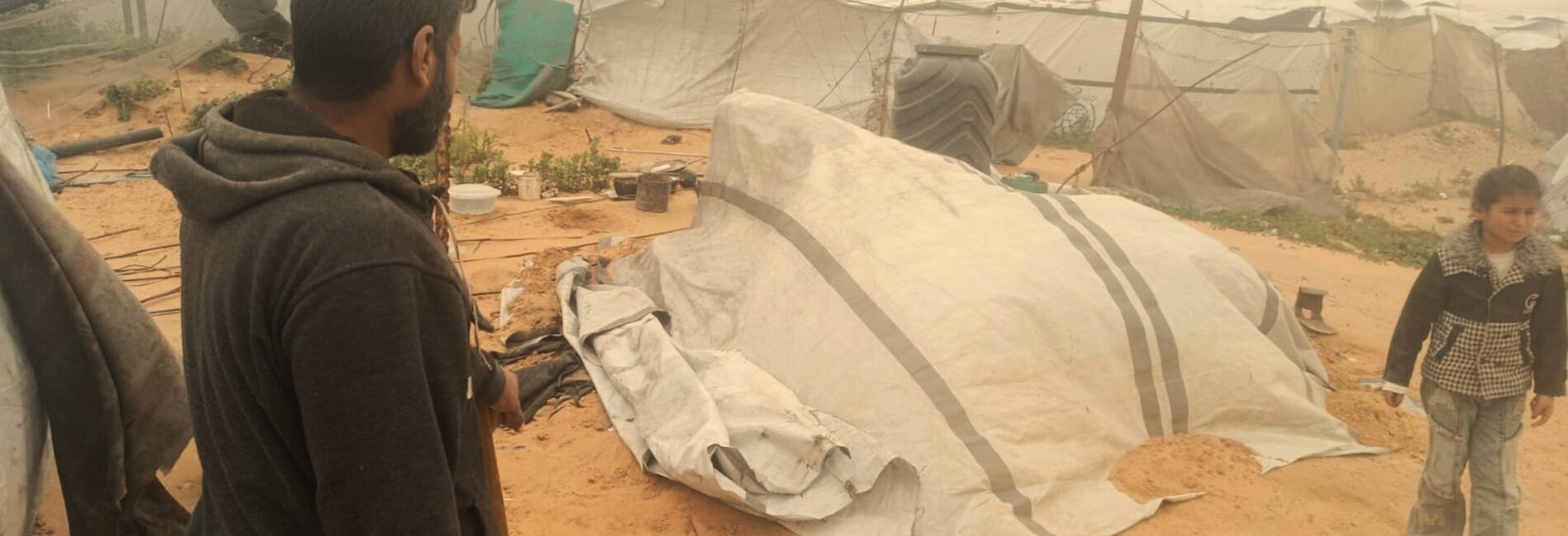
- In the Gaza Strip, reports of airstrikes and other attacks hitting civilian areas continue, while over the weekend, a strong dust storm damaged the shelters and belongings of hundreds of families in displacement sites.
- In the West Bank, settler attacks have become more severe, with a 54 per cent increase in injuries and a more than fourfold increase in related displacement this year compared with 2025 averages.
- Access to Gaza remains restricted, with Kerem Shalom being the only operational crossing point for humanitarian and commercial supplies, resulting in a major bottleneck; meanwhile, the Israeli authorities have announced the resumption of limited medical evacuations and returns through Rafah crossing.
Overview
Families across the Occupied Palestinian Territory have observed the month of Ramadan amid tightened restrictions and heightened risks to their safety.
The UN Human Rights Office (OHCHR) has raised alarm over a pattern of unlawful killings following incidents on 15 March in which two Palestinian families were reportedly killed by Israeli fire in Gaza and the West Bank. The office warned that these incidents, alongside escalating settler attacks and intimidation against Palestinian communities, raise serious concerns about impunity and protection risks for civilians.
In the Gaza Strip, most people remain displaced, often living in dire conditions with limited protection and inadequate access to diverse and sufficient supplies, while continuing to face daily shooting and strikes hitting residential areas. Casualties continue to be reported including among children and women. The Israeli authorities have announced that the Rafah Crossing will reopen for the resumption of limited movement of people, namely medical evacuation and returns. Kerem Shalom remains the only operational crossing for cargo, creating a major bottleneck for incoming supplies.
In the West Bank, including East Jerusalem, the humanitarian situation has further deteriorated. This is marked by rising casualties, intensified violence by Israeli settlers, and increased risk of eviction. Displacement linked to settler attacks and access restrictions so far in 2026 has already reached about 95 per cent of the total numbers recorded in the whole of 2025. Since the beginning of March, intensified movement restrictions have limited people’s access to land, livelihoods and essential services, and further exacerbated a pre-existing coercive environment that pushes people out of their homes and communities. These risks have intensified in the context of regional escalation, which has led to fatalities and injuries as well as property damage.
Gaza Strip
Airstrikes, shelling, and gunfire continued across the Gaza Strip, reportedly resulting in civilian casualties. On 15 March, an airstrike in the Az Zawayda area of Deir al Balah reportedly killed a man, his pregnant wife, their son, and another boy. Later in the day, an unmanned aerial vehicle reportedly struck a car, also in Az Zawayda, killing eight Palestinian police personnel, according to the UN Human Rights Office (OHCHR). Overall, according to the Ministry of Health (MoH) in Gaza, between 6 and 17 March, 35 Palestinians were killed, one succumbed to wounds, three bodies were retrieved and 95 people were injured. Since the announcement of the ceasefire in October 2025, 673 Palestinians have reportedly been killed, according to MoH.
On 14 March, a severe sandstorm accompanied by strong winds affected multiple areas across the Gaza Strip, followed by rainfall that further worsened already fragile living conditions in displacement sites. The high winds caused extensive damage to temporary shelters and site infrastructure, particularly those built from lightweight materials with limited reinforcement. According to the Site Management Cluster, 894 households were affected in displacement sites, with 29 family shelters destroyed and 32 damaged, along with several education, nutrition and child protection facilities. Humanitarian partners have been responding to alerts from affected families, with 76 households having already received multisectoral assistance packages, 689 households having received tarpaulins and seven having received a 50-square-metre plastic-film roll as of 17 March. Efforts continue to assess and attend to the remaining alerts.
In addition, 80 households affected by airstrikes received multisectoral assistance packages, including tarpaulins, clothing kits, blankets, and cereals between 8 and 14 March.
Market conditions remain volatile. Between 9 and 15 March, food prices continued fluctuating sharply, with the prices of some items, such as oranges, rising by 84 per cent compared with the previous week and the prices of other items increasing by 5 to 30 per cent. The prices of staples like chicken, rice, sugar and flour have dropped back to levels recorded before the regional escalation. Prices of non‑food items remained stable. Compared with pre‑October 2023 levels, inflation has reached 305 per cent so far in March, up from 153 per cent in February. Cash‑out commissions remained stable. Shortages and high price of cooking gas will affect families’ observation of Eid al Fitr.
Humanitarian operations in Gaza continue despite ongoing constraints.
As of 19 March, the Kerem Shalom Crossing remained the only operational entry point to Gaza. The Zikim Crossing in the north is closed until further notice. Rafah Crossing reopened on 19 March for limited movement of people in both directions, allowing the resumption of medical evacuations and returnee movements that have been paused since the regional escalation on 28 February.
Gaza Humanitarian Operations
Since the reopening of the Kerem Shalom Crossing on 3 March, humanitarian partners have been able to bring into Gaza limited volumes of humanitarian and commercial supplies, including fuel to sustain life-saving operations, every day. While this has allowed partners to sustain programming, stocks in partner warehouses continue to decline due to the imbalance between items entering Gaza and those being distributed.
In addition to the volume of incoming supplies being limited by the bottleneck created at Kerem Shalom, restrictions persist on types of items that are not easily approved. Critical humanitarian items that the Israeli authorities have deemed to have “dual use” are difficult or often nearly impossible to get approval for. Even when approved, such items are only allowed to be brought into Gaza once per week, down from two times per week prior to the regional escalation, representing another constraint.
Read more
The inability to sustain an inflow of equipment and spare parts has compelled humanitarian partners to implement shorter-duration interventions using inadequate materials, while also increasing operational costs and hindering progress on infrastructure repairs.
Between 6 and 16 March, the United Nations coordinated 53 humanitarian movements with the Israeli authorities inside Gaza. Of the total, 22 missions were facilitated. Five were initially approved but then faced impediments, being eventually either partially or fully accomplished. Fourteen were denied outright, while 12 others were cancelled by the organizers. These include seven medical evacuation operations which had been tentatively planned in case the Rafah Crossing would reopen, as the latter remained shut through 18 March.
Other ongoing challenges to aid work across all sectors include electricity shortages, unreliable communication networks, unsafe roads, and weather‑related disruptions.
The Logistics Cluster has identified two new warehouses in Deir al Balah, which will become operational in March, expanding shared storage capacity for humanitarian partners.
Incoming supplies
- Between 6 and 16 March, based on preliminary data retrieved from the UN 2720 Mechanism at 16:00 on 18 March, more than 19,700 pallets of aid administered by the UN and partners were offloaded at Kerem Shalom, the only operational cargo crossing. About 71 per cent of these pallets contained food supplies, followed by shelter items (12 per cent), water, hygiene and sanitation (WASH) materials (11 per cent), nutrition (4 per cent), health (1 per cent), and operational supplies (1 per cent).
-
During the same period, more than 16,900 pallets were collected from the crossing. Of these, 73 per cent were food supplies, followed by WASH items (15 per cent), shelter (8 per cent), nutrition (3 per cent) and health assistance (1 per cent).
-
The above data does not include bilateral donations or the commercial sector.
-
Between 6 and 16 March, UNOPS collected into Gaza nearly 1.57 million litres of diesel and almost 46,000 litres of benzine.
-
Humanitarian cargo offloading rates from the Egypt corridor have improved. Between 1 and 15 March, 78 per cent of all UN and partner trucks manifested via this corridor were offloaded at Kerem Shalom, compared with just 34 per cent between 1 and 24 February.
-
For more information, see the online UN 2720 Mechanism Dashboard.
Food Security
- As of 15 March, Food Security Sector (FSS) partners had provided more than 120,000 families (about 600,000 people) with household-level general food assistance as part of the monthly distribution cycle. Partners were only able to provide half rations, covering 50 per cent of caloric needs, due to the low rates of humanitarian cargo offloading at the Kerem Shalom Crossing through the Egypt corridor in February.
- The sector continues to advocate for the entry of both humanitarian and commercial supplies through all crossings. With Kerem Shalom, in the south, remaining the only operational crossing into Gaza since the start of the regional escalation, partners are forced to reroute supplies destined to the north through a longer and costlier path that consumes scarce fuel and relies on damaged roads. The reduction in humanitarian and commercial goods – including cooking gas – has further strained market availability across Gaza, driving up the cost of vegetables and firewood during the month of Ramadan. As a result, some partners have had to adjust cooked‑meal menus or suspend fresh‑produce distributions due to shortages and high prices.
- As of 7 March, partners continued to prepare and deliver nearly 1.5 million meals daily through 170 kitchens across the Gaza Strip. This included 515,000 daily meals produced in the north and 970,000 meals in southern Gaza. In addition, 30 UN-supported bakeries produced daily approximately 130,000 two-kilogram bread bundles. One-third of this bread is distributed for free, along with cooked meals, while two-thirds are sold through 139 retailers at a subsidized price of NIS 3 ($0.95) per bundle.
- Between 3 to 12 March, partners distributed 307 metric tonnes of animal feed to 2,050 herders, with a new round of distributions beginning on 15 March and continuing.
- The recovery of agricultural production in Gaza hinges on the full and unrestricted entry of agricultural inputs through both commercial and humanitarian channels, as large‑scale food production can only resume when multiple, complementary inputs are available simultaneously and in a timely manner.
Health
- Health Cluster partners continue to deliver services across the Gaza Strip despite major operational constraints related to fuel dependency, damaged infrastructure, and the limited entry of medical supplies. Health partners provide health services to approximately 260,000 people every week, primarily through general clinical consultations provided via hospitals, primary health care centres, and medical points.
- Between 8 and 15 March, 284 out of 677 health service points were operational (about 42 per cent). Of these, only 20 facilities were fully functioning, while 264 only partially, reflecting significant constraints across the health system. Operational facilities include 19 hospitals, 12 field hospitals, 109 primary health care centres, 122 medical points, and 22 ambulance centres, supported by 30 emergency medical teams (EMTs), including two national EMTs.
- Rehabilitation capacity also remains critically limited. Since June 2025, 158 cases of Guillain-Barré Syndrome – a rare autoimmune condition in which the immune system attacks the nerves, usually triggered by a viral or bacterial infection – have been identified across the Strip, 87 of which require specialized rehabilitation services. Currently, 63 patients are receiving rehabilitation support, while 24 remain on waiting lists due to insufficient capacity. WHO has provided 40 trauma rehabilitation kits to health facilities, each capable of supporting up to 50 patients, to strengthen rehabilitation service delivery.
- Sexual and reproductive health (SRH) needs remain acute. As of 16 March 2026, approximately 572,000 women and girls of reproductive age required SRH services across Gaza, including an estimated 50,000 pregnant women. Health partners estimate 130 to 160 births occur daily under extremely constrained conditions. To support these needs, SRH partners recently distributed essential supplies across 20 health facilities, reaching approximately 9,000 beneficiaries.
- Medical evacuations for patients requiring specialized treatment unavailable in Gaza have remained paused since 28 February and as of the time of writing (18 March). Since October 2023, 11,124 patients have been evacuated, including 5,835 children, alongside 13,032 caregivers. However, more than 18,500 patients, including approximately 3,800 children, still require urgent medical evacuation for life‑saving treatment unavailable in Gaza.
- Health partners continue to face major operational constraints affecting service delivery, including restrictions on the entry of medical supplies and equipment classified as dual‑use, ongoing fuel shortages, movement restrictions affecting humanitarian access and staff rotations, and shortages of medicines, laboratory reagents, and rehabilitation materials. Coordination with the Ministry of Health and partners is ongoing to map power supply needs across health facilities and strengthen contingency planning for electricity provision.
For more information, see the online Heath Cluster Dashboard.
Nutrition
- During February, nutrition partners continued delivering life‑saving community‑based management of acute malnutrition and infant and young child feeding in emergencies services through health facilities, mobile teams and community outreach. Screening expanded significantly, resulting in better early case detection and increased enrollment into treatment.
- Support for infant and young child feeding was strengthened through counselling, community messaging, and the provision of micronutrient supplements for pregnant and breastfeeding women, with strong integration into health services to improve identification, referral pathways and continuity of care.
- Frontline response capacity improved significantly, with nearly 400 health workers trained on community‑based management of acute malnutrition and over 400 on infant and young child feeding in emergencies .
- In February, a total of 168,700 children aged 6-59 months were screened for acute malnutrition, of whom 3,125 were identified with moderate acute malnutrition (MAM) and 602 with severe acute malnutrition (SAM) and enrolled for outpatient treatment. Another 43 children diagnosed with SAM with medical complications were admitted for in-patient treatment within dedicated stabilization centres. Overall, compared with January, the treatment enrollment rate increased by 72 per cent for MAM and 167 per cent for SAM, reflecting increased screening, improved detection and service uptake.
- In addition to the newly enrolled children, 11,571 acutely malnourished children already in treatment continued receiving ready‑to‑use therapeutic food (RUTF).
- In parallel, 61,403 pregnant and breastfeeding women were screened for wasting, of whom 1,540 were enrolled for treatment, and 835 referred for further care, such as counselling on infant and young child feeding or cash assistance to prevent acute malnutrition. In addition, 6,178 pregnant and breastfeeding women received multiple micronutrient supplements and 9,064 women received iron and folic acid supplements to prevent anaemia and micronutrient deficiency.
- Over 75,200 caregivers were reached with IYCF‑E messaging.
For more information, see the online Nutrition Cluster Dashboard.
Water, Sanitation and Hygiene
- Repairs to the Mekorot pipeline supplying drinking water from Israel to Gaza city were completed on 15 March, following damage sustained on 19 January. During the outage, per‑capita access to drinking water in Gaza city fell below the emergency standard of six litres per person per day. The second‑largest water source in Gaza city, the Safa Well Field, was also non-functional due to damage, with repairs contingent on access approval by the Israeli authorities. As a result, the population relied heavily on private‑sector water supplies and drinking water trucked by WASH partners. Although the Palestinian Water Authority increased groundwater production, the salinity levels of this water remain too high for drinking and cooking.
- The Mekorot supply line in Gaza city is now operating at 65 per cent of its capacity --similarly to early‑January levels. Approximately 15,000 cubic metres (m3) of water are produced per day, though an estimated 70 per cent continues to be lost due to damaged distribution networks.
- In Deir al Balah, the Bani Saeed Mekorot pipeline from Israel is operating at roughly 50 per cent of its design capacity, while in southern Khan Younis, the Bani Suhaila Mekorot line was damaged on 15 March; WASH partners are planning repairs using 600 mm salvaged pipes. Overall, the three Mekorot lines from Israel currently supply about 42 per cent of the water they provided prior to October 2023, and the flow is undependable. Disrupted access to water is also exacerbated by irregular fuel deliveries and shortages of spare parts and consumables needed for repairs.
- UNICEF, jointly with the WASH Cluster, has completed a review of water pricing for private desalination plants participating in the subsidized water scheme. Under this scheme, UNICEF supports by providing water treatment chemicals and fuel for operation, and the plants sell a set quantity of water daily to cluster partners at a reduced price to facilitate distribution of safe drinking water to affected communities. Following the revision, the price was lowered from 90 Israeli shekels ($29) per cubic metre to 43 Israeli shekels ($14), a reduction of more than 50 per cent. Twenty‑three of the 25 participating plants have agreed to the new pricing and will continue supporting partners.
- As of 11 March, partners continue to provide over 19,000 m3 of drinking water per day on average through more than 1,800 distribution points, maintaining significant coverage despite ongoing challenges. Water shortages remain particularly severe in high-density areas, such as Al Mawasi area in Khan Younis. To improve water supply service delivery and to reduce the burden and costs of water trucking, there is an urgent need to bring in materials to repair water distribution networks and transition to more sustainable water sources.
Shelter
- Between 8 and 15 March, Shelter Cluster partners reached 9,189 households with shelter assistance through in-kind and voucher-based modalities. In-kind distributions included 3,190 sealing-off kits, 4,461 kitchen kits, 916 tents, 495 bedding items and 117 emergency Shelter kits (including timber, nails, ropes, tarpaulins, plastic sheeting, tools and information, education and communication materials) and other household items.
- Shelter item stocks in partner warehouses continue to decline, with approximately 41,000 tarpaulins, 32,000 sealing‑off kits, 23,000 bedding items, and about 1,000 tents, along with limited quantities of other household essentials, still available. These remaining supplies are estimated to meet the urgent shelter needs of roughly 30,000 households. 1,000 tents, along with limited quantities of other household essentials. These remaining supplies are estimated to meet the urgent shelter needs of roughly 30,000 households.
- To sustain the response despite pipeline constraints, some partners have procured items from the local market, enabling distributions of bedding kits, kitchen kits, and clothing assistance through cash and voucher assistance. Since the beginning of March, locally procured framing kits (packages of materials used to build or reinforce the structural frame of emergency or transitional shelters) have been provided to 2,000 households. The Shelter Cluster continues to monitor the feasibility and market impact of such procurement approaches given the limited market capacity.
- Partners working with the Qatar Committee also reported distributing 2,104 family clothing kits and shoes to households in Gaza and Deir al Balah governorates.
- Since January 2026, UNDP has brought into Gaza 1,584 Relief Housing Units (RHUs) and is gradually proceeding to their installation. At present 353 RHUs have been installed, 303 at the Az-Zaytoun site in Gaza city where only latrines are still pending completion, and 50 to expand health facilities across the Strip. UNDP has also begin installing another 71 RHUs at the As Salateen site, while preparations are underway to start installations at the At Touam site in Beit Lahia. (For more information on RHUs see the Emergency Telecommunications section below.)
For more information, see the online Shelter Cluster page.
Protection
- Between 8 and 15 March, Protection Cluster partners provided protection services to more than 14,300 people. Among them were children, caregivers, women, persons with injuries or disabilities, and frontline workers. Services focused primarily on psychosocial support (psychological first aid, psychosocial support sessions and specialized mental health services), case management, legal assistance, disability-inclusive and rehabilitation services, community awareness and protection monitoring, while integrating humanitarian assistance aimed at reducing vulnerability and negative coping mechanisms.
For more information, see the online Protection Cluster dashboard.
Child Protection
- Between 8 and 15 March, child protection partners reached over 2,700 children with mental health and psychosocial support (MHPSS) and recreational activities.
- Case management services were scaled up to respond to increasing protection concerns, with 150 children newly registered and supported through tailored interventions, including follow-up and referrals for specialized services to ensure continuity of care.
- Over 800 caregivers participated in child protection awareness sessions, including explosive ordnance risk education, with awareness materials and protection messaging also distributed in displacement settings.
- Child protection services were complemented by assistance, including cash support to 661 families with children facing protection vulnerabilities, as well as clothing kits provided to 40 children.
- Between, 8 and 15 March, UNICEF also brought into Gaza 600 wheelchairs for children with injuries and disabilities.
- Partners report increasing violence against children, driven by overcrowded shelters, heightened caregiver stress, and the breakdown of family and community support structures. Many areas still lack adequate child‑friendly spaces due to congestion in shelters and displacement sites, and partners emphasize the need to integrate safe spaces when new sites are established. Ongoing fuel shortages and limited cash liquidity for transportation also continue to restrict staff mobility, hampering access to operational locations and the delivery of child protection services. At the same time, there remains a significant shortage of psychologists, counsellors and trained psychosocial workers, limiting the capacity to meet the growing mental health and protection needs of children.
Addressing Gender-Based Violence
- On 8 March and throughout the following week through 15 March, partners addressing gender-based violence (GBV) marked International Women’s Day through a range of activities, including workshops, art and painting sessions, bazaars and inclusive events for persons with disabilities. These initiatives reached over 2,000 participants and focused on promoting women’s empowerment, supporting vulnerable groups, and recognizing the contributions of frontline workers and women leaders.
- Multisectoral services addressing GBV continued to be provided through 68 safe spaces for women and girls, two safe shelters, and multiple case-management and awareness-raising points. Between 8 and 15 March, partners conducted more than 530 daily group sessions, reaching over 13,500 people with legal aid, sexual and reproductive health information and psychosocial support. Individual case management, including cash‑for‑protection assistance, was also provided. To address the growing intersection between mental health and GBV, a dedicated session was held for 22 partners, focusing on service linkages. The MHPSS Technical Working Group additionally shared an updated GBV referral map to strengthen integrated response and prevention efforts. Partners reported operational challenges due to rising costs of materials needed for group activities – such as handicrafts and pastry making – as well as increasing transportation costs.
- Eighteen partners distributed dignity kits to 15,000 vulnerable women and girls between 8 and 15 March.
Mine Action
- Between 8 and 15 March, partners conducted 173 hazard assessments (EHAs) in support of debris removal activities, along with 27 quality assurance visits to verify compliance with standard operating procedures and ensure operational standards are consistently upheld.
- During the same period, five emergency response missions were conducted in support of the UN Department of Safety and Security.
- Explosive ordnance risk education continued, with partners reaching over 10,000 people in Gaza city, Deir al Balah and Khan Younis between 8 and 12 March.
- During the same period, one explosive ordnance incident was recorded, in which two Palestinians were killed, and six others were injured.
Education
- During the reporting period, 64 Education Cluster partners continued efforts to maintain and expand safe learning spaces, support the delivery of structured learning and psychosocial support, equip and train educational personnel, and promote protective and inclusive learning environments for children. Particular attention was given to reaching girls, children with disabilities, and other vulnerable groups.
- However, the scale and quality of the response continue to be affected by the challenging operating environment in Gaza, including extensive damage to education infrastructure, overcrowding in displacement sites, limited space for learning, and restrictions affecting the entry of supplies and movement of personnel. Recent NGO deregistration measures are further constraining the Cluster’s ability to expand and sustain the education response, reducing technical capacity and limiting NGOs’ ability to bring staff, supplies, and learning materials into Gaza. These constraints continue to pose significant obstacles to meeting the education needs of all children across the Gaza Strip.
- By mid-March 2026, 494 temporary learning spaces (TLSs) were operational in Gaza, accommodating 300,243 students (54 per cent girls) currently attending classes, supported by 7,854 teachers (73 per cent female). Out of the enrolled students, 287,500 are school-aged children and 12,743 kindergarten-aged children. Of the total 1,923 are children with disabilities.
- Despite this progress, only about 39 per cent of all school-aged and kindergarten-aged children (ages 4–17) for the 2025–2026 academic year are enrolled in these TLSs, highlighting the significant gap that remains in access to education. In neighborhoods with high displacement, existing TLSs cannot meet the demand, leaving thousands of children unreached. If this gap is not addressed, children risk falling behind academically, losing critical psychosocial support, and facing long-term consequences for their development and future opportunities.
- Between 7 and 16 March, education partners brought into Gaza 428 learning kits, sufficient for approximately 17,000 learners.
For more information, see the online Education Cluster page.
Multi-purpose Cash
- Since the beginning of the year, more than 177,000 households (973,500 people) in Gaza have received at least one multi-purpose cash assistance (MPCA) transfer. Among them were 68,000 households (374,000 people) who received two payments. Each household received 1,250 Israeli Shekels (US$378) through digital payment modalities in line with the agreed Minimum Expenditure Basket transfer value. MPCA distributions have reached 133,000 households in January and 112,000 households in February.
Emergency Telecommunications
- The Emergency Telecommunications Cluster (ETC) continued strengthening secure communications and emergency readiness across Gaza by deploying a technical specialist to Jerusalem between 19 February and 8 March, working with other UN agencies and partners on secure communications infrastructure, and training Security Operations Centre staff on radio programming.
- On 9 March, the ETC participated in a multi‑sector assessment of proposed Relief Housing Unit (RHU) sites in Deir al Balah, focusing on network coverage, mobile signal strength, and the availability of wireless internet services. (For more information on RHUs see the Shelter section above.)
West Bank
In the West Bank, including East Jerusalem, the humanitarian situation continues to deteriorate, marked by rising casualties, intensified settler violence, and more displacement.
People are exposed to severe violence: Between 10 and 16 March, eight Palestinians, including three children, were killed by Israeli forces or settlers, bringing the total number of fatalities since the beginning of 2026 to 26; more than half have occurred since the escalation on 28 February. During that week, at least 37 settler attacks against Palestinians were recorded, resulting in casualties, property damage and displacement. The severity of settler violence has increased in 2026, with a monthly average of over 100 Palestinians injured and 600 displaced, compared with 69 injured and 138 displaced per month in 2025.
Violence leads to displacement: Since 1 January 2026, over 1,500 Palestinians have been displaced due to Israeli settler attacks and access restrictions. As the month of March progresses, displacement has already reached about 95 per cent of the total recorded in the whole of 2025. Most displacement has occurred in communities on the outskirts of towns and villages, particularly among Bedouin and herding communities in Area C, where recurrent settler attacks, threats and restrictions on access to land and livelihoods are driving displacement. In East Jerusalem, displacement risks remain high, with dozens of Palestinian families in Silwan facing imminent eviction and over 1,000 Palestinians at risk due to ongoing eviction cases, amid an increasingly coercive environment.
Since the regional escalation, falling debris has hit residential areas in the West Bank following the interception of missiles, in some cases resulting in damage to homes and vehicles. On 18 March, at least three Palestinian women were reportedly killed and others injured in Beit Awwa town in Hebron governorate from munitions that fell during an Iranian missile attack.
Casualties and Settler Attacks
Between 10 and 16 March, eight Palestinians were killed and 34 injured by Israeli forces or settlers in the West Bank, including East Jerusalem. Israeli forces killed seven Palestinians, including three children, and injured 16 others, including five children; four of the fatalities occurred in a single incident (see below). Among the injured was one Palestinian who was attempting to cross the Barrier to reach East Jerusalem and Israel.
During the same period, Israeli settlers killed a Palestinian man and injured 18 others, including two children. Since the beginning of 2026, a total of 26 Palestinians, including six children, were killed by Israeli forces or settlers, including 18 by Israeli forces, seven by Israeli settlers, and one where it remains unknown if they were killed by Israeli forces or settlers. More than half (15 out of 26 fatalities) were killed since the regional escalation began on 28 February.
Below are details of the incidents that resulted in fatalities:
- On 12 March, Israeli forces shot, killed and withheld the bodies of two Palestinian men following who had allegedly attempted to carry out a ramming and shooting attack against Israeli forces at Za’atara checkpoint, in Nablus governorate. No Israeli casualties were reported. Following the incident, Israeli forces closed at least four main checkpoints and at least six road gates, blocking access to and from Nablus city, isolating multiple surrounding communities in Nablus and Salfit governorates, and leaving thousands of Palestinians stranded for over 24 hours. Some of these closures remain in place as of the time of reporting.
- On 15 March, undercover Israeli forces shot and killed two children (aged five and six years) and their parents and injured their two siblings while the family was travelling in a car in Tammun village, in Tubas governorate. Israeli forces were reportedly conducting an arrest operation and opened an investigation into the incident.
- On 16 March, Israeli forces shot, killed and withheld the body of a 17-year-old Palestinian boy and injured another child on the eastern outskirts of Sinjil town, in Ramallah governorate. According to Israeli forces, the incident occurred when Palestinians were throwing stones at vehicles travelling on Road 60. Between 10 and 16 March, OCHA documented at least 37 Israeli settler attacks against Palestinians across 29 communities that resulted in casualties, property damage, or both. One Palestinian was killed, 19 injured (including 18 by settlers and one by forces), and about 200 were displaced (see below). Most incidents were recorded in Nablus governorate (13), particularly in Qusra village, followed by Tubas governorate (eight), particularly in Khirbet Yarza community located in the northern Jordan Valley area. Settler attacks, threats and harassment predominantly affected communities near Israeli settlement outposts, involving repeated raids, assaults, damage to homes and denial of access to agricultural land.
In one incident, on 14 March, Israeli settlers, some of whom were armed, stoned a house and then opened fire at Palestinians in Qusra village, in Nablus governorate, killing one man and injuring at least two others. The attack also resulted in damage to property. Since the beginning of 2026, eight Palestinians have been killed by Israeli settlers during settler attacks across the West Bank, compared with 17 Palestinians killed in settler-related incidents in 2025, including eight by settlers, seven by Israeli forces and in two cases it remains unknown whether they were killed by Israeli forces or settlers.
Since the onset of the recent regional escalation, more than 100 Palestinians have been injured during settler attacks, including about 90 by settlers and the remainder by Israeli forces, averaging approximately seven injuries per day in this context. So far in 2026, more than 260 Palestinians have been injured by Israeli settlers during settler attacks, reflecting a threefold increase in the monthly average of Palestinians injured by settlers during settler attacks since 2023 – 105 vs. 30 (see chart).

Displacement due to Demolitions and Settler Attacks
Since 1 January 2026, more than 1,500 Palestinians from 29 communities have been displaced in this context, including over 260 displaced since the start of the regional escalation. These displacements account for 96 per cent of all displacement linked to settler violence and access restrictions recorded in 2025, with most incidents occurring in communities on the outskirts of towns and villages, particularly among Bedouin and herding communities in Area C.
Between 10 and 16 March, OCHA documented the demolition of 18 Palestinian-owned structures all for lacking Israeli-issued building permits, which are almost impossible for Palestinians to obtain. These include 17 structures in Area C and one in East Jerusalem. Demolished structures included 10 inhabited residences, six agricultural and livelihood structures, and two water and sanitation structures. As a result, 32 Palestinians, including 15 children, were displaced, of whom 27 were in Area C and five in East Jerusalem, and another 18 people were otherwise affected.
The highest level of displacement was recorded in Qalqas village, in Hebron governorate, where six households comprising 20 people were displaced when Israeli authorities dismantled and confiscated six donor-funded residential tents that had been provided as humanitarian assistant in response to a previous demolition in the community on 18 February 2026. In East Jerusalem, a Palestinian family comprising five people including four children was displaced when it was forced to demolish its own home, built in 1993, in Jabal Al Mukabbir area in East Jerusalem.
Palestinian Bedouin and herding communities in Area C continue to face forced displacement driven by recurrent settler attacks and access restrictions, particularly in the Jordan Valley area. Between 10 and 16 March, 38 Palestinian herding households comprising 199 people, including 89 children, were displaced or began relocating due to continued settler attacks and access restrictions. Over 70 per cent of them were residing in the northern Jordan Valley area. In Tubas governorate, 28 herding families (144 people including 61 children) were displaced following repeated attacks and threat by Israeli settlers in five communities, namely: Khirbet Yarza, Einun, Hammamat al Maleh, Khirbet Atuf and Khirbet Samra. In Khirbet Yarza, the attacks were perpetrated by settlers believed to be from a newly established settlement outpost nearby. In one incident Israeli settlers attacked and injured one elderly Palestinian man and two activists providing protective in Hammamat al Maleh herding community.
This has occurred alongside continued settlers’ threats to burn and destroy property, attempts to seize livestock, and restrictions on access to grazing land. Displaced families relocated to multiple locations within the same governorate. In Khirbet Atuf, after the families left on the same day on 10 March, Israeli bulldozers closed all roads leading to the community with earth mounds and damaged the main water pipeline supplying the remaining eight families and about 3,000 dunums of agricultural land. In addition, Israeli forces broke water meters, resulting in losses for farmers cultivating irrigated crops, according to local sources.
In Nablus governorate, three households (22 people, including 12 children, two elderly persons and two women with disabilities) were forcibly displaced from Beita town, southeast of Nablus city, following an attack by Israeli settlers believed to be from Evyatar settlement outpost on 16 March. According to community sources, masked and armed settlers broke into the homes, damaged fences and windows, confined residents to one room and threatened to kill them if they did not leave. Settlers also cut off water and electricity and remained in the houses for about a day. Israeli forces later arrived and forced the families to leave without allowing them to take their belongings.
In southern Hebron governorate, seven Palestinian families (33 people, including 16 children) were forcibly displaced from the Umm as Swaneh area near Ar Ramadin village on 16 March following repeated harassment by Israeli settlers, believed to be from a nearby newly established settlement outpost near Adh Dhahiriya. The families relocated to Al Burj and Ar-Ramadin villages, leaving behind their residential structures and animal shelters, and were able to take only part of their belongings and livestock.
Between January 2023, when OCHA began systematically documenting displacement linked to specific incidents of settler violence, and 16 March 2026, 1,028 Palestinian households – comprising more than 5,500 people – have been displaced across 107 communities and residential areas, the majority of them Bedouin and herding communities. In the Jordan Valley area, which extends across parts of Tubas, Nablus, Jericho and Ramallah governorates, displacement has steadily increased over the past three years in connection with settler attacks on families, livestock and property, as well as restrictions on access to grazing land, with 1,993 people displaced, accounting for 36 per cent of people displaced within this context. In January 2026 alone, 600 Palestinians were displaced from Ras Ein al ‘Auja Bedouin community in the central Jordan Valley, marking the highest single-community displacement due to settler attacks and access restrictions over the past three years.
In East Jerusalem, in February, the Israeli authorities ordered 11 Palestinian families (80 people) in the Batn al Hawa area of Silwan to leave their homes by 23 March, after which their properties are expected to be taken over by Israeli settlers. The Protection Cluster and its Legal Task Force reported that all available legal remedies to challenge the eviction cases against these families have been exhausted.
Additionally, the Cluster warns that, while these families face imminent displacement, the case forms part of a broader pattern of eviction proceedings in Silwan based on Israeli laws applied in East Jerusalem, which have already resulted in the displacement of multiple Palestinian families and place hundreds more residents at risk. As the deadline approaches and legal avenues have been exhausted, affected families report heightened psychosocial distress, particularly among children, amid concerns over the lack of safe shelter in the current environment. Protection partners continue to provide support and referrals; however, the Protection Cluster underscores that humanitarian assistance alone cannot address the underlying drivers of displacement.
At least 243 Palestinian households in East Jerusalem currently face eviction cases filed in Israeli courts, the majority by settler organizations, placing over 1,000 Palestinians, including more than 460 children, at risk of forced displacement. Evictions have grave physical, social, economic and emotional impact on Palestinian families concerned. In addition to depriving the family of a home – its main asset and source of physical and economic security – evictions frequently result in disruption in livelihoods, increased poverty and a reduced standard of living. The high legal fees families incur when defending a case in court further strain already meagre financial resources. The impact on children can be particularly devastating, including post-traumatic stress disorder, depression, anxiety and diminished academic achievement. Moreover, the establishment and continued presence of settlement compounds within Palestinian areas have significantly affected the daily lives of Palestinian residents, contributing to an increasingly coercive environment that may place additional pressure on them to leave. The main elements of this environment include increased friction; restrictions on movement and access; and a reduction on privacy due to the presence of private security guards and accompanying surveillance cameras.
Funding

Sources: Financial Tracking System and oPt HF
SUBSCRIBE TO RECEIVE OCHA'S INFORMATION PRODUCTS
 SUBSCRIBE
OCHA Sites










Follow Us
Support
Your donations go to relief organizations delivering quick and effective support to Palestinians in need.