
Humanitarian Situation Report | 11 September 2026
Highlights
- Between January and August 2026, more than 1,600 settler attacks resulting in Palestinian casualties or property damage were documented across 275 communities, averaging 6.7 attacks per day, up from five per day in 2025.
- Some 846,000 students began the new school year in the West Bank amid continued access constraints, while regular schooling remains disrupted for more than 4,000 displaced students, and 19 schools remain inaccessible, closed or abandoned.
- In Gaza, preparations are underway for the new academic year, planned to begin on 19 September, including through 359 temporary learning spaces.
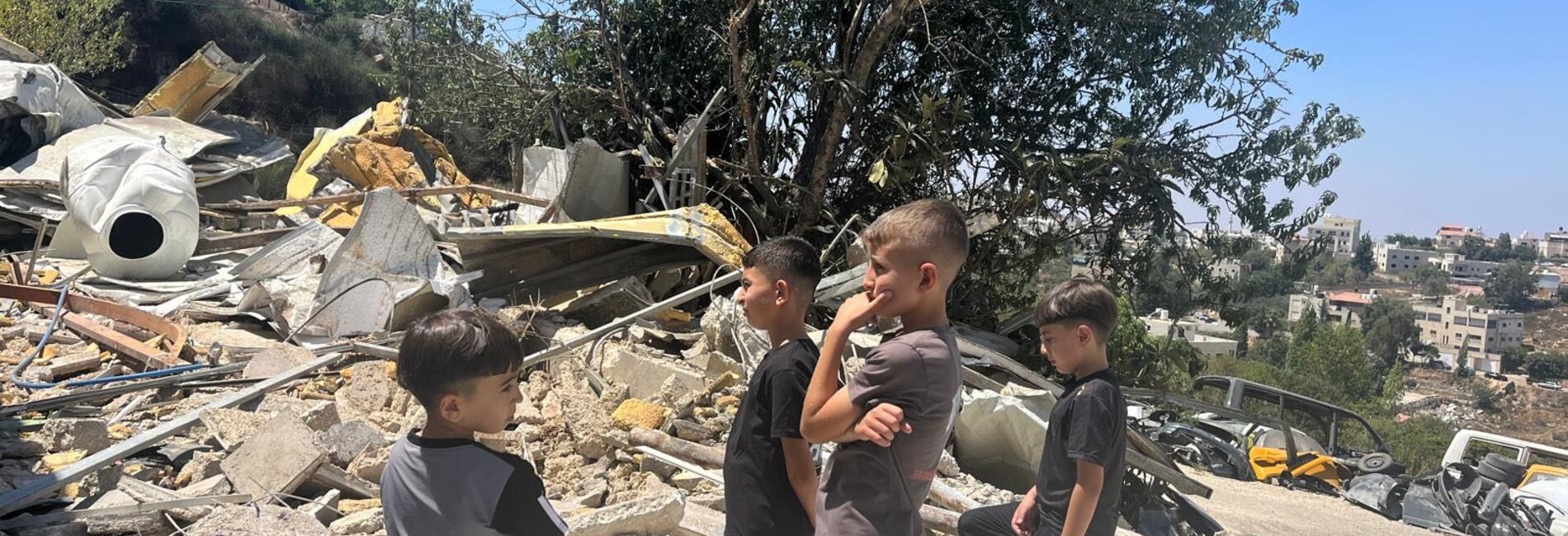
- Two waves of demolitions in three communities in Masafer Yatta between 2 and 8 September displaced 57 people, including 27 children. So far in 2026, about 1,500 Palestinians have been displaced by demolitions across the West Bank.
- Vaccination efforts in the West Bank continued in response to the Foot-and-Mouth Disease outbreak, with nearly 50,000 vaccine doses provided and resources secured to procure an additional 400,000 doses. About 200,000 sheep and goats have received a first dose.
- In Gaza, Israeli airstrikes and other attacks continued to hit populated areas, causing casualties and property damage and driving further displacement.
- Women now head nearly one in four households in Gaza, a new analysis by UN Women finds, and face greater hardship, including higher levels of inadequate shelter, housing damage, and displacement.
- Overcrowding, inadequate shelter and limited access to safe water and sanitation are increasing the risk of communicable disease transmission in Gaza, particularly respiratory infections, acute watery diarrhoea and acute jaundice syndrome.
- Winter preparedness efforts at overcrowded displacement sites remain severely constrained by funding shortages and restrictions on the entry of essential materials, leaving families exposed to flooding, strong winds and deteriorating site conditions.
- Denials and delays of approvals for engine oil and spare parts threaten generator-dependent water, sanitation, health and waste management services; since 1 March, 13,445 litres have been approved and 92,778 litres remain pending, data from UN 2720 Mechanism indicates.
Overview
As the new academic year begins across the Occupied Palestinian Territory, children continue to face barriers to safe learning due to displacement, insecurity caused by airstrikes and other attacks, damage to facilities and persistent access restrictions. Water access also remains precarious. In Gaza, 91 per cent of assessed households face moderate to high water insecurity, with many reliant on water trucking, while temporary disruptions to desalination facilities in Israel in early September also reduced water supply in both Gaza and parts of the West Bank. In Gaza, families are highly concerned about the upcoming rainy season amid funding shortfalls and restrictions on the entry of critical humanitarian supplies and equipment, limiting humanitarian partners’ ability to mitigate flooding and improve conditions at overcrowded displacement sites.
West Bank
The reporting period for this section is 1 to 7 September unless otherwise specified
Humanitarian needs across the West Bank continued to be driven by operations by Israeli forces, settler violence, demolitions and movement restrictions, disrupting access to essential services and constraining humanitarian operations amid persistent funding shortages. Access to essential services, including health care, education and water, remained particularly affected, including by restrictions on the movement of health teams, continued disruption to education following prolonged operations and displacement, and temporary reductions in bulk water supply affecting parts of the central and southern West Bank.
During the reporting period, operations by Israeli forces, settler violence and demolitions continued to result in casualties, damage to property and infrastructure, and displacement. Six Palestinians were killed, 31 Palestinians and one Israeli settler were injured, and 61 Palestinians were displaced by demolitions. In Al ‘Arrub Camp (Hebron) on 7 September and Qarawat Bani Hassan village (Salfit) on 3 September, about 30 Palestinians were detained and interrogated in each community during Israeli forces’ operations, and Palestinian homes were temporarily used by Israeli forces for detention and other purposes. In Al ‘Arrub, Israeli forces also restricted free movement by closing all gates surrounding the camp and blocking roads with earth mounds, with restrictions remaining in place for more than 24 hours following their withdrawal.
Across the West Bank, Health Cluster partners continued to support life-saving and essential health services through a network of 869 health service points, including 60 hospitals, 478 primary health centers (PHCs) and 227 mobile clinic locations. Mobile clinics remain particularly important for underserved communities, including in Area C, the “Seam Zone” and H2 area of Hebron, where access for health teams remained unpredictable. Shortages of essential medicines and funding constraints further constrained access to and delivery of health care.
Access to water was also affected by disruptions to bulk water supply. According to the Water, Sanitation and Hygiene (WASH) Cluster, during the first week of September, temporary reductions in supply from the Israeli water companies Mekorot and Hagihon affected the majority of the population primarily in the central and southern West Bank, including Hebron, Bethlehem, Jerusalem, and Ramallah and Al-Bireh governorates, following the temporary shutdown of desalination plants in Israel. Supply gradually recovered and returned to normal levels after approximately three days. Separately, as of 7 September, the breakdown since 24 July of the Beit Iba well, operated by the Israeli Mekorot company, continued to disrupt water supply to 11 communities across Nablus, Qalqiliya and Jenin governorates, affecting approximately 50,000 people. During August, 11 WASH Cluster partners implemented 124 interventions across 69 West Bank communities, including the delivery of more than 13,000 cubic metres of emergency trucked water, distribution of 270 water storage tanks and 3,840 hygiene kits, provision of household and community latrines, rehabilitation of water and sewage networks, and sanitation and solid-waste services for internally displaced and other vulnerable populations.
Livestock-dependent communities continued to be affected by the ongoing Foot-and-Mouth Disease (FMD) outbreak. In response, the UN Food and Agriculture Organization (FAO) provided the Ministry of Agriculture (MoA) with 49,900 doses of the FMD-SAT1 vaccine to support the emergency vaccination campaign, while the MoA secured resources to procure an additional 400,000 doses for cattle, sheep and goats across the West Bank. According to the latest data from MoA veterinary services, all cattle in the West Bank have received two vaccine doses, administered one month apart, while approximately 200,000 sheep and goats have received their first dose and require a subsequent dose to ensure full immunity. The outbreak poses particular risks to Bedouin and herding communities that depend heavily on livestock for food and income and are already affected by settler violence, displacement pressures and restricted access to grazing land and water.
Meanwhile, the 2026-2027 school year began on 6 September, with approximately 846,000 students returning to schools across the West Bank, including East Jerusalem, amid continued protection risks, movement restrictions and disruptions to education. This included approximately 48,000 students in UNRWA schools who began the new academic year on 7 September across 90 schools. Access remains particularly constrained in some of the affected areas. More than 4,000 students displaced from refugee camps in the northern West Bank have had their regular schooling disrupted, while six UNRWA schools in East Jerusalem remain closed. In Area C, 10 schools that had served more than 360 students were abandoned following the full displacement of the communities they served due to recurrent settler attacks and related access restrictions, three of which were subsequently demolished. In addition, 84 schools remain under pending demolition or stop-work orders, affecting nearly 13,000 students. See the Access to Education section below for further details.
Casualties, Operations by Israeli Forces and Access Disruptions
Between 2 and 8 September, Israeli forces shot and killed six Palestinians, including two children, and Israeli forces and settlers injured 31 Palestinians, including 10 children, across the West Bank, including East Jerusalem. Israeli forces injured 15 Palestinians, the majority during raids and other operations, while Israeli settlers injured 16. A Palestinian man stabbed and injured an Israeli settler near Nablus.
Two Palestinian children were killed by Israeli forces on 2 September in Al Mughayyir village, Ramallah governorate, amid a sharp increase in settler attacks affecting the village. Since January 2026, more than 56 settler attacks resulting in Palestinian casualties or property damage have been documented in Al Mughayyir, averaging about seven incidents per month, more than double the monthly average during the preceding three years. Since January 2023, seven Palestinians have been killed and about 150 injured in the village in the context of settler attacks.
The 2 September incident followed a series of attacks, harassment and access restrictions by settlers involving livestock in and around the village. According to the village council, Israeli settlers took 72 sheep belonging to a Palestinian family, while Israeli media, citing the Israeli military, reported that Israeli forces entered the village to retrieve livestock claimed to belong to Israelis. During the ensuing raid, Israeli forces shot and killed the two children.
The increase in settler attacks has coincided with settlement and outpost expansion and prolonged access restrictions. Al Mughayyir, home to about 3,300 Palestinians, is surrounded by eight settlement outposts, five of which have been established since mid-2024, including two in Area B. Palestinian access to agricultural and grazing land has become increasingly restricted, while the village’s main entrance from Road 458 (the Allon Road) has remained closed by Israeli forces since mid-2023.
Separately, on 4 September, Israeli forces shot and killed a Palestinian man near Damascus Gate in East Jerusalem after he allegedly attempted to stab soldiers, according to the Israeli military; no Israeli injuries were reported.
On 7 September, Israeli forces shot and killed a Palestinian man and injured five others in Hajja, Qalqiliya governorate, during a raid in which Palestinians thew stones at the forces. This followed the entry of armed Israeli settlers into the community, where they reportedly held the homeowner for a short period following a verbal altercation.
Between 7 and 8 September, Israeli forces shot and killed two Palestinian men during separate operations in Qabalan and Aqraba villages in Nablus governorate. In Qabalan, Israeli forces closed the village’s four main entrances and surrounded a Palestinian home for about six hours, shooting and killing a Palestinian man and withholding his body. According to the Israeli military, the man had carried out a stabbing attack earlier that day near Osarin village, in which an Israeli settler was injured, and subsequently attempted to stab soldiers during the operation. Tear gas fired near two schools resulted in four schoolgirls requiring treatment, while about 30 Palestinian men were later detained and interrogated in a Palestinian house for approximately five hours before being released.
In Aqraba, Israeli forces surrounded a Palestinian home for about five hours before shooting and killing a Palestinian man. Israeli forces fired projectiles at the house and used a military bulldozer, rendering it uninhabitable and displacing two women. According to the Israeli military, the man attempted to attack soldiers during the operation.
Settler Violence
During the reporting period, 32 attacks by Israeli settlers were reported that resulted in Palestinian casualties, property damage or both, including recurrent attacks affecting Palestinian access to water, agricultural and grazing land, livelihoods and homes. Water infrastructure was affected in at least four incidents. In Al Hadidiya (Tubas), settlers took about 30 water tanks used for livestock and began fencing grazing land, further restricting Palestinian access. In Beit Imrin (Nablus), settlers damaged about 10 metres of a water pipeline, disrupting water supply to a household for four days. Water pipelines or household fittings were also damaged in Al Aqaba (Tubas) and East Tayba Bedouin community (Ramallah) where families rely on trucked water.
Settler attacks also affected agricultural livelihoods and essential infrastructure across several communities. In Khallet al Louza (Bethlehem), settlers damaged seasonal crops planted on six dunums (1.5 acres) belonging to three families, while in Silwad (Ramallah), they uprooted and destroyed at least four mature olive trees. In Beita (Nablus), settlers attacked livestock facilities and damaged electricity and other infrastructure, while four Palestinians were injured. In Al Masudiya (Nablus), damage to electricity infrastructure resulted in a three-day power outage affecting about 12 families. In Khirbet Abu Falah (Ramallah), settlers dismantled parts of an agricultural structure and took metal sheets from land that the affected Palestinians have reportedly been prevented from accessing since May, following the establishment of a nearby settlement outpost.
These incidents occurred amid a continued increase in both the frequency and geographic spread of settler attacks across the West Bank. Between January and August 2026, more than 1,600 settler attacks resulting in Palestinian casualties and/or property damage were documented, an average of 6.7 attacks per day, compared with five per day in 2025 and 1.5 per day in 2021. During the first eight months of 2026, attacks affected 275 Palestinian communities, nearly as many as the 279 communities affected during all of 2025 and more than double the 116 communities affected in 2020 (see graph below).

Demolitions and Displacement
During the reporting period, Israeli authorities demolished 38 Palestinian-owned structures across the West Bank, including East Jerusalem, for lacking Israeli-issued building permits, which are nearly impossible for Palestinians to obtain. The demolished structures included nine homes, six uninhabited residential structures, 18 WASH and agricultural structures, and five livelihood-related and other structures. As a result, 12 households comprising 61 people, including 34 children and 14 women, were displaced, including 23 people in Masafer Yatta and 31 in East Jerusalem.
Between 2 and 8 September, including one incident occurring after the reporting period, Israeli forces carried out two waves of demolitions in three Palestinian communities in Masafer Yatta, located within an area designated by the Israeli authorities as “Firing Zone 918” for military training. Overall, 49 structures were demolished, displacing 57 people, including 27 children, while affecting an additional 30 people who reside in the area seasonally. The demolitions affected residential and livelihood structures as well as essential water and solar electricity infrastructure.
The largest of these incidents took place on 2 September in Khirbet at Tabban, where the Israeli Civil Administration, accompanied by Israeli forces, demolished 27 structures, including residential and animal shelters, storage structures, latrines and water cisterns. Four families comprising 23 people, including 13 children, were displaced, while an additional six families comprising 30 people, including 19 children, who seasonally reside in the community were also affected. Eighteen of the demolished structures were donor-funded. Following the demolition, only two structures remained in the community, both of which sustained damage. Six water tanks were also destroyed, and electrical connections to the community’s solar system were damaged. Residents rely primarily on water trucking after the main water network was reportedly cut by Israeli settlers multiple times in early 2026.
Masafer Yatta is a predominantly rural area in the South Hebron Hills, where approximately 1,200 Palestinians live across 13 communities within Firing Zone 918. Communities in the area face recurrent demolitions alongside settler violence and other protection and access pressures. Since January 2009, about 110 demolition incidents have been documented in this part of Masafer Yatta, resulting in the demolition of over 380 structures, including schools and water structures, more than 57 per cent of which had been provided as humanitarian assistance.
Following the latest demolitions, humanitarian assessments were conducted and immediate assistance was mobilized, including emergency shelter, non-food items, food, hygiene and dignity kits, baby kits and psychosocial support. Humanitarian partners continue to coordinate the response, identify remaining gaps and explore more sustainable shelter and WASH options in light of the recurrent protection risks affecting communities in the area.
In East Jerusalem, seven households comprising 31 people, including 16 children, were displaced in two demolition incidents during the reporting period. On 2 September, three female-headed households comprising 10 people were displaced following the demolition of a residential building comprising four apartments in the Al Bustan area of Silwan. On 7 September, four Palestine refugee households comprising 21 people were displaced following the demolition of three residential structures in Beit Hanina. Al Bustan, home to about 1,500 Palestinians, is affected by an Israeli settlement-related plan to build a Biblical Park that would entail the demolition of dozens of Palestinian housing units.
So far in 2026, about 1,500 Palestinians have been displaced by demolitions across the West Bank, including some 120 during the first 10 days of September. Overall, more than 4,000 Palestinians have been displaced across the West Bank this year due to demolitions, evictions, settler attacks and related access restrictions. More than 60 per cent have been displaced following settler attacks and related access restrictions, making it the leading driver of displacement in the West Bank in 2026.
Access to Education
According to the Education Cluster, access to education across the West Bank continues to be affected by operations by Israeli forces, settler violence and movement and access restrictions. During the first half of 2026, the Cluster documented 224 education-related incidents affecting 152 schools and directly affecting 20,450 students and 859 education personnel. More than half of the incidents (122) involved access restrictions, while 47 involved settler violence, accounting for 21 per cent of all documented education-related incidents, compared with three per cent during the same period in 2025 and five per cent in 2024. Twenty-eight schools sustained damage or were vandalized. As of September 2026, 84 schools across the West Bank, including East Jerusalem, remain under pending demolition or stop-work orders, affecting 12,855 students and 1,076 teachers, with most located in Area C and East Jerusalem. In addition, six UNRWA schools in East Jerusalem remain closed.
Settler violence and related access restrictions have also affected longer-term access to education in communities exposed to displacement. Since January 2023, 49 Palestinian communities have been fully displaced following recurrent settler attacks and related access restrictions. All affected students have continued to access education through temporary relocation to alternative learning spaces, enrolment in schools in their areas of displacement, or hybrid learning arrangements. Ten schools serving more than 360 students were abandoned following the full displacement of the communities they served; seven were subsequently vandalized and three were demolished, including two demolished by Israeli settlers. The schools primarily served remote Bedouin and herding communities in Area C, illustrating the longer-term impact of displacement on access to education.
Challenges remain particularly acute in the northern West Bank at the start of the 2026-2027 school year, where Palestine refugee students from Jenin and Nur Shams refugee camps remain unable to return to their regular schools following prolonged operations by Israeli forces and large-scale displacement. In Jenin Camp, four UNRWA school buildings remain inaccessible, and about 1,600 students have been temporarily relocated to alternative learning spaces. Two UNRWA school buildings in Nur Shams Camp also remain inaccessible. Four UNRWA school buildings adjacent to Tulkarm Camp are accommodating about 2,300 students from six schools in Tulkarm and Nur Shams camps. These arrangements are taking place within UNRWA’s current reduced working schedule owing to austerity measures.
For key figures and additional breakdowns of casualties, displacement, and settler violence between January 2005 and July 2026, please refer to the OCHA West Bank July 2026 Snapshot. For key figures on the impact of settler attacks, please refer to the West Bank – The Impact of Settler Attacks, January 2023 – April 2026.
Gaza Strip
The reporting period for this section is 31 August to 6 September unless otherwise specified.
The humanitarian situation in Gaza remains dire, as Israeli airstrikes and other attacks continue to hit populated areas, causing casualties and property damage and driving further displacement. Persistent shortages of critical medical supplies are undermining treatment for communicable and non-communicable diseases, while access to already overstretched water and sanitation services remain precarious. Against this backdrop, humanitarian partners are working to improve living conditions and mitigate flooding risks at overcrowded displacement sites as winter approaches. However, funding shortages and ongoing restrictions to the entry of critical materials, engine oil and spare parts continue to severely curtail these efforts.
According to the Ministry of Health (MoH) in Gaza, which operates under the de facto authorities, 35 Palestinians were reported killed, including those who died of wounds and had their bodies retrieved from under the rubble, and 104 people were injured between 2 and 9 September. This brings the overall reported casualty toll since the announcement of the ceasefire agreement on 10 October 2025 to 1,358 fatalities and 4,541 injuries, according to MoH. Another 160 fatalities were retroactively added to the total number after their identification details were approved by MoH.
On 8 September, an airstrike hit a building in Al Bureij, in Deir al Balah, near two UN schools that have been serving as temporary shelters for people who have been displaced, as well as a bakery supported by the World Food Programme. While no casualties were reported, some 24 families lost their shelters and six other families sustained damages as a result. Humanitarian partners are mobilizing rapid assistance although stocks of critical supplies are insufficient to meet needs.
The consequences of insecurity, repeated displacement and the destruction of homes are placing growing pressure particularly on women, many of whom are now the sole providers for their families. A new UN Women report assesses that households headed by women have doubled since October 2023, representing an estimated 86,000 households, nearly one in four families in Gaza. This includes widows and women whose husbands are missing, detained, severely injured, or forcibly disappeared, or whose fate just remains unknown. Households headed by women face greater hardship than male-headed households, including higher rates of inadequate shelter, housing damage, and displacement.
Meanwhile, attempts by the de facto authorities to inspect humanitarian warehouses for alleged contraband continue. Between 25 August and 9 September, the UN recorded at least five requests from the de facto authorities to search humanitarian warehouses, causing disruptions to humanitarian operations and breaching the inviolability of United Nations premises. No contraband was found.
Preparing Health Services and Displacement Sites for Winter
Amid increasing overcrowding, inadequate shelter, limited access to safe water and sanitation services and ongoing population displacement, Health Cluster partners continue to monitor communicable disease transmission to assess trends and mitigate risks with the limited supplies available. Between 10 and 30 August, acute respiratory infections represented almost half of all reported communicable diseases, followed by skin diseases (29.5 per cent) and acute watery diarrhoea (21 per cent). Reported cases of acute jaundice syndrome continued to rise, from 52 during the week of 27 July to 2 August to 74 during the week of 24 to 30 August. Health Cluster partners are conducting targeted follow-up activities to assess possible Hepatitis A transmission, including investigations of affected catchment areas and water sources in Gaza city. One reported case of tuberculosis was confirmed, bringing the cumulative number of such confirmed cases in 2026 to six.
As winter approaches, Health Cluster partners are concerned that communicable diseases may increase further. An expected rise in respiratory infections, coupled with persistent waterborne and vaccine-preventable disease risks, could place additional pressure on an already overstretched health system.
Site Management partners are strengthening winterization preparedness efforts across displacement sites, identifying priority site-level interventions, including drainage improvements, shelter reinforcements, pathway maintenance and other small-scale activities to mitigate risks associated with heavy rainfall, flooding, strong winds and deteriorating site conditions. However, limited funding and the insufficient availability and entry of essential materials and equipment continue to constrain efforts.
To maximize available resources and partially address gaps, the Site Management Cluster is coordinating with Food Security Sector partners to mobilize and repurpose available materials for site-level improvements. This includes the collection and distribution of wooden pallets and empty flour sacks, which are being repurposed as sandbags to support basic flood mitigation and shelter reinforcement measures. While these initiatives provide practical short-term support, they remain insufficient compared with the scale of needs across displacement sites. Additional funding, tools, materials and winterization support are urgently required to enable partners to scale up preparedness activities ahead of the winter.
Incoming Supplies
Based on data collected through the Logistics Cluster, the UN and partners’ aid offloading rate, representing the proportion of truckloads successfully offloaded at Kerem Shalom Crossing against those authorized for manifesting each day, decreased to 77 per cent, down from 88 per cent during the previous reporting period. The Egyptian corridor continued to face the highest levels of truck returns and rejections, with offloading rates dropping significantly to 43 per cent from 72 per cent during the previous reporting period. The Ashdod route remained the most utilized entry route for UN and partners’ humanitarian cargo, accounting for just over half of all truckloads entering Gaza.
During the reporting period, the International Organization for Migration resubmitted a request to the Israeli authorities to coordinate the entry into Gaza of nearly 37,000 pieces of timber and 660 Emergency Shelter Kits that had been previously rejected twice, on 26 August and 2 September, at the Kerem Shalom Crossing. The Israeli authorities denied the coordination request, reportedly due to security reasons. Ahead of winter, this will further prevent the shelter response from progressing towards more durable solutions and severely limit improvements to makeshift shelters and emergency repairs to partially damaged housing units.
Engine Oil Shortages
In Gaza, the near-total absence of reliable electricity means that communities depend heavily on backup generators to keep critical services running, although these were never designed to run around the clock. Engine oil is essential to maintain these generators, which power water wells, desalination plants, sewage pumping stations, hospitals, primary health-care centres, blood banks and field hospitals. It is also required for vehicles and heavy machinery used for food distribution, solid waste collection, rubble removal and humanitarian transport.
Since 1 March 2026, only 13,445 litres of engine oil have been approved by the Israeli authorities, while 92,778 litres remain pending approval, information collected by the UN 2720 Mechanism indicates. This excludes engine oil for bakeries, which is not tracked by the mechanism. Of the 13,445 litres, 12,175 have already been brought into Gaza, while 1,269 will start entering in smaller batches in the coming days.
Nearly half of the pending volume, 43,288 litres (47 per cent), is intended for water, sanitation and hygiene (WASH) and solid waste management activities, followed by 22,722 litres (25 per cent) for health services, 19,612 litres (21 per cent) for general operations, logistics and multi-sector activities, and 6,264 litres (7 per cent) for food security interventions.
If more approvals are not provided urgently, access to safe water could deteriorate further, sewage systems may fail as pumping stations shut down, and uncollected solid waste could once again accumulate, increasing public health and environmental risks.
On the commercial front, data from the Gaza Chamber of Commerce, shared with the Cash Working Group, indicate that 881 commercial truckloads were collected into the Gaza Strip between 31 August and 6 September by the private sector. The composition of incoming cargo remains a concern: according to the same data, 251 of the 881 commercial truckloads (28 per cent) carried non-essential items, further limiting the entry of critical sectoral commodities needed to address humanitarian needs.
According to Cash Working Group market monitoring data, inflation remains high at approximately 200 per cent above pre-October 2023 levels. Prices of basic commodities remained relatively stable, with only minor fluctuations compared with the previous week.
Since the closure of the Zikim Crossing in northern Gaza on 24 May, Kerem Shalom has remained the only operational crossing point for cargo. This continues to expose market functionality to heightened vulnerability, as any disruption to cargo flows would likely have cascading effects on the availability of essential commodities across the Gaza Strip.
The UN is only able to confirm the entry of supplies tracked by UN 2720. For breakdowns of those, see the online UN 2720 Mechanism Dashboard.
For a detailed account of the latest humanitarian operations in Gaza, see Annex 1 below.
Funding

Sources: Financial Tracking System and oPt HFas of 28 August 2026.
Annexes
Annex 1: Humanitarian Operations in the Gaza Strip by Cluster
Read more
The reporting period for this section is 31 August to 6 September unless otherwise specified.
Intersectoral support
- Partners provided emergency assistance through the Rapid Joint Distribution Mechanism to 105 households affected by 18 incidents reported by communities and site representatives across the Gaza Strip. The incidents comprised four airstrikes affecting 37 households, four displacement incidents affecting 51 households, the structural collapse of five shelters impacting nine households and five accidental fires affecting an additional eight households. Most affected people were in Khan Younis, where nine incidents cumulatively impacted 77 households, followed by Gaza city and Deir al Balah. All reported incidents received a response, with assistance prioritized according to the assessed level of need, type of incident, and severity of damage.
Food Security
- Between 1 and 7 September, partners provided in-kind food assistance to 51,000 households (more than 205,000 people) as part of the monthly distribution cycle. Due to stock availability, each family received only one parcel and one 25-kilogram flour bag, covering about 50 per cent of minimum caloric needs.
- As of 3 September, 25 partners continued to prepare 734,000 meals every day through 103 kitchens, delivering them across 1,104 locations. This includes 276,000 meals distributed to 377 locations in northern Gaza and 458,000 meals to 727 locations in the central and southern governorates. Overall, meal production levels have remained largely stable since late May.
- As of 8 September, around 90,000 two-kilogram bread bundles continued to be baked daily by 22 subsidized bakeries across Gaza. About 72 per cent of this bread is sold through 160 contracted retailers at a subsidized price of 3 NIS (US$0.93) per bundle, while the remaining 28 per cent is distributed free of charge to more than 300 shelters and community sites. In addition, through the “fuel-only” production model, a total of 18 private bakeries are receiving free fuel from humanitarian partners to produce and sell bread for the community. This includes eight new bakeries that joined the network in September. While managing their operations independently, these bakeries have been steadily increasing their production, baking more than 53 metric tonnes of bread per day.
A few examples of what is needed: Restrictions on the entry of engine oil, lubricants, spare parts and agricultural inputs have to ease, mine action interventions have to be enabled to support timely roll-out of agricultural activities, sustainable entry of animal fodder, and safe access to farmlands that are currently off limits. Beyond humanitarian assistance, the import of cooking gas, wheat flour and diverse nutritious food such as fresh vegetables, fruit, dairy and other animal proteins, through commercial channels must be further facilitated. Combined with enhanced access to WASH, shelter, health and nutrition services, the scaled-up entry of nutritionally diverse food items is critical to particularly support children and pregnant and breastfeeding women, who are among the most vulnerable groups. Ahead of the imminent winter season, there is also a critical need to establish more covered storage spaces for cargo at the Kerem Shalom Crossing to avoid stock losses due to spoilage and damage due to exposure to rain while entering the Strip.
Water, Sanitation and Hygiene (WASH)
- Partners distributed 22,000 kilograms of laundry powder, 13,000 adult diapers, 9,500 litres of bleach, 6,000 litres of chlorine liquid, and 2,000 dignity kits. In addition, partners distributed 550 household-level sanitation kits, supporting almost 3,500 people.
Shelter
- Partners supported 1,851 households with emergency shelter materials and other essential items. This included cash assistance and sealing-off materials for eight households living in damaged housing units, as well as 571 family tents, 425 bedding sets, 847 solar lamps, and searchlights.
For more information, see the Shelter Cluster website.
Nutrition
- During the first half of August, Nutrition partners screened 36,240 children between the ages of 6 and 59 months, out of whom 2,613 (7.2 per cent) were diagnosed with acute malnutrition and admitted for treatment, including 271 (0.75 per cent) with the most severe malnutrition form. In addition, five severely malnourished children between the age of 6 and 59 months with medical complications were admitted for inpatient care in stabilization centers.
- During the same period, 23,811 pregnant and breastfeeding women (PBW) were screened for acute malnutrition, with 838 admitted for targeted supplementary feeding.
- In addition to those receiving treatment, 134,821 children aged 6-59 months and 53,265 PBW were reached with medium quantity lipid-based nutrient supplements as part of the preventative blanket supplementary feeding programme. The number of operational nutrition sites is currently 281 across the Strip.
- Partners also reached 25,403 people, including PBW and other caregivers, with a combination of group and one on one counselling on infant and young child feeding in emergencies.
Protection
- Reporting partners reached at least 22,000 people with direct protection services. These includes:
- Mental health and psychosocial support (MHPSS), psychological first aid (PFA), individual and group counselling, and psychosocial support sessions for 2,538 people;
- Case management, follow-up and referral services for 261 people;
- Explosive ordnance risk education , child protection and protection awareness sessions, information dissemination and related training for 19,177 people;
- Disability-inclusive case management and rehabilitation services for 685 people;
- Specialized victim assistance services for 26 people.
- The Protection Cluster continued coordinating the Protection Desk, supporting 236 returnees through psychological first aid, emergency assistance and referral services. This brings the cumulative number of returnees assisted since the reopening of the Rafah Crossing to 5,827 people, of whom 1,959 are currently receiving follow-up through protection services, including initial needs assessments and specialized psychosocial support.
- Protection monitoring continued through seven focus group discussions and 111 key informant interviews, covering nine neighbourhoods and reaching 996 people across accessible areas.
For more information, see the online Protection Cluster dashboard.
Child Protection
- Child protection partners reached at least 9,000 children and adolescents with MHPSS and related child protection services across North Gaza, Gaza city, Deir al Balah and Al Mawasi areas in Khan Younis. Services included structured and focused MHPSS, PFA, individual and group counselling, play therapy, recreational and life-skills activities, adolescent engagement, storytelling and support through child-friendly spaces and other safe spaces.
- More than 3,500 caregivers and adults received psychosocial and caregiver support, including group counselling, positive parenting, family-based psychosocial support, stress management and guidance on responding to children’s emotional and protection needs.
- At least 190 children at risk, including children with heightened protection concerns, received child protection case management services through new assessments, referrals, follow-up and ongoing individual support. Other specialized services included speech therapy for 63 children, cash assistance for 180 children with disabilities or chronic illnesses, eye examinations for 226 children and eyeglass fitting for 175 children. Children with disabilities also participated in inclusive psychosocial support, recreational and safe-space activities.
- At least 181 unaccompanied and separated children received follow-up and monitoring services. Four children who were newly identified as such in Deir al Balah were enrolled in child protection case management to address their protection and care needs.
- Community-based child protection activities reached at least 9,290 people, including 7,078 children and 2,212 caregivers and adults, through structured awareness and risk-mitigation sessions on child protection, safe and unsafe touch, prevention of sexual exploitation and abuse (PSEA), personal safety, bullying, violence and exploitation prevention, hygiene, positive parenting, fire safety, internet safety and safe help-seeking and reporting mechanisms.
- During the reporting period, at least 270 children across 10 displacement sites participated in child safety walks and safety mapping exercises, identifying unsafe pathways, damaged infrastructure, inadequate lighting and sanitation concerns, and contributing to community-level actions aimed at reducing protection risks.
- Safe-space programming continued to expand, with Child Protection partners establishing a new child-focused safe space in Deir al Balah to support MHPSS and protection activities.
- As part of complementary in-kind support, partners distributed 939 personal hygiene items to children, 250 hygiene kits to displaced and vulnerable families, and 192 clothing and stationery sets to children. These distributions helped address growing material deprivation and supported children's participation in education, protection and psychosocial activities.
A few examples of what is needed: Predictable, flexible and multi-month funding to sustain case management, MHPSS, community-based child protection and disability-inclusive services; sufficient frontline staffing, fuel and transport; adequately equipped and accessible child-friendly spaces; child-friendly and MHPSS materials; stronger referral pathways and increased availability of assistive devices and specialized rehabilitation services.
Addressing Gender-Based Violence
- Partners addressing gender-based violence (GBV) reached 89,335 people across the Gaza Strip with prevention and response services, including MHPSS, group counselling, awareness-raising activities and case management services.
- Partners distributed more than 6,400 dignity kits and 8,000 menstrual hygiene management items, while providing cash-for-protection assistance to nearly 3,000 people and targeted cash and voucher assistance to 519 women and girls.
- Awareness raising sessions for communities covered psychological first aid, stress management, PSEA, early marriage, positive masculinity and legal support. Service delivery remained constrained by continued displacement, shortages of shelter and hygiene supplies, and the closure or relocation of 11 service delivery points due to displacement orders.
Mine Action
- Partners conducted 180 explosive hazard assessments in support to different UN agencies, to facilitate rubble removal operations.
- Partners conducted six emergency response team missions in support of the United Nations Department of Safety and Security, in addition to 10 quality assurance missions.
- Partners delivered in-person education sessions on explosive ordnance risks to over 11,000 people between 27 August and 3 September.
** Double asterisks indicate that a figure, sentence, or section has been rectified, added, or retracted after the initial publication of this update.
SUBSCRIBE TO RECEIVE OCHA'S INFORMATION PRODUCTS
 SUBSCRIBE
OCHA Sites










Follow Us
Support
Your donations go to relief organizations delivering quick and effective support to Palestinians in need.