
Humanitarian Situation Report | 1 May 2026
Highlights
- Four months into 2026, just over 10 per cent of the funding required to provide critical humanitarian operations this year has been secured.
- In Gaza, two NGO workers were killed in separate incidents, triggering the suspension of health and water services.
- Restrictions on the entry of generators, engine oil, and spare parts are driving widespread system failures, reducing health and sanitation services, debris removal, and the movement of humanitarian teams.
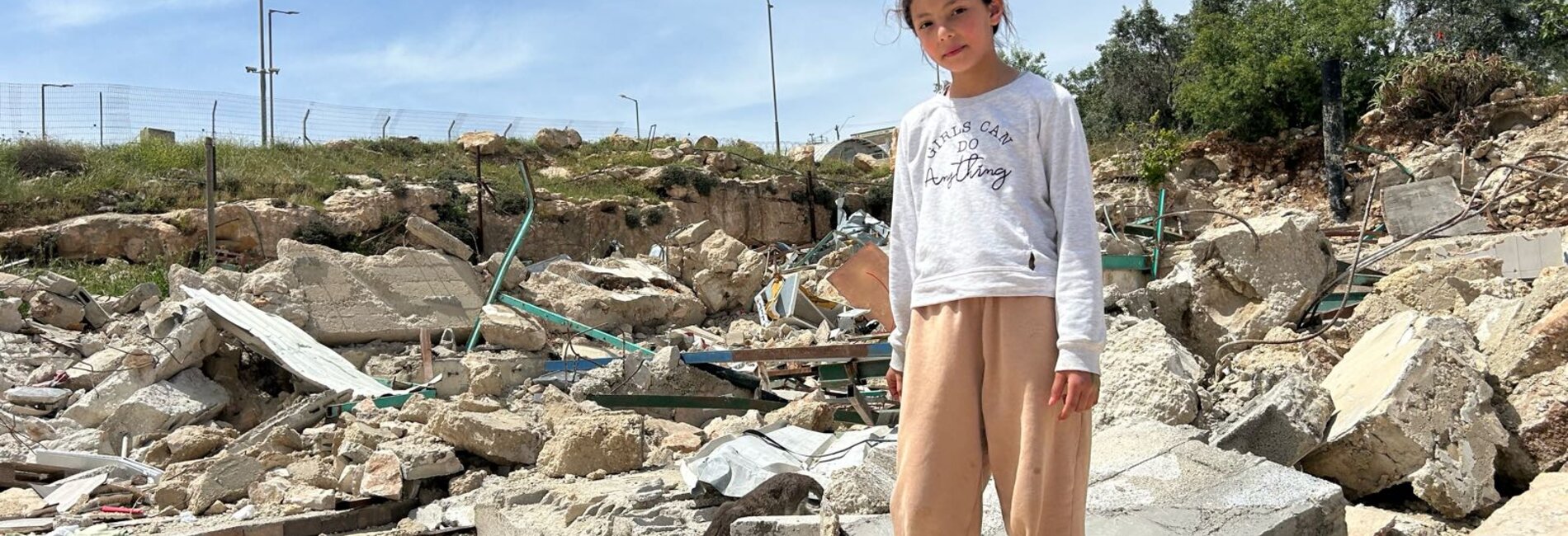
- In the West Bank, 2026 has so far recorded the highest monthly average of people displaced due to lack-of-permit demolitions in over 17 years for which UN records are available.
- Israeli forces and settlers killed four Palestinians, including two children, between 21 and 27 April, and a Palestinian woman died of injuries sustained during an Israeli operation in 2023.
- Settler attacks on education are increasing pressure on rural families to leave their homes and communities.
Overview
Humanitarian conditions across the Occupied Palestinian Territory remain dire and often life-threatening, while humanitarian action continues to be constrained. Conditions affecting the operating environment range from import restrictions and impeded movement of UN agencies and NGOs into and within the territory, to strikes and other disruptions affecting service delivery. Within overcrowded displacement sites, women consistently report feeling unsafe due to inadequate lighting, which significantly increases gender-based violence risks, especially at night. Meanwhile, funding remains critically low, with less than 10 per cent of the required resources secured so far in 2026.
Gaza Strip
Most people across the Gaza Strip remain displaced, in poor shelter conditions and exposed to rising public health risks linked to pests and rodents, as well as ongoing strikes, shelling, and gunfire. They remain largely confined to less than half of Gaza, unable to access other parts of the Occupied Palestinian Territory, namely the West Bank, or to travel abroad, except for the very small number of patients approved for medical evacuation and their companions.

The second half of April saw continued strikes and exchanges of fire. Many of these incidents occurred in residential areas, resulting in civilian casualties and otherwise affecting civilians and services on which they rely.
On 26 April, an aid worker from the non-government organization (NGO) Ard El Insan was shot and killed in Gaza. In a social media post, Ard El Insan reported that he was killed next to his workplace and during working hours. This NGO provides medical services with support from the Humanitarian Fund, which OCHA manages on behalf of the Humanitarian Coordinator (see the funding section below). The organization says it has suspended services while a security assessment is underway.
On 20 April, an airstrike reportedly hit NGO workers at a water well in Gaza city – killing one person and injuring four others, heavily damaging the well, and triggering the suspension of on-site work. Activities also remain suspended at Al Mansoura filling point, where two civilian truck drivers contracted by UNICEF were killed on 17 April (see last week’s report).
- According to the Water, Sanitation and Hygiene (WASH) Cluster, these suspensions did not immediately lead to a decline in water production. Despite severe constraints, partners have so far been able to offset these setbacks by increasing the volume of water extracted from alternative sources and delivered by truck. However, the WASH Cluster stresses that people’s water needs remain far from being met, with about 60 per cent of families facing difficulties in securing enough clean water.
- Also according to the WASH Cluster, current arrangements are costly and unsustainable, as they depend heavily on items that are scarce or require extensive engagement with the authorities to secure approval for their entry into Gaza (see below). These items include fuel, lubricating oil, generators, consumables, spare parts, and trucks. Equipment is also urgently needed to repair the pipe network, which has been destroyed and is assessed to be at a point of collapse.
- The WASH Cluster estimates that moving water by truck from desalination plants to cover the needs of communities affected by the suspension of activities at Al Mansoura filling point costs an additional US$30,000 per day.
As of 29 April, OCHA had recorded the killing of at least 593 aid workers in Gaza since October 2023, including eight since a ceasefire was announced on 10 October 2025.
Between 13 and 25 April, the UN-led Joint Rapid Distribution Mechanism provided full multi sectoral assistance packages to 14 households, primarily in response to domestic fire incidents. Each package includes a tent or three tarpaulins, nylon rolls, hygiene kits, baby cereal, clothes and bedding items.
Lack of Engine oil and Spare Parts
Restrictions on the entry of essential items – including generators, engine oil, and spare parts for vehicles and rubble‑removal machinery – are having a cumulative and increasingly severe impact on humanitarian operations and service delivery in Gaza. A prolonged shortage of engine oil and spare parts, previously mitigated through reuse, is no longer manageable and critical systems are now failing.
Operational capacity is steadily deteriorating as vehicles and generators break down beyond repair, undermining humanitarian mobility, power supply, and service continuity. The shortage has already disrupted food distributions, water trucking, ambulances, dispatch of educational supplies and the medical cold chain.
The shortage has already led to widespread vehicle and generator breakdowns, directly affecting food collection and distribution and daily bread production. Generator failures are affecting hospitals, including intensive care units.
As of 21 April, only 16 sewage pumping stations out of 73 were operational, resulting in the discharge of approximately 40,000 cubic metres of sewage per day into the sea, residential areas, and groundwater. Debris removal capacity has dropped sharply – from approximately 25,000 tons per day to about 5,000 tons – due to non-functional heavy machinery. Constraints are also affecting armoured vehicles used for field missions and emergency responses, increasing risks for humanitarian staff. Generator limitations are further affecting facilities critical to staff safety, including the 24/7 Gaza Security Operations Centre managed by the UN Department of Safety and Security, which relies on uninterrupted power for security communications and incident monitoring.
Continued delays in allowing the entry of generator oil and spare parts risk a rapid collapse of essential services. Telecommunications infrastructure may further deteriorate, undermining humanitarian coordination, emergency communications, and digital cash assistance, including the functioning of financial service providers. Hundreds of generators, water wells, desalination plants, pumping stations, and tanker fleets are at risk of irreversible failure. Without immediate access to lubricant oil and spare parts, safe drinking water production and trucking may cease, significantly heightening the risk of public health emergencies and disease outbreaks. The few remaining functional agricultural wells and irrigations systems are at risk of shutting down, which could hinder the already fragile resumption of local food production.
Incoming Supplies
Between 21 and 30 April, according to UN 2720 Mechanism data retrieved at 16:00 on 30 April, approximately 21,000 pallets of UN and partners’ aid were offloaded at the Kerem Shalom and Zikim crossings. This brings the total number of pallets offloaded between 1 and 30 April to over 50,300, compared with about 47,500 in March, 54,700 in February, and 58,300 in January.
The lower offload volumes in March were largely attributable to crossing disruptions linked to the regional escalation, with all crossings closed between 28 February and 2 March and Zikim in the north remaining sealed for humanitarian aid collection until 13 April.
With regard to collections, between 1 and 30 April, over 45,700 pallets of UN and partner’s supplies were uplifted into the Strip for further distribution to people in need, including 19,200 in the last nine days.
On the commercial front, data shared by the Gaza Chamber of Commerce with the Cash Working Group suggests that between 20 and 26 April, 397 private sector truckloads were collected into Gaza. The commercial supply chain remains highly volatile. For instance, on 24 April, no commercial truckloads entered and on 21 April, only one entered – according to that dataset. This volatility significantly reduces vendors’ ability to predict restocking capacity. Of the 397 commercial truckloads, 172 reportedly comprised food supplies, 51 shelter materials and 17 hygiene items, while 157 contained commodities classified as “other,” largely non-essential consumer goods such as chocolate-hazelnut spread and instant coffee. Assessments indicate that lower volumes of commercial products are let in, the higher the proportion being of non-essential items – likely driven by higher profit margins for wholesalers.
When assessing markets as a whole, there are growing concerns regarding the availability, quality, diversity, and affordability of non-food items, which are essential for multi-sectoral humanitarian responses.
Regarding prices, potatoes, apples, and cucumbers continue to increase, while most other food commodities have stabilized or begun to decline following the spike linked to the recent regional escalation. Non-food items have shown similar trends of stabilization or gradual price decreases. Nevertheless, both food and non-food prices remain largely unaffordable, with the cost of living calculated at 282 per cent of pre-war levels, alongside daily price fluctuations of up to 10 to 15 per cent.
The UN is only able to confirm the entry of supplies tracked by UN 2720. For further breakdowns of those, see the online UN 2720 Mechanism Dashboard.
For a detailed account of the latest humanitarian operations in Gaza, see Annex 1 below.
Fuel
Between 22 and 29 April, UNOPS facilitated the entry of 730,000 litres of diesel into Gaza and distributed almost 835,000 litres (including from stocks that entered before that period) in support of humanitarian operations.
The following are among the challenges facing fuel entry:
- Information shared between the Israeli authorities, Egyptian authorities, and private sector suppliers is often conflicting. Resulting in lack of clarity and time necessary to verify and adapt, has often consumed the already narrow operating window at the Kerem Shalom crossing.
- Delays are further compounded by the current two-step notification process, which requires formal notification from the Israeli side to the Egyptian side before entry is authorized. Unclear processes regularly add several hours to each convoy and limit operational flexibility.
Inside Gaza, fuel storage capacity remains severely constrained. While UNOPS has identified a viable fuel station with adequate storage capacity, utilizing this fuel station hinges on approval from Israeli authorities, which has been pending for more than one month. Until this location is authorized, limited storage continues to force inefficient, short-cycle resupply movements and increases dependence on daily access through Kerem Shalom.
These storage limitations also affect distribution. Without approved locations to pre-position fuel near areas of high demand, the distribution network remains highly sensitive to minor delays, congestion, or disruptions at currently functioning stations.
West Bank
Across the West Bank, the humanitarian situation continues to deteriorate amid a sustained increase in settler violence, operations by Israeli forces, and movement restrictions. These dynamics are driving casualties, displacement, and damage to homes and critical infrastructure, while further constraining access to livelihoods and essential services, including education. Vulnerable communities – particularly in Area C, East Jerusalem, and refugee camps – are increasingly exposed to a coercive environment that heightens protection risks and drives displacement. Humanitarian partners continue to respond through emergency assistance, protective presence, psychosocial support, and service provision, including efforts to sustain access to education.
Casualties and Settler Attacks
Between 21 and 27 April, Israeli forces shot and killed a Palestinian child in Nablus city during an Israeli forces raid, and Israeli settlers shot and killed three Palestinians, including one child, in two separate incidents in Al Mughayyir and Deir Dibwan both in Ramallah governorate, and injured others, including children; one of these incidents took place in the vicinity of a school during the school day. In addition, a Palestinian woman died of injuries sustained in 2023 during an operation carried out by Israeli forces in Jenin Camp. This brings the total number of Palestinians killed by Israeli forces or settlers in 2026 up to 27 April, to 42, including 10 children and two women.
On 29 April, after the reporting period, in two separate incidents, Israeli forces shot and killed two Palestinians, including one child, in two raids in Ramallah and Hebron governorates.
Al Mughayyir village in Ramallah governorate has been increasingly exposed to recurrent attacks by Israeli settlers, particularly those believed to reside in the Adei Ad and other surrounding settlement outposts, alongside intensified operations carried out by Israeli forces.
- Since mid-2024, the establishment of multiple new settlement outposts in the vicinity, including one in the northwestern part of the village, in Area B, has heightened pressures on the community, also affecting nearby villages such as Khirbet Abu Falah and Turmus’ayya. This has further intensified a coercive environment characterized by recurrent violence, access restrictions, and risks to Palestinian livelihoods – all of which jointly pressure residents to leave their homes and communities.
- Since January 2023, OCHA has documented at least four displacement incidents in Al Mughayyir due to settler attacks, in which a total of 113 Palestinians, including 57 children, were forcibly displaced. These include a large-scale incident in April 2024 that led to the displacement of 86 people following a violent settler attack involving the burning of residential houses, vehicles and agricultural structures, and widespread destruction of property and livelihoods. Subsequent incidents reflect repeated displacement of smaller herding households: in August 2024, two households comprising 10 people were displaced after Israeli settlers set fire to residential tents and damaged donor-funded structures; in January 2025, a herding household of seven people was displaced after Israeli settlers, accompanied by Israeli forces, raided the area, damaged shelters and forced the family to leave under threat; and in February 2026, two herding households comprising 10 people were forcibly displaced after Israeli settlers attacked and damaged their shelters, rendering them uninhabitable.
- So far in 2026, OCHA has documented 17 settler attacks affecting Al Mughayyir – an average of about five incidents per month – marking a sustained increase compared with a monthly average of one to two incidents over the preceding three years, and following a sharp escalation in 2025, when about 40 settler attacks resulting in casualties or property damage were recorded. These incidents resulted in Palestinian casualties, widespread property damage, and significant agricultural losses, including the burning and vandalism of cultivated land, the uprooting of olive trees, and the killing of livestock. Incidents that did not cause casualties or damage are not included in this count, although they too are assessed to be part of the coercive environment driving displacement.
- Since 2017, 11 Palestinians have been killed in Al Mughayyir, including at least six in the context of settler attacks, with a notable concentration of fatalities in recent periods, including four in 2025 and so far in 2026. This reflects a shift not only in the frequency of incidents but also in their severity.
Between 21 and 27 April, at least 57 Palestinians, including seven children, were injured, including 37 by Israeli settlers in settler attacks and 20 by Israeli forces mainly within the context of search operations and other raids by Israeli forces or settlers. Seventy per cent of Palestinians injured by Israeli settles during settler attacks (26 out 37) were reported in two attacks on 21 and 27 April in Beit Imrin and Jalud villages, both in Nablus governorate; Israeli settlers, believed to be from nearby settlement outposts, injured at least 26 Palestinians, including three children, and at least seven houses and four vehicles sustained damage.
During the same period, OCHA documented at least 30 Israeli settler attacks against Palestinians that resulted in casualties, property damage, or both, bringing the total number of attacks since the beginning of 2026 to over 700 in over 200 communities. This is an average of six incidents per day.
Access to Education
Since January 2023, the Education Cluster documented a sustained pattern of Israeli settler attacks affecting education across the West Bank, including raids on schools, vandalism of classrooms and equipment, intimidation of students and teachers, obstruction of access to schools, and damage to related infrastructure. Among 45 fully displaced communities due to recurrent settler attacks and related access restrictions, ten had schools that have been fully abandoned; of these, eight have been vandalized and two were subsequently demolished after being abandoned.
These attacks have affected already vulnerable Bedouin and herding communities in Area C, where schools have been established to serve remote communities. In several cases, attacks have disrupted classes, forced temporary closures, damaged donor-funded facilities, or contributed to the displacement of communities, further undermining children’s access to education. The Education Cluster recently noted that the demolition of Al-Maleh School in Hammamat al Maleh in April followed months of repeated vandalism, theft and attacks, and “effectively ended any remaining possibility of educational access within the community.” The school had served children from surrounding Bedouin communities in the northern Jordan Valley. For further information on this demolition, see last week’s report.
In the northern West Bank, 10 UNRWA school facilities out of 38 in the area face access restrictions. In Jenin Camp, four UNRWA school buildings remain inaccessible. As a result, about 1,600 students have been temporarily relocated to alternative learning spaces outside the camp; these students attend three days of in-person classes per week and one day of remote learning, in line with UNRWA’s current four-day school week due to financial constraints. In Tulkarm Camp, four UNRWA school buildings are accessible and accommodate about 2,300 students from six schools in Tulkarm and Nur Shams camps; these students attend in-person classes four days per week. Additionally, 350 students from the two camps have been temporarily relocated to alternative learning spaces, where they follow a hybrid schedule of three in-person days and one day of remote learning. In Nur Shams Camp, two UNRWA school buildings remain inaccessible. In East Jerusalem, six UNRWA schools remain closed, affecting approximately 800 students, who have been transferred to other available schools in their area.
In southern Hebron governorate, in Umm al Khair Bedouin community, on 20 April, students protested after Israeli settlers had blocked the main access route to the local school on 13 April with a metal fence, leaving only an unsafe alternative route passing near a settlement outpost. When students and families attempted to access the school following the blockage, Israeli forces accompanying settlers fired tear gas canisters toward them, affecting 55 students, including 23 girls, who suffered tear gas inhalation and acute stress symptoms; no cases were referred for medical treatment. According to the Education Cluster, the incident highlights children’s exposure to the use of force near schools and ongoing risks to safe access to education. In response, education partners delivered coordinated support to affected children, including psychosocial services, while cash assistance for transportation has commenced and will continue through the end of the academic year, alongside the distribution of recreational kits, stationery, and school bags.
The Education Cluster further reports that, prior to the demolition of Al-Maleh School, 85 schools across the West Bank, including East Jerusalem, were under pending demolition orders, collectively serving over 13,000 students. It warns that the recurrent incidents affecting education, combined with the coercive environment created by settler violence and movement restrictions, is heightening protection risks for children and educators and further eroding access to education in affected communities. Addressing these arising shocks and other longstanding needs, partners continue to provide psychosocial support, rehabilitation of damaged facilities when available, legal aid, transportation support, supplies, remedial education and catch-up classes, temporary learning spaces, advocacy and community protective presence where possible, to help sustain children’s access to safe education.
Displacement

Between 21 and 27 April, six Palestinian-owned structures were demolished due to the lack of building permits, which are nearly impossible for Palestinians to obtain. These included a livelihood structure in Area C and five structures in East Jerusalem. In East Jerusalem, three homes were demolished by their owners, displacing 18 people, including 10 children.
On 23 April, the Israeli authorities delivered final eviction notices until 17 May to seven more Palestinian families in the Batn al Hawa area of Silwan in East Jerusalem, to make way for settlers to take over the building, placing 42 people, including 21 children, at risk of imminent displacement. Since the beginning of the year, 17 families comprising 77 people, including 30 children, have been forcibly evicted from their homes in Batn al Hawa to enable the takeover of the properties by Ateret Cohanim, a settler organization whose ownership claims have been upheld by Israeli courts.
In East Jerusalem, over 2026 up to 27 April, 98 structures were demolished in East Jerusalem, displacing over 230 people, including about 100 children, compared with 63 structures demolished during the same period in 2025, displacing 178 people, including about 90 people. Of the 98 structures demolished in 2026, 55 were homes, about half of all structures (53) were demolished by their owners, and about one-quarter were demolished in the Silwan area.
Across the West Bank, more than 620 Palestinians have been displaced by demolitions due to the lack of building permits in 2026, an average of 160 people displaced per month. This is higher than any annual monthly average recorded since OCHA began documenting displacement in 2009 and double the monthly average of displacement in this context in 2022 (77 people) – see chart. 2025 registered the second-highest level, and since 2022, there has been a clear upward trend in displacement. Those displaced had their homes demolished primarily in Area C and East Jerusalem, where the Israeli planning and zoning regime imposes severe restrictions on Palestinian construction.

Humanitarian Impacts of Raids and Other Operations
Between 21 and 27 April, OCHA documented at least 100 raids as well as search and other operations by Israeli forces, entailing mass detentions, temporary home evacuations, and movement restrictions, including in Jerusalem and Nablus governorates.
In the northern West Bank, operations in multiple communities resulted in the injury of at least three Palestinians with live ammunition as well as detentions. These caused widespread disruption to daily life and access to basic services. On 22 April, in areas adjacent to Jenin refugee camp, which has remained designated as a closed military zone since January 2025, Israeli forces warned that up to 20 residential buildings could be evacuated if attempts to access the camp continued. In Madama and Duma villages, in Nablus, operations involved extended closures lasting over 30 hours, sealing of entrances, blocking key access roads with earth mounds, and forcing the shutdown of shops and bakeries, alongside house raids and detentions.
In the Jerusalem governorate, on 27 April, Israeli forces conducted an 18-hour raid in three areas on the West Bank side of the Barrier – Qalandiya Camp, Kafr ‘Aqab, and Ar Ram. The operation involved extensive house-to-house searches, with at least 120 homes raided and ransacked, causing significant damage to doors, interior structures, walls, furniture and personal belongings, alongside detentions, movement restrictions, physical assaults and injuries. Israeli forces forcibly evicted about 100 Palestinians from three residential buildings comprising 21 housing units in Qalandiya Camp, resulting in their temporary displacement while the buildings were used as military posts. At least 60 Palestinians were detained, including about 30 in Qalandiya camp who were assaulted and interrogated, and at least 30 in Ar Ram who were handcuffed, detained and reportedly subjected to degrading treatment. The operation caused severe disruption to daily life, forcing clinics and schools to shut down, while Israeli forces denied access for journalists and ambulances and expelled them from the area, restricting media coverage and emergency medical response.
For key figures and additional breakdowns of casualties, displacement and settler violence between January 2005 and March 2026, please refer to the OCHA West Bank March 2026 Snapshot.
Funding

Sources: Financial Tracking System and oPt HF
Annexes
Annex 1: Humanitarian Operations in the Gaza Strip by Cluster
Read more
This section covers 20 to 26 April unless otherwise specified.
Food Security
Partners provided general food assistance at the household level to more than 197,000 families (approximately 790,000 people) as part of the April monthly distribution cycle. Each family received two parcels, one 25-kilogram flour bag and 2.5 kilograms of high energy biscuits, covering 75 per cent of minimum caloric needs. Additional caloric needs are covered through other modalities.
As of 22 April, partners continued to prepare and serve over 1.1 million meals every day through 121 kitchens. This includes 332,000 daily meals produced in northern Gaza and 771,000 meals in the south. Partners are also focusing more on delivery to hard-to-reach and underserved areas. Compared with late March, daily meal production has decreased, largely due to the scale-down of some partners' activities in light of the diversification of aid modalities for the sector, such as increasing cash assistance.
Bread production remains stable, with approximately 130,000 two-kilogram bread bundles produced daily through 26 UN-supported bakeries. One fifth of the bread is distributed free of charge to more than 400 shelters and community sites, while the remainder is sold at a subsidized price of NIS 3 (US$0.95) per bundle through 164 retailers. Five new private bakeries in Gaza city, Deir al Balah and Khan Younis are now operating after receiving free fuel from FSS partners. Between 15 to 25 April, partners distributed three 50-kilogram bags of animal feed to 2,200 herders each.
Health
- As of 25 April, only 296 of 683 service points (43 per cent) were operational, mostly partially, with just 23 fully functional. This included 20 hospitals, 13 field hospitals, 117 primary health care (PHC) centres, 124 medical points, and 22 ambulance centres. Since the ceasefire announcement, partners have supported the restoration or establishment of 92 health service points.
- Over the past four epidemiological weeks, reportable diseases accounted for 18.5 per cent of consultations (1.0M). Acute respiratory infections declined, while acute watery diarrhea and skin infections continued to rise, mostly linked to seasonal changes and higher temperatures and shortages in WASH materials. Reporting sites remain stable. To ensure surveillance sensitivity, 105 additional sites were selected for community-based surveillance expansion.
- Non-communicable diseases services remained severely constrained by shortages of medicines, diagnostics, and screening tools, including insulin syringes, glucometers, blood pressure devices, and cardiovascular medicines. Updated non-communicable disease service mapping is being rolled out to identify gaps, improve referrals, and support early recovery planning.
- Between 20 and 26 April, 104 patients, including 12 children, were medically evacuated to Egypt through Rafah, alongside 167 caregivers.
- Rehabilitation services reached around 7,200 people weekly but remained far below needs due to equipment shortages, weak referral pathways, and high demand for trauma and long-term care. Trauma services also remained under significant pressure.
- During the same period, partners provided sexual and reproductive services to around 16,000 women and girls services in 22 health facilities. Breast cancer screening and treatment were recently initiated at Al-Shifa Hospital. As of 22 April, 36 emergency medical teams, with 310 national and 72 international personnel, were deployed across Gaza, supporting trauma, inpatient, outpatient, and emergency services.
For more information, see the online Heath Cluster Dashboard.
Water, Sanitation and Hygiene (WASH)
- Partners are compensating for the suspension of activities at filling points (see above) by trucking increased quantities of drinking water from alternative locations, including private-sector desalination plants.
- On 21 April, partners completed rehabilitation works for the desalination plant at the Al Marwa water well site in Jabalya, which has the capacity to produce 40 cubic metres of water per hour. The plant will be operated using a second-hand generator to supply the local distribution network.
Shelter
- Between 20 and 26 April, partners provided 14,821 households with 19,063 bedding items, 7,048 bedding kits, 3,352 tarpaulins, 1,532 sealing-off kits, 61 plastic rolls, 1,384 clothing kits, and 2 tents.
- During the same period, through the Rapid Joint Distribution Mechanism, partners also supported 1,890 families – including some living in damaged buildings – with emergency shelter and essential items, including tarpaulins, sealing-off kits, clothing kits, and bedding items.
- Between 13 and 20 April, partners took approximately 34,000 mattresses and 19,500 blankets into Gaza for allocation and distribution.
For more information, see the Shelter Cluster website.
Protection
- Between 20 and 26 April, partners reached more than 23,000 people through a multi-layered response delivered via static sites including shelters and community spaces, and through mobile teams. Services continued to adapt to movement restrictions and insecurity, with mobile approaches increasingly used to maintain access.
- During the same reporting period, mental health and psychosocial support (MHPSS) remained a core focus, reaching over 11,000 people through psychological first aid, counseling, and support services. Specialized case management also supported more than 1,200 people with complex needs. Disability-inclusive services reached over 150 beneficiaries, legal assistance supported more than 170 people, and community engagement activities reached over 1,200 people through outreach and awareness sessions.
- Protection-linked assistance also continued between 20 and 26 April, with over 13,000 people reached through in-kind distribution and more than 400 households receiving cash assistance, reflecting the continued integration of protection services with basic needs support.
- Partners offered services to 271 returnees through psychological first aid, emergency assistance, and referral services during the same reporting period. This brings the total number of returnees supported since the reopening of the Rafah Crossing to 1,816, with 282 people receiving follow-up protection services, including needs assessments and specialized psychosocial support.
- Between 21 and 23 April, partners trained 20 emergency protection responders, bringing the total number of trained responders under the Protection Cluster to 640.
- Operational constraints continue to affect service coverage and quality. Insecurity and movement restrictions have shifted delivery toward mobile modalities, reducing consistency. Limited availability of safe and private spaces affects confidentiality, while overcrowding increases protection risks. Fuel shortages, transport constraints, and shortages of specialized materials further limit outreach and follow-up. Human resource capacity remains insufficient, particularly for case management and MHPSS services, while damaged infrastructure and restricted access routes continue to hinder service delivery.
For more information, see the online Protection Cluster dashboard.
Child Protection
- Between 19 and 26 April, partners provided over 4,000 children and at least 1,600 caregivers with MHPSS interventions, including group activities, individual counselling, Psychological First Aid, and resilience-building support to address trauma and distress and strengthen caregiver coping.
- Partners also reached 350 high-risk children with case management and other specialized services, including individual counselling, disability-focused support, assistance to unaccompanied children, and referrals. Cash assistance was equally provided to 140 children and families to help reduce harmful coping mechanisms, such as child marriage and child labour.
- Prevention and community-based activities, including protection awareness, explosive ordnance risk education (EORE), parenting sessions, and safety messaging, reached more than 3,500 children and caregivers, with 220 children engaged in safety mapping and risk identification.
- Partners distributed recreational kits and child‑focused items to over 10,000 children, supporting psychosocial wellbeing and engagement in displacement settings.
- Partners continue to integrate disability‑inclusive approaches across the response, reaching over 8,150 children with disabilities between January and March 2026, an average of approximately 2,700 children per month.
- As of 26 April, over 250 child-friendly and safe spaces remain operational across Gaza, though most are tent-based, limiting safety, accessibility, and service quality, particularly for children with disabilities.
Addressing Gender-Based Violence (GBV)
- Partners reached almost 8,500 people through 68 safe spaces for women and girls, two designated emergency shelters, and multiple service delivery points across the Strip. Services included group MHPSS sessions, individual case management with cash-for-protection assistance and referral, awareness sessions and dignity kit distributions.
- Partners provided training to 162 frontline service providers. In addition, training on MHPSS in GBV response was completed for 40 participants from implementing partners in Deir al Balah and Khan Younis. Over 300 personnel received sessions on the prevention of sexual exploitation and abuse (PSEA).
Mine Action
- Between 20 and 30 April, UNMAS conducted 118 explosive hazard assessments in support of debris removal and other partner activities, and ten emergency response team missions.
- Explosive ordnance risk education activities continued between 16 and 22 April, reaching over 12,200 people in Gaza city, Deir al Balah, Khan Younis, and Rafah.
- Since the October 2025 ceasefire announcement, 93 accidents have been recorded, leading to 245 Palestinians injured and 49 killed.
Education
- Between 20 and 26 April, partners distributed 119 School-in-a-Carton kits across six temporary learning spaces (TLSs), benefiting 7,960 learners. They also delivered 42 Early Childhood Development kits to 15 TLSs, benefiting 2,100 pre-school children, while 26 recreational kits were provided to seven TLSs, reaching more than 3,500 children.
- Partners set up 10 high-performance tents (weather-resistant tents) across six TLSs, primarily in Khan Younis and Nuseirat, in Deir al Balah.
- The lack of donated fuel is increasingly constraining operational capacity, including disruptions to two workshops producing essential TLS furniture. This furniture is urgently needed to support learning spaces and the upcoming Tawjihi examinations scheduled for late May.
For more information, see the online Education Cluster page.
** Double asterisks indicate that a figure, sentence, or section has been rectified, added, or retracted after the initial publication of this update.
SUBSCRIBE TO RECEIVE OCHA'S INFORMATION PRODUCTS
 SUBSCRIBE
OCHA Sites










Follow Us
Support
Your donations go to relief organizations delivering quick and effective support to Palestinians in need.