
Humanitarian Situation Report | 15 May 2026
Highlights
- Living conditions in Gaza remain dire, with most people displaced and exposed to continued health and environmental risks, while reports of attacks hitting residential areas continue.
- Over 43,000 people in Gaza have sustained life‑changing injuries, the World Health Organization estimates, while rehabilitation services remain overstretched.
- Only one in every two aid trucks from Egypt could offload at Israeli-controlled crossings along Gaza’s perimeter in the first 11 days of May, based on data tracked by the Logistics Cluster.
- Despite the constraints, humanitarian partners are helping people in Gaza restore bread production and strengthen early market recovery.
- In the West Bank, nearly 90 per cent of the 45 Palestinian-owned structures demolished between 5 and 11 May were used for agricultural, livelihood, water, or sanitation.
- The Jordan Valley has witnessed a spike in settler violence, with the monthly average of incidents causing casualties or property damage increasing 14-fold since 2020.
Overview
The humanitarian situation across the Occupied Palestinian Territory is marked by insecurity, ongoing attacks that endanger lives, and the progressive erosion or often destruction of critical infrastructure. Repeated and prolonged displacement, combined with severe movement restrictions, continues to disrupt daily life. Access to essential services remains limited, with health care, water and sanitation, education, and protection services all significantly affected. Many of those who have lost their homes and livelihoods have little opportunity to rebuild their lives, while the productive assets of others are under increasing strain. As a result, families are finding it difficult to meet their basic needs independently. Humanitarian partners continue to deliver assistance and, where possible, support the restoration of basic services and local coping capacity. However, constraints, shortages, widespread damage and – more generally –the lack of solutions that address the root causes of the crisis – continue to limit the reach, consistency and sustainability of this response.
Gaza Strip
The humanitarian situation in Gaza remains dire, with many displaced families still forced to shelter in overcrowded tents or severely damaged structures due to the absence of safer alternatives. Access to basic services remains limited, with inconsistent availability of clean water and impaired waste management systems that cannot meaningfully address public health concerns, including those linked to pests and rodents. Many residential areas across Gaza remain unsafe, exposed to recurrent strikes, shelling and shooting within or in their vicinity.
Data by the Ministry of Health (MoH) in Gaza indicates that between 7 and 12 May, 10 Palestinians were killed, one body was retrieved, and 45 people were injured. This brings the overall reported casualty toll since the announcement of the ceasefire on 10 October 2025 to 856 fatalities and 2,463 injuries. Another 103 fatalities were retroactively added to the total number after their identification details were approved by MoH.
Humanitarian operations continue to be undermined by restrictions on the import of critical spare parts, back-up generators and other equipment, as well as shortages of essential inputs, including fuel and engine oil. Operations are also constrained by bans on the operations of key partners, movement restrictions within the Gaza Strip, damaged roads and infrastructure, and continued strikes, gunfire and insecurity. With improved conditions, humanitarian partners would be able to expand their reach, respond more effectively and deliver assistance more consistently across all areas of the enclave. This would require fully enabled humanitarian access, active facilitation of efforts to clear explosive ordnance, remove rubble and repair damaged houses, and the unimpeded entry of critical supplies.
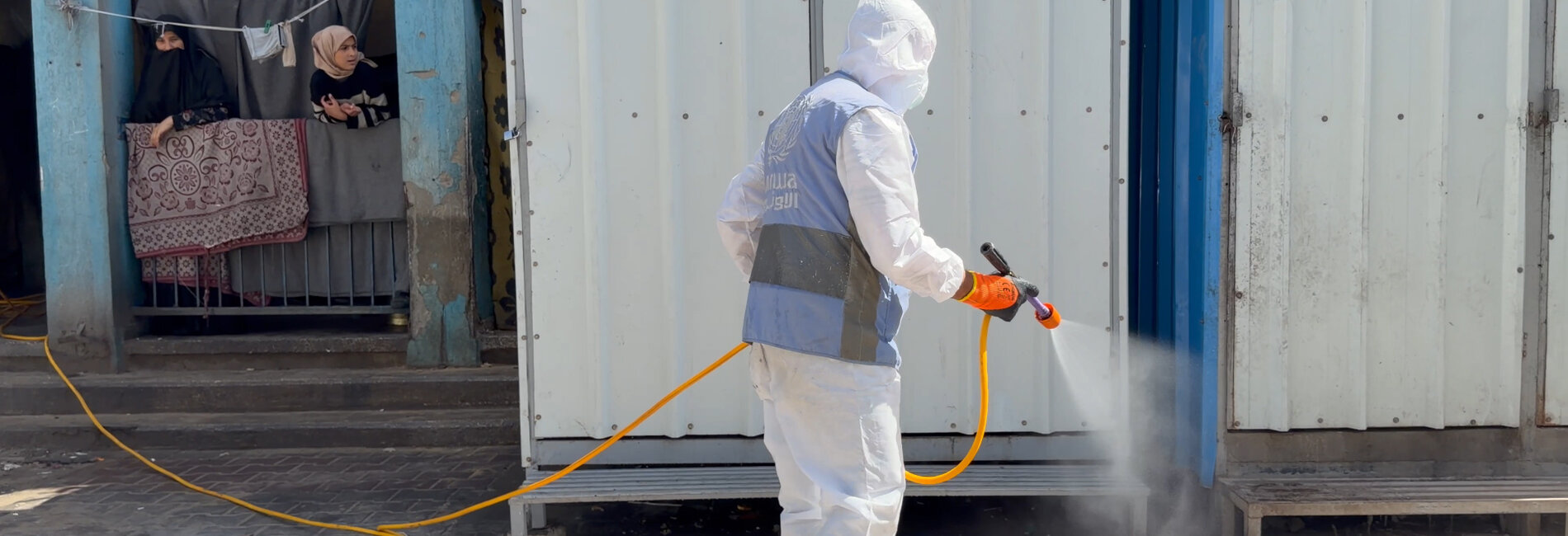
Partners leading on water, sanitation and hygiene (WASH) warn that a severe shortage of lubricant oil and other materials – critical to maintain back-up generators that keep water and sanitation systems running in the absence of electricity – is causing critical failures. In Khan Younis, key sewage pumping stations have ceased operations, with sewage flooding residential areas, untreated wastewater accumulating in streets and flowing into drainage channels and stormwater lagoons. This is exacerbating public health and environmental risks, including heightened disease transmission near homes and displacement sites. WASH partners have been forced to operate more than 200 facilities on backup generators for over 2.5 years with limited access to basic maintenance materials. In the WASH sector, most generators are now running on recycled oil, significantly increasing the risk of irreversible mechanical damage and forcing the suspension or reduction of essential services. Similar concerns have also been raised by other sectors.
The World Health Organization (WHO) estimates that over 43,000 people in Gaza have life‑changing injuries, with one in every four of them being a child. Serious injuries include limb trauma, amputations, spinal cord injuries, burns, and traumatic brain injuries, leaving over 50,000 people in need of long-term rehabilitation. However, rehabilitation services remain critically overstretched: no rehabilitation facility is fully operational, access to specialized care is limited, and severe shortages of equipment, prosthetics, and assistive devices persist due to restrictions on imports. Waiting times are long, with many patients discharged early or unable to receive adequate treatment, increasing the risk of permanent disability. Despite the efforts of health workers and partners, only a fraction of needs is being met, while the ongoing crisis continues to generate new injuries.
Protection risks across Gaza remain severe, particularly for women, girls, and children. Humanitarian partners leading on protection report that gender-based violence (GBV) risks are heightened by repeated displacement, overcrowded living conditions, and the lack of privacy in shelters, exposing women and girls to increased risks of violence and limiting their ability to safely access support services. At the same time, child protection concerns are escalating, with rising reports of child labour, school dropout, and children assuming adult responsibilities to support household survival. Children are also increasingly exposed to unsafe environments, hazardous conditions, and harmful behaviours within displacement sites, alongside growing signs of psychological distress, aggression, and behavioural regression linked to prolonged trauma and instability. Demand for specialized case management, mental health and psychosocial support services, and protection interventions continues to exceed available capacity.
Incoming Supplies
Kerem Shalom and Zikim remain the only operational entry points for humanitarian and commercial goods into Gaza.
In April, the volume of incoming humanitarian supplies tracked by the UN increased by 4 per cent compared with March, from 47,500 to 49,500 offloaded pallets, based on data retrieved from the UN 2720 dashboard on 13 May 2026.
This increase could have been more significant, but only 86 per cent of the supplies manifested to the Israeli authorities for entry into Gaza, following initial approval, were ultimately offloaded at the crossings. The remaining supplies were returned to their points of origin. Offloading rates were particularly low for supplies arriving through the Egyptian corridor, at only 69 per cent.
Between 1 and 11 May, offloading rates declined to 78 per cent, with every other truck from Egypt unable to offload at the Israeli crossings along Gaza’s perimeter, based on data tracked by the Logistics Cluster; this does not include bilateral humanitarian donations or the private sector.
On the commercial front, data from the Chamber of Commerce shared with the Cash Working Group suggests that 789 private-sector truckloads entered Gaza between 4 and 10 May, a slight increase from the 750 truckloads entered during the previous week. Most of them reportedly comprised food items, but about 30 per cent are said to consist of non-essential items. Smaller shares included hygiene items, shelter materials, and some electrical and communications equipment as well as medical supplies.
According to the Chamber of Commerce and other humanitarian partner market assessments, prices have begun to stabilize following the peak observed during the regional escalation, with some items already recording price decreases of 10 to 20 per cent.
The UN is only able to confirm the entry of supplies tracked by UN 2720. For breakdowns of those, see the online UN 2720 Mechanism Dashboard.
For a detailed account of the latest humanitarian operations in Gaza, see Annex 1 below.
West Bank
Across the West Bank, including East Jerusalem, the humanitarian situation continues to deteriorate amid escalating settler violence, ongoing operations by Israeli forces and restrictive planning and access regimes. These dynamics are driving casualties, displacement, and the destruction of homes, livelihoods, and essential infrastructure, while constraining access to work opportunities and basic services. The deterioration is unfolding against the backdrop of a severe economic downturn, including growing risks faced by Palestinians attempting to cross the Barrier to access workplaces in East Jerusalem and Israel following the revocation or suspension of most permits since October 2023.
Settler attacks on Palestinian rural and herding communities have spiked, especially in the Jordan Valley, where the recurrent targeting of agricultural assets, water infrastructure and grazing areas has undermined livelihoods and heightened the pressure on vulnerable communities to leave. Across Area C, Israeli authorities continue demolishing structures that support livelihoods, water and sanitation. In response, WASH partners continue to scale up emergency interventions despite significant access constraints and operational risks.
Child protection partners provide mental health and psychosocial support (MHPSS), case management, awareness activities, referrals, legal assistance and emergency support interventions to approximately 2,600 children and caregivers across the West Bank every week. Community-based psychosocial support remains the primary intervention modality, reaching more than 1,400 children and caregivers through individual and group counselling, recreational and sports activities, drama and art therapy, psychodrama, positive parenting sessions and structured psychosocial support activities. Partners also continue to raise awareness of children, caregivers, humanitarian workers and communities on child protection risks, violence prevention, child safeguarding and safe reporting pathways. In parallel, child protection partners provide case management, legal support, referrals and specialized follow-up for approximately 50 to 60 high-risk children per week, including children exposed to violence, displaced children, and children requiring specialized protection services. Children with disabilities remain among the most vulnerable groups, with partners providing rehabilitation support, referrals, assistive devices and inclusive child protection services to approximately 100 children with disabilities weekly.
To address growing protection needs, partners focusing on GBV-response have strengthened specialized case management and MHPSS services, including by establishing support groups in Jenin. These interventions provide structured psychological support and safe spaces for self-expression, particularly for displaced women and women affected by the psychological impacts of land confiscation and settlement expansion.
Partners continue to integrate material relief with protection assistance through the distribution of dignity kits to displaced populations in Jenin and Tulkarm, while maintaining 11 safe spaces for women and girls as critical hubs for confidential service delivery and referrals. However, according to GBV partners, specialized care services remain under significant strain. Recurrent displacement, movement restrictions, and insecurity, particularly in Area C, the H2 area of Hebron, Massafer Yatta, and Jenin, continue to disrupt access to survivors, limit the regular operation of safe spaces, interrupt follow-up and referral pathways, and constrain the ability of specialized staff to safely reach affected communities. Coupled with staffing pressures, these operational constraints are undermining the provision of sustained, high-intensity MHPSS and case management services required by survivors.
Casualties and barrier-crossing incidents
Reports indicate that on 11 May, during a raid into the nearby Qalandiya camp in Jerusalem governorate, Israeli forces shot and killed a Palestinian man, withheld his body, and confiscated his car, after the man had reportedly shot toward the forces. No Israeli casualties were reported. In the camp, Israeli forces also fired live ammunition and tear gas canisters toward Palestinians, injuring three people, including on by live ammunition and two due to tear gas inhalation. Israeli forces also entered the UNRWA Qalandiya Training Centre, photographed the site and took measurements of the buildings.
Also on 11 May, a Palestinian man died of wounds sustained after he was shot by an Israeli settler and subsequently arrested by Israeli forces on 15 April near Qarawat Bani Hassan village, in Salfit governorate. According to the Palestinian District Coordination Office, he had mental health conditions and had previously received treatment at a mental health institution.
This brings the number of Palestinians killed in the West Bank to 47 in 2026 up to 11 May. This includes 13 people killed by Israeli settlers, 32 by Israeli forces, and two by either Israeli settlers or Israeli forces. Overall, these fatalities include 14 Palestinians killed in settler attacks, including 12 by Israeli settlers and two by either Israeli settlers or Israeli forces. In addition, one Palestinian woman died in 2026 from injuries sustained in December 2023.
Since 7 October 2023, when Israeli authorities revoked or suspended most permits issued to Palestinians to access East Jerusalem and Israel for work and other purposes, and as of 11 May, OCHA has documented the killing of 17 Palestinians and the injury of over 290 others who were reportedly attempting to cross the Barrier. In addition, on 12 May, Israeli forces shot and killed a Palestinian man from Deir Qaddis village, in Ramallah governorate, and injured another Palestinian man while they were reportedly attempting to cross the Barrier through Ar Ram town, in Jerusalem governorate, to access workplaces in East Jerusalem and Israel.
As of 11 May 2026, the monthly average number of Palestinians injured by Israeli forces while attempting to cross the Barrier stood at 11 injuries per month. This follows a sharp increase recorded in 2025, when the monthly average rose to 14 injuries per month, more than double the 2024 monthly average of six injuries per month and a marked increase compared with the last three months of 2023, when about one injury per month was documented in this context.
Overall, between 5 and 11 May, about 70 Palestinians, including 10 children, were injured by Israeli forces or settlers, mainly in the context of search operations and raids carried out by Israeli forces, and during settler attacks.
Escalating Settler Violence and Attacks on Livelihoods
Between 5 and 11 May, OCHA documented at least 33 Israeli settler attacks against Palestinians that resulted in casualties, property damage, or both, bringing the number of such attacks documented since the beginning of 2026 to over 800 across more than 220 communities – an average of six incidents per day.
Among the key settler attacks documented during the week were five that took place in the Jordan Valley targeting Palestinian livelihoods, water resources and agricultural assets, alongside physical assaults and intimidation of residents. Reported in Jericho and Tubas governorates, these incidents reflect a recurrent pattern of attacks concentrated around herding communities and areas where new settlement outposts had been set up and where settlers frequently target grazing areas, agricultural infrastructure and basic services essential for sustaining Bedouin and herding communities.
For example, in Al Jiftlik – al Musaffah community, in Jericho governorate, settlers stole a water tank belonging to a Palestinian herder family and, in a separate incident, chased a Palestinian herder while attempting to seize his tractor, and fired live ammunition toward the vehicle, damaging its tires. Also in Jericho, in the Al Awsaj area, armed settlers physically assaulted a Palestinian family, injuring two people, while attempting to burn the family home and seize livestock and a vehicle. In the northern Jordan Valley, in Khirbet Samra, settlers physically assaulted a Palestinian herder while he was grazing livestock, fired live ammunition toward him, and stole and smashed residents’ mobile phones used to document the incident.
Some of these attacks also involved extensive destruction of agricultural infrastructure and productive assets. For instance, in Nablus governorate, in Al Jawaneh area near Beit Furik, settlers reportedly bulldozed agricultural structures, destroyed a water well, water tanks, fencing and crops, and damaged about 200 tree saplings, agricultural equipment and solar lighting infrastructure.
The Jordan Valley has emerged as one of the areas most affected by the escalation in settler violence in recent years. Since the beginning of 2026, 107 of 759 settler attacks that resulted in casualties or property damage (14 per cent) were in the Jordan Valley, more than half of which occurred in Tubas governorate in the northern Jordan Valley. This follows a sharp rise in such incidents over recent years, from 23 incidents in 2020 to 224 incidents in 2025, while the monthly average increased from two incidents per month in 2020 to 27 incidents per month during the first four months of 2026 – an almost 14-fold increase.

Across the West Bank, and as of 11 May, 12 Palestinians were killed by Israeli settlers in attacks in 2026, while two others were killed in settler attacks, where it remains unknown whether they were killed by Israeli settlers or forces. This compares with 13 Palestinians killed by Israeli settlers in settler attacks in 2023, three in 2024, and eight in 2025. Eleven of the 12 fatalities attributed to Israeli settlers in 2026 were recorded after the onset of the regional escalation on 28 February.**
In addition, injuries during settler attacks have sharply increased in 2026. Since the beginning of the year, about 490 Palestinians have been injured by Israeli settlers in settler attacks, nearly equivalent to the annual totals recorded in each of 2023 and 2024. This is an average of four injuries per day. This exceeds the daily average of 2.3 Palestinians injured by settlers in 2025, when about 830 Palestinians were injured in such incidents. In March 2026 alone, about 170 Palestinians were injured by Israeli settlers, marking the highest monthly number of injuries by settlers since OCHA began systematically documenting settler violence in 2006.
Attacks by Palestinians where Israeli settlers killed or injured Palestinians are recorded separately.
Demolitions, Displacement and WASH Response
During the reporting period, 45 Palestinian-owned structures were demolished for lacking Israeli-issued building permits, which are nearly impossible for Palestinians to obtain. These included 40 structures in Area C, including four homes, displacing two families comprising 13 people, including eight children, as well as five structures in Area B and one in East Jerusalem. Four of the demolished structures were homes, one was an uninhabited residential structure, and the remaining 40 structures (89 per cent of the total) were agricultural, livelihood-related, or water and sanitation structures.
Since the beginning of 2026, 69 per cent of structures demolished in Area C for lacking Israeli-issued building permits (258 out of 372) have been agricultural, livelihood-related, or water and sanitation structures.
Among the key incidents during the reporting period, Israeli authorities demolished vehicle and truck maintenance facilities in Husan and Shuqba villages, in Bethlehem and Ramallah governorates respectively, including workshops, storage rooms, inspection pits and associated infrastructure that constituted the primary source of income for four affected families. In Al ‘Eizariya town, in Jerusalem governorate, Israeli authorities also demolished commercial and industrial facilities supporting the livelihoods of 25 households, affecting about 135 people, including 76 children. The demolished structures included vehicle mechanic garages, car-wash facilities, construction material shops, supermarkets, and restaurants.
In Bardala village, in the northern Jordan Valley, Israeli forces demolished seven agricultural greenhouses cultivated with vegetables across about 11 dunums of land and destroyed associated water networks, severely affecting the livelihoods of three farming households comprising 15 people, including nine children. According to affected farmers, the demolition followed military orders issued in February 2026 targeting approximately 45 dunums of cultivated greenhouse land in the area. Agricultural and WASH-related assets were also extensively damaged.
Damage to agricultural and WASH structures was also documented in Silwad village, in Ramallah governorate, and Al Malha area, in Bethlehem governorate; Israeli authorities demolished or damaged water cisterns, water tanks, animal shelters, agricultural resting rooms, fencing, latrines and stone walls, undermining water storage capacity as well as agricultural and herding activities. In Khashem ad Daraj community, in Massafer Yatta in Hebron governorate, Israeli authorities confiscated a residential tent and demolished an animal shelter and related structures, displacing one family for the second time this year following a previous confiscation incident in February 2026.
Amid continued demolitions, displacement, settler violence and attacks affecting basic infrastructure, humanitarian partners have scaled up emergency response efforts to mitigate the impact on affected communities. Partners of the Water, Sanitation and Hygiene (WASH) Cluster continue to respond to prolonged service disruptions through interventions such as emergency water trucking to communities in Masafer Yatta, where at least 10 communities remain disconnected from the water network supply, as well as to herding communities in the northern Jordan Valley and displaced families from Ras Ein al ‘Auja following the full displacement of the community.
Between January and April 2026, 14 WASH partners implemented 382 interventions across 139 communities in the West Bank. These included the rehabilitation and expansion of more than 14 kilometres of water networks, the trucking of nearly 10,000 cubic metres of water, the distribution of 868 water storage tanks, and the installation or rehabilitation of 57 cisterns. Partners also provided sanitation and hygiene support, including wastewater desludging for displaced people in the northern West Bank, construction and repair of sewerage networks, provision of 375 household emergency mobile latrines, distribution of over 10,000 hygiene-related kits, and solid waste management interventions in displacement sites and overstretched host communities.
For key figures and additional breakdowns of casualties, displacement and settler violence between January 2005 and March 2026, please refer to the OCHA West Bank March 2026 Snapshot.
Funding

Sources: Financial Tracking System and oPt HF
Annexes
Annex 1: Humanitarian Operations in the Gaza Strip by Cluster
Read more
This section covers 4 to 10 May unless otherwise specified.
Food Security
- In the first 10 days of May, partners provided general food assistance to 71,000 households (251,000 people) as part of the monthly distribution. Each family receiving two parcels, one 25-kilogram flour bag and 2.5 kilograms of high energy biscuits, covering 75 per cent of the minimum caloric needs – the same as in April. Additional caloric needs are covered through other modalities.
- As of 10 May, partners continued to prepare and serve over 1.1 million meals every day through 111 kitchens and to almost 2,000 different locations. This includes 296,000 daily meals produced in northern Gaza and 809,000 meals in the south.
- Twenty-eight UN-supported bakeries produce some 130,000 two-kilogram bread bundles daily. One fifth of the bread is distributed free of charge to more than 300 shelters and community sites, while the remainder is sold at a subsidized price of NIS 3 (US$0.95) per bundle through 168 retailers.
- Since 25 April, partners have provided free fuel to an additional five private bakeries to resume operations through a “diesel-only” modality, which allows them to set their own price. Production of these bakeries has steadily increased in May, reaching an average of nine metric tons of bread per day, as they rebuild their customer base and gradually expand their sales networks through additional retailers.
- For six weeks in March-April, partners supported 43 retail businesses with conditional cash grants of $7,000-10,000 each, covering up to 70 per cent of rehabilitation and business development costs to stimulate co-investment and address challenges such as weak supply chains, banking constraints, high costs, and market volatility. The grants were used for light repairs, equipment replacement, energy and connectivity solutions, cold-chain improvements, and digital payment systems.
- In the first half of May, partners supported over 2,200 herders, giving each of them four 50‑kilogram bags of concentrated feed or barley.
A few examples of what is still needed: To resume large-scale local food production, multiple complementary inputs must be made available in a timely manner. Among other things, local importers and distributors specialized in agricultural inputs must be allowed to import supplies directly. To rehabilitate and reconstruct farms and production facilities, the entry of essential materials – such as spare parts, engine oil, fuel, and other inputs – must be facilitated.
Health
- Partners monitored the risk of hantavirus – which could be heightened by overcrowding, rodents, and poor sanitation – and raised awareness to help mitigate that risk.
- On 7 May, the International Committee of the Red Cross completed the delivery of supplies to support the expansion of its field hospital in Rafah, increasing its capacity from 60 to 72 beds and improving emergency, outpatient, maternity, pediatric, and post-operative services. Since its opening in May 2024, the hospital has delivered more than 250,000 consultations, conducted over 11,300 surgeries, and supported 1,200 births.
- Between 4 and 10 May, progress also continued under the Limb Reconstruction Care initiative, supported by Health Cluster partners. As of 11 May, more than 2,300 patients have been screened at Nasser Medical Complex, Al-Aqsa Hospital, and Al-Shifa Hospital. Of these, 933 require surgical intervention, including 645 major and 288 minor limb reconstruction cases. Orthopedic supplies and training have been delivered, with major surgeries expected to begin in mid-May 2026.
- World Health Organization (WHO) supported the medical evacuation of 88 patients, including six children, along with 130 companions, to Egypt through the Rafah crossing.
A few examples of what is still needed: International prosthetic technicians must be deployed, workshop capacity must be expanded, and prosthetics materials that remain restricted must be allowed in.
For more information, see the online Heath Cluster Dashboard.
Nutrition
During the second half of April 2026, partners:
- provided blanket supplementary feeding (medium-quantity lipid-based nutrient supplements) to 206,641 children aged 6-59 months and to 75,771 pregnant and breastfeeding women;
- provided targeted supplementary feeding to 22,953 malnourished pregnant and breastfeeding women;
- provided ready-to-use therapeutic food to 10,757 children;
- screened 82,116 children aged 6-59 months for acute malnutrition, admitting 2,923 (3.56 per cent) of them for treatment, including 507 children (0.62 per cent) with severe acute malnutrition (SAM);
- 69 severely malnourished children were admitted to stabilization centres for inpatient treatment;
- 40 infants under six months at risk of poor growth and development were admitted for inpatient malnutrition care;
- screened 64,044 pregnant and breastfeeding women for acute malnutrition, admitting 2,147 of them for treatment;
- provided 66,748 caregivers with counselling on how to feed infants and young children in emergencies;
- kept 215 nutrition sites operational.
Shelter
- Partners delivered shelter and non-food items through in-kind and voucher-based modalities, reaching 26,521 households. Assistance included 45,816 bedding items, 2,503 bedding kits, and 1,046 tents.
- in North Gaza and Khan Younis, they installed 64 more emergency shelters made from available materials such as plastic sheets and designed as an immediate solution that can be upgraded into transitional shelters once materials are allowed entry.
A few examples of what is still needed: More essential household items are needed, as available stocks are merely enough to support fewer than 3,400 additional households. Administrative impediments should be lifted along with restrictions on shelter items.
For more information, see the Shelter Cluster website.
Protection
- Partners reached over 30,000 people through static sites and mobile outreach. Services included mainly on MHPSS, as well as legal assistance, awareness raising activities, and disability-inclusive services.
- They offered psychological first aid, emergency assistance and referrals to 214 Palestinians who returned from Egypt, bringing the total number of returnees offered such services since the reopening of Rafah on 2 February to 2,283; including 821 who are currently receiving follow-up protection services.
- They also held 26 focus group discussions and conducted 188 key informant interviews across 15 neighborhoods, reaching 2,629 people, as a means of monitoring protection needs and services.
- Protection partners and those leading on the protection from sexual exploitation and abuse (PSEA Network) trained 28 focal points from 25 organizations on safeguarding monitoring. PSEA Network and Protection Cluster Emergency Protection Responder (EPR) joint distribution teams, monitoring safety and inclusion at distribution points across Gaza and reporting on best practices
A few examples of what is still needed: It is critical to address psychological distress among staff members, fuel shortages, transportation costs, cash flow constraints, and shortages of materials and spare parts. Safer access is required to certain areas considered highly insecure or where infrastructure is heavily damaged.
For more information, see the online Protection Cluster dashboard.
Child Protection
Between 4 and 10 May, partners:
- provided over 4,800 children with MHPSS interventions, including group activities, individual counselling, sports, and resilience-building support to address trauma and distress and strengthen caregiver coping;
- delivered psychosocial support sessions to more than 2,000 caregivers, aimed at strengthening protective family environments and reducing stress linked to prolonged displacement and economic hardship;
- provided case management support to over 486 children at risk, 51 of whom have injuries or disabilities and 326 are without parental care (including unaccompanied and separated children); they were identified, registered, and supported through alternative care and family-strengthening interventions;
- helped reunite nine children with their families;
- conducted home visits and ongoing follow-up for previously identified high-risk cases, while case management interventions continued to be documented and managed through the Child Protection Information Management System;
- provided reached additional children with disabilities through inclusive MHPSS, counselling, recreational activities, case management, and caregiver support programmes;
- distributed hygiene products to over 1,500 children and caregivers;
- distributed clothes to 316 vulnerable children;
- distributed stationery kits to 200 children to support learning continuity and overall wellbeing.
- provided cash assistance to 109 vulnerable families aimed at reducing harmful coping mechanisms and mitigating children’s exposure to heightened protection risks.
A few examples of what is still needed: More rehabilitation services, assistive devices, and specialized personnel are needed to scale up inclusive interventions. These in turn require increased funding, the procurement of assistive devices, additional trained staff, and stronger coordination between child protection, health, and rehabilitation actors to improve referrals and access for children with disabilities.
Addressing Gender-Based Violence
Between 4 and 10 May, partners:
- processed 340 hotline calls, providing callers with individual counselling and safe referrals to specialized services;
- provided specialized, confidential case management services to 374 GBV survivors;
- provided MHPSS to 389 people;
- kept 42 safe spaces for women and girls functional;
- expanded their preventive and therapeutic reach through targeted community workshops and psychosocial support activities;
- Provided women and girls with specialized protection services aimed at strengthening coping mechanisms and overall psychological well-being.
- Raised awareness on GBV within communities.
Mine Action
- UNMAS conducted 38 explosive hazard assessments in support of debris removal and other partner activities, and one interagency mission.
- Explosive ordnance risk education activities continued between 1 and 7 May, reaching almost 17,000 people in Gaza city, Deir al Balah, Khan Younis, and Rafah.
Education
- Partners continued to scale up temporary learning spaces (TLS), reaching 626 TLS, up from 494 at the end of March, now supporting approximately 58 per cent of pre school and school aged children across Gaza.
- Partners are distributing limited quantities of education that they took into Gaza between 5 and 9 May, following a prolonged disruption; these include kits for adolescent care, clothing for children aged 12-14 years, early childhood development and kit-in-a-carton items, and school-in-a-carton kits.
A few examples of what is still needed: Over 40 per cent of children remain without access to structured learning; many rely on informal community initiatives, while others remain out of school. Most learners receive no more than three hours of instruction per day, three days per week, on average. Incoming supplies remain far below identified needs and authorization for the increased entry of education supplies at scale, alongside adequate funding to maintain procurement and replenish pipelines is needed.
Emergency Telecommunications
Between 4 and 10 May, partners:
- checked the coverage of the VHF digital system at the UNDP building in Gaza city, confirming successful connectivity with the UNDSS-operated Joint Support Operations Centres in Deir al Balah and Jerusalem.
- reviewed the upgrade of UNDSS’s digital system.
- produced unified UN standard codeplugs for VHF configurations, with preliminary testing of emergency and administrative functions completed successfully.
- worked with UNRWA to resolve the status of the Deir al Balah VHF repeater.
** Double asterisks indicate that a figure, sentence, or section has been rectified, added, or retracted after the initial publication of this update.
SUBSCRIBE TO RECEIVE OCHA'S INFORMATION PRODUCTS
 SUBSCRIBE
OCHA Sites










Follow Us
Support
Your donations go to relief organizations delivering quick and effective support to Palestinians in need.