
Humanitarian Situation Report | 14 August 2026
Highlights
- Humanitarian response efforts continue across the Occupied Palestinian Territory despite persistent restrictions and funding shortfalls.
- In Gaza, most people remain internally displaced, in harsh living conditions, and exposed to ongoing military strikes; in early July, 90 per cent was experiencing moderate-to-high water insecurity, an increase from 84 per cent in June, a survey finds.
- Every fourth Palestinian injured in Gaza since October 2023 is estimated to live with spinal cord or brain injuries among other potentially life-changing conditions, while the entry of rehabilitation supplies and assistive products remains restricted.
- In the West Bank, a large-scale operation by Israeli forces in Qalandiya Camp injured 51 Palestinians and disrupted health services. Nine structures were also demolished in nearby Kafr Aqab and near Qalandiya checkpoint, affecting 71 people.
- In just one week, 38 settler attacks were reported, resulting in casualties, property damage or both. In Tuba, Masafer Yatta, settlers injured five Palestinians and destroyed three homes, displacing 23 people, including 14 children.
- Israeli authorities demolished 25 Palestinian-owned structures in eight incidents, displacing 29 people, including 17 children. The demolitions included part of a school in Masafer Yatta, affecting 54 students.
Overview
In a statement issued on 12 August for International Youth Day, Deputy Special Coordinator, Resident and Humanitarian Coordinator Ramiz Alakbarov said that for Palestinian youth, hopes for dignity, opportunity and a peaceful future remain constrained “by occupation, conflict, displacement, violence and profound uncertainty.”
In Gaza, young people have borne “the devastating consequences of the ongoing conflict, including persistent violence, the loss of loved ones, repeated displacement and the widespread destruction of homes, schools and universities.” Dr. Alakbarov warned that the future of an entire generation in Gaza is threatened by “the collapse of essential services, disruption of education and loss of livelihoods.” In the West Bank, including East Jerusalem, “youth continue to face escalating violence, expanding settler presence, severe restrictions on movement and access, and shrinking economic opportunities.”
Dr. Alakbarov, who is also the Acting United Nations Special Coordinator for the Middle East Peace Process, reaffirmed UN’s commitment to work alongside young people in Palestine, advocating for their rights and supporting access to education, health, decent work, meaningful participation and pathways to economic and social recovery.
Gaza Strip
The reporting period for this section is 3-9 August unless otherwise specified.
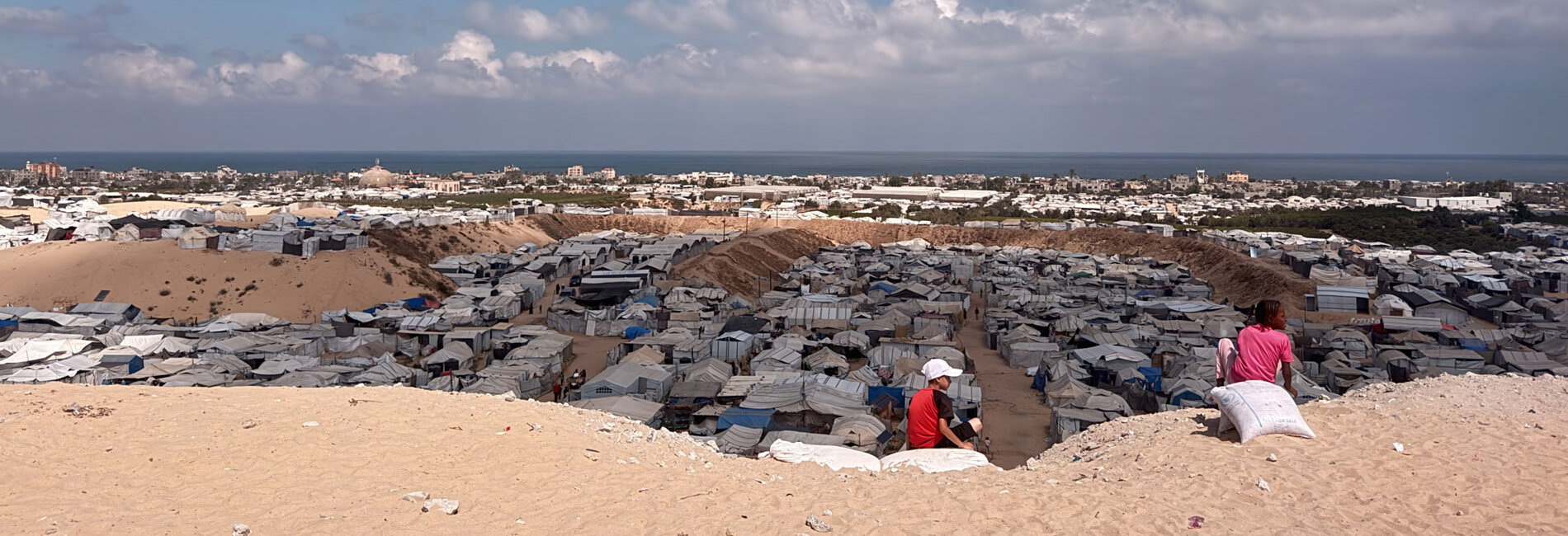
The humanitarian situation in Gaza remained critical, with military activities continuing across the Strip, causing more casualties and displacement.
According to the Ministry of Health (MoH) in Gaza, which operates under the de facto authorities, seven Palestinians were reported killed, including those who died of wounds and had their bodies retrieved from under the rubble, and 28 people were injured between 5 and 12 August. This brings the overall reported casualty toll since the announcement of a ceasefire agreement on 10 October 2025 to a total of 1,259 fatalities and 4,148 injuries, according to MoH.
So far in 2026, the World Health Organization (WHO) has recorded 45 attacks affecting health care in the Gaza Strip, nearly half of them in Rafah. In most cases, health transport was affected and the delivery of health care obstructed. The majority of reported incidents occurred during medical evacuation operations in the vicinity of Rafah crossing, convoys were obstructed, delayed or searched, and, in some cases, patients or their companions were detained.
Access to safe drinking water remains a challenge for the people of Gaza. The Light Touch Monitoring Survey completed by the Water, Sanitation and Hygiene (WASH) Cluster in early July shows that 90 per cent of the population are experiencing frequent, unpredictable disruptions in access to safe, clean, and reliable water for daily drinking, cooking, and hygiene, an increase from 84 per cent in the previous month. At the governorate level, Gaza city scored the lowest, with 92 per cent of surveyed households moderately-to-highly water insecure, followed by Khan Younis at 90 per cent and Deir al Balah at 87 per cent.
Despite ongoing efforts to increase water trucking operations to address the overwhelming needs (see cluster section below), challenges persist. Since early July, for instance, WASH partners have been unable to access approximately 5,000 people sheltering in six displacement sites in northern Rafah due to ongoing insecurity and stray bullets.
When it comes to hygiene and sanitation conditions, the proportion of households reporting sewage or sludge within 10 metres of their shelter decreased to 43 per cent, from 52 per cent in June, while those reporting nearby solid waste piles declined from 43 to 26 per cent. Regular domestic waste collection at household level also improved slightly, increasing from 65 to 68 per cent. Consistent funding, more approvals to bring in spare parts, and renewed access to Gaza’s landfills, which are in the access-restricted areas, remain essential.
According to the Health Cluster’s Rehabilitation Task Force, a quarter of those injured in Gaza since the escalation of hostilities in October 2023, are estimated to live with potentially life-changing injuries such as amputations, spinal cord injuries and traumatic brain injuries. According to the task force’s latest report, MoH data suggests that children account for 18 per cent of amputations and 31 per cent of spinal cord and traumatic brain injuries. The report notes that there are no specialized paediatric rehabilitation services available in Gaza.
Overall, the task force estimates that approximately 2 per cent of Gaza’s population – as it was before the October 2023 escalation – is now living with severe conflict-related injuries.
The importation of rehabilitation equipment, supplies and assistive products continues to face significant constraints, including engine oil and spares for generators. No rehabilitation equipment for rehabilitation facilities entered Gaza between May 2024 and 14 April 2026, the task force notes, adding that the average waiting time for pending shipments containing assistive products is 136 days (as of 14 April 2026). According to the report, overstretched rehabilitation services, combined with shortages of essential equipment, assistive products and consumables, are contributing to preventable secondary complications and further increasing pressure on already limited rehabilitation capacity; presently, about 30 per cent of inpatient beds in remaining specialist rehabilitation services are reportedly occupied by patients with advanced pressure sores. Limited beds are also driving early discharge, increasing risks of deterioration, loss of function and avoidable readmission, the report says.
On 4 August, in North Gaza, a 13-year-old child was injured by the detonation of an abandoned explosive ordnance at his displacement site, as reported by Mine Action partners. Since October 2023, partners have reported a total of 589 explosive ordnance incidents across Gaza, resulting in the killing of 274 people and the injury of 1,142. For background, see last week’s report. For mine action response during the reporting period, see below.
Incoming Supplies
According to data collected by the Logistics Cluster, the UN and partners’ aid offloading rate, representing the proportion of truckloads that were successfully offloaded at Kerem Shalom against those authorized to be manifested each day, increased from 77 per cent in the previous reporting period to 87 per cent in the current one. The Egyptian corridor continues to face the highest levels of truck returns and rejections with a 72 per cent offloading rate. The Jordanian route was the most utilized route for UN and partners’ humanitarian cargo entering Gaza during the week, with 170 truckloads offloaded. Kerem Shalom remained the only operational crossing point for cargo.
On the commercial front, data from the Gaza Chamber of Commerce, shared with the Cash Working Group, indicates that the private sector collected 878 truckloads into Gaza between 3 and 9 August. Overall, the number of commercial truckloads reported as entering Gaza has remained stable in recent weeks, with only minor variations. This remains insufficient to sustain the demand. Moreover, of all private sector trucks, 264 (30 per cent) still carried non-essential items, at the expense of more critical supplies as shelter and WASH materials. Only eight trucks reportedly carried animal feed and two medical equipment.
According to the Chamber of Commerce, prices of basic commodities on the local market remained relatively stable, with only minor variations compared to the previous week. According to the Gaza Consumer Index, the inflation rate has increased to 209 per cent more than the time before October 2023. Cash-out fees equally remain stable at 7-8 per cent, according to Cash Working Group, but they are again closely monitored in light of the announced development of the banking system.
The UN is only able to confirm the entry of supplies tracked by UN 2720. For breakdowns of those, see the online UN 2720 Mechanism Dashboard.
For a detailed account of the latest humanitarian operations in Gaza, see Annex 1 below.
West Bank
The reporting period for this section is 4 to 10 August unless otherwise specified.
Humanitarian needs across the West Bank continued to be driven by operations by Israeli forces, settler violence, demolitions and movement restrictions, which disrupted access to essential services and constrained humanitarian operations. In Qalandiya Camp, a large-scale two-day operation by Israeli forces resulted in dozens of injuries, temporary displacement, damage to residential property and disruption of health services.
Despite these constraints, Health Cluster partners continued to support life-saving and essential health services through a network of 870 service points, including 59 hospitals, 477 primary health-care centres, 230 mobile clinic locations and 16 emergency centres. Mobile clinics remain particularly critical for communities in Area C, the “Seam Zone” and H2 area of Hebron, where they are often the main or only source of essential primary health care. Many facilities run by the Ministry of Health have reduced operating hours and service days amid the ongoing fiscal crisis. In addition, shortages of medicines, medical supplies and consumables, which the Ministry has attributed to the prolonged withholding of Palestinian clearance revenues, have persisted since at least early June and continue to affect the availability and continuity of care. Checkpoints, road closures and operations by Israeli forces also continued to delay or prevent the movement of ambulances, mobile health teams, patients and health workers.
Against this backdrop, according to the latest WHO data, which cover incidents through the end of July, 37 attacks on health care were recorded in July, compared with eight in June and a monthly average of about 10 incidents during the first six months of 2026, bringing the total recorded between January and July to 98. Overall, these attacks affected 83 health transport vehicles and 11 health facilities and resulted in 33 injuries and four fatalities. Obstruction of health-care delivery was documented in 92 incidents, while 66 involved the use of force against health care, 25 involved the arrest or detention of health personnel or patients, and 13 involved militarized searches of health personnel, facilities or transport. WHO identifies obstruction and detention at checkpoints, full closures during operations and requirements for “prior coordination” of ambulance movements among the factors impeding access to health care across the West Bank.
In July, WASH partners delivered more than 9,000 cubic metres of water across the West Bank (66 per cent of which supported internally displaced people) and distributed more than 400 household water tanks. Partners rehabilitated nearly 15 kilometres of water networks benefiting more than 65,000 people, installed or rehabilitated 127 household latrines, provided sewage desludging services to displaced populations in the northern West Bank and collected 200 metric tonnes of solid waste from displacement sites. Nearly 1,200 household hygiene kits were distributed, about half to internally displaced people.
In the northern West Bank, where the humanitarian situation remains particularly severe following prolonged operations by Israeli forces and large-scale displacement, child protection partners have provided psychosocial support, awareness-raising, in-kind assistance, services for children with disabilities and case management to more than 29,600 children and 14,300 adults since the beginning of 2026. In July, mine action partners conducted 761 sessions to educate people on explosive ordnance risks, awareness and conflict preparedness and protection, reaching over 11,600 people across Tulkarm, Hebron, Tubas, Jenin, Nablus and Bethlehem governorates. According to the Palestinian Mine Action Centre and Palestinian Explosive Ordnance Disposal Police, nine explosive ordnance-related casualties were recorded across the West Bank between January and July 2026.
Operations by Israeli Forces
During the reporting period, no Palestinian fatalities were reported in the West Bank. At least 89 Palestinians were injured by Israeli forces or Israeli settlers, most during a large-scale operation in Qalandiya refugee camp, in northern East Jerusalem, and six during two separate raids in Burqa, in Nablus governorate.
The operation in Qalandiya Camp, with an estimated 16,900 residents, took place on 5 and 6 August, involving extensive deployments of Israeli forces, military bulldozers and other heavy vehicles. Israeli forces sealed the camp’s entrances for about 48 hours and restricted movement within the camp. The majority of residential buildings in the camp were searched, with some residents reporting that family members were confined to single rooms for prolonged hours. Israeli forces took over three houses, as well as the offices of the camp’s Popular Committee and the Jerusalem Governorate, for use as temporary interrogation centres. At least six households were temporarily displaced from their homes and sought shelter with relatives and neighbours; all have since returned. Local sources reported that approximately 150 Palestinians were detained and interrogated inside the camp, most of whom were subsequently released. On 6 August, Israeli forces entered the UNRWA Kalandia Training Centre and inspected the premises before leaving after approximately an hour.
According to the Palestine Red Crescent Society (PRCS), 51 Palestinians were injured during the operation: 44 (including a 9-year-old) were physically assaulted; one was hit by a rubber-coated metal bullet; and six were treated for tear gas inhalation. According to the Health Cluster, the operation and associated movement restrictions prevented the UNRWA Health Centre in Qalandiya Camp from operating on 5 and 6 August. Medical teams also faced restrictions entering the camp, but were able to evacuate at least 11 patients following coordination with the Israeli authorities through the Palestinian District Coordination Liaison Office. Following the end of the operation, Israeli forces eased access constraints, and UNRWA extended the operating hours of its health centre and waste collection services through 8 August to address health and sanitation needs following the two-day disruption. On 7 August, humanitarian partners conducted a joint assessment and documented damage to doors, windows, furniture and other household property in approximately 30 homes. Affected families reported significant financial losses associated with damage to their homes and belongings. No significant structural damage to residential properties or displacement resulting from the damage was identified.
During the same two-day operation, Israeli forces also carried out demolitions in Kafr Aqab and the vicinity of Qalandiya checkpoint, citing the lack of Israeli-issued building permits. A post-operation humanitarian assessment documented the demolition of nine structures, affecting 13 Palestinian households comprising 71 people, including 31 children. These included four livelihood structures hosting six commercial facilities as well as five agricultural and storage structures attached to residential buildings near the Barrier. Israeli forces also dug a trench alongside the Barrier, destroying the backyards of private properties and leaving some residential buildings immediately adjacent to the excavation. Humanitarian partners are mobilizing assistance to address needs identified through the assessment.
Late on 10 August, during a raid in Burqa (Nablus), five Palestinians, including two children, were physically assaulted while their homes were searched and subsequently taken to hospital. Earlier, on 4 August, an elderly Palestinian woman was treated for tear gas inhalation during another raid in the village. Elsewhere, Israeli forces injured two Palestinians with live ammunition or shrapnel during raids in Balata Camp (Nablus) and Jenin city, including a 14-year-old child in Jenin.
Settler Attacks
During the reporting period, a total of 38 incidents involving Israeli settlers resulted in Palestinian casualties, property damage or both. Attacks affected Palestinians and their property across the West Bank, including homes, vehicles, agricultural land, water and electricity infrastructure and other livelihood assets.
On 5 August, about 30 Israeli settlers attacked the Tuba community in Masafer Yatta (Hebron), throwing stones and flammable materials at homes and physically assaulting residents. Five Palestinians, including two girls, were injured. Three residential structures were destroyed by fire, displacing three families comprising 23 people, including 14 children, who subsequently sheltered with relatives and neighbours. A kitchen, storage tent, about 10 tonnes of animal fodder, a mobile latrine and the community's solar power system were also destroyed, leaving about 100 residents without electricity. Elsewhere in Masafer Yatta, on 9 August, settlers threw flammable material into a Palestinian home in Shi'b al Butum while its residents were sleeping, destroying furniture before the family and neighbours extinguished the fire.
Palestinian access to agricultural land and livelihoods was also affected, particularly in Nablus and Ramallah governorates. Between 6 and 8 August, four attacks in Beit Furik and neighbouring Beit Dajan (Nablus) resulted in seven Palestinian injuries, primarily while Palestinians were accessing agricultural land or working in the area. In three incidents, settlers were reportedly wearing military or military-style uniforms. On 7 August, more than 200 olive trees were found vandalized in Deir Sharaf (Nablus), after landowners had reportedly been threatened by settlers and told not to return to their land two days earlier. In Beitillu (Ramallah), settlers expelled Palestinian farmers from agricultural land in Area B and set fire to a vehicle.
Access to essential services, including health care, was also impeded. On 7 August, Israeli settlers attacked a PRCS team responding to reports of injuries near Abu Njeim (Bethlehem), injuring four Palestinians, including two paramedics who were sprayed with pepper spray, and damaging three PRCS vehicles and a mobile water tanker. In Qusra (Nablus), settlers installed a road gate on 9 August that isolated at least three Palestinian households comprising about 13 people and restricted their access to food, water and other essential supplies. Late on 10 August, settlers reportedly stopped an ambulance that had coordinated access to evacuate a sick child; it was subsequently able to leave after Israeli forces arrived.
Demolitions
During the reporting period, eight demolition incidents were documented (including in Kufr Aqab as reported above) in which 25 Palestinian-owned structures were demolished across the West Bank, including East Jerusalem. The demolitions displaced six households comprising 29 people, including 17 children, and otherwise affected more than 160 people, including nearly 100 children. Of the 25 structures demolished, 24 were demolished for lacking Israeli-issued building permits and one on punitive grounds.
On 10 August, the owners of two apartments in Jabal al Mukabbir, East Jerusalem, were forced to demolish their properties that lacked Israeli-issued building permits. As a result, two households comprising 10 people, including six children, were displaced. According to the family, attempts to obtain building permits had been rejected and they had accumulated more than NIS 800,000 (US$270,000) in fines for unlicensed construction. In July, the family received a final demolition order giving them 21 days to carry out the demolition themselves or face additional costs if the demolition was carried out by the Israeli authorities.
Lack-of-permit demolitions in Area C also displaced three families comprising 13 people in Nahhalin and Al Maniya (Bethlehem) and Khallet al Farah (Hebron). The demolitions included residential, commercial and agricultural structures.
Demolitions also affected education and agricultural livelihoods. On 4 August, Israeli authorities demolished two administrative rooms and a storage room at a mixed basic school in Shi'b al Butum in Masafer Yatta (Hebron), citing the lack of an Israeli-issued building permit. The main school building remains intact but is also subject to a demolition order. The demolition affected 54 school and kindergarten students and 14 educational personnel, including 11 teachers. According to the Education Cluster, the resulting rubble has created safety and access concerns ahead of the new academic year. Reconstruction remains on hold due to the risk of further demolition and ongoing legal proceedings, while efforts are under way to clear the rubble and mobilize mental health and psychosocial support for affected students. On 9 August, Israeli authorities also demolished three agricultural structures in Mirka (Jenin), following a seizure order affecting about 3.5 dunums of land for stated military purposes, affecting the livelihood of a family of five.
Separately, late on 10 August, Israeli forces used explosives to demolish, on punitive grounds, the family home of a Palestinian accused by the Israeli authorities of killing a member of Israeli forces in Tell (Nablus) on 24 July. The demolition displaced a woman and her five daughters. Residents of about 25 neighbouring homes were evacuated during the operation and could subsequently return; several homes sustained damage to doors, windows and water tanks.
For key figures and additional breakdowns of casualties, displacement, and settler violence between January 2005 and June 2026, please refer to the OCHA West Bank June 2026 Snapshot. For key figures on the impact of settler attacks, please refer to the West Bank – The Impact of Settler Attacks, January 2023 – April 2026.
Funding

Sources: Financial Tracking System and oPt HFas of 12 August 2026.
Annexes
Annex 1: Humanitarian Operations in the Gaza Strip by Cluster
Read more
The reporting period for this section is 3-9 August unless otherwise specified.
Intersectoral support
- Through the Rapid Joint Distribution Mechanism, partners from across the humanitarian community responded to 16 requests for assistance following 13 incidents related to shelling which affected 287 households, as well as two domestic fires and one displacement triggered by the installation of new “yellow blocks,” which affected seven households cumulatively. Most appeals originated from northern Gaza and Deir al Balah. To provide tailored support, partners conducted rapid assessments and identified 89 households as having the highest needs.
Food Security
- Between 1 and 9 August, partners provided general food assistance to 58,000 households (approximately 189,000 people) as part of the monthly distribution cycle. Each family received three parcels and one 25-kilogram flour bag, covering more than 100 per cent of the minimum caloric needs.
- As of 6 August, 23 partners continued to prepare 691,000 meals every day through 97 kitchens, delivering them across 1,065 locations. This includes 259,000 meals distributed to 346 locations in northern Gaza and 432,000 meals to 719 locations in the central and southern governorates of the Strip. Overall, meal production levels have remained largely stable since late May, despite minor week-to-week fluctuations.
- As of 10 August, 28 subsidized bakeries continued to produce approximately 100,000 two-kilogram bread bundles daily across Gaza. About 75 per cent of the bread is sold through 166 contracted retailers at a subsidized price of 3 NIS (US$0.93) per bundle, while the remaining 25 per cent is distributed free of charge to more than 300 shelters and community sites. In addition, through the “fuel-only” production model, 10 private bakeries are receiving free fuel from humanitarian partners to produce bread for the community. While managing their operations independently, these bakeries have been steadily increasing their production, reaching a total of 53 metric tonnes of bread per day.
- Starting late July, partners are conducting another round of animal fodder distribution targeting about 2,200 livestock holders in Gaza. Each herder is receiving one 50-kilogram bag of barley and one 50-kilogram bag of concentrate feed.
An example of what is still needed: Continued entry of animal fodder.
Water, Sanitation and Hygiene (WASH)
- As part of cluster’s summer water trucking scale-up plan, the partners have been able to respond to 88 per cent of the 240 new water provision requests received since 20 July, supporting more than 193,000 people through the trucking of an additional 1,160 cubic metres of drinking water daily.
- Partners distributed 2,005 hygiene kits, 215,320 kilograms of laundry powder, 1,000 household water containers with a capacity of 10 litres each, 47,400 garbage bags and 87 household bins, 14,700 litres of household chlorine and 24 latrine kits.
Shelter
- Partners provided approximately 3,350 households with emergency shelter and non-food item support through both in-kind distributions and voucher-based modalities. Distributed items included over 324 bedding kits, 11,504 bedding items, 481 tents, 501 tarpaulins, 1,501 kitchen sets, and 3,571 solar lights.
A few examples of what is still needed: More funding is needed to procure new emergency stocks, which need to be urgently prepositioned ahead of the upcoming rainy season. Also need to be addressed are insecurity, access and logistical constraints, which complicate beneficiary verification, needs assessments, targeting, and the safe and timely delivery of assistance.
For more information, see the Shelter Cluster website.
Site Management
- During the reporting period, Site Management Cluster (SMC) finalized a flood risk assessment to support evidence-based preparation for the rainy season (winterization) across displacement sites with an active partner presence.
Protection
- Partners reached at least 11,131 people with direct protection services. This includes:
- Mental health and psychosocial support (MHPSS) for nearly 12,300 people, including psychological first aid, individual and group counselling, and other structured and community-based MHPSS interventions.
- Case management, referral services and follow-up for 647 people.
- Legal aid, housing, land and property rights and mediation-related services for 251 people.
- Disability-inclusive services, rehabilitation and specialized support for 438 people.
- Helping-the-helpers support and capacity-building activities for 218 frontline workers, service providers and community actors.
- Risk-awareness activities, including large-scale risk-education sessions and awareness raising on the prevention of sexual exploitation and abuse (PSEA) and digital safety for nearly 20,000 people.
- To address immediate protection-related needs, partners provided material assistance to a further 1,384 people, including menstrual health management and hygiene kits, dignity items, cash-for-protection and other cash assistance, pest and rodent control support, emergency shelter assistance, and adult diapers for persons with disabilities and other vulnerable people.
- Partners offered support to 251 returnees through psychological first aid, emergency assistance, and referral services. This brings the cumulative number of returnees assisted since the reopening of the Rafah Crossing to 5,092 people, of whom 1,851 are currently receiving ongoing protection support, including specialized psychosocial services.
For more information, see the online Protection Cluster dashboard.
Child Protection
- Between 3 and 9 August, child protection partners reached at least 8,700 children and 3,000 caregivers through structured MHPSS sessions, individual counselling, psychological first aid, play therapy, group-based support, summer camps and child-friendly activities.
- A total of 230 new high-risk child protection cases were identified and enrolled in individual case management to address their specific needs, including 28 unaccompanied and separated children and other children at risk who were registered for alternative care services. A further 2,700 previously opened cases received follow-up, two children were reunified with their parents or other family members, and 191 households caring for children at risk received integrated cash assistance to mitigate protection risks or prevent family separation.
- Partners also provided targeted support to children with disabilities and children with conflict-related injuries, including cash assistance for 250 children with disabilities or chronic illnesses, assistive devices or specialized rehabilitation services for at least 67 children, and speech therapy for 63 children without parental care. Assistance included wheelchairs, crutches and other functional support devices.
- At least 20,676 children and caregivers participated in awareness-raining activities on child protection concerns, including prevention of family separation, PSEA, hygiene and safe water, emergency preparedness, stress management and gender-based violence. Child safety walk plans, action plans and safety mapping tools, which are frameworks designed to protect children by identifying environmental hazards, establishing clear emergency protocols, and teaching situational awareness were implemented in 10 displacement sites with 275 children, enabling children to participate in identifying safety concerns and informing mitigation actions. Community committees, focus group discussions and key informant interviews also continued to support identification of protection concerns, referrals and follow-up. Approximately 117,000 caregivers were reached through mass-media messaging on MHPSS and child protection.
A few examples of what is needed: More funding. Shortages of essential assistive devices, including hearing aids, continue to restrict children’s communication, mobility and access to protection services.
Addressing Gender-Based Violence
In July, partners reached 72,116 people with services addressing or preventing GBV. These included:
- Case management and specialized MHPSS for 26,908 people.
- Activities at the 85 functional women and girls safe spaces – where 15,519 women and girls participated – including group MHPSS sessions and vocational skills training, particularly handicrafts, bakery and cookery.
- Staff care and wellbeing services for 6,164 frontline response providers
- Training on specialized services to address or prevent GBV for 156 responders.
- Community-level awareness raising initiatives focused on prevention and referral for 3,523 people.
- In-kind assistance, including the provision of 1,901 dignity kits and 406 menstrual management kits for women and girls.
- Cash assistance for 215 GBV survivors equipping them with the financial resources needed to escape abusive situations, cover costs for safe accommodation, and reduce financial dependence on abusers.
Mine Action
- Partners conducted 18 explosive hazard assessments to facilitate rubble removal operations, shelter-related and activities supporting farming and agriculture.
- Partners conducted 630 in-person education sessions on explosive ordnance risks for 15,395 people.
Education
- Partners installed shade structures at 10 temporary learning spaces in North Gaza and Gaza city to improve learning conditions and ensure children’s continued participation in indoor and outdoor learning activities amid intense summer heat. More than 300,000 children continued to participate in summer learning programmes.
Emergency Telecommunications Cluster (ETC)
- The Emergency Telecommunications Cluster (ETC) continued supporting UNDSS in the standardization of United Nations VHF radio communications. A total of 14 VHF radios were configured across four UN agencies, strengthening interoperability, communications coordination and the effective use of inter-agency security communications for humanitarian operations. Approximately 80 per cent of the UN VHF radio fleet has been reconfigured thus far – most of it since July – with activities underway across 13 of 15 UN agencies.
- On 3 August, ETC and UNDSS trained 10 UN personnel on basic security communications, including how to operate radio, and how to follow communication procedures and security communications protocols.
** Double asterisks indicate that a figure, sentence, or section has been rectified, added, or retracted after the initial publication of this update.
SUBSCRIBE TO RECEIVE OCHA'S INFORMATION PRODUCTS
 SUBSCRIBE
OCHA Sites










Follow Us
Support
Your donations go to relief organizations delivering quick and effective support to Palestinians in need.