
Humanitarian Situation Report | 13 November 2026
Key Highlights
- Flooding in Gaza has compounded an already dire situation, with the Site Management Cluster reporting about 46,000 households affected and over 40,000 family shelters damaged. Response is held back by Israeli restrictions alongside funding shortfalls.
- Sewage-contaminated stormwater poses public health risks, compounded by flooded health facilities, suspended services, medicine shortages and a rise in probable meningitis cases and other diseases.
- The latest rainfalls left thousands of young students in over 100 learning spaces without access to education, damaged 15 child and psychosocial spaces, and caused the collapse of a safe space serving 200 women and girls.
- In the West Bank, demolitions by Israeli forces displaced 150 Palestinians in one week, including in areas affected by the E1 settlement expansion plan and the Jordan Valley, as well as in East Jerusalem.
- Education-related incidents nearly doubled in the third quarter of 2026 compared with 2025, affecting 149 schools and nearly 28,000 students and education personnel across the West Bank.
- Settler violence and access restrictions continued to displace families and disrupt the olive harvest, with 410 harvest-related settler attacks recorded since 1 September 2026.
Gaza Strip
The reporting period is 3 to 9 November 2026 unless otherwise specified.
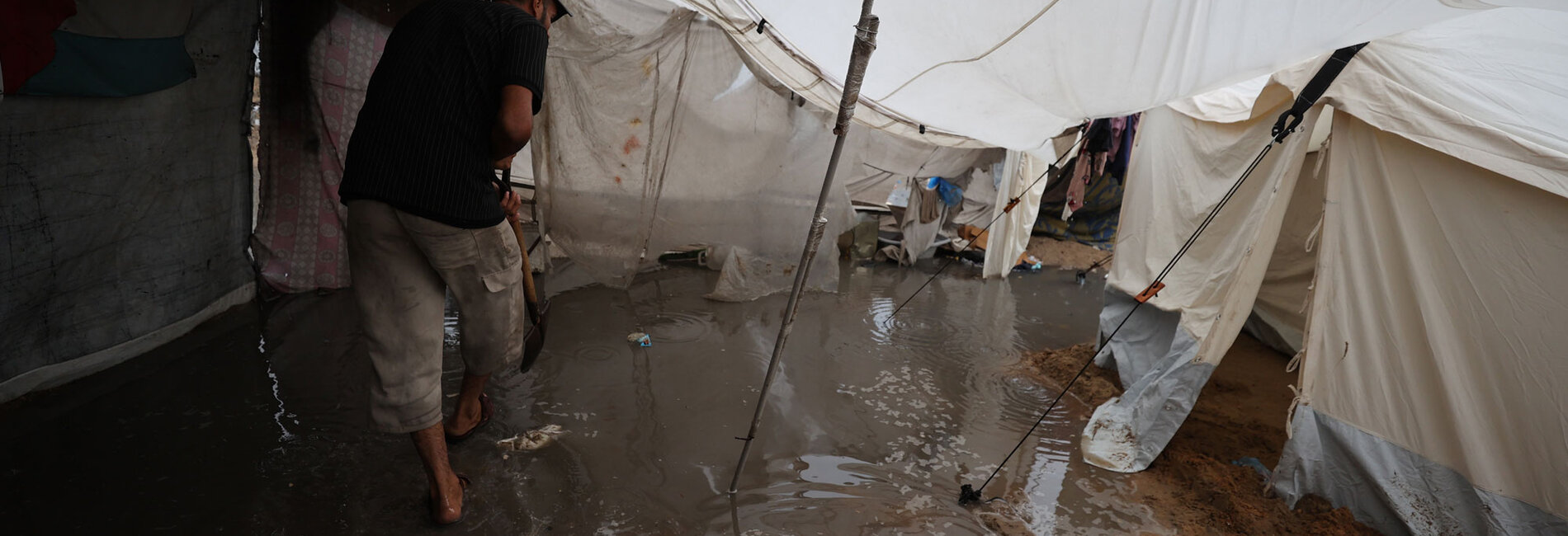
Israeli airstrikes, shooting and shelling continue to hit populated areas across the Gaza Strip, causing casualties, including among displaced people. Heavy rainfall since 6 November has compounded the situation, flooding and damaging tents, shelters, and service delivery points – resulting in fatalities and displacement. Services have been disrupted, and humanitarian partners' response capacity remained limited amid critical shortage of supplies and equipment.
According to the Ministry of Health in Gaza, which operates under the de-facto authorities, 22 Palestinians were reported killed in conflict-related incidents and 90 injured between 3 and 9 November, bringing the total number of reported casualties since the October 2025 ceasefire agreement to 1,613 fatalities and 5,833 injuries. Another 12 fatalities were retroactively added to the total number after their identification details were approved by MoH.
According to the Logistics Cluster, 262 UN and partner trucks carrying humanitarian supplies were manifested for entry into Gaza between 2 and 8 November. Of these, 228 were offloaded on the Israeli side of Kerem Shalom; 128 from Ashdod, 25 from Egypt, 44 from Israel, 13 from the West Bank and 18 from Jordan. Compared with the previous week, the number of trucks offloaded fell by around 42 per cent. The lower offloading figure is mainly attributed to the suspension of the Egyptian corridor by the Israeli authorities who reportedly cited concerns over smuggling, with no trucks offloaded between 3 and 8 November. Overall figures also declined due to reduced aid volumes available to partners amid funding constraints.
Between 3 and 9 November, the Protection Cluster supported 215 returnees through psychological first aid, emergency assistance and referral services. This brings the cumulative number of returnees since the opening of the Rafah crossing in February to over 7,000 people, of whom over 2,000 are currently being followed up with protection services, including initial needs assessments and specialized psychosocial support.
Water, health and health system conditions
| KEY FIGURES | |
|---|---|
| 85% | 42% |
|
of households with moderate to severe water insecurity |
of essential medicines at zero-stock level in October Source: Health Cluster/MoH |
According to the Water, Sanitation and Hygiene (WASH) Cluster’s monitoring survey in early October, water insecurity remained dire, with 85 per cent of assessed households experiencing moderate to severe water insecurity, compared with 84 per cent in September. In addition, 66 per cent of households reported access to less than the minimum six litres of drinking water per person per day, compared with 65 per cent in September. The proportion of households reporting insufficient access to basic hygiene supplies declined from 89 per cent in September to 76 per cent in October, with limited distribution coverage (97 per cent) and high costs (91 per cent) cited by key informants as the main barriers. Compared to September, hygiene-related health concerns declined in October, with the largest reductions in reported bedbug cases (29 per cent to 14 per cent) and skin diseases or scabies (60 per cent to 52 per cent).
A significant increase in probable meningitis continues to be monitored. During epidemiological weeks 40-44 (27 September to 31 October), 294 probable viral and 119 probable bacterial cases were recorded, 68 per cent of them in Gaza governorate. Of 202 cases individually documented through 5 November, 77 per cent were infants under one year, and 10 bacterial cases were confirmed by laboratory testing. According to the Health Cluster, the increase in cases can be attributed to crowded tents and schools, and deterioration in shelter conditions and sanitation, as well as exposure to unsafe water.
Medicine availability remains a major constraint on health services. In October, about 42 per cent of all medicines, about 55 per cent of essential chemotherapy medicines, and about 73 per cent of supplies for open-heart surgery and cardiac catheterization were at zero-stock levels, according to MoH in Gaza. Laboratory reagents for kidney and liver function, electrolytes and diabetes testing are acutely short, as are pediatric dextrose-saline and citrate for hemodialysis. Key noncommunicable disease medicines, including amlodipine, bisoprolol and losartan, are also in short supply.
Between 3 and 9 November, 119 patients, including 40 children, together with 141 companions, were medically evacuated from Gaza through the Rafah and Kerem Shalom crossings.
Another major constraint is the lack engine oil, batteries, tyres and spare parts, as well as the unpredictability of fuel supplies. Shortages of maintenance items have led some transport providers to suspend transport of health workers, affecting staff access to facilities. Old generators are vulnerable to failure, severe lubricant-oil shortages are affecting generator operations, cold-chain capacity, infection prevention and control, and staff transport, and bringing in new generators and spare parts remains difficult. The entry of many of these items is heavily restricted by Israeli authorities.
Impact of heavy rainfall and flooding
| KEY FIGURES | |
|---|---|
| ~5,500 | >40,000 |
| Students enrolled in the 109 affected learning spaces remain unable to access learning. Source: Education Cluster, as of 10 November 2026 |
Shelters were damaged and over 46,000 households affected by the heavy rain. Source: Site Management Cluster, as of 9 November 2026 |
Since the start of the heavy rain on Gaza on 6 November and as of 9 November, the Site Management Cluster alert system recorded about 473 alerts, indicating that over 46,000 estimated households (226,000 people) may have been affected, including over 5,000 households who were reportedly sleeping out of a shelter. Yet to be confirmed damage reported through those alerts included over 40,000 shelters, including over 9,000 shelters reportedly destroyed beyond repair, in addition to 960 damaged latrines, and nine damaged health facilities. Many displaced families remain unprepared for winter, with torn tents and worn-out bedding, and tarpaulin prices reportedly increasing, pushing families into debt. Between 7 and 9 November, Joint Distribution Mechanism partners assessed the needs of 3,240 households in 87 sites and supported 749 households. Twenty-one displacement sites received 1,550 items, including 27 tents, 583 tarpaulins, 624 blankets, 191 plastic sheets, 70 mattresses, 41 cereal packages, 10 jerrycans and 4 hygiene kits.
Flooding of displacement sites and low-lying areas across Gaza has left people exposed to standing water and contamination. According to the WASH Cluster, water levels at Sheikh Radwan Lagoon rose by nearly 1.5 metres, and the pumps are struggling to keep up with the influx. Stormwater mixed with sewage from damaged networks is exposing people to dangerous contamination that could lead to a public health crisis. A further intense rainy period could cause the lagoon to overflow, worsening these risks. Partners’ response capacity is stretched, and the available dewatering pumps, sandbags and other materials and equipment are not sufficient to cover all needs.
Flooding and poor road conditions disrupted health staff movement and patient access, and some health services were suspended. One partner activated remote prosthetics and orthotics follow-up on mental health and psychosocial support (MHPSS) sessions where access was disrupted. With acute respiratory infections, waterborne diseases and hypothermia expected to increase this winter, MoH has highlighted pediatric inpatient capacity as a major concern, with only about 90 beds operational in Gaza and North Gaza, compared with about 350 before the escalation.
Heavy rainfall and flooding over the weekend disrupted education services across Gaza. About 109 of the over 600 operational learning spaces serving an estimated 66,000 pre-school and school-aged children, have been affected by rainfall and flooding. At least 5,500 of these children remain unable to access learning because their learning spaces are damaged or inaccessible, as of 10 November. Impacts include flooded classrooms, leaking and collapsed tents, damaged learning infrastructure and inaccessible sites, leading to partially or fully suspended activities and reduced attendance. In addition, 19 displaced households have taken shelter in six temporary learning spaces, forcing learning activities to be suspended at these locations. Urgent alternative and improved shelter support is needed to accommodate these families and restore access to learning.
Protection field teams could barely reach some sites during the rainfall, and people were often unable to reach service points, disrupting protection services and outreach in overcrowded displacement shelters. Younger children, children with disabilities and children in female-headed households are particularly exposed to cold, damp conditions, illness and distress. Rain damaged 15 safe spaces, child-friendly spaces and psychosocial support tents, forcing the suspension of activities. Sewage overflow closed some child protection service points and increased exposure to contaminated wastewater. While some partners specializing in addressing gender-based violence responded initially to the surge in emergency calls, many have exhausted their supplies, and service points were kept open mainly for routine MHPSS and case management. The collapse of a safe space for women and girls in Palestine Camp Stadium in Gaza city disrupted access of over 200 women to services addressing gender-based violence.
Home gardening and composting activities were also disrupted, with several gardens waterlogged and rainwater accumulating due to poor drainage. At least four partner-supported home gardens were confirmed as damaged. Assessments are ongoing to determine the full extent of the damage, though preventive measures built into garden planning may have helped limit crop losses.
Humanitarian response activities at a glance – Gaza Strip
3–9 November 2026 (unless otherwise specified)
Education: Partners provided 24,560 children with School-in-a-Box kits, 6,900 pre-school children with Early Childhood Development kits, and 23,917 school-aged children with school bags. In response to the rain, partners removed floodwater from learning spaces, reinforced damaged structures, and carried out flood-protection works.
Shelter and Site Management: Site Management partners installed sandbags and sand barriers, undertook ground levelling, dispatched and installed more than 700,000 flour sacks and 50,000 sandbags to priority sites. Between 2 and 9 November, Shelter Cluster partners distributed shelter and non-food items to 10,690 households, including 10,591 tarpaulins, 1,419 sealing-off kits, 439 relief housing units, 173 tents, 601 kitchen sets, 3,033 winter clothing kits, 533 mattresses, 166 blankets, 15 bedding kits, 30,000 mats and 10,000 transparent plastic sheets. About half of these households (5,423) were reached on 9 November alone, including families affected by the recent rainfall.
Health: Partners implemented drainage, water removal, temporary repairs, flood barriers, and weatherproofing. UNRWA opened a new health centre in Gaza on 7 November, serving a catchment of about 100,000 people with maternal and child health, nutrition and psychosocial support.
Water, Sanitation and Hygiene: Partners deployed heavy machinery to 25 displacement sites to remove floodwater, clear drainage channels, level ground and construct sand barriers, reaching 3,700 families (about 22,200 people). Blocked sewer lines, manholes, stormwater basins, screens and drainage canals were cleared at 60 locations, benefiting an estimated 30,000 families, alongside the removal of solid waste around stormwater inlets and the use of suction trucks to remove water mixed with sewage. Fifteen dewatering pumps are in use by WASH teams, and the distribution and installation of sandbags is accelerated. Partners are also providing hygiene kits.
Protection: Protection services including intersectoral ones continued during the reporting period. This spanned, among others, MHPSS, explosive ordnance risk education, legal assistance, case management, and cash for protection. Protection monitoring continued through six focus group discussions and 36 key informant interviews, reaching 528 people in eight neighborhoods. Child protection: Case management reached 333 children, at least 5,465 children received MHPSS, and at least 3,172 caregivers and other adults were reached through MHPSS and parenting programmes. Awareness and community-based activities reached 16,373 children and caregivers, and six community protection committees were established. Nearly 7,900 children received winter clothing kits in Gaza city, a further 300 children received winter clothing, and tarpaulins, 40 dignity kits and 600 hot meals were also provided. Winter and fire safety messaging reached 500 children and caregivers in Khan Younis. Addressing Gender-Based Violence: Partners maintained services across 86 women and girls safe spaces and two safe shelters, reaching over 11,000 people with multisectoral support and over 6,000 through outreach and awareness activities between 2 and 8 November. Emergency shelter assistance, including 44 tents, was provided in Gaza city and North Gaza. Mine Action: Partners completed 14 explosive hazard assessments, and 21,765 people received explosive ordnance risk education between 29 October and 5 November.
Debris Working Group: Partners strengthened 102 sites following the latest rainfall by deploying heavy machinery for soil stabilization, improving shelter sites, constructing protective berms, draining, leveling pathways, and reinforcing roads.
West Bank
The reporting period is 3 to 9 November 2026 unless otherwise specified.
| KEY FIGURES | |
|---|---|
| 185 education-related incidents | 27,987 students and education personnel affected |
| Recorded during July–September 2026, nearly double the number during the same period in 2025 Source: Education Cluster |
Across 149 schools during July–September 2026, a 120 per cent increase compared with 2025 |
The humanitarian situation across the West Bank, including East Jerusalem, continued to be affected by Israeli forces' operations, settler violence and restrictions on Palestinian movement and access to essential services, compounded by shortages of medicines and medical supplies and the Palestinian Authority's fiscal crisis, which continues to undermine the provision of essential health services. During the reporting period, Israeli forces shot and killed a 14-year-old Palestinian boy and injured three other Palestinians, including a child, near Burqa village (Nablus) on 9 November. According to local sources, Israeli forces opened fire at a group of Palestinians near the main road. The Israeli military, as cited in Israeli media, stated that soldiers had opened fire at Palestinians whom they alleged were planning to throw stones at Israeli vehicles travelling along the road.
Overall, 37 Palestinians, including two children, were injured during the reporting period, of whom 19 were injured by Israeli settlers and 18 by Israeli forces. Of these injuries, 23 (62 per cent) occurred in the context of settler attacks, including 14 linked to the olive harvest. A total of 52 settler attacks resulting in casualties or property damage were recorded. Settler violence also resulted in the displacement of 13 Palestinian Bedouin households and injuries among people providing protective presence to Palestinian communities. On 4 November, an Israeli settler attack and takeover of homes on Isteih Bedouin community (Jericho) displaced 13 Palestinian households and injured four people, including two Palestinians and two Israeli solidarity activists (see settler violence section below).
Israeli-imposed movement restrictions continued to disrupt access to livelihoods and essential services, including education, particularly in Masafer Yatta (Hebron), where communities within the designated "Firing Zone 918" face restrictions on vehicle movement and recurrent confiscations. On 5 and 7 November, Israeli forces confiscated four Palestinian-owned vehicles, including two agricultural tractors, and detained nine Palestinians in Halaweh and Khirbet al Majaz communities. Three vehicles in Halaweh were returned the following day, while a fourth vehicle confiscated in Khirbet al Majaz remained in Israeli custody as of the reporting date. All nine detainees were released the same day. These incidents occurred amid additional restrictions on coordinated vehicle access, limiting entry to designated days and purposes, and compounded longstanding access challenges, including disruptions to school transportation following the previously reported confiscation of vehicles transporting students. Elsewhere in Hebron governorate, Israeli forces closed roads leading to the industrial zone and surrounding farmland in Beit Ula village, affecting access to livelihoods and agricultural land for hundreds of families and at least 15 industrial facilities. Israeli forces reportedly attributed the closures to efforts to prevent unauthorized entry of Palestinian workers into Israel through openings in the Barrier.
The impact of access restrictions and settler violence on education extends across the West Bank, including East Jerusalem. According to the Education Cluster's third-quarter 2026 snapshot, 185 education-related incidents were recorded between July and September, nearly double the number during the same period in 2025. These incidents affected 149 schools and nearly 28,000 students and education personnel. This is a 120 per cent increase compared with 2025 and resulted in the loss of more than 52,700 class-minutes. Access-related incidents accounted for nearly three-quarters of the total, while incidents involving Israeli settler violence increased more than five-fold, from six to 31. Most incidents (91 per cent) occurred in September, following the start of the 2026/27 academic year, with Nablus and Salfit governorates accounting for 45 per cent of recorded incidents. The findings highlight the broader impact of movement restrictions and settler violence on children's safety, access to schools and continuity of education.
Demolitions and Displacements
| KEY FIGURES | |
|---|---|
| 150 | 65 |
| People displaced due to demolitionsBetween 3-9 Novembe | People displaced due to settler attacks and related access restrictions between 3-9 November |
During the reporting period, Israeli authorities demolished or forced Palestinians to demolish 78 Palestinian-owned structures across the West Bank, including East Jerusalem, for lacking Israeli-issued building permits, displacing 150 Palestinians, including 61 children, and otherwise affecting over 70 people. Of the demolished structures, 69 were in Area C, six in East Jerusalem and three in Area B, while 13 were donor-funded. The demolitions included 32 residential structures, of which 30 were inhabited, 35 water, sanitation and agricultural structures, and 11 livelihood-related and other structures.
In Biddu (Jerusalem), Israeli authorities demolished five residential buildings comprising 12 apartments on 5 November, displacing 12 Palestine refugee households comprising 41 people, including 15 children and two pregnant women, and otherwise affecting another household of nine people. Water cisterns, tanks and household belongings were also destroyed. In Bir al Maskoob A (Jerusalem), one of 18 Palestinian Bedouin and herding communities near the area designated for the E1 settlement expansion plan, four households comprising 19 people, including six children, were displaced following the demolition of four residential structures, including three donor-funded caravans, and associated water and sanitation facilities. According to the families, the structures were covered by a precautionary court order issued in 2018, and no demolition orders had been issued. The E1 plan raises concerns over further fragmentation of the West Bank and the risk of forced displacement of approximately 4,000 Palestinians in the 18 communities.
In Al Jiftlik–Abu al 'Ajaj (Jericho), located within an Israeli-designated military firing zone, which forms part of the approximately 30 per cent of Area C designated as "firing zones", Israeli authorities demolished six residential, sanitation and livestock structures, displacing three households comprising 15 people, including six children. Two families had reportedly already left their homes due to recurrent settler harassment. In East Jerusalem, residential demolitions in Jabal al Mukabbir, Al Bustan in Silwan and Wadi Qaddum in Ras al Amud displaced four households comprising 32 people, including 13 children. Three households were forced to self-demolish their homes or parts thereof to avoid additional costs, while a family of six, including a person with a physical disability, was displaced in Al Bustan, an area affected by settlement-related plans and demolition orders.
Separately, in Isteih community in Jericho governorate, at least 15 Palestinian Bedouin households comprising an estimated over 80 people were displaced following a settler attack and a takeover on 4 November, including some families displaced for a second time. Settlers took over at least three uninhabited residential structures, fired live ammunition into the air and assaulted residents, injuring two Palestinians and two Israeli activists providing protective presence to the community. Israeli forces subsequently declared the area a closed military zone, restricting access. The community has faced recurrent settler attacks and intimidation, including an attack in February 2026 during which 28 structures were demolished by Israeli settler displacing 13 households. Some families affected by the latest incident were staying with relatives within the community, while others lacked adequate shelter following the latest attack. Since January 2023, more than 6,700 Palestinians have been displaced due to settler violence and access restrictions across 134 West Bank communities, including 49 fully displaced as of 9 November 2026.
Settler violence and olive harvest season
| KEY FIGURES | |
|---|---|
| 52 | 410 |
| Harvest-related settler attacks in one week (3-9 November) | Harvest-related settler attacks since the season began (1 September – 9 November) |
Settler violence continued at high levels, with 52 attacks resulting in casualties or property damage recorded across 38 communities between 3 and 9 November, compared with a weekly average of 53 such attacks so far in 2026. During the reporting period, 13 Palestinian Bedouin households, comprising an estimated over 80 people, were displaced following a settler attack, while other attacks resulted in 23 injuries, and damage to residential and livelihood structures, and disruptions to water and electricity supplies. October recorded the highest monthly number of such attacks since the UN began documenting these incidents in 2006, with 467 recorded by 31 October.
Among the attacks recorded during the reporting period, settlers also targeted people providing protective presence to Palestinian communities and damaged essential water and electricity infrastructure. In Deir Dibwan village (Ramallah), settlers damaged a tent used by people providing protective presence to Palestinian herders and farmers, who reported almost daily settler intimidation and restrictions on grazing. In Nablus governorate, damage to water pipelines in the villages of Beit Imrin and Burin disrupted water supply to six households, including a family of seven relying on dwindling stored water supplies. In Burin, Israeli forces and a settlement guard reportedly obstructed repairs, leaving at least two households without running water. Damage to electricity infrastructure in Al Mas'udiya village caused a power outage affecting approximately 13 households, while three electricity poles were damaged in a separate incident in Burin, without reported service disruptions.
The olive harvest continued to be disrupted by Israeli settler violence and restrictions on farmers’ access to agricultural land, including repeated cancellations and postponements of coordinated access, limited harvesting days and low permit approval rates, particularly near Israeli settlements and behind the Barrier. As of 4 November, in Qalqiliya, only 1,750 of 4,000 permit applications had been approved, while in Salfit, approximately 80 permits were issued out of 350 names submitted. In Tulkarm, only 60–70 farmers reportedly accessed their land in Akkaba, despite 105 names submitted for coordination. In Jenin, most agricultural gates along the Barrier remained closed, while in the Aqraba area of Nablus, farmers faced additional restrictions on the number and age of people permitted to access their land. Even where access was coordinated, farmers continued to face restrictions and settler attacks. On 3 November, near Beit Fajjar in Hebron governorate, Israeli settlers attacked farmers during a coordinated harvesting day, forcing them to leave and stealing approximately 150 kilograms of harvested olives and agricultural tools. Across several areas, farmers also reported shortened access periods and discrepancies between agreed coordination arrangements and their implementation.
Between 3 and 9 November, 21 olive-harvest-related settler attacks resulting in casualties or property damage were documented, including in Areas A and B. In Area B, settler attacks and intimidation continued to disrupt olive harvesting and restrict farmers’ access to their land, including in Beita (Nablus), where masked settlers armed with iron rods, knives and pepper spray assaulted and injured a Palestinian farmer and stole harvesting equipment. In Turmus’ayya (Ramallah), armed settlers riding quad bikes forced farmers to leave their olive groves, where farmers reported recurrent access restrictions due to settler presence at a nearby outpost.
Humanitarian partners continued supporting farmers through harvesting tools and machinery, volunteer harvesting campaigns, protective presence and accompaniment, and Cash for Protection assistance. However, settler violence and access restrictions continued to constrain the response, with assistance reaching only a limited number of farmers in most locations.
Humanitarian response activities at a glance – West Bank
From 3 to 9 November 2026 (unless otherwise specified)
Shelter: Partners reached 428 people (148 households) through shelter repairs, non-food items and cash assistance, primarily in Jenin, Hebron and Jerusalem governorates. Following three demolition incidents in Jerusalem and Nablus governorates, partners activated the First Line Response mechanism to provide emergency shelter and essential household items. Initial assessments identified five households without adequate shelter, including four sleeping in the open and one living in a car. Emergency cash assistance, bedding, hygiene and other essential items, as well as tents and mobile latrines, were being mobilized. In Hebron, families returning following the Israeli forces' operation continued to require damage assessments and emergency shelter repairs. With winter approaching, additional shelter support and weatherproofing remained critical for displaced households living in tents and makeshift shelters.
Food Security: In the northern West Bank, WFP confirmed its capacity to continue cash and voucher assistance for displaced people during November and December 2026. In Hebron city, following the recent Israeli forces' operation, partners mobilized approximately 500 food parcels for distribution by municipal teams, with additional capacity available to address emerging needs. Food Security Sector partners also continued supporting agricultural livelihoods during the olive harvest, including through the provision of harvesting tools and collective harvesting assistance in some of the 123 identified hotspots. However, settler violence, access restrictions and funding constraints continued to limit the delivery of assistance.
Water, Sanitation and Hygiene: During October, at least 14 WASH Cluster partners implemented 88 interventions across 55 communities in the West Bank, including the installation or rehabilitation of nearly 22 kilometres of water networks, rehabilitation of 52 cisterns and delivery of nearly 8,000 cubic metres of emergency water through trucking. Partners also installed or repaired 49 latrines, distributed 1,900 hygiene kits and supported solid waste management. During the reporting period, partners provided emergency hygiene kits to displaced households in Nablus and Jericho, while mobilizing additional emergency water, sanitation, and hygiene assistance. In Nablus governorate, partners coordinated with local authorities to assess damage to water infrastructure and support repairs following the damage and sealing of three water wells by Israeli forces near An Nassariya and settler damage to a water pipeline in Burin.
Child Protection: During the reporting period, Child Protection partners continued providing mental health and psychosocial support, psychological first aid, case management and parenting support across the West Bank. In Hebron governorate, emergency psychosocial support through drama and expressive arts reached approximately 2,000–2,500 children in four schools affected by the recent Israeli forces' operation, while theatre performances reached approximately 2,000 children in surrounding villages. Group-based psychosocial support reached 199 children and adolescents and 20 caregivers across Bethlehem, Hebron, Tulkarm and Tubas, while psychological first aid was provided to at least 96 people in Jenin and Nablus, alongside two families in Yatta. Partners also provided case management support to 16 children and positive parenting sessions to 62 women. Movement restrictions, military operations and school disruptions continued to constrain service delivery, while needs for psychosocial support and specialized child protection services exceeded available resources.
Education: Following the recent Israeli forces' operation in Hebron city, the Education Cluster coordinated with the Directorate of Education to assess outstanding needs in 11 affected schools serving 4,450 students and 246 education personnel. Follow-up assessments identified no damage to school facilities or emergency schoolbag needs.
** Double asterisks indicate that a figure, sentence, or section has been rectified, added, or retracted after the initial publication of this update.
SUBSCRIBE TO RECEIVE OCHA'S INFORMATION PRODUCTS
 SUBSCRIBE
OCHA Sites










Follow Us
Support
Your donations go to relief organizations delivering quick and effective support to Palestinians in need.