
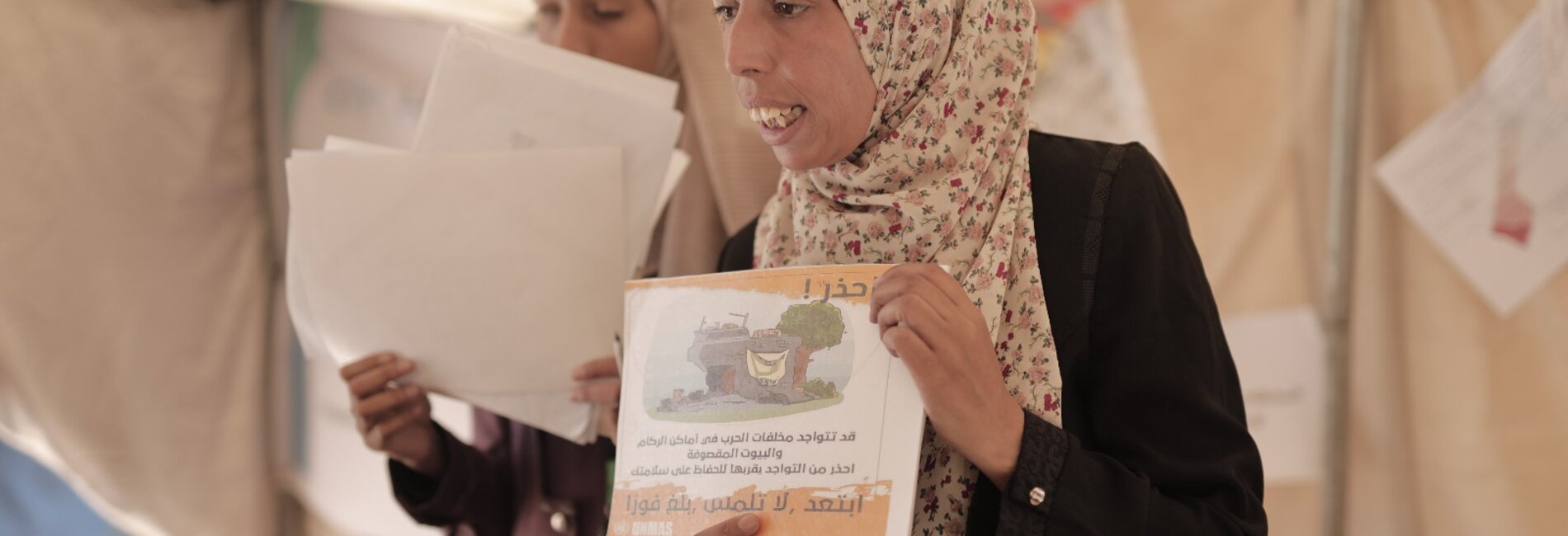
Rama’s awareness sessions leave no one behind
Rama,* a resident of the Gaza Strip, worked as a session facilitator during the war. Through a project run by Atfaluna Society for Deaf Children and supported by the occupied Palestinian territory Humanitarian Fund (oPt HF), she helped families learn how to stay safe during displacement and crisis.
For Rama, this was more than a job. As a woman with a visual impairment, it was an opportunity to show that disability does not mean inability: even in the most challenging circumstances, everyone is welcome to take part, and everyone can be an active contributor to their communities.
“I wanted to leave a mark, an imprint on everyone I meet, to change lives,” she says.

Rama led awareness-raising sessions for women, men, and children. She taught practical steps to protect themselves and others against violence and abuse, stay safe from unexploded ordnance, and support each other emotionally. As she shared this knowledge, she felt her own confidence grow.
“The participants were engaged and cooperative,” she recalls. “It showed me how working together can make the community stronger.”

Some of her favourite moments came after sessions with children. “When they leave the tent singing the song I just taught them about unexploded ordnance, I know they’ll remember what they’ve learnt, which will help them stay safe for a long time,” she says.
Through this project, families across Gaza received vital information: how to protect children, prevent gender-based violence, and avoid explosive hazards. It also allowed women, children and other vulnerable groups in displacement receive much-needed psychological first aid. These efforts helped communities become safer and more resilient, even in the face of instability.
Rama’s story proves that leadership and inclusion matters. Her work is a reminder that when everyone has access to safety information, entire communities benefit.
* Name has been changed to protect her safety and privacy.


subscribe to our mailing list
SUBSCRIBE TO RECEIVE OCHA'S INFORMATION PRODUCTS
 SUBSCRIBE
OCHA Sites










Follow Us
Support
Your donations go to relief organizations delivering quick and effective support to Palestinians in need.