
Large scale forcible displacements in “firing zones” along the Jordan Valley
Temporary lull in demolitions in a “firing zone” in southern Hebron
This month witnessed mixed developments affecting Bedouin and herding communities located in areas designated as closed military zones for training or “firing zones”, across Area C of the West Bank: on the one hand, the Israeli authorities declared a temporary lull in demolitions and an easing of access restrictions in one such area in southern Hebron (Massafer Yatta, or Firing Zone 918); on the other hand 160 people were forcibly displaced from other “firing zones” along the Jordan Valley.
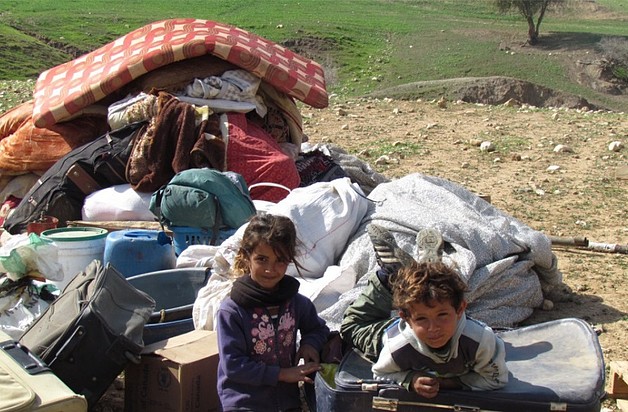
Approximately 18 per cent of the West Bank, or 30 per cent of Area C, has been designated since the beginning of the occupation as “firing zones”. At present there are 38 Bedouin and herding communities, with a population of 6,200, located within these areas, and another 50 communities with over 12,000 residents in their immediate vicinity. Due to the ban on access and residence stemming from the designation of their residential or grazing areas as “firing zones”, these communities face significant humanitarian needs and are highly vulnerable to displacement. (See box herein for more on “firing zones”.) The largest incident, which took place on 30 January in a section of the Ein al Hilwa Bedouin community (Tubas Governorate) located in a “firing zone”, displaced 66 people, including 36 children. About 100 other residential and livelihood structures here, some of which were funded by international donors, have pending demolition orders. Another eviction incident, on 8 January, targeted the Abu al ‘Ajaj area of Al Jiftlik town (Jericho Governorate), involving the demolition of 13 residential structures and animal shelters, and resulting in the displacement of three families (26 people). A few days later, the Israeli authorities also demolished and confiscated six tents that had been provided to the families by an international organization as emergency shelters. An appeal from the community to the Israeli High Court of Justice (HCJ) against a previously-issued order calling for their eviction from the area was overturned in December 2013. Finally, on 22 January, the Israeli authorities demolished another 19 structures in the community of Khirbet Yarza (Tubas Governorate), which is entirely located in a “firing zone”, displacing 14 people. Generally in such cases, the displaced families stay with relatives and neighbours until they receive emergency shelter tents. These demolitions occurred in the context of a significant rise in demolitions and displacement in the Jordan Valley during the past year: the number of Palestinian-owned structures demolished during 2013 more than doubled compared to 2012 (390 and 172 respectively) as did the number of people displaced (590 and 279), alongside a decrease in other parts of Area C. Overall during January, over 100 Palestinian homes and livelihood structures were demolished across Area C and East Jerusalem due to lack of Israeli issued permits (which these communities find almost impossible to obtain), with some 90 per cent located in the Jordan Valley.
From the statement the un humanitarian coordinator, James W. Rawley, 31 January, following the demolitions in Ein al Hilwe:
By contrast, there has been a positive development concerning 14 communities (1,200 people) in southern Hebron (Masafer Yatta area) located in “firing zone” 918. Since the late 1990’s, these communities have been involved in protracted litigation at the Israeli HCJ challenging the Israeli authorities’ intention to evict them from their homes.1 As part of a mediation process, in which both sides engaged in the context of the litigation, this month they reached an agreement aimed at “promoting mutual trust”. According to the agreement, it will be in force until mid-May 2014:
- The residents will be allowed to rehabilitate eight structures and several roads damaged during the Winter Storm Alexa in December 2013;
- all pending demolition orders will be temporarily frozen;
- access to the area on foot will be generally allowed, unless there is a concrete suspicion of an intended “illegal” act;
- Palestinian Authority’s officials and aid workers will be allowed to enter with vehicles;
- entry of construction materials and equipment without a permit is prohibited.
While the agreement provides some relief to the communities in this area, given its short term duration and the prohibition of of construction materials, its impact will remain limited and will not remove the threat of displacement. According to the Israeli authorities, Palestinians residing in “firing zones” are trespassers and they are regularly removed from the area for their own safety. However, as highlighted by the UN Secretary General, the removal of communities from the “firing zone” in southern Hebron “would appear to amount to individual and mass forcible transfer, contrary to Israel’s obligations under international humanitarian law. It also appears to amount to forced evictions contrary to Israel’s obligations under international human rights law”.2
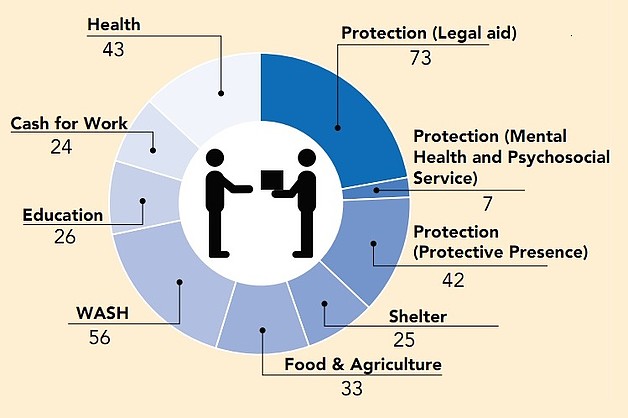
From the Vulnerability Profiling Project: firing zones
Number of communities targeted with interventions
- In 1999, the Israeli military evicted most of the residents from the area and destroyed or confiscated most of their homes and property. A few months later, the Israeli High Court of Justice, in a response to a petition from the residents, issued an interim injunction order allowing some of the people to temporarily return, pending a final court decision. For further information see, OCHA, The Massafer Yatta Communities – Case Study, May 2013. ↩
- Secretary-General’s Report to the General Assembly on the human rights situation in the occupied Palestinian territory, including East Jerusalem, August 2013 ↩


subscribe to our mailing list
SUBSCRIBE TO RECEIVE OCHA'S INFORMATION PRODUCTS
 SUBSCRIBE
OCHA Sites










Follow Us
Support
Your donations go to relief organizations delivering quick and effective support to Palestinians in need.