
Humanitarian Situation Update #351 | Gaza Strip
Between 17 December 2025 and 20 January 2026, one Humanitarian Situation Update is being issued every week. The next Humanitarian Situation Update on the West Bank will be issued on 6 January and the next Humanitarian Situation Update on the Gaza Strip will be issued on 14 or 15 January.
Key Highlights
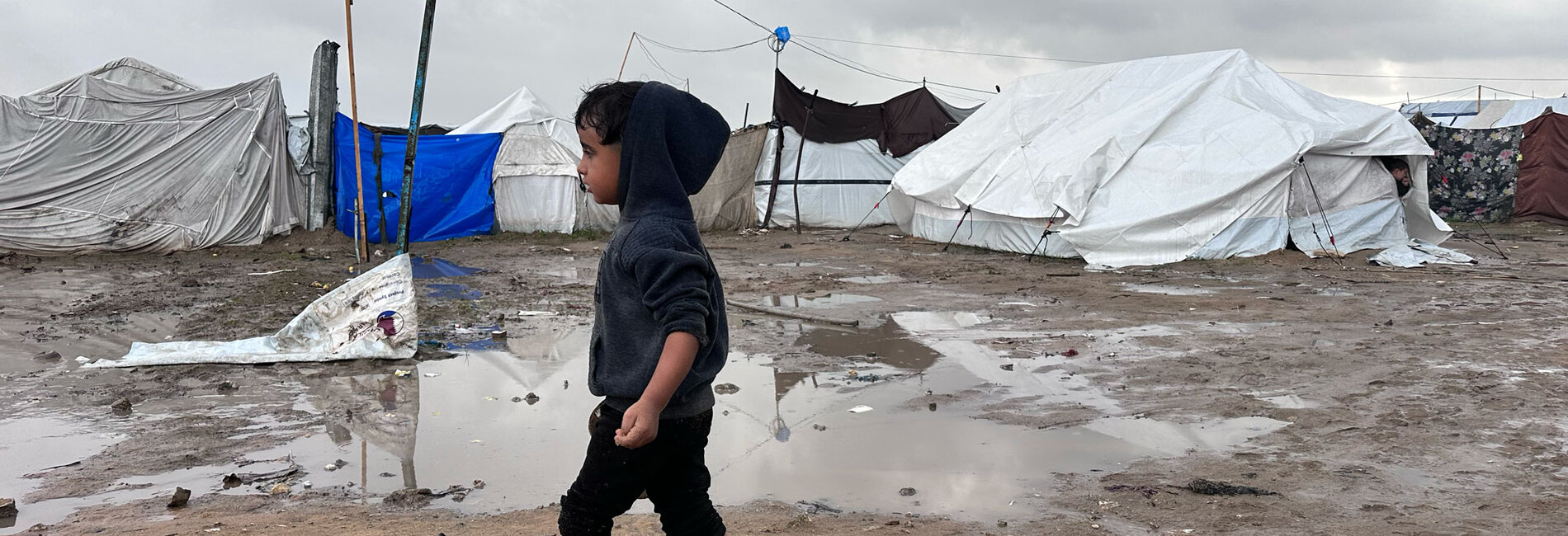
- Hundreds of thousands of Palestinians in Gaza are struggling in makeshift tents damaged by rain, wind and seawater waves or damaged buildings at risk of collapse.
- So far in December, humanitarian partners have provided emergency shelter assistance to over 80,000 households.
- The latest Integrated Food Security Phase Classification analysis finds that famine conditions have been alleviated but acute food insecurity and malnutrition remain at critically high levels.
- UN agencies continue to emphasize the importance of predictable and unimpeded access, increased supplies and sustained funding for a transition from emergency to early recovery efforts in Gaza.
- Solid waste management efforts are constrained, with waste generation exceeding collection capacity in several areas due to the lack of access to landfills, damaged infrastructure, fuel shortages, and restrictions on the entry of essential equipment and spare parts, according to the Water, Sanitation and Hygiene Cluster.
Context Overview
- Humanitarian convoys by the UN and its partners inside Gaza require coordination with Israeli authorities to and from crossings and in or near other areas where Israeli forces remain deployed. Between 17 and 29 December, 86 humanitarian missions were coordinated with the Israeli authorities, of which 46 were successfully facilitated, 22 were impeded, and five were denied. Thirteen missions were cancelled by the requesting organizations due to operational, logistical or security reasons.
- Airstrikes, shelling and gunfire continue to be reported across the Gaza Strip, resulting in casualties. In one incident, on 19 December, Palestinian Civil Defense (PCD) reported that at least five people were killed when a school sheltering internally displaced persons (IDP) was hit in At Tuffah, in eastern Gaza city, west of the “Yellow Line.” The Israeli military remains deployed in over 50 per cent of the Gaza Strip, beyond the “Yellow Line” which remains largely unmarked on the ground and where access to humanitarian facilities and assets, public infrastructure and agricultural land are either restricted or prohibited. Detonations of residential buildings and bulldozing activities continue to be reported, including near or to the east of the “Yellow Line.” Access to the sea remains prohibited. Between 25 and 26 December, about 150 families living in eastern At Tuffah neighbourhood in Gaza city were displaced to nearby areas following the intensification of military activities and reported reception of verbal evacuation notices. Some families remained in the area due to the lack of alternative shelter options.
- Hundreds of thousands of Palestinians continue to struggle in flooded makeshift tents or damaged buildings at risk of collapse (see more below), while winter storms are heightening the risk of cold-related illnesses and preventable deaths, particularly among children under five. On 28 December, the PCD reported that its teams recovered the bodies of a 30-year-old woman who died due a wall collapse and a seven-year-old child who drowned in a well during the storm. According to the Ministry of Health (MoH) in Gaza, so far in December, 17 people died due to the collapse of damaged buildings and three children died of hypothermia, including a two-month-old baby who died on 29 December. Earlier, a 29-day-old infant died on 18 December shortly after admission into Nasser Medical Complex, according to Médecins Sans Frontières (MSF). MSF teams report consistently high rates of respiratory infections, warning that these will only increase throughout the winter.
- According to the MoH in Gaza, between 17 and 29 December, 17 Palestinians were killed, 70 were injured and 47 bodies were recovered from under the rubble. This brings the casualty toll among Palestinians since 7 October 2023, as reported by the MoH, to 71,266 fatalities and 171,222 injuries. According to the MoH, the total number includes 292 fatalities who were retroactively added between 19 and 26 December after their identification details were approved by a ministerial committee. MoH reported that since the ceasefire, 414 Palestinians have been killed, 1,145 injured, and 680 bodies retrieved from under the rubble.
- According to the Israeli military, between 17 and 29 December, as of noon, no Israeli soldiers were killed in Gaza. The casualty toll among Israeli soldiers since the beginning of the Israeli ground operation in October 2023 stands at 471 fatalities and 2,995 injuries. According to Israeli forces and official Israeli sources cited in the media, more than 1,671 Israelis and foreign nationals have been killed, the majority on 7 October 2023 and its immediate aftermath. As of noon on 30 December, the remains of one hostage are in the Gaza Strip.
- Explosive ordnance continues to pose a serious threat across the Gaza Strip. On 18 December, PCD reported that a child was killed by explosive ordnance (EO) in his family home in An Nuseirat Camp, in Deir al Balah. Highlighting the immense scale of EO contamination in the Gaza Strip, UNMAS chief Julius Van Der Walt noted that people are getting injured “simply by collecting basic necessities on a day-to-day basis.” The Protection Cluster's monitoring system highlights that children remain particularly exposed to serious safety hazards, including explosive remnants of war, while searching for firewood and plastic in and around displacement sites. To mitigate risks and facilitate the creation of an enabling environment for humanitarian aid delivery, since 10 October, mine action partners have responded to requests for explosive hazard assessments (mainly in response to rubble removal efforts), supported inter-agency missions, and delivered risk education sessions to people and frontline humanitarian workers across the Gaza Strip.
- Following the release of the latest Integrated Food Security Phase Classification (IPC) analysis on 19 December (see below), the UN Secretary-General stated that while famine conditions in Gaza have been pushed back and access to food has improved for many people, these gains remain “fragile – perilously so.” Emphasizing that humanitarian needs are growing faster than aid delivery, he called for a durable ceasefire and urged the need for “more crossings, the lifting of restrictions on critical items, the removal of red tape, safe routes inside Gaza, sustained funding, and unimpeded access – including for NGOs.” He also reiterated that international humanitarian and human rights law must be upheld across the Occupied Palestinian Territory (OPT) and reaffirmed his support for UNRWA as an indispensable actor in the response.
- On 30 December, the Israeli authorities announced that they plan to suspend the operation of some international NGOs. In a statement, the Humanitarian Country Team in the OPT, representing UN agencies and over 200 local and international humanitarian partners, urged Israeli authorities to reconsider the announcement, stressing that international NGOs (INGOs) are essential for life-saving aid delivery.
Winter Storms
- The recent rainstorm since 26 December has triggered flash flooding, particularly affecting people living in low-lying areas, coastal zones, and those sheltering in substandard structures and tents. Seawater has once again inundated tents housing displaced families, including in the Al Mawasi area of Khan Younis, rendering many shelters uninhabitable. Many families, already vulnerable from displacement, have been forced to move to higher ground as their belongings were soaked. Heavy winds have further exacerbated conditions, destroying or severely damaging numerous tents and makeshift shelters. According to the PCD in Gaza, since early December, 18 residential buildings have completely collapsed, resulting in significant human and material losses, while over 110 additional buildings have sustained dangerous partial damage, posing an immediate threat to thousands of residents in and around them.
- According to the Water, Sanitation and Hygiene (WASH) Cluster, heavy rains have stretched the capacities of damaged and unmaintained infrastructure, posing serious risks to communities living near stormwater lagoons and sewage networks. Recent rains raised water levels in Wadi Gaza and Sheikh Radwan lagoon, demonstrating the critical need to ensure dewatering pumps can continue to function across the Gaza Strip. The Palestinian Water Authority (PWA) is implementing urgent and critical interventions to mitigate flooding risks and protect public health, but noted that restrictions on the entry of necessary equipment have forced a reliance on emergency measures. The WASH Cluster has cautioned that a range of preparedness measures for flood mitigation requires the urgent entry of specialized equipment, such as pumps, pipes and other electromechanical components, which continue to be denied entry, and a consistent supply of fuel.
- Between 21 and 27 December, Protection partners have provided approximately 10,000 people with integrated, life-saving interventions, including mental health and psychosocial support services, legal services on civic documentation, comprehensive protection support for released detainees, prosthetics and orthotics support to persons with disabilities, and cash assistance. These services include the winterization response, whereby Protection partners have provided clothing parcels, vouchers, and blankets to 6,000 people.
- Overall, since early December, Shelter Cluster partners have reached over 80,000 households (approximately 448,400 people), providing 37,740 tents, 127,860 tarpaulins and 94,980 bedding items, including to respond to weather conditions. These figures include approximately 7,000 tents distributed through UN coordination and other tents provided as bilateral donations and distributed with the support of Shelter Cluster partners. In addition, almost 20,650 households were provided with winter clothing through in-kind as well as cash and voucher assistance. While the shelter gap was expected to further decrease due to sustained response efforts, the additional 65,000 households affected by recent rainstorms have increased overall needs; the Shelter Cluster estimates that over a million people remain in need of urgent shelter assistance.
Famine Conditions Alleviated, but Food Insecurity and Malnutrition Levels Remain Critical
- On 19 December, a new IPC analysis for the Gaza Strip found that acute food insecurity and malnutrition remain at critically high levels. The analysis noted improvement in recent months following reduced hostilities, early steps toward a peace plan, and increased entry of humanitarian and commercial food supplies. The IPC estimates that approximately 1.6 million people will continue to face Crisis or worse levels of acute food insecurity (IPC Phase 3 or above) through April 2026, including about 571,000 people in Emergency (IPC Phase 4) and approximately 1,900 people in Catastrophe (IPC Phase 5). This reflects a reduction from nearly a third of the population projected to face catastrophic conditions in August 2025. The analysis additionally projects that through October 2026, at least 101,000 children between six and 59 months will suffer from acute malnutrition, including more than 31,000 severe cases, placing children at heightened risk of mortality. While this represents a decrease from the 132,000 cases, including 41,000 severe cases, estimated in August, nutrition needs remain extensive. In addition, nearly 37,000 pregnant and breastfeeding women are expected to require urgent nutrition support by October 2026.
- The IPC analysis further highlights that prolonged displacement, inadequate food availability, poor dietary diversity, disrupted markets and constraints on humanitarian access continue to drive severe food consumption gaps across the Gaza Strip. It indicates that no children aged 6-23 months meet minimum dietary diversity standards, while 71.5 per cent continue to experience severe food poverty – consuming two or fewer out of eight food groups per day – down from 92.4 per cent in September, underlining the ongoing risk of long-term nutritional and developmental harm without sustained intervention. The IPC underscores the need for continued, large-scale food assistance alongside an expanded and integrated nutrition response, including treatment for acute malnutrition, micronutrient supplementation and support for infant and young child feeding. It additionally stresses that sustained, expanded, and consistent humanitarian access, predictable commercial supply and the removal of operational impediments are critical to preventing further deterioration and reversing current food insecurity and malnutrition trends across Gaza.
- On 19 December, the Food and Agriculture Organization of the United Nations (FAO), the United Nations Children’s Fund (UNICEF), the World Food Programme (WFP) and the World Health Organization (WHO) underscored that while the latest IPC analysis confirms that famine conditions have been pushed back in Gaza following the ceasefire and improved access, the gains remain extremely fragile: “Humanitarian needs remain staggering, with current assistance addressing only the most basic survival requirements.” UNICEF Director of Emergency Operations, Lucia Elmi, cautioned that “food is now in markets, but many families simply cannot afford to buy it. Health facilities are barely functioning, clean water and sanitation services are scarce, and winter is bringing increasing suffering to displaced people huddling in makeshift shelters. These fragile gains could vanish overnight if fighting resumes.” Calling for decisive action, the agencies stressed that “[o]nly access, supplies and funding at scale can prevent famine from returning and help Gaza move from survival to recovery.”
Access to Markets and Emergency Food Assistance
- According to the latest WFP Market Monitor covering the first half of December, food commodity prices remained largely stable across the Gaza Strip nearly two months into the ceasefire and markets have shown early signs of recovery, supported by the gradual resumption of commercial imports and a reduction in prices. WFP reported that, while most prices remained higher than September 2023 levels and beyond the reach of most people, significant reductions in the prices of nearly all key commodities were recorded compared with the pre-ceasefire period (early October 2025). For instance, egg prices dropped sharply across all governorates, falling to 40 NIS ($11) for a two-kg box, frozen chicken was available at 30-35 NIS ($8-9.5) per kg, and frozen beef at 60-65 NIS ($16-18) per kg. In the second week of December, some staple foods have also been sold at prices below September 2023 levels, such as wheat flour, brown lentils and sunflower oil. A 25-kilogramme (kg) bag of wheat flour, for instance, was sold at NIS 30-40 ($8-11), compared with about NIS 48 ($13) in September 2023.
- WFP noted that high coordination fees imposed on commercial goods entering Gaza, often amounting to several thousand US dollars per truck, combined with damaged infrastructure and ongoing supply chain disruptions, remain key drivers of elevated prices for essential commodities, including meat, eggs, fruits, vegetables and dairy products. As a result, market access remains severely constrained. Three quarters of surveyed households reported continued difficulties accessing markets in the first half of December. Among them, 98 per cent cited lack of cash as the primary barrier, while 32 per cent reported being unable to afford basic food items despite recent price drops. Cash liquidity shortages continue to affect market functionality, with 85 per cent of surveyed retailers reporting insufficient cash, limiting their ability to restock goods or pay suppliers.
- Food consumption continued to show modest improvement in December, WFP highlighted, with surveyed households reporting an average of two meals per day, compared with one meal per day in July. However, one in four surveyed households continued to consume only one meal per day. Dietary diversity remains critically low, with households largely dependent on cereals and pulses. Compared with September 2023 patterns, vegetables were consumed on average only two days per week (down from six), fruits half a day per week (down from three), and meat or other protein sources only 0.7 day per week (down from three), reflecting continued constraints in access to nutritious foods.
- Despite a decrease in the percentage of people who rely on waste burning to cook, down from 55 per cent in November, WFP reports that in the absence of predictable and sufficient gas supplies, people continue to resort to unsafe cooking and heating options. Forty-three per cent of households continue to rely on waste burning, 54.5 per cent on wood, 1.5 per cent on gas, while one per cent have no cooking source at all. The Protection Cluster notes that reported incidents of fire hazards, linked to unsafe cooking and heating practices, have in some cases resulted in severe damage to shelters. In one incident on 19 December, a gas stove malfunctioned resulting in a fire that destroyed the tent of a widowed woman and her four children. Protection teams have since initiated fire safety awareness sessions in displacement sites.
Challenges Facing Solid Waste Management
- Solid waste management across the Gaza Strip remains a serious challenge. According to the WASH Cluster, since October 2023, an estimated $66 million in damages have been recorded to solid and medical waste management systems, the WASH Cluster reported; this includes the destruction or damage of more than 200 waste collection trucks, 18 pieces of landfill equipment, five medical waste vehicles, two medical waste microwaves, 90 facilities and approximately 6,000 waste containers. The two main landfills, Sofa and Johr ad Dik, are located near the border and have remained inaccessible for over 24 months, forcing municipalities and partners to rely on temporary dumping sites. As a result, the waste collection system has fundamentally shifted: primary collection is now largely carried out using donkey carts and tractors, while secondary collection depends on a limited number of tipper and compactor trucks. Waste generation has increased from less than 0.4 kg per capita per day during the most critical phases of hostilities to an estimated 0.5-0.7 kg per capita per day currently, reflecting changing consumption patterns and population movements. This increase, combined with damaged infrastructure, continues to outpace collection capacity in several areas due to lack of access to landfills, insufficient fuel allocations, and restrictions on the entry of spare parts, waste collection machinery and other equipment.
- The United Nations Development Programme (UNDP) reports that since October 2023 it has supported the collection of more than 480,000 tons of solid waste - over 50 per cent of estimated total waste generated – currently serving about 1.4 million people with daily collection. However, collection capacity remains uneven. In southern Gaza, where there are eight out of the 10 dumping sites across the Strip, daily collection is broadly aligned with daily waste generation. By contrast, in northern Gaza, collection rates cover only about 60 per cent of generated waste as of the end of 2025, and the only available temporary dumping sites (Feras Market in Gaza city, and Al Khuzndar in Jabalya) are heavily congested and operating beyond capacity. This has resulted in continued accumulation of solid waste in densely populated areas, posing public health and environmental risks. To help mitigate some of these risks, a new temporary dumping site in the Netzarim corridor has been agreed with municipal authorities and is expected to absorb accumulated waste from Feras Market and other informal dumping locations in the north starting in early 2026, as well as accommodate ongoing daily waste generation.
- With the onset of winter, accumulated waste in flood-prone and densely populated areas poses heightened environmental and public health risks. Rainfall and flooding increase the likelihood of waste dispersal, blocked drainage systems and contamination of water sources, potentially exacerbating health risks and the spread of diseases. Within this context, priority needs include tyres, batteries, spare parts, medical waste treatment equipment, pesticides and additional collection vehicles. While some supplies have entered Gaza, including eight tipper trucks, 55 containers, 92 tyres, and personal protective equipment for workers, and other materials are expected to enter soon including 11 tipper trucks, four compactors and two medical waste collection vehicles, significant gaps remain between current capacity and operational requirements, UNDP notes. Without sustained scale-up of waste collection, access to disposal sites and rehabilitation of waste management infrastructure, public health risks could intensity in the coming months.
Funding
- As of 30 December, Member States disbursed approximately $1.6 billion out of the $4 billion (40 per cent) requested to meet the most critical humanitarian needs of 3 million out of 3.3 million people identified as requiring assistance in Gaza and the West Bank, including East Jerusalem, under the 2025 Flash Appeal for the OPT. Nearly 88 per cent of the requested funds is for the humanitarian response in Gaza, with just over 12 per cent for the West Bank. On 8 December 2025, the UN and its humanitarian partners launched a Flash Appeal for $4.06 billion to address the humanitarian needs of 2.97 million out of 3.62 million people identified as requiring assistance in Gaza and the West Bank, including East Jerusalem, in 2026. Nearly 92 per cent of those required funds are for the humanitarian response in Gaza, with just over eight per cent for the West Bank. In November, the oPt Humanitarian Fund managed 128 ongoing projects, totalling $73.5 million, to address urgent needs in the Gaza Strip (89 per cent) and the West Bank (11 per cent). Of these projects, 61 are being implemented by international NGOs, 51 by national NGOs and 16 by UN agencies. Notably, 58 out of the 77 projects implemented by international NGOs or the UN are being implemented in collaboration with national NGOs. For more information, please see OCHA’s Financial Tracking Service webpage and the oPt HF webpage.
SUBSCRIBE TO RECEIVE OCHA'S INFORMATION PRODUCTS
 SUBSCRIBE
OCHA Sites










Follow Us
Support
Your donations go to relief organizations delivering quick and effective support to Palestinians in need.