
Humanitarian Situation Report | 4 September 2026
Highlights
- Children continue to be killed by airstrikes and other attacks affecting populated areas in the Gaza Strip.
- Most of Gaza’s 2.1 million are approaching the rainy season in overcrowded displacement sites, at risk of flooding and disease, while efforts to help them prepare are constrained by funding shortfalls and access restrictions.
- A water well and desalination plant in Deir al Balah was damaged by a nearby strike, while a temporary suspension of desalination in Israel reduced water provision to 1 million people across the Strip.
- In the West Bank, settler violence continues at high levels, resulting in Palestinian casualties, damage to property and livelihood assets, and disruptions to access, including to water and other essential infrastructure.
- More than 2,500 Palestinians have been displaced so far in 2026 due to settler attacks and related access restrictions.
- Funding shortages continued to constrain humanitarian assistance amid worsening food insecurity, with WFP announcing a reduction in food assistance from 400,000 to 200,000 people in the West Bank.
Overview
Palestinians across the Occupied Palestinian Territory continue to face violence and restrictions with little to no protection. Displacement remains widespread and growing, with more families losing their properties and shelters each day, while humanitarian efforts continue to be constrained.
Gaza Strip
The reporting period for this section is 24-30 August unless otherwise specified.
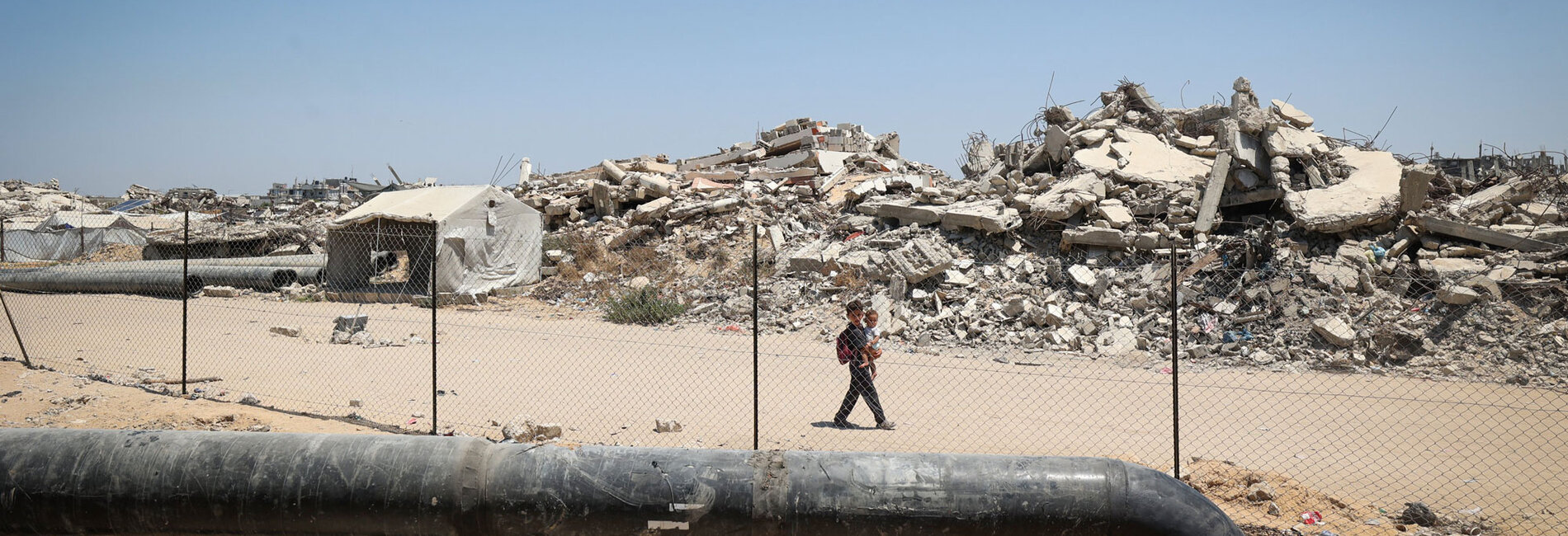
The humanitarian situation in Gaza remained critical as military activities continued to cause civilian casualties and damage to civilian infrastructure. As the rainy season approaches, concerns are mounting over the vulnerability of displaced people in damaged and makeshift shelters, while the continued deterioration of essential infrastructure – including roads as well as water and sanitation systems – is expected to increase humanitarian needs. Severe access and security constraints as well as funding shortfalls continue to impede humanitarian efforts, particularly preparations for the imminent winter.
According to the Ministry of Health (MoH) in Gaza, which operates under the de facto authorities, 31 Palestinians were reported killed, including those who died of wounds and had their bodies retrieved from under the rubble, and 86 people were injured between 26 August and 2 September. This brings the overall reported casualty toll since the announcement of a ceasefire agreement on 10 October 2025 to 1,334 fatalities and 4,429 injuries, according to MoH.
On 28 August, UNICEF stated that at least four children had been reported killed in the preceding five days and many others injured, including children sustaining life-changing injuries. On 2 September, UNICEF added that three children had reportedly been killed and at least five others injured in the preceding 24 hours with a total of seven children reportedly killed between 23 August and 2 September 2026.
Meanwhile, humanitarian facilities and services continue to be affected by ongoing strikes and general insecurity. On 24 August, a UNICEF-supported water well and desalination facility in Deir Al Balah was severely damaged by a nearby strike, disrupting access to safe drinking water for more than 4,000 people, including about 2,000 children. That day, airstrikes hit close to humanitarian facilities in Ash Shati’ Camp, Al Bureij and two locations in Deir Al Balah, shattering the windows at a guesthouse used by humanitarian partners. Also that day, a humanitarian warehouse in Deir al Balah was destroyed by a nearby strike, which damaged more than US$770,000 worth of UNICEF nutrition supplies intended to support more than 40,500 children, as well as 4,900 pregnant and breastfeeding women. On 27 August, an explosive munition detonated about 30 metres from a UN convoy returning with fuel from the Kerem Shalom crossing, as it crossed the “Yellow Line” in Rafah. The explosion caused a minor mechanical issue involving one of the vehicles in the convoy.
On 29 August, an Israeli drone strike reportedly hit a warehouse within the Al Aqsa Hospital compound in Deir al Balah, according to the hospital director, as reported by the media. Israeli authorities stated that the strike targeted a Hamas commander hiding in the compound.
Water and Sanitation
Water, sanitation and hygiene (WASH) conditions remain critical in Gaza amid severe infrastructure constraints. According to the latest Light Touch Monitoring Survey conducted by the WASH Cluster, 91 per cent of assessed households continued to experience moderate-to-high water insecurity in early August, up from 90 per cent in July and 84 per cent in the June round, with overcrowding at water collection points emerging as the most commonly reported barrier to accessing clean drinking and domestic water.
On 31 August, after the reporting period, a temporary halt to desalination in Israel reduced the water available to about 1 million people in Gaza who rely on the Israeli grid. As of 3 September, the problem persisted. Humanitarian partners have used alternative sources to partially compensate for the reduction.
On 24 August, an airstrike damaged a reverse osmosis unit at the J32 well in Deir al Balah, according to the WASH Cluster. After debris clearance, partners repaired the facility, which provides purified drinking water for an estimated 100,000 people.
At the same time, UNICEF and partners are working to restore operations at the Sheikh Ajleen wastewater treatment facility in Gaza city. The facility used to serve about 700,000 people but was damaged extensively in the conflict and is discharging sewage into the Sheikh Radwan Lagoon, originally designed for storm water management. The rehabilitation effort comes against a backdrop of a broader wastewater crisis, with all six wastewater treatment plants currently non-operational and 70 per cent of sewage pumping stations out of service. As a result, more than 150,000 cubic metres of untreated wastewater are discharged into the environment each day, increasing public health risks and the potential for further water contamination.
Preparations for the Winter
With the rainy season approaching, humanitarian actors are increasingly concerned about the heightened risk of flooding and further deterioration of living conditions across Gaza. Urgent preventive and mitigation measures are needed to protect vulnerable communities, critical infrastructure and essential services from the anticipated impact of seasonal rains.
Lessons from last winter underscore the urgent need for additional covered storage and handling space on the Israeli-controlled Palestinian side of the Kerem Shalom crossing, where humanitarian supplies were damaged or spoiled after exposure to rain while awaiting collection. The requirement for additional covered storage space to protect perishable goods at Kerem Shalom has been raised as part of the 2026-27 Winterization Plan developed by the humanitarian community, and WFP as the Logistics Cluster Lead Agency has temporary warehouse structures available in Jordan that may be used to support this requirement, should permission to install them be granted. This issue has been raised with Israeli authorities, so far no way forward has been identified.
At the same time, preparations for the winter remain constrained by depleted humanitarian stocks of shelter materials and non-food items (NFIs), driven by continued access restrictions and funding shortfalls.
During the reporting period, Site Management Cluster partners conducted safety audits across approximately 230 displacement sites hosting at least 187,462 people (31,782 households). The assessments found inadequate lighting around pathways and WASH facilities, deteriorated shelters requiring urgent winterproofing, unsafe latrines and open pits, wastewater hazards, poor drainage in low-lying areas, and overcrowding. Other recurring issues included fire risks, pests and stray animals, limited safe spaces for women and girls, and exposure to security incidents in some locations.
While site-level improvement works like drainage clearance, pathway repairs, pit covering, lighting installation, and community clean-up activities are urgently needed, only limited interventions could thus far be implemented. Where resources, including funding, are available, Site Management partners are undertaking small-scale interventions, including community clean-up and waste removal, very limited manual rubble and debris clearance, minor repairs and basic site maintenance, as well as minor, locally implementable flood mitigation and drainage measures, with some activities implemented through cash-for-work initiatives. However, the shortage of toolkits and related materials, caused by funding shortages hampering the procurement of these supplies and restrictions imposed by the Israeli authorities slowing the entry of the limited available stocks, represents a major impediment to the rapid scale-up of site-level works. As a result, many identified risks are expected to worsen ahead of the winter season.
Efforts are also constrained because most of Gaza’s land remains inaccessible, including areas that are less vulnerable to flooding and could be used to set up tents for temporary and preventive relocation of internally displaced personsat high risks.
Forinformationon delays in securing Israeli approval for the entry of winter-related shelter supplies, see below under “Incoming Supplies.”
Incoming Supplies
According to data collected by the Logistics Cluster, the UN and partners’ aid offloading rate, representing the proportion of truckloads successfully offloaded at Kerem Shalom against those authorized to be manifested each day, stood at 88 per cent, consistent with the previous reporting period. The Egyptian corridor continued to face the highest levels of truck returns and rejections, with an offloading rate of 72 per cent, in line with the previous reporting period. The Ashdod route remained the most utilized entry route for UN and partners’ humanitarian cargo, accounting for 55 per cent of all truckloads entering Gaza. Since the closure of the Zikim Crossing in northern Gaza on 24 May, Kerem Shalom continues to represent the only operational crossing point for cargo.
The entry of items that Israeli authorities label as having “dual use” continues to be extremely limited. These goods require a longer approval process that often leads to rejections. Of the approved items labelled as having “dual use,” the Israeli authorities are only allowing 15 truckloads to enter each week. They also limit the offloading of such items at the Kerem Shalom crossing to one day per week.
For example, timber products and tools have often been classified by the Israeli authorities as having “dual use.” On 26 August, the Israeli authorities rejected the entry via the Egypt corridor of 36,960 pieces of timber and 660 Emergency Shelter Kits (ESKs) comprising framing materials and basic construction tools, which had been approved in August. The same cargo was manifested a second time on 2 September, following coordination with the Israeli authorities, but was again rejected. Meanwhile, over 442,000 pieces of timber – representing 80 per cent of all timber available in the Shelter Cluster pipeline – and 15,800 ESKs submitted for entry via the Jordan corridor are pending Israeli customs clearance. These delays are restricting the availability of critical humanitarian supplies: materials needed for emergency shelter repairs and winterization activities.
The Shelter Cluster estimates that at least 400 truckloads would be required to bring into Gaza all urgent and critically needed humanitarian shelter items currently awaiting clearance in the Jordan corridor. These include 141,000 tarpaulins, 7,540 tents, 3,500 sealing-off kits, 2,923 ESKs, as well as over 442,000 pieces of timber, 19,500 toolkits and tens of thousands of pieces of plywood, ropes, tapes, fixing materials and plastic film. Given that most critical shelter inputs – including tents, tarpaulins, timber, ropes and tapes, tools, kitchen sets and solar systems – are classified as having “dual-use,” current restrictions continue to severely limit the scale-up of shelter assistance. At the present rate of entry, many of these materials are unlikely to reach Gaza in time to support an effective 2026-2027 winter response.
On the commercial front, data from the Gaza Chamber of Commerce, shared with the Cash Working Group, indicates that 865 commercial truckloads were collected into the Gaza Strip between 24 and 30 August by the private sector. The composition of cargo remains a concern. According to that data, of the 865 truckloads, shelter materials accounted for 99 truckloads, followed by hygiene items (41), stationery supplies (11), baby care items (3), medicines (3), and animal feed (1). The data further indicates that the remaining trucks were divided roughly equally between food and non-essential commodities, meaning that non-essential goods entering Gaza continue to compete with more critical humanitarian and recovery-related supplies. Overall, in August, a total of 3,627 commercial truckloads were collected into Gaza, exceeding the July total by 116 trucks, according to the Chamber of Commerce. Despite this light improvement, reported supply levels remain very highly insufficient to fully address the scale of needs across the Strip.
According to Cash Working Group market monitoring data, inflation remains high at 206 per cent above pre-October 2023 levels. During the reporting week, the price of several fresh food items, including apples, onions, bananas, cucumbers and tomatoes decreased, while the price of a 25-kg sack of flour rose by 29 per cent compared with the previous week.
The UN is only able to confirm the entry of supplies tracked by UN 2720. For breakdowns of those, see the online UN 2720 Mechanism Dashboard.
For a detailed account of the latest humanitarian operations in Gaza, see Annex 1 below.
West Bank
The reporting period for this section is 25 to 31 August unless otherwise specified.
Humanitarian needs across the West Bank continued to be driven by operations by Israeli forces, settler violence, demolitions and movement restrictions, disrupting population access to essential services and constraining UN and NGO’s operations, amid persistent funding shortages. Food insecurity also continued to worsen, as declining household incomes and high food and fuel prices further constrained families’ ability to meet basic needs.
Israeli authorities continued to maintain a presence at the United Nations Relief and Works Agency for Palestine Refugees in the Near East (UNRWA) Kalandia Training Centre (KTC) in occupied East Jerusalem, after forcibly entering it on 25 August. Israeli forces vacated the site after more than three days on 28 August but briefly returned to the compound on 30 and 31 August. Upon their departure, UNRWA raised concerns over the protection of its premises and assets after signs of looting were observed inside. The Jerusalem Municipality has indicated it intends to use the KTC premises for educational purposes with municipal workers and a few dozen Palestinian youths observed there in the first days of September. The KTC consists of tens of training workshops, classrooms, dormitories, and administrative buildings, and was preparing for the opening of a new academic year at the time of the forced entry. More than 340 Palestine refugee students from across the West Bank were expected to start their studies there this week.
Elsewhere, in Qusra village in Nablus governorate, three out of 18 Palestinian families remained subject to severe access and movement restrictions for more than 20 days, amid the continued presence of Israeli settlers and Israeli forces in the area following the establishment of a new settlement outpost in Area B near their homes around 9 August 2026. Meanwhile, humanitarian access negotiations enabled partners to reach families with very limited assistance in collaboration with the local municipality.
Meanwhile, funding shortages are increasingly constraining food assistance amid worsening food insecurity. On 1 September, the World Food Programme (WFP) announced that, due to funding shortfalls, it has reduced its food assistance in the West Bank from 400,000 to 200,000 people for the remainder of 2026. This compares with a 2026 Flash Appeal target of 450,000 people, while an estimated 900,000 people are food insecure across the West Bank. As WFP is the largest provider of food assistance within the Food Security Sector, the reduction is expected to significantly constrain overall response coverage and capacity in the coming months. WFP’s latest analysis found that 76 per cent of households experienced a significant decline in income, and one-third could not afford a nutritious diet, with rural areas and southern West Bank governorates particularly affected.
Child protection partners continued to provide mental health, psychosocial and community-based protection services. Since the beginning of 2026, partners have provided mental health and psychosocial support to more than 57,000 children, including over 2,200 children with disabilities, and nearly 25,700 caregivers. Partners have also supported 15 safe spaces and 44 community-based child protection structures, strengthening access to protection services and the identification and referral of children at risk.
Casualties and Settler Violence
On 28 August, an Israeli drone strike on Jenin city killed three Palestinian men who were present in a house under-construction. Israeli forces subsequently withheld the bodies. Local community sources reported that medical access was also obstructed.
Seventy Palestinians, including 13 children and nine women, four Israeli activists and two foreign journalists were injured between 25 and 31 August across the West Bank, including East Jerusalem. More than two thirds (51) of Palestinian injuries occurred in the context of settler attacks, including 35 Palestinians injured by Israeli settlers. In southern Hebron governorate, 17 Palestinians, including at least seven children, were injured on 28 August in two settler attacks in Khallet Al Humus and Khirbet Ghwein al Fauqa. The attacks involved physical assault and pepper spray, including against a nine-month-old infant, and damage to water and electricity infrastructure at one of the affected homes. On 25 August, four Israeli activists were injured and three of their vehicles damaged when settlers attacked them and Palestinian residents in Abu Nujeim, east of Bethlehem, as they attempted to reopen a road reportedly blocked by settlers that provides access to the homes of three Palestinian families. Israeli forces were reportedly present during the incident but did not intervene. In another incident, on 29 August, two Palestinians and two international journalists were injured in Jalud village, south of Nablus, when settlers believed to be from a nearby settlement outpost physically assaulted a Palestinian family and the journalists while they were conducting a media interview. Since the beginning of 2026, 82 Palestinians, including 19 children, have been killed and about 1,900 injured by Israeli forces or settlers in the West Bank. Of these, 23 Palestinians were killed and over 1,100 injured in the context of settler attacks. The frequency of injuries directly caused by Israeli settlers has risen sharply, from an average of one Palestinian injured every three days in 2020, to two per day in 2025 and more than three per day so far in 2026.
During the reporting period, 39 attacks by Israeli settlers were reported that resulted in Palestinian casualties, property damage or both, including recurrent attacks on some of the same communities that affected Palestinians’ access to homes, agricultural land and key roads, and damaged or disrupted water and electricity infrastructure. In Al Mughayyir, Ramallah governorate, four settler attacks resulted in the injury of 11 Palestinians, including four shot by Israeli forces, and damage to or loss of water infrastructure, property and livelihood assets. Settlers reportedly from a nearby settlement outpost targeted the village’s main water supply point for the second time in August, disrupting water supply to the village’s 3,300 residents for at least three days. Settlers also destroyed four water tanks, took over two agricultural tents and their contents, stole 35 livestock and killed two sheep. Severe movement restrictions imposed by Israeli forces continued for at least three consecutive days, including prolonged closure of the village entrance and restrictions on ambulance access. According to the WASH cluster, settler attacks affecting water access were also reported since 24 August in Tall Al Khashabeh (Nablus), East Tayba Bedouins and Turmus’ayya (Ramallah), including the emptying of cisterns, damage to water connections and repeated attacks on supply lines, further exacerbating water insecurity in affected communities.
Demolitions and Displacement
During the reporting period, 18 Palestinian-owned structures were demolished across the West Bank, including East Jerusalem for lacking Israeli-issued building permits. The demolitions displaced four households comprising 19 people, including nine children, all in a single incident on 31 August where the Israeli Civil Administration, accompanied by Israeli forces, demolished two three-storey residential buildings in area C in Nablus city. Overall, the demolished structures included five residential structures, including two inhabited homes, and 13 livelihood-related, agricultural, and water and sanitation structures.
Across the West Bank, settler attacks and related access restrictions have intensified since January 2023, particularly in Bedouin and herding communities in Area C. Between January 2023 and 31 August 2026, 130 Palestinian communities experienced full or partial displacement. Of these, 48 communities have been fully displaced, including 12 so far in 2026. Overall, more than 6,400 Palestinians, including over 3,100 children, have been displaced in this context since January 2023. Of them, more than 2,500 people, including over 1,200 children, were displaced in 2026 alone. The cumulative impact of repeated displacement, recurrent settler attacks, damage to homes and infrastructure, and restrictions on access to land and essential services continues to increase humanitarian needs while undermining the resilience of affected communities.

More than 3,960 Palestinians have been displaced due to demolitions, evictions, settler attacks and related access restrictions in 2026, averaging more than 16 people per day – nearly double the daily average observed between 2023 and 2025. The increase has been driven primarily by a sharp rise in displacement following recurrent settler attacks and related access restrictions, which has exceeded the annual total recorded in each of the past three years and accounted for over 60 per cent of all displacement recorded so far this year. The figures point to a significant shift in displacement patterns, with settler attacks and related access restrictions emerging as the principal driver of displacement in 2026.
Amid these conditions, WASH Cluster partners continued to provide lifesaving and emergency assistance across the West Bank during August in response to operations by Israeli forces, settler violence, displacement and other acute vulnerabilities. Activities included emergency water trucking and desludging, the distribution of hygiene kits and water storage tanks, the installation of emergency latrines, rehabilitation of household cisterns, and operation and maintenance support to water service providers, alongside hygiene promotion and community engagement activities.
For key figures and additional breakdowns of casualties, displacement, and settler violence between January 2005 and July 2026, please refer to the OCHA West Bank July 2026 Snapshot. For key figures on the impact of settler attacks, please refer to the West Bank – The Impact of Settler Attacks, January 2023 – April 2026.
Funding

Sources: Financial Tracking System and oPt HFas of 28 August 2026.
Annexes
Annex 1: Humanitarian Operations in the Gaza Strip by Cluster
Read more
The reporting period for this section is 24-30 August unless otherwise specified.
Intersectoral support
- Partners provided emergency assistance through the Rapid Joint Distribution Mechanism to 558 households affected by 22 incidents reported by communities and site representatives across the Gaza Strip. The incidents comprised 10 airstrikes affecting 531 households, nine accidental fires affecting 23 households, the structural collapse of two shelters affecting three households, and one displacement incident affecting one household. Most affected people were in Gaza and Deir al Balah governorates, where 12 incidents cumulatively impacted 521 households, followed by North Gaza and Khan Younis. All reported incidents received a response, with assistance prioritized according to the assessed level of need, type of incident, and severity of damage.
Food Security
- Throughout August, partners provided general food assistance to 228,000 households (more than 880,000 people) as part of the monthly distribution cycle. During the first half of the month, each family received three parcels and one 25-kilogram flour bag, covering more than 100 per cent of minimum caloric needs. However, due to stock availability, as of mid-August onwards, the ration size was adjusted to two food parcels and one flour bag, covering 75 per cent of minimum caloric needs.
- As of 27 August, 24 partners continued to prepare 726,000 meals every day through 98 kitchens, delivering them across 1,097 locations. This includes 276,000 meals distributed to 374 locations in northern Gaza and 450,000 meals to 723 locations in the central and southern governorates. Overall, meal production levels have remained largely stable since late May.
- In August, humanitarian partners supported the production of about 280 metric tonnes of bread, representing 34 per cent of the estimated bread needs in the Strip. This includes approximately 100,000 two-kilogram bread bundles baked daily by 26 subsidized bakeries across Gaza. About 75 per cent of this bread is sold through more than 150 contracted retailers at a subsidized price of 3 NIS (US$0.93) per bundle, while the remaining 25 per cent is distributed free of charge to more than 300 shelters and community sites. In addition, through the “fuel-only” production model, 10 private bakeries are receiving free fuel from humanitarian partners to produce and sell bread for the community. While managing their operations independently, these bakeries have been steadily increasing their production, baking more than 45 metric tonnes of bread per day. As of 3 September, five more bakeries joined the “fuel-only” production model while the amount of subsidized bread produced for retailer sale and free distribution has been adjusted to 90,000 2-KG bundles per day in September. Three additional bakeries are expected to join the “fuel-only” model in the coming days.
- In late August, partners began another round of animal fodder distribution to approximately 2,200 livestock holders. Each herder received one 50-kg bag of barley or one 50-kg bag of concentrate feed, based on stock availability. Continued entry of animal fodder is critical to sustain the improvements in livestock survival rates and herd recovery observed since the announcement of the ceasefire agreement in October 2025.
- To increase local food production and diversify household-level food intake, partners have been scaling up support to kitchen gardening and local vegetable production despite facing challenges, providing conditional cash grants, local seed and agricultural inputs as well as technical field support to hundreds of families.
A few examples of what is needed: Restrictions on the entry of engine oil, lubricants, spare parts and agricultural inputs have to ease, mine action interventions have to be enabled to support timely roll-out of agricultural activities, sustainable entry of animal fodder, and safe access to farmlands that are currently off limits. Beyond humanitarian assistance, the import of cooking gas and diverse nutritious food such as fresh vegetables, fruit, dairy and other animal proteins, through commercial channels must be further facilitated. Combined with enhanced access to WASH, shelter, health and nutrition services, the scaled-up entry of nutritionally diverse food items is critical to particularly support children and pregnant and breastfeeding women, who are among the most vulnerable groups.
Health
- Between 23 and 29 August, 216 actively reporting health facilities conducted at least 241,322 medical consultations across the Gaza Strip, with communicable diseases accounting for over 19 per cent of all consultations. Acute respiratory infections, skin diseases and acute watery diarrhoea remained the most frequently reported conditions; cases of impetigo, a highly contagious skin infection that mainly affects infants and young children, continued to increase.
- During the reporting period, 43 patients, including four children, were medically evacuated from Gaza, alongside their 42 caregivers, through the Rafah Crossing. Overall, a total of 444 patients were medically evacuated alongside 574 caregivers during the month of August through both the Rafah and Kerem Shalom crossings.
- As part of ongoing infection prevention and control efforts, between 1 and 27 August, partners collected and tested 756 water samples across the Gaza Strip, with corrective measures to enhance water quality implemented at 28 sites, including wells, desalination plants, water trucks, health-care facilities and displacement sites. The World Health Organization (WHO) also provided laboratory consumables for complete blood count testing and blood screening to the Ministry of Health, rapid diagnostic tests to strengthen infectious-disease surveillance to the International Medical Corps (IMC), alongside ongoing support to other health partners. Pending Israeli authorities’ approvals for laboratory equipment and other essential supplies continue to delay restoration of diagnostic capacity. Regarding non-communicable diseases, WHO provided cardiac catheterization supplies to both the MoH and Palestine Red Crescent Society (PRCS). Approximately 400 patients remain on the waiting list for cardiac catheterization, with plans underway to resume primary percutaneous coronary intervention services. With support from UNDP, the Palestinian American Medical Association (PAMA) provided 20 hemodialysis machines to MoH facilities – ten to the Nasser Medical Complex in Khan Younis and ten to the Al-Shifa Hospital in Gaza city - to strengthen dialysis service capacity and collected a shipment of hemodialysis supplies and insulin syringes from the West Bank with WHO support.
- Between 27 and 31 August, the United Nations Population Fund (UNFPA) distributed essential sexual and reproductive health (SRH) medicines, medical supplies and equipment to 11 health facilities, supporting services for approximately 4,950 women and girls.
A few examples of what is still needed: Additional funding and expedited approvals are critically needed to address shortages of essential medicines, medical supplies, laboratory equipment and WASH materials. Priority gaps include chlorine and spare parts for on-site water treatment in health facilities, gloves and hand-hygiene solutions, medicines and supplies for non-communicable diseases, including NovoRapid and Levemir insulin for patients with Type 1 diabetes, glucometers, blood glucose test strips, blood-pressure monitors and monofilaments, as well oncology-related supplies, laboratory reagents and renal-care commodities, with stocks of bicarbonate, erythropoietin and related consumables equally remaining limited. These shortages, compounded by delayed approvals, continue to constrain essential health services.
Water, Sanitation and Hygiene (WASH)
- Partners distributed 46,000 kilograms of laundry powder, 31,000 litres of chlorine liquid and another 30,000 litres of bleach, 30,000 packs of garbage bags, 16,000 adult diapers, alongside 720 tools for garbage collection and cleaning, including gloves, brooms, floor squeegee, sponges and dustpans.
Shelter
- Throughout August, partners supported 28,631 households with in-kind shelter and NFIs, representing a reduction of approximately 32 per cent compared with the 42,000 households assisted in July. Items distributed included 6,071 tents, 4,897 tarpaulins, 3,676 sealing-off kits, 1,436 tool kits and 74 relief housing units, alongside 21,305 mattresses, 18,049 blankets, 18,130 kitchen sets, 12,843 bedding kits, 10,718 clothing kits, 4,376 sleeping mats and 5,173 solar lights.
- According to a Detailed Damage Assessment exercise that two partners have been conducting across the Gaza Strip since January 2026, a total of 38,240 buildings, comprising 178,632 housing units, have been inspected. Of these, 70,691 units (40 per cent) were found to be habitable or to have sustained minor-to-moderate damage. The remaining 107,941 housing units (60 per cent) were severely damaged, destroyed or otherwise considered uninhabitable. The assessment is informing emergency repairs to enhance living conditions in partially damaged housing units. As of August, partners have completed such basic repairs in 627 units since the start of 2026.
For more information, see the Shelter Cluster website.
Protection
- Reporting partners reached at least 5,000 people with direct protection services. These includes:
- Mental health and psychosocial support (MHPSS), including psychological first aid, individual and group counselling, mind-body interventions and stress-management activities, for at least 2,010 people;
- Case management, follow-up, referrals and family mediation for 250 people;
- Protection risk awareness activities reaching more than 2,000 people;
- Disability-inclusive rehabilitation and therapeutic services for 230 people
- Cash for Protection assistance for 120 people.
- To address immediate protection-related needs, partners provided in-kind assistance to at least 1,030 vulnerable people, including shelter and tent assistance, clothing, basic household supplies, assistive devices, hygiene kits and food parcels.
- The cluster continued coordinating the protection desk, supporting 85 returnees through psychological first aid, emergency assistance and referral services. This brings the cumulative number of returnees assisted since the reopening of the Rafah Crossing in February 2026 to 5,591 people, of whom 1,913 are receiving follow-up through protection services, including initial needs assessments and specialized psychosocial support.
- Protection monitoring continued through nine focus group discussions and 98 key informant interviews, covering 14 neighbourhoods and reaching 1,034 community members across accessible areas.
For more information, see the online Protection Cluster dashboard.
Child Protection
- Between 23 and 30 August, child protection partners reached at least 8,000 children and more than 2,900 caregivers with MHPSS and related child protection services, including structured MHPSS, psychological first aid, individual counselling, play therapy, group-based psychosocial support, recreational and adolescent activities, storytelling, family counselling, positive parenting and caregiver guidance.
- At least 310 children, including high-risk cases, received individual child protection case management, including assessment, case planning, follow-up and referrals. An additional 151 children were referred to other services according to their identified needs.
- More than 150 children and adolescents with disabilities participated in inclusive psychosocial support, recreational and safe-space activities. Following functional assessments, seven children received wheelchairs or crutches, while 76 children received eyeglasses.
- As part of in-kind support, 929 hygiene items and other basic assistance were also distributed to children and vulnerable displaced families.
- During the reporting period, 450 child-friendly spaces and other safe spaces provided MHPSS, child protection awareness, life-skills and recreational activities, referrals and other protective services. An additional 100 high-performance tents were made available to partners to support the expansion of safe-space programming, Community-based child protection activities reached 5,958 children and 2,297 caregivers and adults through structured awareness sessions covering prevention of family separation, Prevention of Sexual Exploitation and Abuse (PSEA), safe and unsafe touch, Gender-Based Violence (GBV)prevention, disability-based violence, positive parenting, personal safety, hygiene and safe help-seeking.
- During the reporting period, 250 children across 10 displacement sites participated in child safety walks, identifying unsafe routes, environmental hazards and trusted sources of support and contributing to community-level actions to reduce protection risks.
- Child protection monitoring identified 19 children engaged in child labour at a displacement site in Al Mawasi area in Khan Younis, including children selling goods and collecting recyclable materials. In Khan Younis, children as young as nine and 10-years-old were reportedly collecting combustible materials because families could not afford cooking fuel.
- Six cases of child marriage involving girls were identified in displacement sites in Al Mawasi area, reportedly linked to socioeconomic pressures, social norms and limited educational opportunities. The girls were included in case management services. Adolescent girls also continued to face limited privacy, movement restrictions, stigma and barriers to confidentially accessing protection services.
A few examples of what is needed: Predictable, flexible and multi-month funding to sustain case management, MHPSS, community-based child protection and disability-inclusive services; sufficient frontline staffing, fuel and transport; adequately equipped and accessible Child-Friendly Spaces; child-friendly and MHPSS materials; stronger referral pathways and increased availability of assistive devices and specialized rehabilitation services.
Addressing Gender-Based Violence
- Despite severe operational constraints and the forced closure and relocation of seven service delivery points in Gaza due to displacement orders, partners maintained essential services that address GBV across Gaza using adaptable delivery modalities.
- To strengthen technical capacity and inter-agency efforts, partners led training on specialized GBV case management, partnered with WHO on joint clinical management of rape (CMR) training, and conducted dedicated sessions on handling of GBV and violence against women (VAW) cases sessions for health practitioners in Gaza city.
Mine Action
- Partners conducted 173 explosive hazard assessments to facilitate rubble removal operations, shelter-related and activities supporting farming and agriculture. Seven other emergency response team missions were conducted in support of UNDSS.
- In-person education sessions on explosive ordnance risks continued, with over 10,200 people reached between 20 and 27 August.
- Since October 2023 and as of 30 August 2026, a total of 625 explosive ordnance incidents have been recorded in the Strip, which have resulted in 283 fatalities and 1,209 injuries. Partners continued to refer casualties of explosive ordnance incidents to appropriate health, psychosocial, and rehabilitation services in the Gaza Strip.
Education
- The Education Cluster has started preparations for the new academic year, planned to begin on 19 September. As part of these efforts, and as of the end of August, 22 Cluster partners managing 359 temporary learning spaces (TLSs) across the Gaza Strip have received 155,711 school bags for learners in Grades 3 and above, alongside 1,086 School-in-a-Carton teaching and learning kits and 15 Early Childhood Development kits for distribution to learners.
** Double asterisks indicate that a figure, sentence, or section has been rectified, added, or retracted after the initial publication of this update.
SUBSCRIBE TO RECEIVE OCHA'S INFORMATION PRODUCTS
 SUBSCRIBE
OCHA Sites










Follow Us
Support
Your donations go to relief organizations delivering quick and effective support to Palestinians in need.