
Humanitarian Situation Report | 22 October 2026
Highlights
- In the West Bank, 148 Palestinians were injured by Israeli forces or settlers between 13 and 19 October, including 69 in olive-harvest-related settler attacks.
- Since 1 September, 272 olive-harvest-related settler attacks have been documented, exceeding the totals recorded during the entire 2024 and 2025 harvest seasons.
- Israeli settlers set fire to a mosque in Jerusalem governorate, bringing to 14 the number of mosques vandalized by settlers since the beginning of 2026 in the West Bank.
- According to WHO, 146 attacks on health care were recorded in the West Bank between January and September 2026, resulting in four fatalities and 43 injuries, alongside 131 instances of obstruction to health-care delivery.
- In Gaza, as of 22 October, eight children had been reported killed and 20 injured in just six days. These are among hundreds of children who have been reported killed since the announcement of the October 2025 ceasefire.
- According to the Gaza Market Monitoring Committee, the price of food items soared. Potatoes reportedly rose by 72 per cent, and the food basket increased by 20 per cent on average.
- Due to funding shortages, Food Security Sector partners are only being able to reach less than one million people out of an estimated 2.1 million in Gaza with monthly food aid from October 2026 onwards. Meanwhile, 60 per cent of funds required by the Shelter Cluster to help people prepare for the cold and rainy season remains unmet and 11 partners might have to cease the delivery of drinking water by truck.
- Across the Strip, trauma, surgical and rehabilitation supplies, as well as specialized medicines for noncommunicable diseases remain scarce due to ongoing aid entry restrictions. Oncology diagnostics and imaging are severely compromised.
West Bank
The reporting Period is 13–19 October 2026 unless otherwise specified.
| KEY FIGURES | |
|---|---|
| 0 killed, 148 injured | 83 |
| By Israeli forces or settlers | Settler attacks resulting in casualties or property damage |
The humanitarian situation in the West Bank, including East Jerusalem, remained severe amid operations by Israeli forces, settler violence, demolitions, damage to homes and productive assets, and restrictions on access to land and essential services. No Palestinian fatalities were recorded during the reporting period, while 148 Palestinians, including six children, were injured: 92 by Israeli forces and 56 by settlers. Of those injured, 74 (50 per cent) were in the context of settler attacks, including 69 during olive-harvest-related incidents. On 13 October, during an eight-hour operation in Ramallah city, Israeli forces injured 59 Palestinians, including two children, mainly through tear gas inhalation, and raided and closed the offices of a Palestinian human rights organization.
Settler violence remained at high levels, with 83 attacks recorded across 48 communities during the reporting period, resulting in casualties or damage to homes, a mosque, at least 151 olive trees and other property. Since the beginning of 2026, 2,159 settler attacks resulting in Palestinian casualties, property damage or both have been documented across more than 300 communities, averaging 7.4 attacks per day, compared with five per day in 2025. On 14 October, Israeli settlers set fire to a mosque in Mikhmas village, northeast of Jerusalem, causing extensive damage to its interior. They also smashed windows, sprayed anti-Palestinian slogans on the mosque's walls and set fire to a nearby vehicle. Since the beginning of 2026, settlers have vandalized 14 mosques across Palestinian villages in Nablus, Tulkarm, Ramallah and Jerusalem governorates. On 17 October, in Ma'in (Hebron), nine Palestinians, including a woman, were injured during an incident involving Israeli settlers and forces, in which settlers reportedly stole 139 sheep from four animal pens and damaged residential and livelihood assets belonging to four families.
During the reporting period, Israeli authorities demolished or forced Palestinians to demolish 21 Palestinian-owned structures, displacing 37 people. Of those displaced, 32 were affected by demolitions carried out for lack of Israeli-issued building permits, which are impossible for Palestinians to obtain. Another five were displaced during an operation by Israeli forces; on 16 October, Israeli forces fired tear gas canisters into a residential apartment in Area B of Kafr Malik village (Ramallah), causing a fire that rendered it uninhabitable. On 13 October, three Palestinian refugee households comprising 16 people, including 10 children, were displaced in At Tur, East Jerusalem, after a residential building was partially self- demolished by its owners and the remaining demolition was carried out by Israeli authorities, citing the lack of an Israeli-issued building permit. Since the beginning of 2026, approximately 1,790 Palestinians have been displaced by demolitions for lack of Israeli-issued building permits across the West Bank, including 668 (37 per cent) in East Jerusalem.
On 22 October, the Acting Special Coordinator, Resident and Humanitarian Coordinator, Ramiz Alakbarov, visited Jenin governorate with diplomatic representatives from 13 Member States to hear directly from Palestinian communities affected by settler violence, access restrictions and prolonged displacement. In Arraba, olive farmers described how recurrent settler attacks and Israeli-imposed access restrictions are undermining their livelihoods, while humanitarian partners briefed the delegation on protective accompaniment and legal assistance. In Qabatiya, the delegation met Palestinians displaced from Jenin Camp since early 2025 who remain unable to return to their homes. Alakbarov called for the protection of Palestinian farmers, accountability for attacks against them, increased humanitarian funding and measures to enable the safe and dignified return of displaced residents.
Attacks on health care and barriers to accessing health services
| KEY FIGURES | |
|---|---|
| 146 | 131 |
| Attacks on health care, January – September 2026 | Instances of obstruction to health-care delivery, January – September 2026 |
Source: WHO
Movement restrictions, settler violence and attacks on health care continue to impede access to essential medical services across the West Bank. According to the World Health Organization (WHO), 146 attacks on health care were recorded between January and September 2026, resulting in four fatalities and 43 injuries. These included incidents affecting 113 health transports and 25 health facilities. The highest numbers of attacks were recorded in Nablus (58) and Ramallah (42) governorates. WHO also documented 131 instances of obstruction to health-care delivery, 88 involving the use of force against health care, and 32 involving the arrest or detention of health personnel or patients.
Access to health services is further constrained by movement obstacles, checkpoint delays, closures during Israeli forces' operations, requirements for prior coordination of ambulance movements, and damage to roads and other infrastructure. These restrictions can delay emergency medical assistance, disrupt patient referrals and undermine continuity of care, particularly in rural and isolated communities. During the reporting period, Médecins Sans Frontières (MSF) reported that one of its staff members, injured in a settler attack on 15 October in the southern West Bank, could not be reached by ambulance due to road closures and access restrictions and had to be transported by private vehicle to meet an ambulance.
Olive harvest season
| KEY FIGURES | |
|---|---|
| 272 | 1 killed, 200 Palestinians, 7 Israelis and 1 foreigner injured |
| Harvest-related settler attacks, 1 Sep - 19 Oct, including 69 between 13 and 19 October | in harvest-related settler attacks, 1 September – 19 October |
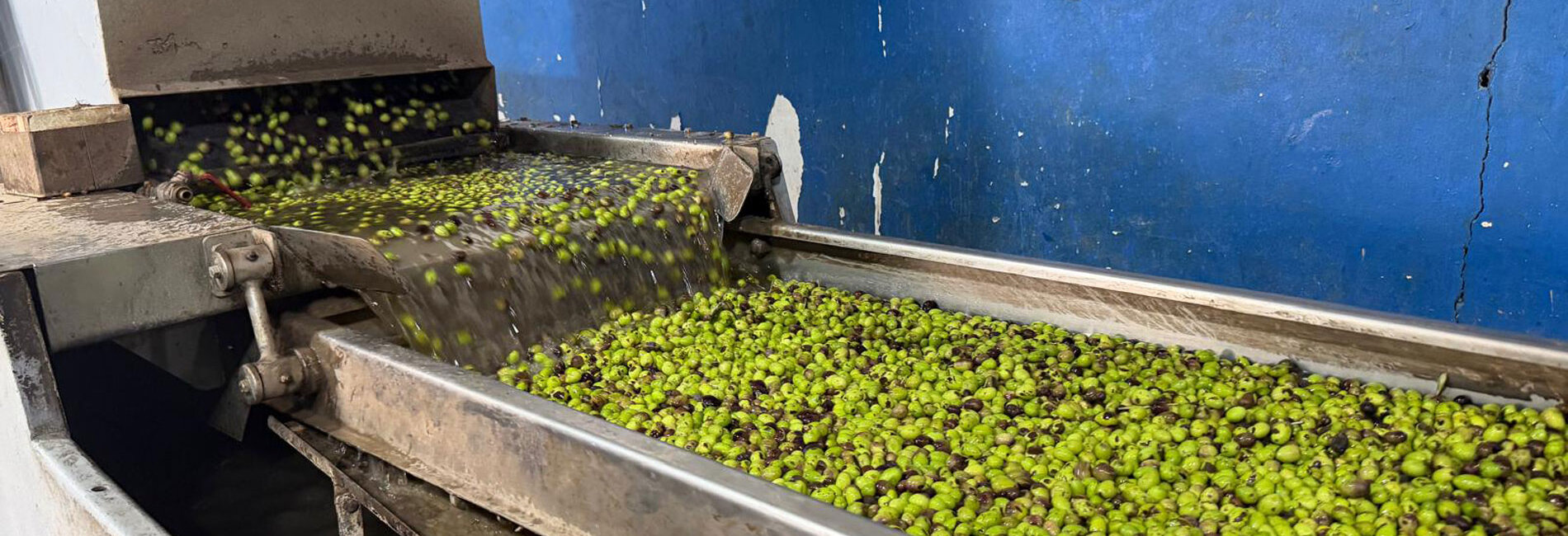
The 2026 olive harvest, which officially began on 15 October, is taking place amid escalating settler violence and access restrictions. Olive-harvest-related settler attacks increased nearly sixfold, from 33 in 2020 to 185 in 2025. Between 1 September and 19 October 2026, 272 attacks were documented, resulting in one Palestinian fatality, 200 Palestinian injuries and damage to more than 3,200 olive trees and saplings. This exceeds the totals recorded during the entire 2024 (224) and 2025 (185) harvest seasons. More than 60 per cent of attacks (164) occurred in Ramallah governorate, followed by Nablus (52), with 122 and 53 Palestinian injuries, respectively. Six communities accounted for 58 attacks (21 per cent): Deir Abu Mash’al, At Tayba, Burqa, Birzeit and Umm Safa in Ramallah, and Beita in Nablus. Of the 200 Palestinians injured, 143 were injured by settlers and 57 by Israeli forces in the context of settler attacks.
During the reporting period, 69 olive-harvest-related settler attacks were documented, including at least 23 in Areas A and B. Attacks also affected journalists, protective presence activists and European diplomatic and municipal representatives accompanying farmers. On 16 October, settlers attacked farmers, activists and journalists in Area B of Khirbet Abu Falah (Ramallah), injuring nine Palestinians, including a child, and a foreign female journalist, who was reportedly beaten with sticks and robbed of her belongings. On 17 October, masked settlers attacked Palestinian families and diplomatic and municipal representatives during a harvest activity in Area B of At Tayba (Ramallah), injuring a Palestinian man and damaging a consular vehicle and a Palestinian home's gate. Settlers also stole harvested olives and agricultural equipment. Following this incident and the 16 October attack in Khirbet Abu Falah, Israeli police reportedly arrested 10 suspects on 19 October. By 22 October, nine had been reportedly released to house arrest, while one remained in custody and investigations were ongoing.
Settler attacks also damaged agricultural assets and resulted in theft of harvested produce. At least 151 olive trees were damaged or destroyed during the reporting period, including 80 in Kisan (Bethlehem) and 56 in Khirbet Abu Falah (Ramallah). In Khallet al Louza (Bethlehem), settlers reportedly harvested and stole approximately two tonnes of olives from 18 dunums of Palestinian-owned land between 15 and 18 October, affecting six families. In other communities, farmers were forced to abandon their harvest, with olives and equipment stolen.
Attacks also occurred on land requiring “prior coordination” with Israeli authorities. In Beit Ijza (Jerusalem), farmers accessing olive groves behind the Barrier near Giv'on HaHadasha settlement faced settler attacks on two designated harvest days. On 15 October, settlers reportedly forced farmers to leave and stole harvested olives in the presence of Israeli forces, who did not intervene. On 19 October, settlers were reportedly found harvesting olives from Palestinian trees and took the produce to the settlement accompanied by an Israeli police vehicle.
In a statement issued during the reporting period, the UN Human Rights Office (OHCHR) called for urgent action by States and donors to protect Palestinian communities during the olive harvest. OHCHR highlighted settler attacks and severe movement restrictions preventing thousands of farmers from accessing their land, warning of the associated risks of displacement and dispossession. OHCHR urged increased international and diplomatic presence in high-risk communities, safe access to agricultural land, accountability for attacks and adequate funding for protection and livelihood interventions.
Humanitarian response activities at a glance – West Bank
13–19 October 2026 (unless otherwise specified)
Shelter: Partners reached 746 people (152 households), primarily through minor-to-moderate shelter repairs, non-food items (NFIs) and cash assistance. Approximately 63 per cent of those assisted were in Nablus, Ramallah and Hebron governorates.
Food Security: Partners are coordinating planned olive harvest assistance across nine governorates, including the distribution of harvesting tools and machinery, collective harvesting, and transportation of olives to presses.
Water, Sanitation and Hygiene: During the third quarter of 2026, 15 WASH Cluster partners implemented 445 interventions across 195 communities, reaching approximately 140,000 people. These included the delivery of 31,537 cubic metres of trucked water, the provision of 727 water storage tanks and the installation, rehabilitation or expansion of 52,170 metres of water networks. The WASH Cluster also published the 2026 West Bank WASH Vulnerability Mapping Dashboard to inform response prioritization, partner planning and resource allocation.
Protection:
- Four partners provided services to address gender-based violence (GBV) through 28 service delivery points across the West Bank, including in Jenin, Jerusalem and Nablus. Reported activities included 17 people receiving GBV case management, 47 receiving individual psychosocial counselling and 500 participating in group psychosocial support sessions. Partners also distributed 400 dignity kits to displaced women and girls, provided cash-for-protection assistance to 30 survivors and women at risk, and raised the awareness of 375 people to GBV and the prevention of sexual exploitation and abuse. Movement restrictions, settler violence and displacement continued to impede service delivery, including at two service delivery points.
- Since the beginning of 2026, Child Protection partners have provided life skills sessions to 558 adolescents and child protection awareness sessions to 10,227 children and 3,989 caregivers. My Rights puppet theatre performances in Jenin, Hebron and Qalqilya also reached 3,771 children and 2,500 parents, raising awareness of children's rights. During the reporting week, partners highlighted movement restrictions and lengthy travel times as obstacles to reaching service locations, alongside needs for winter clothing and school supplies in Hebron governorate.
- In September, two mine action partners conducted 481 explosive ordnance risk education and conflict preparedness and protection sessions, reaching 6,271 people across Nablus, Hebron, Tubas and Qalqilya governorates.
For further information on humanitarian response activities and gaps, see the latest published Flash Appeal Response Monitoring Update (August 2026).
Gaza Strip
The reporting period is 12–18 October 2026 unless otherwise specified.
Israeli airstrikes, shelling and gunfire continued across Gaza, reportedly causing civilian casualties. Israeli incursions and demolitions were also reported near the “Yellow Line.” UNICEF highlights that on 17 October, a 14-year-old boy was reported killed by an armed drone strike while walking home from a UNICEF-supported learning center in Deir al Balah. The next day, a six-year-old child was reported killed by gunfire in Al-Maghazi while another 12-year-old boy was reported shot while on the ruins of his home in Beit Lahia. On 20 October, another 14-year-old boy was reported killed by tank fire in northern Nuseirat. Overall, as of 22 October, eight children had been reported killed and 20 injured in just six days across the Strip, bringing the total reported number of children killed since the announcement of the October 2025 ceasefire to 351, adds UNICEF.
According to the Ministry of Health in Gaza, which operates under the de-facto authorities, 32 Palestinians were reported killed and 123 injured between 13 and 19 October, bringing the total number of casualties since the ceasefire agreement to 1,522 fatalities and 5,421 injuries. Another 67 fatalities were retroactively added to the total number after their identification details were approved by MoH
The humanitarian situation remains catastrophic with the near totality of the population still surviving in deteriorated tents and makeshift shelters, bracing for a fourth winter without adequate protection from the cold, wind, rain and flooding risks. Families continue to face dire water, hygiene and sanitation conditions, queuing daily to fill plastic jerrycans with trucked drinking water amid widespread destruction and shortages of all essential supplies – from generators, engine oil and spare parts for essential WASH infrastructure to medicines for cancer and other noncommunicable diseases.
According to the Logistics Cluster, between 13 and 19 October, out of 779 UN and partner trucks carrying humanitarian supplies manifested for entry into Gaza, 702 were successfully offloaded on the Israeli side of Kerem Shalom, of which 363 came from Ashdod, 150 from Egypt and 133 from Jordan. This represents a47 per cent increase compared with the 476 truckloads offloaded between 6 and 12 October, which saw increased closures linked to public holidays.
The private sector collected only 315 commercial truckloads into the Gaza Strip between 12 and 18 October, based on data from the Gaza Chamber of Commerce shared with the Cash Working Group. This represents a 25 per cent decrease compared with previous week (5–11 October). The downtrend coincided with reports starting 13 October of a halt in commercial imports linked to a high fee said to be charged by the de facto authorities, with conflicting narratives over whether that fee was voluntary or imposed. According to the Chamber of Commerce, 223 of the 315 commercial trucks carried food supplies while 51 trucks carried non-essential items; an additional 23 trucks carried cooking gas, 12 carried hygiene and shelter materials, three carried baby care items, two carried animal feed and one carried medicines. According to the Gaza Market Monitoring Committee, the price of food items soared. Potatoes reportedly rose by 72 per cent and the food basket increased by 20 per cent on average. By contrast, the price of non-food items reportedly remained stable.
On 23 October, 14 out of 17 commercial bakeries supported by the World Food Programme through the “fuel-only” production model were temporarily closed citing shortage of flour following a reported lack of commercial flour entry since 14 October. On 24 and 25 October, humanitarian partners donated some limited amount of flour to the bakeries as a temporary measure. Subsequently, 16 of the 17 bakeries resumed operations, with one remaining temporarily closed as of 25 October due to technical issues.
Meanwhile, 21 UN-subsidized bakeries continued to produce about80,000 two-kilogram bread bundles daily without interruption – about 81 per cent of the bread sold via 161 contracted retailers at a subsidized price of 3 NIS (US$0.97) per bundle and 19 per cent distributed for free to more than 300 shelters and community sites.
Water, sanitation and health challenges
During the reporting period, the WASH Cluster conducted repairs to the Gaza city Mekorot water line from Israel, allowing drinking water supply to return to the same levels as in September following a disruption in early October. The Southern Gaza Desalination Plant in Khan Younis continues to produce water at lower than potential capacity due to the lack of replacement membranes and spare parts due to bureaucratic and administrative impediments imposed by Israeli authorities. The plant's power supply was disrupted on 13 October due to a cut in the underground cable with repairs completed by the evening of the same day.
WASH-related preparations for the cold and rainy season are ongoing, with lack of essential supplies forcing partners to prioritize the most critical interventions. They warn that, once heavy rains start, the lack of personal protective equipment, generators, sewage maintenance trucks, mobile dewatering pumps and repair materials, will hinder their ability to respond to flooding and sewage blockages.
On the health front, significant gaps remain in trauma, surgical and rehabilitation supplies, including IV fluids, anesthesia and surgical medicines, as well as microbiology and other specialized consumables. Specialized medicines for noncommunicable diseases, including Type 1 insulin analogues, remain in short supply, while diabetes screening is constrained by limited laboratory capacity and access to essential diagnostic services. Oncology diagnostics and imaging are severely compromised due a combination of ongoing restrictions on the entry of critical health supplies and equipment, collapse of the health sector with only 47 per cent of all health service points either partially or fully functioning across the Strip and limited capacity of the local health workforce. Breast cancer services are particularly constrained. The Gaza MoH reports approximately 664 documented breast cancer cases, including 105 newly documented cases in 2026. Major gaps include limited mammography and CT capacity,, lack of MRI services across the Strip, only four histopathologists, shortages of pathology supplies and consumables, and delays across diagnosis, treatment and referral pathways.
Funding shortages compounding the humanitarian crisis
Funding shortfalls, combined with ongoing restrictions, have begun reversing gains achieved since the announcement of a ceasefire over a year ago.
In September 2026, Food Security Sector partners (including UN agencies, NGOs and bilateral government actors) reached around 1.3 million people in the Gaza Strip with some form of food assistance (e.g. food parcels, sectoral cash and vouchers for food), compared with 1.2 million people in August, 1.5 million people reached monthly between April and July, 1.9 million people monthly between February and March, and 2.1 million in January 2026. It is expected that the number of people reached per month will further decrease to less than one million people in Gaza from October 2026 onwards as food parcel and flour distribution for around 500,000 people per month has been suspended. Rations remain at approximately 50 per cent of minimum caloric requirements, and most families receive food rations on a rotational rather than monthly basis.
For its part, the Shelter Cluster reports that about 60 per cent of the $283 million required to help families prepare for the cold and rainy season remains unmet. Eleven WASH partners also warn that they might have to discontinue the trucking of drinking water in the coming months, which would impact about 360 out of 3,500 water distribution points.
Humanitarian response activities at a glance – Gaza Strip
12–18 October 2026 (unless otherwise specified)
Food Security: As of 15 October, 603,000 meals were prepared daily by 24 partners in 90 kitchens and delivered to 1,318 locations. Partners supported the daily production of approximately 280 metric tonnes of bread, meeting an estimated 33 per cent of daily bread needs through subsidized sales and free distributions. During the ongoing monthly distribution cycle, more than 344,000 people (97,000 households) have received food parcels and wheat flour through 27 distribution points. Partners continued livestock support, completing one round of fodder distributions to approximately 2,250 livestock holders and initiating a second round targeting herders and working-animal owners.
Shelter and Site Management: Shelter Cluster partners reached 7,917 households with shelter and household-item assistance, distributing 1,633 toolkits, 3,605 sheets of transparent plastic, 1,500 tarpaulins, 1,095 bedding kits, 4,504 mats, 390 mattresses and 960 blankets.
Health: Partners supported haemodialysis services through the provision of more than 14,000 bicarbonate cartridges, 4,800 erythropoietin units, approximately 5,000 sodium bicarbonate powder consumables units, and essential medicines for kidney transplant patients. Cluster partner continued supporting health providers to strengthen noncommunicable disease services at primary care level, with more than 300 health professionals trained to date in screening, diagnosis and management, against a target of 500.
Water, Sanitation and Hygiene: Partners brought into Gaza critical water-treatment chemicals, including 88 barrels of sodium hypochlorite, 24 barrels of caustic soda and 52 barrels of anti-scalant, supporting the operation of water treatment facilities. Partners distributed 498 water tanks, 24 handwashing stations, 32 sanitation accessibility kits, 23,824 bars of soap, 10,102 jerry cans, 1,600 pairs of rubber gloves, 960 kilogram of laundry soap and 500 tarpaulins.
Nutrition: During the first half of October, partners screened 24,499 children aged 6–59 months, admitting 710 (3 per cent) for acute malnutrition treatment, including 102 (0.42 per cent) with severe acute malnutrition (SAM). A further 28 children with SAM and medical complications were admitted to stabilization centres, alongside five infants under six months at risk of poor growth and development. Partners also screened 12,071 pregnant and breastfeeding women (PBWs), of whom 4,613 are currently receiving targeted supplementary feeding. Preventive blanket supplementary feeding reached 54,220 children aged 6–59 months and 24,699 PBWs with medium-quantity lipid-based nutrient supplements, while 21,031 PBWs and other caregivers received group or individual counselling on infant and young child feeding in emergencies. Across the Gaza Strip, 310 nutrition sites remain operational.
Protection: Protection partners reached 7,453 people with direct protection services, including mental health and psychosocial support, case management, referrals, explosive ordnance risk education, legal assistance, cash-for-protection and disability inclusion support. An additional 329 people received protection-sensitive and inter-sectoral assistance. Protection monitoring activities included eight focus group discussions and 98 key informant interviews, reaching 979 people across 15 neighbourhoods. Child Protection partners reached 5,892 children with psychosocial support and recreational activities, provided case management to 245 newly identified at-risk children, and continued follow-up of 3,945 active cases. Partners addressing gender-based violence (GBV) reached 20,205 people with multisectoral services through 117 service delivery points, while 54,027 people participated in community awareness and outreach activities.
Education: Partners distributed backpacks to 23,083 pre-school and school-aged children, stationery to 22,300 learners, and early childhood development kits to 750 pre-school children. Classroom furniture was delivered to 297 classrooms, supporting learning opportunities for approximately 60,000 children across multiple shifts.
Joint Distributions | Emergency Response: Joint Distribution Consortium processed 17 incident appeals affecting 253 households across Gaza, including seven incidents in Khan Younis (80 households), four in Gaza governorate (88 households), three in Deir al Balah (46 households), two in North Gaza (38 households) and one in Rafah (one household). Reported incidents included 10 airstrikes affecting 237 households, four accidental fires affecting eight households, two shelter-collapse incidents affecting five households and one wind-related incident affecting three households. Rapid assessments classified 49 households as high-need, 113 as medium-need and 91 as low-need, with assistance prioritized based on incident type, extent of damage and assessed needs.
Funding

** Double asterisks indicate that a figure, sentence, or section has been rectified, added, or retracted after the initial publication of this update.
SUBSCRIBE TO RECEIVE OCHA'S INFORMATION PRODUCTS
 SUBSCRIBE
OCHA Sites









Follow Us
Support
Your donations go to relief organizations delivering quick and effective support to Palestinians in need.