
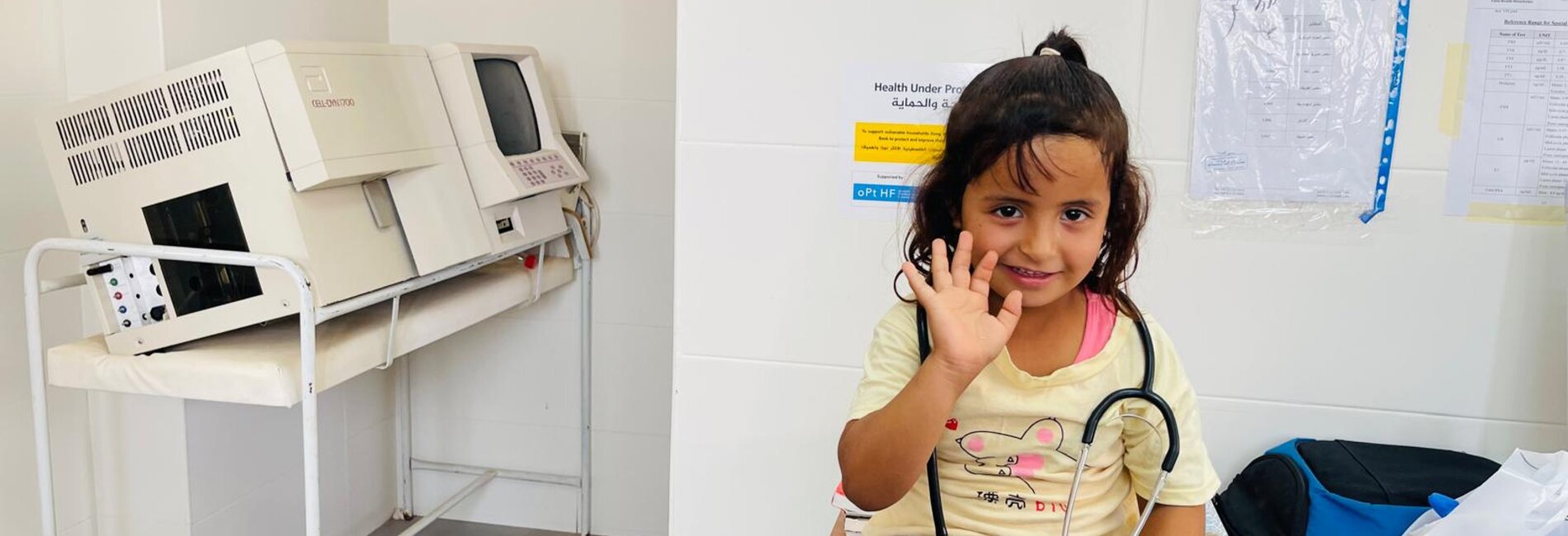
How a mobile clinic saved Samar
In the Palestinian community of An Najada, in Masafer Yatta area of the southern Hebron hills, families face restrictions that make accessing health care a daily challenge. Frequent checkpoint closures and limited transportation mean that reaching Hebron city – where medical services are available – is extremely difficult.
With support from the Occupied Palestinian Territory Humanitarian Fund (OPT HF), CARE, an international NGO, operates a mobile clinic that brings essential services directly to communities in Masafer Yatta. By doing so, they ensure that children and families can receive medical care despite such barriers.
In June 2025, five-year-old Samar* arrived at the mobile clinic with symptoms that deeply worried her mother: constant thirst and frequent urination. The medical team immediately ran a urine test, which showed dangerously high glucose levels. A follow-up blood sugar test confirmed acute hyperglycemia, a life-threatening condition that requires urgent medical attention.
CARE’s medical team worked closely with the family, providing emotional support, health education, and a tailored nutritional programme. Following referral to a specialist and confirmation of her diabetes diagnosis, Samar began insulin therapy. She is now in a stable condition, with regular check-ups, and receiving home visits from CARE’s team to monitor her health, reinforce treatment adherence, and support her mother in confidently managing the condition at home.
By July 2025, Samar’s blood sugar had returned to a much safer range, showing clear progress. Her condition stabilized, and she now has regular follow-up consultations to safeguard her health.
Samar is one of many children in Masafer Yatta who rely on mobile clinics to access essential health care. CARE’s mobile team travels with essential equipment and supplies, using local primary health-care centres when available and community-provided spaces when they are not, to reach hard-to-access communities. Each week, the team serves 40 to 50 patients, providing general consultations, pediatric care, chronic disease follow-up, women’s health services, family planning, first aid training, and community health education.
Mobile clinics and teams have provided vital health care for many years, serving communities across Area C of the West Bank. The clinics bridge the gap for thousands of residents who otherwise lack access to essential medical services. Mobile clinics are needed as restrictive planning policies prevent the construction of permanent health facilities; severe movement and access restrictions, make it difficult for residents to reach hospitals or service centres; absence of basic infrastructure, such as electricity, clean water, and public transportation; high travel costs and logistical barriers to reach the nearest hospital, often located many kilometres away; and a high need for women’s health, mental health and emergency care in underserviced areas.
By bringing health care directly to these communities, mobile clinics ensure dignity, safety and continuity of care where permanent solutions are not feasible.
* Name changed to protect privacy.


subscribe to our mailing list
SUBSCRIBE TO RECEIVE OCHA'S INFORMATION PRODUCTS
 SUBSCRIBE
OCHA Sites










Follow Us
Support
Your donations go to relief organizations delivering quick and effective support to Palestinians in need.