
Helping Sara and other women in Gaza find safety and support
Sara*, a 36-year-old mother of four from northern Gaza, endured unimaginable hardships during the 2023 escalation of hostilities.
In early December, just two months into the war, she lost her only son. She and her three daughters survived, but their ordeal was far from over.
Just weeks later, her husband – who subjected her to repeated physical and psychological abuse – divorced her, leaving Sara and the girls without a home. With nowhere to go and no immediate support, they spent several nights in the streets as Gaza came under heavy bombardment until a distant relative offered temporary shelter.
At that time, the conflict had already pushed women and girls across the coastal enclave into increasingly unsafe conditions. The destruction of homes, overcrowded shelters, restricted movement, and the collapse of basic services left many exposed to heightened risks, both inside and outside the household. As safe spaces disappeared and support systems became overwhelmed, domestic tensions and gender-based violence escalated sharply, and protection concerns grew more severe, particularly for women and girls.
Over the next eighteen months, as the war raged on – bringing more death, injury, destruction and displacement – Sara and her daughters struggled to survive without stable shelter or support.
In the summer of 2025, Sara arrived at Al-Awda Health Center. Initially, she sought medical care at the facility. But then, she learned about AWDA’s community centre, where protection services are provided to people in her situation, with support by the occupied Palestinian territory Humanitarian Fund (oPt HF).
At first, she came quietly, not asking for help, until the staff gently reached out. As the team spent time with her, they learnt what she had endured while lacking access to safe shelter and basic resources for her children. It was clear that she needed urgent support.
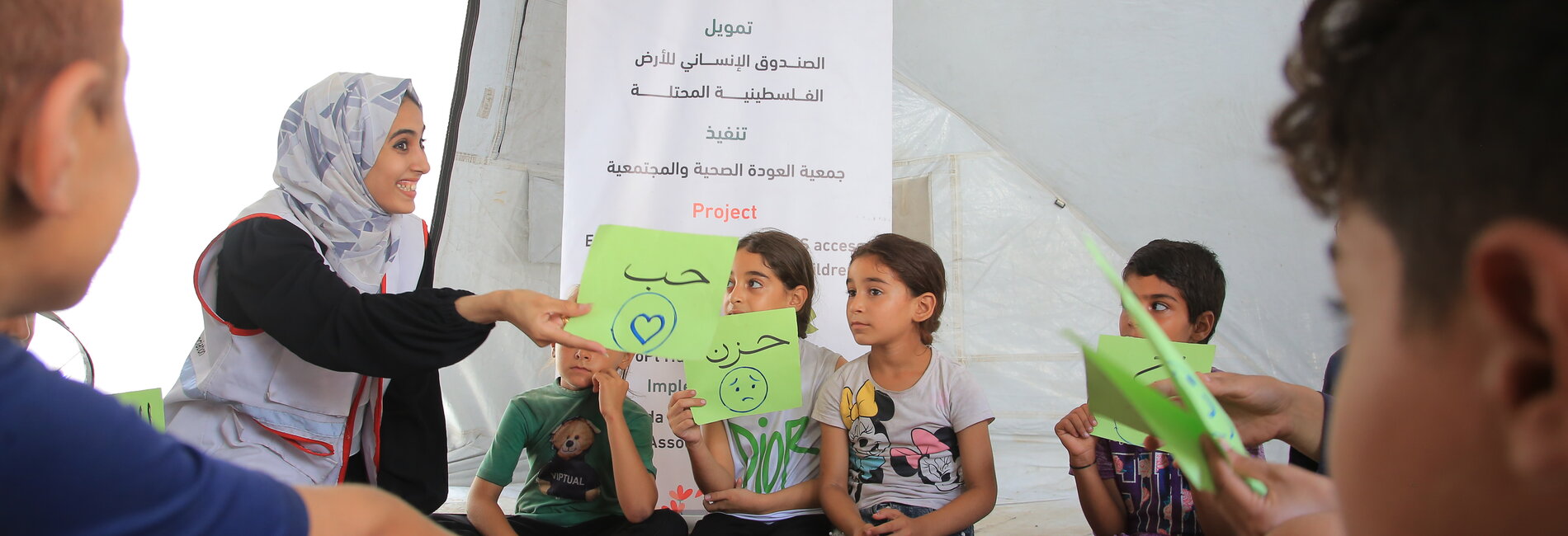
AWDA’s team activated its referral network to ensure Sara and her daughters received a tent and cash assistance, giving them some protection and the means to cover basic needs. Through a project funded by the oPt HF, Sara also received specialized psychosocial support. The team offered her holistic protection and case management services. Meanwhile, Sara’s children joined child protection activities at the centre, offering them a calm and supportive space to play, learn and express themselves – away from the stress of displacement.

The recent ceasefire offers a much-needed respite and a glimmer of hope for recovery.
Today, Sara and her daughters are in a more stable situation. She has regained confidence and emotional strength, while her daughters continue to benefit from the activities and support at the centre. Through this project, Sara has restored a sense of safety and dignity for herself and her children.
Yet, life in Gaza remains difficult – especially for women and children, many of whom still face unsafe conditions either at home or in displacement. Protection initiatives like this ensure that vulnerable groups have access to care, relative safety, and a supportive community when they need it most.
* Name changed to protect the privacy of Sara and her family.


subscribe to our mailing list
SUBSCRIBE TO RECEIVE OCHA'S INFORMATION PRODUCTS
 SUBSCRIBE
OCHA Sites










Follow Us
Support
Your donations go to relief organizations delivering quick and effective support to Palestinians in need.