
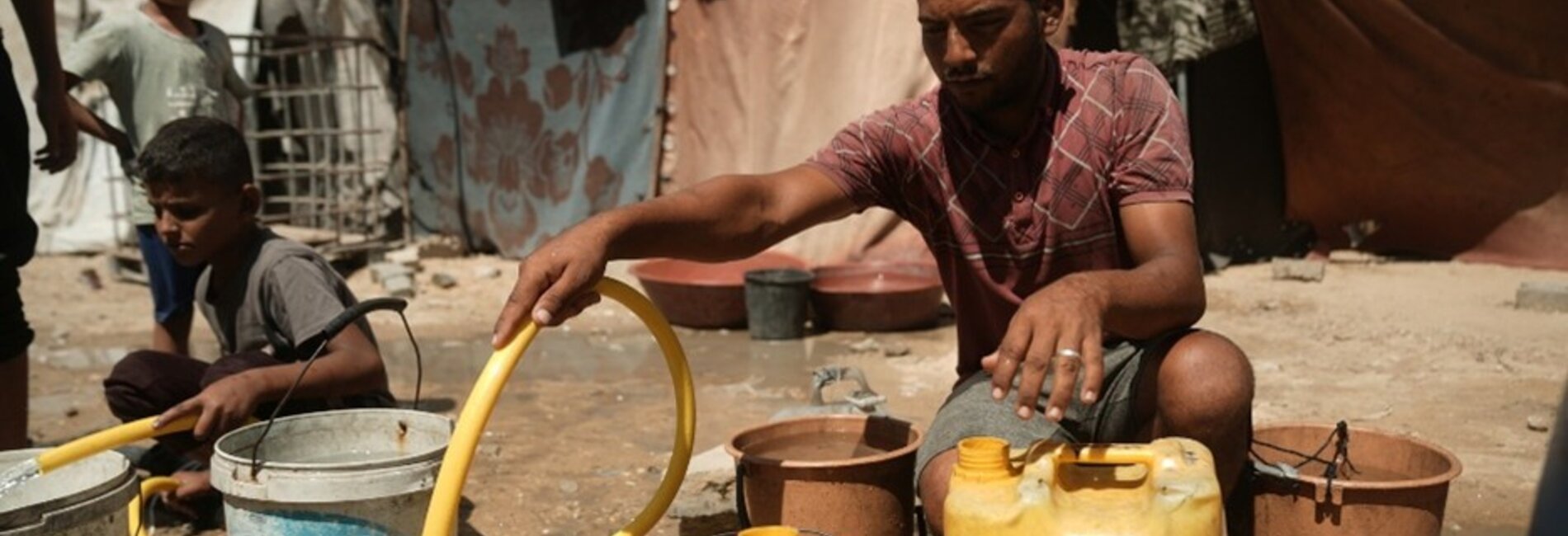
Helping displaced families in Gaza access safe water
“Life without water is impossible… you can endure many things, but not the absence of water.” – Ola, 54 years old
After months of repeated displacement, 26-year-old Jameel* and his family of six struggled to meet basic needs as they moved between different locations across Gaza. Like many displaced families, they spent extended periods in temporary sites where access to essential services, including water, was severely limited.
For Jameel, water quickly became one of the most urgent challenges.
“We received water only once a week,” he said. “Sometimes I left at three in the morning and waited until daylight to fill a few jerrycans. If we couldn’t find any, we went a whole week without it. We wiped our dishes clean, instead of washing them. We developed skin diseases and got intestinal worms because of the lack of hygiene.”
His mother, Ola, * 54 years old, described how the shortage affected every part of daily life: “Personal hygiene, washing dishes, laundering clothes,” she said. “Life without water is impossible… you can endure many things, but not the lack of water.”
With funding from the Occupied Palestinian Territory Humanitarian Fund (OPT HF), Oxfam, in partnership with the local NGO, Beit Lahia Development Association, supported the operation of a water well serving displacement sites in western Gaza, in August 2025. Fuel shortages and damage to infrastructure since October 2023 have severely disrupted water and sanitation services, leaving many communities dependent on emergency solutions.
Through this support, displaced families in the area were able to access water on a regular basis, reducing health risks linked to unsafe water and poor hygiene conditions.
The project has supported more than 100,000 displaced people living in sites across western Gaza, including during periods of intensified displacement following Israeli orders.
Despite changing conditions on the ground, access to safe water remains a critical need for families affected by displacement and infrastructure damage across Gaza. Emergency water services continue to play a key role in safeguarding public health.
* Names changed to protect privacy.


subscribe to our mailing list
SUBSCRIBE TO RECEIVE OCHA'S INFORMATION PRODUCTS
 SUBSCRIBE
OCHA Sites










Follow Us
Support
Your donations go to relief organizations delivering quick and effective support to Palestinians in need.