
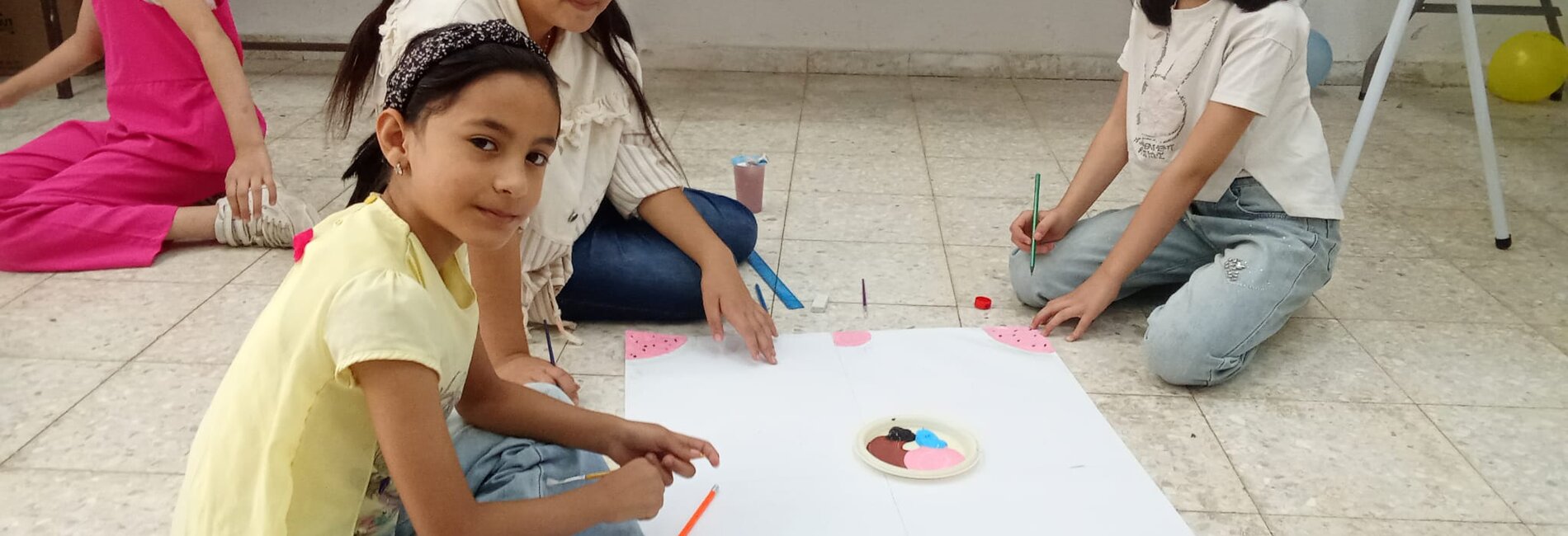
Helping children in the West Bank catch up on learning and rebuild confidence
In the summer of 2025, Sara,* a 10-years-old Palestinian from Huwwara, in the northern West Bank, was finding it difficult to keep up with her lessons. Her teachers and family noticed that she was struggling to follow the curriculum and had become less confident in the classroom.
For many children in the West Bank, access to safe and regular education has been disrupted by movement restrictions, school closures, insecurity and economic hardship. These challenges have affected children’s learning, while also increasing stress and emotional distress, particularly in areas affected by repeated violence and instability.
With support from the occupied Palestinian territory Humanitarian Fund (oPt HF), World Vision implemented an education and psychosocial support project for children in the West Bank from December 2024 to December 2025. They supported more than 2,700 children through catch-up classes, psychosocial sessions and recreational activities – helping them continue learning and cope with the impact of conflict. Teachers, counsellors and facilitators were trained to support students’ learning and emotional needs in a way that is sensitive to trauma and conflict. When needed, children were also referred to specialized child protection and mental health services.
Sara was enrolled in the project. She received regular learning support, including interactive educational activities and individual follow-up. She also participated in psychosocial support activities designed to help children express themselves, manage stress and feel safer in a group setting.
Over time, her mother and teachers noticed improvements. Sara became more engaged in class, more able to concentrate and more willing to participate in learning activities. Her confidence improved, and she began interacting more positively with her classmates and teachers.
“I started to see a real change in Sara,” her mother said. “She became more confident, more motivated to go to school, and happier to take part in class.”
Her academic progress also improved. Follow-up assessments showed gains in basic reading and mathematics skills compared with her level when she first joined the project. Her behavior in class also appeared calmer and more stable.
The project reached children whose education and wellbeing had been affected in different ways by the humanitarian situation in the West Bank. For some, repeated disruptions to schooling, insecurity and movement restrictions had deepened existing learning gaps. In Al Lubban Elementary School, in Nablus governorate, Ameer,* a second-grade student, joined the project after struggling with basic English skills, including reading simple words and pronouncing them correctly. At first, he was hesitant to participate and avoided reading aloud in class.
Using interactive and child-centered methods, including visual aids, flashcards, songs and guided oral activities, his teacher helped him practice in a supportive environment. Gradually, Ameer became more willing to participate, showed greater confidence when reading aloud, and improved his pronunciation and word recognition.
For other children, the humanitarian impact was reflected in emotional distress and loss. Zain,* an 11-year-old girl from Huwwara, joined the project after experiencing deep emotional distress following the loss of her older brother in traumatic circumstances. She had become withdrawn, found it difficult to concentrate and was less able to engage with peers and daily routines.
Through structured group activities, expressive exercises and age-appropriate psychosocial support, Zain was gradually able to express her emotions more safely and reconnect with others. Facilitators observed that, over time, she became more willing to participate in activities, express her feelings and engage with her peers.
For children like Sara, Ameer and Zain, the project responded to different but connected needs arising in the context of violence, movement restrictions, school disruptions and emotional distress. While this support could not remove the wider challenges affecting education in the West Bank, it helped reduce learning gaps, restore confidence and provide children with a safer space to learn, interact and recover.
* Names have been changed to protect privacy.


subscribe to our mailing list
SUBSCRIBE TO RECEIVE OCHA'S INFORMATION PRODUCTS
 SUBSCRIBE
OCHA Sites










Follow Us
Support
Your donations go to relief organizations delivering quick and effective support to Palestinians in need.