
Humanitarian Situation Update #345 | Gaza Strip
The Humanitarian Situation Updates on the Gaza Strip and on the West Bank are both issued every Wednesday/Thursday. The next Humanitarian Situation Update on the Gaza Strip will be published on 10 or 11 December.
Key Highlights
- Forty-two health facilities, including four hospitals, have opened or resumed operations since the ceasefire in Gaza, while 61 per cent of all health service points remain non-functional, the Health Cluster reports.
- Amid limited rehabilitation services and shortages of assistive devices, persons with disabilities face heightened protection risks during winter, particularly in overcrowded sites and unsuitable shelters, according to the Protection Cluster.
- UNICEF reports that two-thirds of children under five consumed two or fewer food groups in October, while winter conditions, overcrowding and rising disease risks are worsening vulnerabilities among children.
- Most of the debris in Gaza could be cleared within seven years, UNDP estimates, provided there is stable access, uninterrupted operations, and sufficient funding.
Context Overview
-
Over the past week, airstrikes, shelling and gunfire continued to be reported across the Gaza Strip, with the majority of incidents occurring in the vicinity of the so-called “Yellow Line,” resulting in casualties. In areas where the Israeli military remains deployed, comprising over 50 per cent of the Gaza Strip, daily detonations of residential buildings continue to be reported and access to humanitarian assets, public infrastructure and agricultural land remains restricted or altogether barred. Access to the sea remains prohibited.
-
Over the past week, shifts in the yellow cement blocks marking the so-called “Yellow Line” have prompted new waves of displacement, particularly from At Tuffah and Ash Shuja’iyyeh neighbourhoods in eastern Gaza city to Ad Daraj, An Naser and other parts of central Gaza city. According to the Protection Cluster, coupled with winter weather, these compounding factors have disrupted service delivery, decreased community participation in planned protection activities, and heightened protection risks and psychological distress, particularly among vulnerable groups including children, persons with disabilities, older persons, and female-headed households. Between 26 November and 2 December, the Site Management Cluster (SMC) reported that more than 20,500 displacement movements were recorded across the Strip, including more than 5,000 movements from eastern to central Gaza city. This is compared with over 17,000 movements in the preceding week. While in the first month following the ceasefire, displacement movements were mainly associated with returns to places of origin, displacement over the past month have been primarily related to heavy rainfall and flooding. Since the ceasefire came into effect on 10 October, over 774,000 displacement movements have been recorded, of which about 639,000 were from southern to northern Gaza.
-
On 29 November, the United Nations Secretary-General marked the International Day of Solidarity with the Palestinian People by highlighting the horrific suffering in Gaza after two years of hostilities and the glimmer of hope that the recent ceasefire offers. The UN Chief emphasized that “all parties must work in good faith towards solutions that restore and uphold international law […] Lifesaving humanitarian aid must be allowed to enter Gaza at scale, and the international community must continue to stand firmly with UNRWA – an irreplaceable lifeline for millions of Palestinians, including Palestine refugees.”
-
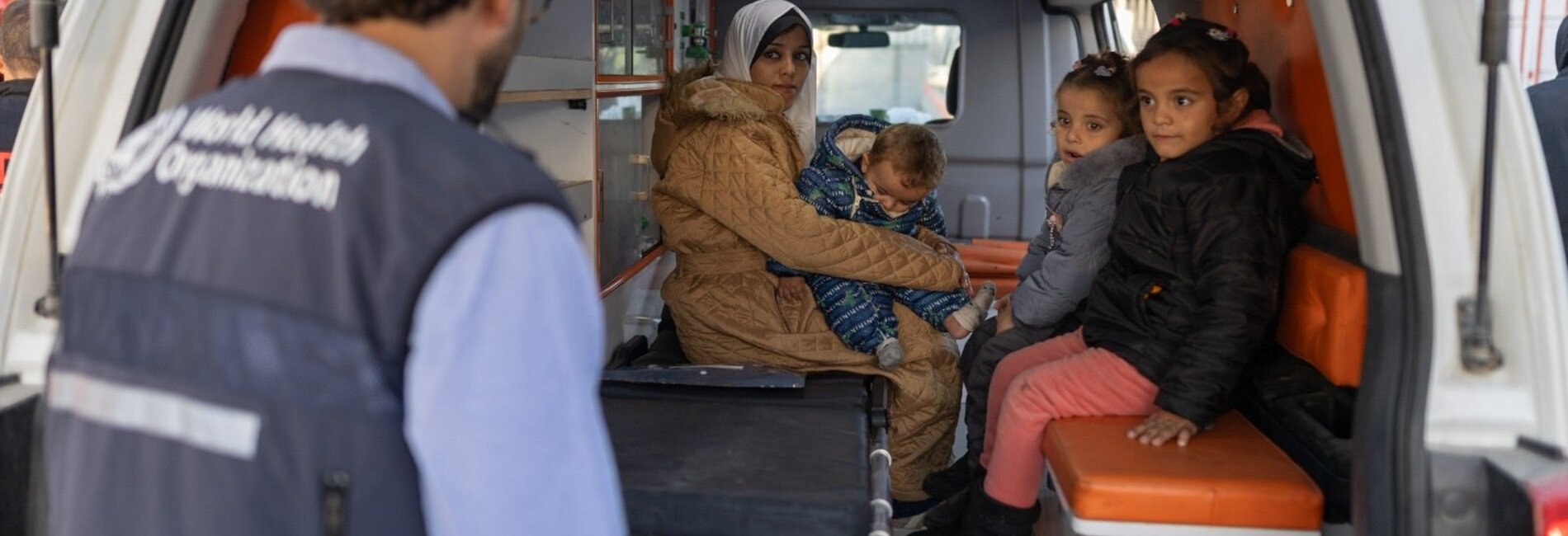
On 1 December, the World Health Organization (WHO) facilitated the medical evacuation of 18 patients from Gaza, in addition to 54 companions. According to WHO, since October 2023, 10,620 patients have been evacuated along with 12,074 companions. This includes 235 patients and 708 companions who have been evacuated since the ceasefire. More than 16,500 patients, including 4,000 children, still require medical evacuation, as the advanced care they need is not available in the Strip. WHO continues to call for additional support and the opening of all evacuation routes, particularly to the West Bank, including East Jerusalem.
-
According to the MoH in Gaza, between 26 November and 3 December, 11 Palestinians were killed, 16 were injured and 20 bodies were recovered from under the rubble. This brings the casualty toll among Palestinians since 7 October 2023, as reported by the MoH, to 70,117 fatalities and 170,999 injuries. According to the MoH, the total number includes 299 fatalities who were retroactively added between 21 and 28 November after their identification details were approved by a ministerial committee. MoH reported that since the ceasefire, 360 Palestinians were killed, 922 were injured and 617 bodies were retrieved from under the rubble.
-
According to the Israeli military, between 26 November and 3 December, as of noon, no Israeli soldiers were killed in Gaza. The casualty toll among Israeli soldiers since the beginning of the Israeli ground operation in October 2023 stands at 471 fatalities and 2,984 injuries. According to Israeli forces and official Israeli sources cited in the media, more than 1,671 Israelis and foreign nationals have been killed, the majority on 7 October 2023 and its immediate aftermath. As of noon on 3 December, it is estimated that the bodies of two deceased hostages remain in the Gaza Strip.
-
Coordination with Israeli authorities continues to be required for humanitarian convoy movements by the UN and its partners in Gaza, to crossings as well as in or near other areas where Israeli forces remain deployed. Between 26 November and 2 December, humanitarian organizations coordinated 54 missions with the Israeli authorities, of which 38 were facilitated, seven were cancelled, five were impeded and four were denied. At present, three crossings remain open. Kerem Shalom is used for both cargo and staff movements, including medical evacuations, while Zikim and Kissufim are used exclusively for cargo. Zikim and Kissufim operate on an alternating schedule: when one is open for cargo offloading, the other is open for cargo uplifting. Kerem Shalom is currently the only crossing where both processes can occur on the same day. The Philadelphi Corridor remains the sole route available for movements to Kerem Shalom crossing, as the southern section of Salah Al Din Road remains inaccessible.
-
The rubble generated by the destruction in Gaza is accumulated in large debris fields, blocking roads and key access routes and limiting the movement of people, goods and emergency services. The Debris Management Working Group reports that Gaza faces an immense recovery challenge, with over 80 per cent of buildings damaged or destroyed. Debris also poses significant health and environmental hazards, often contaminated with explosives, asbestos, industrial by-products, and medical waste. According to UNDP, clearing debris is hindered by several factors, including contamination with explosives and hazardous materials, restricted access to priority sites, inconsistent fuel supplies, and the need for permits from Israeli authorities to bring in specialized equipment. UNDP emphasizes that if these challenges are removed, through stable operating conditions, unimpeded access and adequate funding, most of the rubble could be cleared within seven years.
Access to Emergency Food Assistance and Nutrition Services
-
Towards the end of November, Food Security Sector (FSS) partners further expanded food assistance across the Gaza Strip, delivering more than 1.5 million hot meals per day through 213 community kitchens, including over 340,000 meals in North Gaza and Gaza city and 1.2 million in Deir al Balah and Khan Younis. As part of the November assistance cycle, nearly 1.4 million people (273,000 households) were assisted with general food distributions through 59 sites, and since 16 November the ration size has been increased to two food parcels and one 25-kilogram flour bag per family. Bread production has also improved, since the 1 December, with 19 UN-supported bakeries producing 180,000 two-kilogram bundles daily, complemented by about 370,000 loaves from one FSS partner.
-
While market activity is slowly resuming, dietary diversity remains poor, with essential protein sources still largely unavailable or unaffordable. Limited cooking gas continues to constrain the operations of some community kitchens and bakeries. According to the Global Price Watch – October 2025, released on 30 November by the Famine Early Warning Systems Network (FEWS NET), food prices fell sharply in October but remained well above the levels prior to October 2023. In early November, with the ceasefire entering its fifth week, families struggled financially due to a lack of cash, and many could not afford basic food items despite the drop in prices.
-
On 28 November, the United Nations Children’s Fund (UNICEF) stated: “With more than two-thirds of young children continuing to consume two or fewer food groups [in October], combined with limited access to health services, inadequate water and sanitation, and sub-optimal feeding practices, the entire under-five population of 320,000 children is at risk of acute malnutrition.” Despite increased access to services, major gaps persist, with winter conditions, overcrowding and elevated disease risks further heightening the vulnerability of children. Partners report that winterization supplies are being depleted faster than they can be replenished, underscoring the need for sustained, unhindered humanitarian access.
-
While caseloads remain among the highest recorded and nearly five times higher than during the February 2025 ceasefire, acute malnutrition admissions have declined since August, reflecting progress in treating and preventing acute malnutrition among children in Gaza, according to UNICEF. In October, Nutrition Cluster partners screened more than 102,000 children aged 6-59 months, reflecting improved access in Khan Younis and Deir al Balah, but there were still limited services in Gaza city at that time, with only 6,000 children screened in the city. Of those screened, nearly 9,300 children under five years were identified with acute malnutrition, including more than 7,300 children with moderate acute malnutrition (MAM) and about 1,900 with severe acute malnutrition (SAM) who were admitted for treatment. Since the ceasefire, the number of acute malnutrition treatment points in Gaza city has increased from seven to 26, allowing improved access to life-saving services for children suffering from acute malnutrition, according to UNICEF.
-
Needs among pregnant and breastfeeding women (PBW) remain substantial. In October, partners screened nearly 45,000 PBW for acute malnutrition, of whom over 8,000 were enrolled in programmes for the management of acute malnutrition, according to the Nutrition Cluster. During the same period, UNICEF reported that it distributed fortified high-energy biscuits to more than 13,000 PBW, multiple micronutrient supplements to more than 5,900 PBW, iron and folic acid to more than 6,700 PWB, and vitamin A supplements to over 15,000 children aged 6-59 months. These services help curb a nutritional decline among mothers and young children who continue to face displacement, food shortages and limited access to care.
Access to Health Care
-
Health facilities and services have expanded to improve health-care delivery across the Gaza Strip, where 61 per cent of health service points remain non-functional, placing significant strain on the health system. According to the Health Cluster, since the ceasefire and as of 3 December, 42 health service points have become operational, all partially, including four hospitals, one field hospital, 16 primary health-care centres (PHC), and 21 medical points. These include both newly established and reopened facilities. Among the new facilities is a 150-bed, field hospital which opened on 19 November in Gaza city and is operated by International Medical Corps, providing outpatient services including prenatal care, non-communicable disease care, mental health support and physiotherapy. The inpatient capacity plan is to set up 200 surgical and non-surgical beds. The Paediatric Intensive Care Unit at Al Shifa Hospital, with a capacity of seven beds, was also inaugurated following the completion of renovation works, according to the MoH.
-
According to Medical Aid for Palestinians (MAP), functional hospitals remain overwhelmed with critically injured and malnourished patients, as the entry of medical supplies has not increased in any meaningful way. For example, testimonies collected by MAP indicate that Nasser, Al Shifa and Patient’s Friends Benevolent Society (PFBS) hospitals are facing severe shortages of essential drugs and supplies, including IV fluids, anaesthesia medications, and gauze, which are fundamental to keeping emergency and surgical services operational. According to MAP, one of the most critical shortages is a lifesaving medication for more than 1,100 patients who rely on kidney dialysis to survive amid severe shortages of dialysis beds. Orthopaedic teams at Nasser and Al Shifa report being forced to re-use items such as external fixators for amputees, which can significantly increase the risk of infection and hinder recovery from limb loss. Diagnostic capacity has similarly been compromised, with only one functioning CT machine at Al-Ahli Hospital in northern Gaza, forcing clinicians to ration imaging to the most critical cases and disrupting MAP’s own diagnostic referral pathways.
-
The MoH in the Gaza Strip warned this week that severe challenges are threatening the continuity of specialized eye-care services, as extensive damage to diagnostic and surgical equipment has greatly limited surgical capacity and increased waiting times, while critically low stocks of essential ophthalmic medications have gravely affected thousands of patients. MoH highlighted that 4,000 glaucoma patients are now at high risk of permanent vision loss due to the lack of necessary treatment and limited surgical options. MoH urgently called for the immediate entry of specialized medication and diagnostic equipment to prevent further deterioration of eye-care services.
-
According to the UN Population Fund (UNFPA), access to sexual and reproductive health (SRH) services remains limited as health facilities in Gaza continue to be overstretched and under-resourced. Recovery is impossible without predictable access to medicines, consumables, fuel, and medical equipment, UNFPA emphasizes. Only 14 hospitals and 64 PHCs and medical points currently provide SRH and emergency obstetric care services, all partially. In parallel, the lack of adequate shelter, heating, and sanitation is creating severe health risks, particularly for pregnant women and newborns. UNFPA estimates that 40,000 displaced pregnant women are enduring overcrowded, unsanitary conditions that heighten their vulnerability and further restrict access to timely, life-saving care.
-
UNFPA and partners are scaling up SRH services across Gaza to help meet these urgent needs. In November, eight medical points and PHCs providing SRH services reopened, with renovation work underway to re-open seven additional PHCs and the maternity department at Al Khair Hospital. To expand service delivery capacity, during November, UNFPA distributed 17 high-performance tents to health partners, equipped more than 90 midwives with midwifery kits, and provided postpartum kits to more than 4,200 new mothers. During the same period, UNFPA delivered reproductive health kits to health facilities for the treatment of sexually transmitted infections, management of postpartum haemorrhage, and emergency deliveries, among others. This has enabled 8,000 SRH services, including 500 safe deliveries, alongside the distribution of more than 450,000 units of essential maternal health medicines, consumables, and contraceptives.
Persons with Disabilities
-
The number of persons with disabilities in the Gaza Strip has grown significantly due to conflict-related injuries. In 2022, prior to the escalation of hostilities, MoH registered over 55,000 persons with disabilities in the Gaza Strip. In September 2025, the World Health Organization (WHO) estimated that nearly 42,000 additional people in the Gaza Strip have sustained potentially life-changing injuries that require ongoing rehabilitation and care, or about 25 per cent of the reported injuries between October 2023 and September 2025. According to WHO, a quarter of them are children. On 3 December, MoH in Gaza reported that there are at least 6,000 amputation cases in Gaza since October 2023. According to the Protection Cluster, while persons with disabilities in Gaza already faced major barriers accessing basic services before October 2023, the destruction of the health system, the loss of health workers, and the widespread damage to infrastructure have sharply increased these barriers and reduced access to essential care.
-
In a positive development, on 2 December, the Palestine Red Crescent Society (PRCS) announced the opening of its Rehabilitation Hospital in Khan Younis, with an initial capacity of 100 beds, to meet the growing need of injured persons and other patients for specialized rehabilitation services. Hamad Hospital also recently reported that it has provided more than 100 people with prosthetic limbs since March 2025. Since the ceasefire and as of 3 December, Protection and Disability partners, through the Protection Cluster and the Disability Working Group, reached 140 people with prosthetics and orthotics for disability rehabilitation, 167 people with assistive devices and physiotherapy, 500 people with adult hygiene kits, and 45 people with specialized rehabilitation referrals. At least 38,000 people, including persons with disabilities, were reached with mental health and psycho-social support services and over 6,200 additional people, including persons with disabilities, were reached with intersectoral referrals for multi-purpose cash assistance, shelter tents and blankets, winterization assistance, and food security support. The response remains far from sufficient in meeting the scale of needs, the Protection Cluster notes, amid significant gaps in rehabilitation services and the entry of prosthetics and other specialized materials.
-
With most people currently living in sub-standard, overcrowded shelters, most shelters and latrines are inaccessible to persons with disabilities, according to the Protection Cluster. This severely limits access for people with mobility challenges, increasing dependence on caregivers, reducing wellbeing, and exposing them to potential risks of abuse. According to the Protection Cluster and the Disability Working Group, the situation is further compounded by extensive damage to roads and explosive hazards, which severely hinder movement and accessibility, further depriving persons with mobility impairments of adequate access to essential services.
-
To effectively deliver medical, psychosocial, case management, and community-based services to persons with disabilities, the Protection Cluster underscores the criticality of embedding disability inclusion and universal (accessible) design in multisector programming efforts, including future reconstruction planning. The Cluster further highlights that the entry of appropriate materials to establish safe spaces must be fully facilitated, noting that partners have faced challenges in bringing in needed items, such as assistive devices, including materials required to repair existing devices. The lack of access to essential assistive devices significantly reduces the coping capacity of people with functional impairments, leading to heightened physical vulnerability and risks of health complications, loss of independence, psychological distress, social isolation, and diminished dignity, further marginalizing already at-risk people, the Protection Cluster warns.
Funding
- As of 4 December, Member States disbursed approximately $1.6 billion out of the $4 billion (40 per cent) requested to meet the most critical humanitarian needs of 3 million out of 3.3 million people identified as requiring assistance in Gaza and the West Bank, including East Jerusalem, under the 2025 Flash Appeal for the Occupied Palestinian Territory. Nearly 88 per cent of the requested funds is for the humanitarian response in Gaza, with just over 12 per cent for the West Bank. In November, the oPt Humanitarian Fund managed 128 ongoing projects, totalling $73.5 million, to address urgent needs in the Gaza Strip (89 per cent) and the West Bank (11 per cent). Of these projects, 61 are being implemented by international NGOs, 51 by national NGOs and 16 by UN agencies. Notably, 58 out of the 77 projects implemented by international NGOs or the UN are being implemented in collaboration with national NGOs. For more information, , please see OCHA’s Financial Tracking Service webpage and the oPt HF webpage.
SUBSCRIBE TO RECEIVE OCHA'S INFORMATION PRODUCTS
 SUBSCRIBE
OCHA Sites










Follow Us
Support
Your donations go to relief organizations delivering quick and effective support to Palestinians in need.