
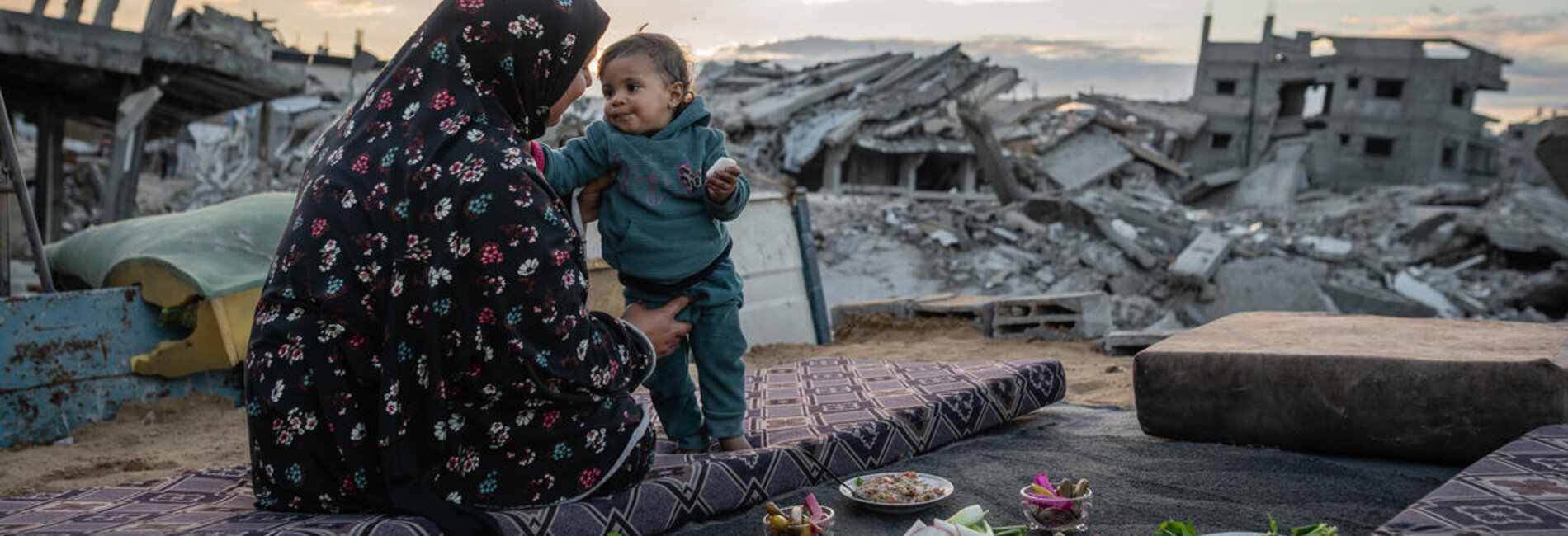
Humanitarian Situation Report | 6 March 2026
As of 18:00 on 4 March 2026, unless otherwise noted
HIGHLIGHTS
- The escalation across the Middle East has had an immediate impact on civilians across the Occupied Palestinian Territory (OPT).
- In Gaza, restrictions on aid operations mounted as crossing closures were accompanied by the suspension of humanitarian movement coordination, medical evacuations, returns of residents from abroad, and staff rotations. The closure of the crossings drove up prices and increased reliance on humanitarian assistance.
- The West Bank saw increased closures of checkpoints and road gates, severing movement between communities and governorates. Violent attacks continued, causing casualties, displacement and damage, amidst risk of falling debris following missile interceptions.
- In Gaza, sexual and reproductive health services remained severely disrupted, with screening and treatment services for cervical and breast cancer largely suspended since October 2023 with ongoing restrictions on the entry of critical equipment classified as “dual-use,” such as ultrasound machines, incubators, ventilators, and mobile maternity units, undermining safe antenatal, obstetric, and postnatal care.
- Since January 2026, the Education Cluster has reached 107,540 school-aged children and 4,200 kindergarten-aged children across 110 temporary learning spaces (TLSs) in Gaza with school‑in‑a‑carton, recreational, and early childhood development kits to improve the quality of learning.
SITUATION OVERVIEW
The regional escalation had immediate repercussions across the Occupied Palestinian Territory.
On 28 February, the Israeli authorities closed all crossings into the Gaza Strip, suspended entry of aid, fuel, and commercial supplies, coordination of humanitarian movements in and near areas where Israeli troops remain deployed, medical evacuations, the return of residents from abroad, and the rotation of humanitarian staff in and out of the coastal enclave. These measures triggered uncertainty about the availability of humanitarian supplies and services,** and private sector goods. Prices of basic commodities rose, increasing reliance on humanitarian support at a time when stocks could not be replenished.
Fuel imports into Gaza, where the electricity grid has been down since October 2023, had already been uncertain due to supplier-related issues. The closure of the crossings forced the limited fuel reserves within the enclave to be rationed: humanitarian partners and service providers suspended vehicle-supported solid waste collection and reduced water production levels. Contingency measures were also activated across hospitals and primary health-care centers.
On 3 March, the Israeli authorities reopened the Kerem Shalom crossing for fuel, and aid cargo coming through Egypt and Israel, while aid transfers from the West Bank and Jordan remained suspended as of 5 March. They also allowed the resumption of some commercial imports through Kerem Shalom. Additionally, they resumed the coordination of humanitarian movements in and near areas where Israeli troops remain deployed.
The Zikim and Rafah crossings remain closed and humanitarian staff rotations, medical evacuations, or the return of residents from abroad have not yet resumed.**
Airstrikes, shelling, and gunfire continued both near and away from the “Yellow Line” inside the Gaza Strip, reportedly resulting in casualties. According to the Ministry of Health in Gaza, 15 Palestinians were killed, 18 bodies were retrieved and 37 were injured, between 26 February and 5 March in the Strip.** Overall, between the onset of the ceasefire on 10 October 2025 and 27 February 2026, the UN Human Rights Office (OHCHR) in the OPT recorded the killing of at least 224 Palestinians east or near the so-called “Yellow Line” and 347 Palestinians in attacks far from it.
In the West Bank, Israeli forces heightened movement restrictions on 28 February, further hampering access to workplaces and services, and largely isolating multiple communities. These measures have limited humanitarian partners’ ability to deliver assistance and conduct needed operations, necessitating special coordination and arrangement to secure operations in exceptional cases.**
In particular, increased access restrictions across the West Bank hindered the ability of ambulances and fire brigades to move between villages, hospitals, and service centres. Between 28 February and 3 March, WHO recorded nine incidents of ambulances being obstructed. WHO received reports of ambulances held at gunpoint at checkpoints, ambulances being searched by Israeli forces, and medical teams forced to take alternative and longer routes, delaying access to care. In one case in the Salfit area, WHO reports that a woman in labour was forced to cross on foot because the ambulance was prevented from reaching her. The provision of health services in clinics and hospitals was also affected, with medical facilities postponing surgeries due to the inability of essential medical staff to access their workplaces or being delayed at checkpoints, and several Health Cluster partners’ mobile clinics temporarily suspended operations.
Delays and closures have also caused shortages of fuel, including cooking gas, which has further affected service delivery.
GAZA HUMANITARIAN AID*
Between 27 February and 5 March, based on data retrieved from the UN 2720 Mechanism dashboard at 16:00 on 6 March, 3,424 pallets of aid administered by the UN and partners were offloaded at Gaza’s crossings. About 71 per cent of these pallets contained food supplies, followed by shelter items (17 per cent), education, WASH and nutrition assistance (8 per cent cumulatively), as well as operations, logistics and telecommunication material (4 per cent).
During the same period, 1,340 pallets of aid were collected at Gaza’s crossings. About 86 per cent of these pallets contained food supplies, followed by health (7 per cent), WASH (4 per cent), and operations, logistics and telecommunication material (2 per cent).

Overall, between the announcement of the ceasefire on 10 October 2025 and 5 March 2026, approximately 329,000 pallets of humanitarian cargo were offloaded, and over 326,000 pallets were collected from the operating crossings. Some 1,532 pallets, just 0.5 per cent all collected aid, were intercepted during transit within Gaza, with no new cargo interceptions reported since early November 2025.
The above data does not include bilateral donations and the commercial sector.
Between 27 February and 5 March, the United Nations coordinated 25 humanitarian missions with the Israeli authorities inside Gaza – nine on 27 February and 16 since coordinated movements were allowed to resume on 3 March. Of the total, 11 missions were facilitated, three were denied outright, three were cancelled by the organizers and three were approved but faced impediments and were partially or fully accomplished.
FUEL
The closure of the crossings on 28 February required that the limited accessible resources be rationed and allocated for limited life-saving health and WASH services. Since 3 March, following the reopening of Kerem Shalom, UNOPS has brought into Gaza 28 fuel trucks with approximately 989,000 litres of diesel, while no benzene has entered the Strip yet.**
HUMANITARIAN RESPONSE IN GAZA
Food Security
- In February, the exceptionally low rate of humanitarian cargo offloading at the Kerem Shalom crossing through the Egypt corridor significantly affected the food response in Gaza, particularly the household-level general food assistance. Throughout the month, partners reached approximately 1.2 million people with reduced rations that covered only 50 per cent of minimum caloric needs, compared to 1.6 million people reached with full rations in January. The March cycle is underway, with half-rations. Additional food supplies are urgently needed to ensure that partners have sufficient stocks to maintain distributions throughout the month.
- As of 28 February, nearly 1.65 million meals continued to be prepared and delivered daily by partners through 185 kitchens across Gaza. This included 553,000 daily meals produced in the north and 1,097,000 meals in southern Gaza.
- Amid existing challenges with sustained entry of supplies, the closure of all crossings on 28 February sparked immediate concerns about partners’ ability to maintain the same level of cooked meal production due to depleting food and fuel stocks. Approximately 710,000 meals, including 12,000 delivered daily to health facilities, were at risk of being put on hold if the full closure persisted. The reopening of Kerem Shalom, however, has allowed partners to sustain operations and avert any critical reductions. Previous Integrated Food Security Phase Classification (IPC) analyses showed that food security and malnutrition levels in Gaza can deteriorate – and also recover – rapidly depending on the volume of food supplies permitted to enter, underscoring the critical importance of ensuring a sustained and predictable flow of both humanitarian aid and commercial goods into the Gaza.
- As of 3 March, approximately 133,000 two-kilogram bread bundles continued to be produced daily through 30 UN-supported bakeries. One-third of this bread is distributed for free, along with cooked meals, while two-thirds are sold through 139 retailers at a subsidized price of NIS 3 (US $0.95) per bundle.
- In February, partners distributed approximately 40 metric tons of potato tubers that entered via the private sector in late January. Fifty-seven farmers in southern Gaza received this assistance to support 42 acres of potato cultivation. Partners continue to provide technical support throughout the cultivation process.
Health
- Health partners continue to operate under significant constraints, particularly related to dependency on fuel, movement restrictions and limited commodity stocks. Partners continue to prioritize life‑saving services, including emergency and trauma care, maternal and neonatal services and communicable disease management, while implementing measures to conserve fuel and adjust operations to maintain essential service delivery. Through coordination with OCHA, UNOPS and WHO, fuel allocations have been prioritized and secured for essential health facilities and partners, helping to sustain critical services in the immediate term. However, the situation remains fluid, and contingency planning is essential. Most services – including hospital operations, vaccine cold-chain systems, ambulance referrals, sterilization units and internal water supply – remain heavily reliant on generator power. Based on partner reporting, many services could face disruptions within approximately two weeks if fuel or supply pipelines are interrupted.
- Emergency medical teams (EMTs) continue to play an important role in service provision. However, the temporary halt to all international humanitarian personnel rotations has disrupted the rotation of internationally deployed EMT personnel. Advocacy efforts are ongoing to facilitate entry for EMT staff. Since the beginning of the year, 32 EMTs have been deployed – 30 international and three national teams – supporting service delivery across 32 health facilities.
- Between 25 and 27 February, 37 patients, including four children, were medically evacuated to Egypt via the Rafah crossing, alongside 91 caregivers. Overall, since Rafah reopened on 2 February, 319 patients and 529 companions have been evacuated through this corridor, bringing the total number of critical patients medically evacuated outside the Strip since October 2023 to 11,176. With the closure of Rafah on 28 February all medical evacuations remain suspended with over 18,000 patients in Gaza still in urgent need of medical treatment unavailable locally.
- Sexual and reproductive health services remain severely disrupted due to damaged infrastructure, shortages of essential medicines and supplies and limited referral capacity. There are an estimated 50,000 pregnant women in Gaza, with approximately 160-180 births occurring daily. Severe bed shortages mean women undergoing major procedures, including Caesarean sections, are often discharged within hours and return to overcrowded displacement settings, increasing risks of complications and infection. Ongoing restrictions on humanitarian supplies, particularly items classified as “dual-use”, continue to affect the entry of critical medical equipment such as ultrasound machines, incubators, ventilators and mobile maternity units. These constraints significantly limit the ability of partners to scale up maternal and newborn health services across Gaza, undermining safe antenatal, obstetric and postnatal care.
- Screening and treatment services for cervical and breast cancer have been largely suspended since October 2023, with access to family planning services, contraceptives, and testing and treatment for sexually transmitted infections (STIs) also limited. Additionally, over 500,000 women and girls face shortages of menstrual hygiene materials and access to clean water.
- In early February, the Health Cluster distributed eight types of reproductive health kits to partner-supported facilities, reaching approximately 6,223 people and supporting clean delivery services, family planning, STI management, and emergency obstetric care. However, postpartum kits have now been depleted following the distribution of nearly 19,883 kits between October 2025 and February 2026, creating an urgent need for replenishment.
Water, Sanitation and Hygiene
- Drinking water availability in Gaza city has remained severely constrained between 25 February and 4 March due to ongoing damage and recurrent repairs to the Mekorot pipeline from Israel and the Safa Wells. This has forced many residents to survive with less than the emergency standard of six liters of water per person per day. On 25 February, the Mekorot contractor completed repairs on the portion of the pipeline located in the area where Israeli forces remain deployed, east of the “Yellow Line”. On 4 March, Palestinian contractors repaired the damage just west of the “Yellow line”. The Mekorot line is currently being tested at 25 per cent flow rate for any additional leaks.
- The disruption in fuel supply at the onset of the regional conflict had an immediate impact on WASH service delivery. Initially, with no clear timeframe for the resumption of fuel deliveries, supplies were restricted to the main water producers and distributors, and water production was rationed. Fuel distribution to most non-governmental organizations and solid‑waste agencies was suspended, with the expectation that their services would cease once existing stocks were exhausted. Following the resumption of fuel entry on 3 March, WASH prioritization has expanded to include the resumption of vehicle-supported solid‑waste collection, as well as critical water‑trucking and water‑well operations.
Shelter
- Between 25 February and 3 March, Shelter Cluster partners reached 7,720 households with shelter assistance through in-kind and voucher-based modalities. In-kind distributions included 5,240 sealing-off kits, 1,595 bedding items and kits (each kit comprising four mattresses, four blankets, six mats and six pillows), 711 tarpaulins, 983 clothing kits and vouchers, and some tents.
- Cluster partners’ stocks remain extremely limited, with key items, such as tents, nearly depleted. This severely constrains partners’ ability to respond to inclement weather, should the rainy season continue, incidents, or emerging urgent needs, allowing only partial assistance due to the lack of essential materials.
- OCHA continues to coordinate efforts to address weather and accident-related emergency needs. Between 26 February and 4 March, 253 families affected by rains and 10 affected by accidental fires across northern Gaza, Deir al Balah and Khan Younis received multisectoral assistance packages, including tents, tarpaulins, clothing kits, blankets and cereals.
Site Management
- Site Management partners continued the rapid review of displacement sites that started on 3 February. As of 4 March, 990 sites hosting an estimated 1.2 million people have been surveyed. Of these, 78 per cent are makeshift sites, 19 per cent are collective centres - which include UNRWA designated emergency shelters - and the remaining 3 per cent classified as scattered sites. Findings show:
- Only 414 sites (46 per cent) have a trained site management agency or actor present, limiting the ability to systematically address operational and protection challenges.
- Critical infrastructure deficits are particularly evident in lighting, with just 101 sites (11 per cent) equipped with communal lighting. As a result, most sites operate in darkness after nightfall, substantially increasing protection risks, including exposure to gender-based violence. Limited visibility also makes nighttime access to essential services risky, especially for women and children.
- About 83 per cent of the sites report infestations of rodents and pests causing public health risks.
- More than half of the sites report accumulated solid waste that has not been collected for at least 30 days, and more than 250 sites (approximately 26 per cent) lack latrines altogether, leading to reports of open defecation and the presence of feces in communal areas.
- These conditions call for urgent need for scaled-up interventions to mitigate protection risks, prevent disease outbreaks, and restore minimum standards of dignity and safety for the displaced communities.
Protection
- General Protection
- Between 26 February and 3 March, partners provided protection services to more than 21,500 people, including children, caregivers, women, persons injured and with disabilities, frontline workers, as well as communities in displacement sites and shelters across the Gaza Strip.
- Services focused primarily on psychosocial support (psychological first aid, psychosocial support sessions and specialized mental health services), case management, legal assistance, disability-inclusive and rehabilitation services, community awareness and protection monitoring, while integrating humanitarian assistance aimed at reducing vulnerability and negative coping mechanisms.
- Protection partners continued to maintain a strong field presence through both community-based services and mobile outreach. Activities were delivered through a combination of in-person and remote modalities, allowing partners to maintain service continuity despite mobility constraints and security concerns.
- Child Protection
- Between 26 February and 4 March, Child Protection (CP) partners reached approximately 4,100 children with mental health and psychosocial support (MHPSS), while over 690 caregivers participated in caregiver psychosocial support and parenting sessions to strengthen coping strategies and improve child wellbeing.
- During the same period, child protection case management services reached 39 children with individualized support. Another 37 children were referred to specialized services based on tailored case plans that addressed health, education and shelter needs.
- Community awareness activities continued across shelters and displacement sites, reaching more than 1,000 caregivers and community members with child protection information on safety, reporting mechanisms, prevention of family separation and positive parenting. In addition, 809 children and 220 caregivers participated in Explosive Ordnance Risk Education (EORE) sessions, and child‑friendly awareness materials were distributed.
- Despite these efforts, children continue to face heightened protection risks in overcrowded displacement settings. Concerns include unsafe shelter conditions, limited lighting, lack of privacy, child labour and child marriages linked to economic hardship, exposure to abuse, and injuries caused by dangerous shelter environments. Access to safe spaces also remains a major challenge, and many children cannot attend school because of overcrowding or the absence of functioning learning facilities.
- Operational constraints are limiting the scale and continuity of services. Fuel shortages are affecting staff mobility, funding gaps are hindering child protection programming, safe spaces for activities remain limited, and electricity and internet disruptions continue.
- Addressing Gender-Based Violence (GBV)
- Between 25 February and 4 March, partners addressing GBV continued to provide essential services through 68 Women and Girls Safe Spaces (WGSSs), two safe shelters, and other case management and awareness‑raising service points. Some 8,750 people received support, including through group psychosocial activities, individual case management and distribution of cash for protection assistance. Another 68 people were referred to additional services, including health care. In addition, over 1,300 women and girls received dignity and menstrual hygiene management kits.
- Last week, over 3,000 people, including 260 men participated in awareness‑raising activities on legal rights, health education and GBV prevention.
- Seven partners are currently providing remote services via helplines. The Women Affairs Center launched two new helplines at the end of February, for women and girls respectively, staffed by case managers and operating from 08:30 to 15:30.
- To improve access to services, partners addressing GBV are updating their service map for dissemination in March. A task force was also formed at the end of February to review and contextualize guidelines for WGSSs. Partners are conducting self‑assessments to identify training needs for capacity‑building activities starting in March.
- Partners addressing GBV are exploring ways to link vulnerable women and girls with sustainable livelihood options to offset the current lack of income-generating avenues.
- Mine Action
- Between 25 February and 4 March, partners conducted 69 explosive hazard assessments (EHAs) in support of debris removal activities, along with 42 quality assurance (QA) visits to verify compliance with Standard Operating Procedures (SOPs) and ensure operational standards are consistently upheld.
- Between 1 and 5 March, EORE activities reached over 11,000 people in Gaza city, Deir al Balah and Khan Younis. The Mine Action Area of Responsibility (AoR) and EORE Technical Working Group are also rolling out a digital EORE prioritization tool to strengthen coordination among EORE actors and identify priority areas for intervention.
- No new explosive ordnance incidents were recorded during the reporting period.
Education
- As of 1 March, Education Cluster partners were operating 502 temporary learning spaces (TLSs) serving more than 297,500 children across Gaza. Between 28 February and 3 March, partners distributed 1,062 School‑in‑a‑Carton kits, 78 Recreation‑in‑a‑Carton kits, and 94 Early Childhood Development (ECD) kits across 24 TLSs in Khan Younis and other accessible areas of Rafah, which collectively benefited 43,300 school‑aged students and approximately 4,200 kindergarten‑aged children. These supplies are helping to improve the quality of learning in temporary settings, while recreation kits enable structured group activities that support children in coping with trauma and encourage positive social interaction—both critical for their wellbeing and development. Overall, since January, the Cluster has reached 107,540 school-aged children and 4,200 kindergarten-aged children across 110 TLSs with school‑in‑a‑carton, recreational and ECD kits.
- In addition, 64 high‑performance tents have been distributed, with installation completed or underway in 13 learning spaces across the Strip. This forms part of the cluster’s scale‑up efforts to expand learning capacity and increase enrollment opportunities, enabling both pre‑school and school‑aged children to access in‑person learning.
Multi-Purpose Cash Assistance (MPCA)
- During February, Cash Working Group (CWG) partners distributed MPCA to about 100,000 households. Each household received NIS 1,250 (US $378) through digital payment modalities in line with the agreed minimum expenditure basket transfer value. In total, more than 177,000 households have received at least one MPCA transfer in 2026.
- The closure of crossings in the context of the regional escalation caused an increase in the prices of both food and non‑food items. Concerns are highest for non‑food items, as most private sector commodities entering Gaza are food products (estimated at 70 to 75 percent), leaving essential non‑food items in very limited supply.
- According to the Gaza Chamber of Commerce, the current pace of commercial truck entry continues to limit availability of goods, restrict restocking and weaken market resilience. Quantities entering are too low for vendors to maintain stock, resulting in items selling out within days. Where stock is available, it typically lasts only two to ten days. This contributes to market volatility and makes it difficult for humanitarian actors to predict trends or assess feasibility of different assistance modalities.
Emergency Telecommunications Cluster
- The Emergency Telecommunications Cluster (ETC) and UNDSS are coordinating the transition from the discontinued very high-frequency radio model currently used in Gaza to a newer, upgraded model. A unified code plug has been developed to standardize radio programming across Gaza and the West Bank, ensuring consistency and improving operational reliability.
* All figures solely refer to UN and partner assistance dispatched through the UN-coordinated system and are preliminary. Supplies entering through bilateral donations and the commercial sector are not reflected.
** Double asterisks indicate that a figure, sentence, or section has been rectified, added, or retracted after the initial publication of this update.
SUBSCRIBE TO RECEIVE OCHA'S INFORMATION PRODUCTS
 SUBSCRIBE
OCHA Sites










Follow Us
Support
Your donations go to relief organizations delivering quick and effective support to Palestinians in need.