The Humanitarian Monitor (New from May 2006)
Special Focus (New from May 2006)
Consolidated Appeals Process 2009 CAP2009
Protection of Civilians Weekly Report
Humanitarian Update Access and Protection
UN statements and Press Releases
Gaza Strip: Access reports ( discontinued )
Humanitarian monitoring reports (Bertini Commitments, discontinued)
Incident Tracking reports(ACIS)
The Humanitarian Monitor | Dec 2009
As the year of 2009 comes to a close, large segments of the Palestinian civilian population in the oPt, in particular those living in the Gaza Strip and in Area C of the West Bank and in East Jerusalem, continue to endure a serious crisis of human dignity. The Israeli-imposed blockade continues to hinder reconstruction in Gaza. As of the end of the year, some 20,000 Gazans remain displaced. Some 60 percent of the West Bank, remains off-limits for Palestinian use and development, and many Palestinian families face the threat of displacement from eviction or demolition of their homes. While in 2009 the overall number of Palestinian injuries reached the lowest level since 2005, human rights groups have drawn attention to the recent rise in Israeli arrests of organizers of non-violent protests in the West Bank.
The Humanitarian Monitor | Nov 2009
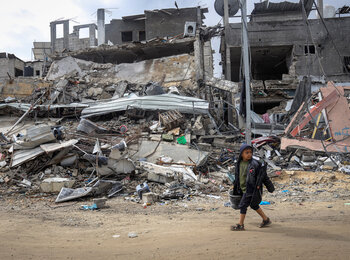
House demolitions and displacement affecting East Jerusalem continue to be of concern. Israeli settler organizations intensify their efforts to take control of land and property in East Jerusalem and establish a sustained presence in Palestinian neighbourhoods. The Jerusalem municipality approve the construction of 900 new housing units in Gilo settlement. In Gaza, as winter approaches there is increasing concern for the families whose homes were destroyed or damaged as a result of the ?Cast Lead? military offensive. The continuing blockade has resulted in negligible reconstruction and repair, as essential materials continue to be denied entry: thousands of families continue to live in homes without window panes or solar panels due to the ban on the import of glass.
The Humanitarian Monitor | October 2009
October's events highlight the impact of access restrictions, including restrictions on the use of space, on the ability of Palestinians to meet basic human needs such as protection, shelter, food, water, and healthcare. The lifting of blockade of Gaza, along with the freezing of demolitions and the revocation of the Barrier permit regime in the West Bank, including East Jerusalem, are essential steps to improving the humanitarian situation and restoring dignity to many Palestinians.
The Humanitarian Monitor | Sept 2009
September events highlight a number of ongoing protection concerns and underscore the fragility of the situation in the occupied Palestinian territory (oPt). After four months of relative calm in the oPt, there was a sudden escalation of Israeli-Palestinian violence and a rise in related casualties, due mainly to clashes in East Jerusalem and increased settler violence.
The Humanitarian Monitor | August 2009
This month, one of the deadliest intra-Palestinian armed clashes since the Hamas takeover of Gaza claimed the lives of 28 people, including five civilians; over 100 others were injured in the incident. Aside from this incident, there were no significant changes in protection and access trends observed during previous months. Palestinian casualties due to Israeli-Palestinian violence remained relatively low in August, in comparison with monthly averages in the first half of the year, and Palestinian movement to and from the main urban centres in the West Bank continued to be relatively smooth, with the exception of access to East Jerusalem. However, access to large farming and grazing areas and water resources in the West Bank remain heavily restricted, and Israel's blockade of Gaza continues to severely impact livelihoods and services.
The Humanitarian Monitor | July 2009
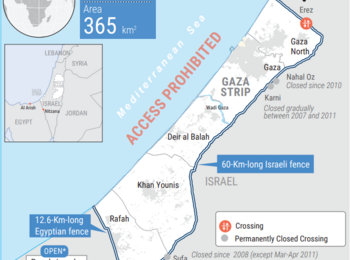
Barriers continue to afflict Palestinians in the occupied Palestinian territory (oPt), impeding efforts to improve the humanitarian situation. The 9th of July marked the fifth anniversary of the International Court of Justice Advisory Opinion on the West Bank Wall, according to which the route of the wall running inside the West Bank was declared illegal. OCHA has issued a new report highlighting the humanitarian impact of the Barrier. In the West Bank, demolition of Palestinian-owned structures for the lack of requisite permits continue and settler violence is on the rise. The Barrier around the Gaza Strip, built in 1995, facilitates the ongoing Israeli blockade, which is collectively afflicting the lives of a million and a half Gazan residents. This month experienced the lowest amount of imports of basic supplies allowed into the Gaza Strip since the beginning of 2009.
The Humanitarian Monitor | June 2009
The blockade of Gaza enters its third year. Gaza imports remain largely restricted to basic food items, while exports entirely banned, except for few exceptional truckloads of flowers that exited Gaza in the first months of 2009. The ongoing ban on construction materials prevents reconstruction of 6,300 houses that were destroyed or sustained damage during the Israeli offensive. The supply of electricity also constrained by the blockade due to the inability to import parts to repair electricity networks. In the West Bank, demolition of Palestinian-owned structures for the lack of requisite permits continue; 11 structures in East Jerusalem and 109 in Area C were demolished this month. Access into some cities further relaxed, however a total of 613 obstacles to movement remain across the West Bank.
The Humanitarian Monitor | May 2009
In the West Bank and Gaza Strip, access restrictions continue to impact Palestinian livelihoods. Approximately, 28 percent of the West Bank is declared by Israel as closed military zones and natural reserves, while in the Gaza Strip, Israeli imposed movement restrictions continue to prevent Palestinians from reaching fishing and farming areas. During the month, two Palestinians were killed in the West Bank and 83 were injured, two-thirds of whom were injured in anti-Barrier weekly demonstrations. In the Gaza Strip, two Palestinians were killed when Israeli air strikes hit Rafah tunnels. Six Palestinians were killed in the last few days of May when clashes erupted in Qalqiliya between Hamas members and PA security forces. The blockade of Gaza continues.
The Humanitarian Monitor | April 2009
The basic right of many Palestinians to human dignity continued to be undermined during April. In the West Bank, over 100 Palestinians, including many children, were displaced, hundreds of Palestinian homes were raided and searched by the Israeli army, and there was a 40% increase in the number of Palestinian injuries, compared to the 2008 monthly average. In the Gaza Strip, the 22-month blockade continues to affect all aspects of life. No benzene or diesel has been allowed for five months and cooking gas continued to be rationed. Moreover, hundreds of Palestinians from Gaza with acute medical problems were unable to obtain the needed care, due to the blockade and the political dispute between the Hamas authorities in Gaza and the PA in Ramallah. While the dispute was resolved at the end of the month, only 90 patients crossed Erez during April, compared to 325 in March.
The Humanitarian Monitor | March 2009
In March, the unilateral ceasefires in the Gaza Strip remained fragile. In spite of some relaxation measures, the closure regime remained largely unchanged for most Gazans. However, access to specialized medical treatment outside Gaza for the chronically ill dramatically deteriorated. In the West Bank, an increase in the vulnerability of specific groups was noticed as a result of several factors, including Israeli-imposed access restrictions, displacement and insufficient rainfall. Demolitions and displacement in and around East Jerusalem continued. Also, the Israeli authorities initiated work on the construction of four sections of the West Bank Barrier.